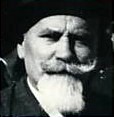
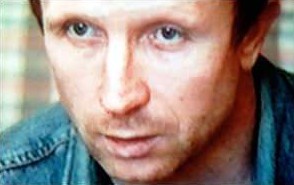
Michael Onufrejczyc
Murderer Albert Goozee
Murderer · United Kingdom · 1956
Albert William Goozee was a British murderer and paedophile. His crimes inspire…
2 victims
Albert Goozee
Murderer · United Kingdom · 1956
Albert William Goozee was a British murderer and paedophile. His crimes inspire…
2 victims
 Alfred Charles Whiteway
Murderer · United Kingdom · 1953
Alfred Charles Whiteway was a serial rapist. Both girls had very deep stab woun…
2 victims
Alfred Charles Whiteway
Murderer · United Kingdom · 1953
Alfred Charles Whiteway was a serial rapist. Both girls had very deep stab woun…
2 victims
 Lewis Lent
Murderer · USA · 1983
Lewis Lent was sentenced to life in prison without parole in Massachusetts in 1…
8 victims
Lewis Lent
Murderer · USA · 1983
Lewis Lent was sentenced to life in prison without parole in Massachusetts in 1…
8 victims
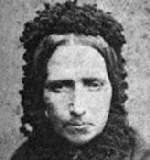 Maria Swanenburg
Serial killer · Netherlands · 1880
Maria Catherina Swanenburg (Leiden 9 September 1839 - Gorinchem 11 April 1915)…
27 victims
Maria Swanenburg
Serial killer · Netherlands · 1880
Maria Catherina Swanenburg (Leiden 9 September 1839 - Gorinchem 11 April 1915)…
27 victims
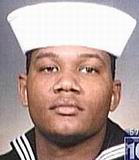 William Oliver Reese
Murderer · Japan · 2006
William Oliver Reese William Oliver Reese was a US Navy airman assigned to the…
1 victim
William Oliver Reese
Murderer · Japan · 2006
William Oliver Reese William Oliver Reese was a US Navy airman assigned to the…
1 victim
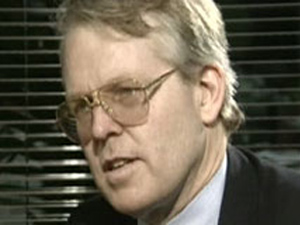 John Barlow
Murderer · New Zealand · 1994
16 February 1994 — Financial dealers Eugene and Gene Thomas, father and son, we…
2 victims
John Barlow
Murderer · New Zealand · 1994
16 February 1994 — Financial dealers Eugene and Gene Thomas, father and son, we…
2 victims
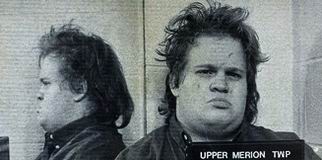 Caleb Fairley
Murderer · USA · 1995
Caleb Fairley (born October 21, 1973) was an American murderer from Gulph Mills…
2 victims
Caleb Fairley
Murderer · USA · 1995
Caleb Fairley (born October 21, 1973) was an American murderer from Gulph Mills…
2 victims
- Gender
- male
- Country
- United Kingdom
- Location
- Cwmdu–Llandeilo, Carmarthenshire, Wales, United Kingdom
- Date of birth
- 1895
- Age at first offence
- 58
- Characteristics
- domestic violence, abuse, the bodies were never found
- Victim profile
- Stanislaw Sykut, 57 (partner pig farm)
- Method of murder
- ???
- Date(s) of murder
- December 14, 1953
- Years active
- 1953
- Date of arrest
- September 14, 1954
- Status
-
Died in custody
Sentenced to death in 1954; sentence commuted to life imprisonment in 1955; released in 1965; killed in a traffic accident in Bradford in 1966
Case record
Personal background
Michael Onufrejczyc was a Pole known locally as “Whiskers”. He was a highly decorated warrant officer in the Polish army. He was wounded twice in the First World War and earned nine medals for gallantry in the Second World War.
After the fighting ended, he pursued a lifelong dream of becoming a farmer. He enlisted in the Polish Resettlement Corps in South Wales and bought Cefn Hendre Farm in 1949, having raised a loan from Polish Army Funds. He largely kept himself to himself and did little to integrate with the local community.
In April 1953 he took on a new business partner, fellow Polish war veteran Stanislaw Sykut, to help him run down the dilapidated farm. Onufrejczyc needed the capital of some £600 that Sykut brought with him.
The partnership and disputes
Cefn Hendre was a near-derelict farm that Onufrejczyc bought in partnership with Stanislaw Sykut. In post-war Britain routine checks were required on all aliens.
Police arrived at Cefn Hendre in December 1953. Onufrejczyc told police that Sykut had sold him his shares in the farm and returned to Poland.
Authorities later checked the claim and found that Sykut had left behind £450 in a savings account and that none of his friends knew that he had left.
Onufrejczyc’s account included a claim that a Mrs Pokora had loaned him the money to buy out Sykut. Mrs Pokora told police that she had not lent Onufrejczyc any money, but had been asked by him to send two packets by registered post that looked the size and shape of £450 in one-pound notes. She also said she had written several letters for Onufrejczyc in Sykut’s name.
Police were well-aware of Onufrejczyc’s temper. They knew that Sykut had complained about being beaten up by his partner and that Sykut had consulted a solicitor about dissolving the partnership. Sykut complained to police that Onufrejczyc had beaten him up. Sykut went to a local solicitor to arrange ending their partnership so that either Onufrejczyc could buy him out or they would have to sell up and split the proceeds.
By the end of the year Sykut had vanished. Onufrejczyc explained Sykut’s disappearance as the result of taking a two-week trip to London.
Investigation and search for the missing partner
Police kept a watch on Onufrejczyc, despite intensive searches of the farm. No body was found. Conflicting reports about the missing man circulated around Llandeilo. Onufrejczyc spread word that Sykut had been kidnapped at gunpoint by Polish secret police. There were also other reports, including claims he had gone to London and returned to Poland.
Later discoveries led police to make more searches. Onufrejczyc had attempted to forge transfer of the deeds to the farm solely to his name. Police then conducted further searches with a team from the Monmouthshire Forensic Laboratory.
Experts uncovered more than 2,000 dark stains on the walls, ceiling, and the passage leading from the kitchen to the farmyard. The majority of the stains were human blood. Onufrejczyc failed to convince anyone by explaining the stains as belonging to rabbits he’d skinned. Sykut himself was still missing despite the discoveries.
Onufrejczyc was eventually charged with murder in August 1954.
Arrest and charge
On 19 August 1954 Onufrejczyc was charged with the murder of Stanislaw Sykut. He had been arrested following police attention to the case.
Trial
Onufrejczyc was tried at a court in Swansea in November 1954 for the murder of his partner Stanislaw Sykut.
The case included evidence of the partners’ stormy relationship. Evidence was also given of over two thousand tiny human bloodstains found in the kitchen of the farmhouse.
The defence contended that Sykut was still alive. Despite the defence’s position, Onufrejczyc was found guilty and sentenced to death. The jury returned a guilty verdict at a 12-day trial in Swansea.
Sentencing and appeal
On 24 January 1955 the sentence was commuted to life imprisonment after an appeal was dismissed.
Aftermath and later death
Onufrejczyc was released in 1965 while still protesting his innocence. After his release, he returned to Cwmdu asking anyone if they had seen his old friend Stanislaw Sykut.
Police continued to suspect that he had met his end in the kitchen of the farmhouse he shared with Sykut and that Sykut’s remains had been chopped up and fed to pigs. Onufrejczyc was killed in a road accident in Bradford the following year.
Timeline
- 1949 — Onufrejczyc bought Cefn Hendre Farm, raising a loan from Polish Army Funds.
- April 1953 — Onufrejczyc took on Stanislaw Sykut as a business partner.
- December 1953 — Police arrived at Cefn Hendre for post-war routine checks on aliens.
- By the end of 1953 — Sykut vanished, explained by Onufrejczyc as a two-week trip to London.
- August 1954 — Onufrejczyc was charged with murder.
- 19 August 1954 — Onufrejczyc was charged with the murder of Sykut.
- November 1954 — Onufrejczyc was tried at Swansea, found guilty, and sentenced to death.
- 24 January 1955 — The sentence was commuted to life imprisonment.
- 1965 — Onufrejczyc was released and returned to Cwmdu asking if anyone had seen Sykut.
- 1966 — Onufrejczyc was killed in a traffic accident in Bradford.
Other details
- The bodies were never found.
- The case was later quoted as a precedent for a “missing body” murder coming to trial.
- The trial evidence included tiny bloodstains in the farmhouse kitchen, and experts later found additional stains on walls, ceiling, and the passage from the kitchen to the farmyard.
Spotted an error, or have more information about this case?