Christopher Simcox
Murderer Albert Goozee
Murderer · United Kingdom · 1956
Albert William Goozee was a British murderer and paedophile. His crimes inspire…
2 victims
Albert Goozee
Murderer · United Kingdom · 1956
Albert William Goozee was a British murderer and paedophile. His crimes inspire…
2 victims
 Alfred Charles Whiteway
Murderer · United Kingdom · 1953
Alfred Charles Whiteway was a serial rapist. Both girls had very deep stab woun…
2 victims
Alfred Charles Whiteway
Murderer · United Kingdom · 1953
Alfred Charles Whiteway was a serial rapist. Both girls had very deep stab woun…
2 victims
 Miles Giffard
Murderer · United Kingdom · 1952
Miles William Giffard (1927 - 24 February 1953) twice played cricket for the Co…
2 victims
Miles Giffard
Murderer · United Kingdom · 1952
Miles William Giffard (1927 - 24 February 1953) twice played cricket for the Co…
2 victims
 Neville Heath
Murderer · United Kingdom · 1946
Neville George Clevely Heath (1917–46) was born in Essex, England, and later li…
2 victims
Neville Heath
Murderer · United Kingdom · 1946
Neville George Clevely Heath (1917–46) was born in Essex, England, and later li…
2 victims
 Kenneth Lee Boyd
Murderer · USA · 1988
Kenneth Lee Boyd was convicted of the murders of Thomas Dillard Curry and Julie…
2 victims
Kenneth Lee Boyd
Murderer · USA · 1988
Kenneth Lee Boyd was convicted of the murders of Thomas Dillard Curry and Julie…
2 victims
 Dominic Culpepper
Homicide · USA · 2001
Dominic Culpepper was 14 years old when he fatally beat 16-year-old Frank Wesle…
1 victim
Dominic Culpepper
Homicide · USA · 2001
Dominic Culpepper was 14 years old when he fatally beat 16-year-old Frank Wesle…
1 victim
 Stephen Michael West
Murderer · USA · 1986
Stephen Michael West was sentenced to death in 1987. A jury in Union County fou…
2 victims
Stephen Michael West
Murderer · USA · 1986
Stephen Michael West was sentenced to death in 1987. A jury in Union County fou…
2 victims
 Shelly Andre Brooks
Serial killer · 2001
Shelly Andre Brooks was a homeless man whom authorities believed killed at leas…
7 victims
Shelly Andre Brooks
Serial killer · 2001
Shelly Andre Brooks was a homeless man whom authorities believed killed at leas…
7 victims
 Faunce Pearce
Murderer · USA · 1999
Faunce Pearce was sentenced to death on February 14, 2002. He was indicted and…
1 victim
Faunce Pearce
Murderer · USA · 1999
Faunce Pearce was sentenced to death on February 14, 2002. He was indicted and…
1 victim
- Gender
- male
- Country
- United Kingdom
- Location
- England, United Kingdom
- Date of birth
- December 10, 1909
- Age at first offence
- 39
- Characteristics
- parricide
- Victim profile
- H is second wife / Hilda Payton (his third wife's sister)
- Method of murder
- Stabbing with knife - Shooting
- Date(s) of murder
- 1948 / November 11, 1963
- Years active
- 1948–1963
- Date of arrest
- —
- Status
-
Died in custody
Commuted to life in prison on March 14, 1964; died in 1981
Case record: Christopher Simcox
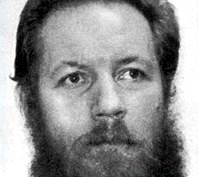
Christopher Simcox (10 December 1909 - 1981) was an English double murderer. He was twice sentenced to death and twice reprieved.
Background
Christopher Simcox worked as a maintenance fitter and lived in Smethwick in the West Midlands of England. He was divorced by his first wife for cruelty.
Simcox married a third time in 1962 to Ruby Irene. In 1963 he threatened his wife with an air-pistol and was put on probation. His wife subsequently left him with the help of relatives. In 1969 his wife divorced him, and the civil judge in that case recommended that Simcox never be released.
The offence
Simcox murdered his second wife in 1948.
Between March and October 1948, Simcox was among 26 persons who were reprieved.
On 11 November 1963, Simcox, armed with a rifle, went in search of his wife. He shot her sister, Mrs Hilda Payton, fatally through the head. He then pursued his wife to her brother’s house. At her brother’s house, he shot them both; they survived. Simcox then turned the gun on himself, shooting himself twice through the body, but he also survived.
Investigation
No investigation details were provided.
Arrest
No arrest details were provided.
Trial
Simcox was sentenced to death at Stafford Assizes in 1948 for the 1948 murder.
In February 1964 Simcox was again tried at Stafford Assizes and sentenced to death by Mr Justice Finnemore.
The Homicide Act 1957 restricted capital murder to a limited class of crimes, including murder with a firearm, and a second murder committed on a different occasion from the first. Simcox was eligible to be hanged on both grounds. The wording of Simcox’s death sentences differed on the two occasions:
- In 1948 he was sentenced “to be hanged by the neck until you are dead”.
- In 1964 he was sentenced “to suffer death in the manner authorised by law”.
The change in language was provided in the 1957 Act; the old language was considered anachronistic, as since the 1870s Britain had employed the “long-drop” method of hanging, held to cause near-instantaneous death.
Sentencing
1948 sentencing and reprieve
Simcox was sentenced to death on the 1948 murder at Stafford Assizes. In April 1948, the House of Commons passed Sidney Silverman’s amendment to the then current Criminal Justice Bill to suspend capital punishment for murder for five years. The House of Lords overturned the amendment later in the year, but in the intervening period the Home Secretary, James Chuter Ede, announced that he would reprieve all condemned prisoners until the law was settled.
Between March and October 1948, 26 persons, including Simcox, were thereby reprieved.
Simcox served 10 years in jail before being released on licence.
1964 sentencing, execution date, and reprieve
Simcox’s date of execution was set for Tuesday 17 March 1964 at Winson Green Prison, Birmingham.
His lawyers petitioned the Home Secretary, Henry Brooke, on the grounds that Simcox was still severely injured from his self-inflicted wounds, could not walk, and would probably have to be hanged in a wheelchair. There was no precedent for postponing an execution until a prisoner was fit enough to be hanged, and there was a history of reprieving prisoners whose executions might result in an unseemly spectacle owing to existing injuries or infirmity.
On 14 March 1964, Henry Brooke announced that Simcox had been reprieved; the sentence of death automatically being replaced by life imprisonment. At that time, there was no provision for attaching special conditions to such a sentence, meaning that one day Simcox might be released again, albeit on licence.
Appeals
No appeals were provided.
Outcome
Simcox’s death sentences were reprieved. His sentence of death was commuted to life imprisonment on March 14, 1964.
Five months later, the last-ever hangings in Britain took place, and in 1965 the death penalty was in practice abolished for murder.
Aftermath
Simcox died in Portsmouth in early 1981, aged 71. It was not known whether he was still a prisoner at the time of his death.
Spotted an error, or have more information about this case?