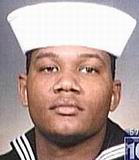
William Oliver Reese
Murderer Masahiro Kanagawa
Murderer · Japan · 2008
Masahiro Kanagawa (金川 真大; Kanagawa Masahiro; born 1983) was a Japanese man. · M…
2 victims
Masahiro Kanagawa
Murderer · Japan · 2008
Masahiro Kanagawa (金川 真大; Kanagawa Masahiro; born 1983) was a Japanese man. · M…
2 victims
 Frank Martinez Garcia
Murderer · USA · 2001
Name: Frank Martinez Garcia TDCJ Number: 999418 Date of Birth: 10/21/1972 Age a…
2 victims
Frank Martinez Garcia
Murderer · USA · 2001
Name: Frank Martinez Garcia TDCJ Number: 999418 Date of Birth: 10/21/1972 Age a…
2 victims
 Travis Lee Gibson
Murderer · USA · 2000
Travis Lee Gibson received sentences of death on 2001. On automatic and direct…
1 victim
Travis Lee Gibson
Murderer · USA · 2000
Travis Lee Gibson received sentences of death on 2001. On automatic and direct…
1 victim
 Gary Wayne Sutton
Murderer · USA · 1992
Gary Wayne Sutton was one of the defendants convicted of killing Tommy Griffin…
2 victims
Gary Wayne Sutton
Murderer · USA · 1992
Gary Wayne Sutton was one of the defendants convicted of killing Tommy Griffin…
2 victims
 Frank Ronghi
Murderer · Kosovo · 2000
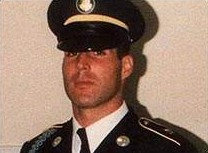
Frank Ronghi was an American Staff Sergeant in the U.S. Army. · Merita Shabiu w…
1 victim
Frank Ronghi
Murderer · Kosovo · 2000
Frank Ronghi was an American Staff Sergeant in the U.S. Army. · Merita Shabiu w…
1 victim
 Kenneth Dessaure
Murderer · USA · 1999
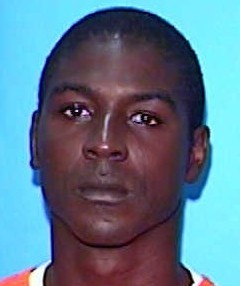
Name: Kenneth Dessaure · Date of birth: 01/28/78 · Supreme Court of Florida opi…
1 victim
Kenneth Dessaure
Murderer · USA · 1999
Name: Kenneth Dessaure · Date of birth: 01/28/78 · Supreme Court of Florida opi…
1 victim
- Gender
- male
- Country
- Japan
- Location
- Yukosuka, Kanawaga Prefecture, Japan
- Date of birth
- 1983
- Age at first offence
- 23
- Characteristics
- abuse, alcohol, robbery
- Victim profile
- Yoshie Sato (female, 56)
- Method of murder
- Beating
- Date(s) of murder
- January 3, 2006
- Years active
- 2006
- Date of arrest
- Same day
- Status
-
Life imprisonment
Sentenced to life in prison on June 3, 2006
Case record
Name
William Oliver Reese
Background
William Oliver Reese was a US Navy airman assigned to the USS Kitty Hawk (CV-63). He later confessed to killing 56-year-old Japanese woman Yoshie Sato in Yokosuka, Japan. Reese was a New Jersey native.
Reese technically remained in the U.S. Navy until his time was served. He had to keep his status-of-forces agreement designation to serve the sentence in a Japanese prison. Cmdr. John Wallach said Reese would not draw a paycheck and would be separated from the Navy with an “other than honorable” discharge. Wallach said most SOFA prisoners were sent to Yokosuka Prison in Kurihama, outside Tokyo, and that five Navy personnel were there at the time; none had a life sentence.
The offence
On January 3, 2006, Reese murdered 56-year-old Yoshie Sato in Yokosuka, Japan while trying to steal her purse.
Reese stopped Sato on the street near the Yokosuka-Chūō train station. He asked her for directions to the nearby naval base, and after she pointed it out to him, he attempted to take her purse. Reese was intoxicated.
When Sato resisted and screamed for help, Reese dragged her into a nearby building entrance and beat her for 11 minutes. Presiding Judge Masazo Ogura told the court that Reese beat her “throwing her against a concrete wall and stomping on her belly with sport shoes a number of times.” Ogura said: “The way she was beaten shows he has no piece of respect for human life,” and that: “The ruptured organs, the bodily damage shows the extremely violent nature of the assault.”
Sato later died at a local hospital the same day. Reese took 15,000 yen, about $130, from Sato’s purse and left the scene. He returned to the base after stopping off at a convenience store.
Some accounts claimed Reese was apprehended by US Navy sentries at the main gate to Yokosuka Naval Base, who became suspicious when they noticed Reese’s bloodstained clothes. Other accounts stated he was caught aboard the USS KITTY HAWK (CV-63) as he attempted to return to work. Reese later claimed he had no idea why he killed her.
During the sentencing, family members said they had asked for the death penalty, and that friends and family found Reese’s punishment “light.”
Investigation
Japanese investigators released a surveillance tape that showed William Reese Jr. stalking 56-year-old Yoshie Sato, who was beaten so badly that she eventually died of a ruptured liver and kidney.
Arrest
Accounts differed on Reese’s capture: one account said US Navy sentries apprehended him at the main gate to Yokosuka Naval Base after noticing bloodstained clothes; another account said he was caught aboard the USS KITTY HAWK (CV-63) as he attempted to return to work.
Trial
Reese was indicted and subsequently convicted after making a full confession.
Reese’s sentencing occurred on Friday, June 3, 2006.
Reese stood before the court in his Navy white uniform. The panel doubted the sincerity of his regret but noted several factors that prevented giving the death penalty, including Reese’s quick confession to the Jan. 3 crime.
Reese admitted killing 56-year-old Yoshie Sato after drinking all night at a local bar. He testified that he didn’t intend to rob Sato but lost his temper when she backed away from him, saying: “I let my emotions get the best of me,” in previous testimony.
The prosecutor Toshimi Honda and the judges decided they could not prove intent, and that this, along with other reasons, was why they opted for life imprisonment.
Ogura said: “The murder was not planned, (Reese) confessed and pleaded guilty, he’s 22 years old and he showed repentance in his own way,” and concluded: “We thought prison for life is appropriate.”
Sato’s brother Shuichi Sanada testified during the two trial hearings since March and Friday’s sentencing. Sanada said: “I myself am dissatisfied with the sentence,” during a news conference held after the sentencing, and he said: “As I have been saying from the beginning, I want (Reese) to pay for the crime with capital punishment.”
Sanada also said he did not like how Reese changed his motive from robbery to drunken anger.
Sentencing
On June 3, 2006, Reese was sentenced to life in prison with forced labor.
The three-judge panel told Reese they doubted the sincerity of his regret but said several factors prevented them from giving him the death penalty, including his quick confession.
Cmdr. John Wallach said Reese had to keep his status-of-forces agreement designation to serve the sentence in a Japanese prison, and he would be separated from the Navy with an “other than honorable” discharge.
Appeals
No appeal information was provided.
Outcome
Reese was sentenced to life in prison with forced labor.
Aftermath
Calls for a Status of Forces Agreement revision followed Reese’s indictment and subsequent conviction. Severe liberty restrictions were also enacted by the US Navy upon sailors stationed in the region, applying to all sailors and including curfews and detailed “liberty plans” written statements of a sailor’s exact whereabouts throughout the day.
A discussion was provided about how “life imprisonment” worked in Japan, including the possibility of parole in 10 years, parole requiring “contrition,” mandatory probationary supervision for the rest of a prisoner’s life after parole, examples of lifers paroled in 2004 and 2003, and Japanese law allowing for several types of amnesty, including “onsha” during imperial changes and individual amnesty through the National Offenders Rehabilitation Commission with approval requirements.
A Ministry of Justice official said: “When an emperor dies, cases are re-examined on a case-by-case basis and guilty sentences can be commuted.” The Ministry of Justice official also said: “The last time amnesty was granted under a special criterion (which includes instances when the emperor died or when a new one ascended) was when Crown Prince Naruhito got married.”
Spotted an error, or have more information about this case?