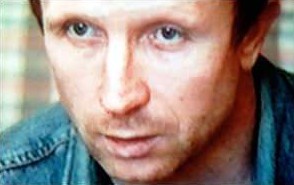
Anatoly Onoprienko
Serial killer Serhiy Tkach
Serial killer · Ukraine · 1980
Serhiy Tkach (Russian: Серге́й Фёдорович Ткач, born 12 September 1952 in Kisely…
100 victims
Serhiy Tkach
Serial killer · Ukraine · 1980
Serhiy Tkach (Russian: Серге́й Фёдорович Ткач, born 12 September 1952 in Kisely…
100 victims
 Vladimir Kondratenko
Serial killer · Ukraine · 1991
Vladimir Kondratenko overdosed on prescription medication and died while in pol…
16 victims
Vladimir Kondratenko
Serial killer · Ukraine · 1991
Vladimir Kondratenko overdosed on prescription medication and died while in pol…
16 victims
 Vladislav Volkovich
Serial killer · Ukraine · 1991
The Nighttime Killers (Ночной Серийник) were responsible for a string of brutal…
16 victims
Vladislav Volkovich
Serial killer · Ukraine · 1991
The Nighttime Killers (Ночной Серийник) were responsible for a string of brutal…
16 victims
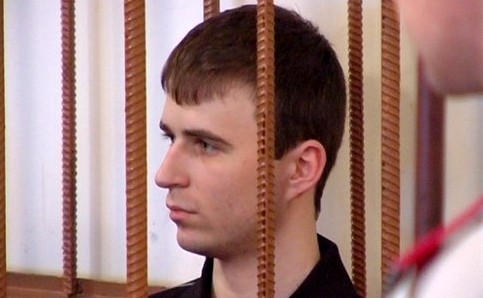 Igor Suprunyuck
Serial killer · Ukraine · 2007
Name: Igor Suprunyuck · Also known as (Ukr): Ігор Супрунюк · Also known as (Rus…
21 victims
Igor Suprunyuck
Serial killer · Ukraine · 2007
Name: Igor Suprunyuck · Also known as (Ukr): Ігор Супрунюк · Also known as (Rus…
21 victims
 Viktor Sayenko
Serial killer · Ukraine · 2007
The case was associated with “The Dnepropetrovsk Maniacs,” a media epithet for…
18 victims
Viktor Sayenko
Serial killer · Ukraine · 2007
The case was associated with “The Dnepropetrovsk Maniacs,” a media epithet for…
18 victims
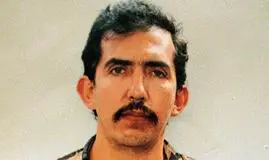 Luis Alfredo Garavito
Serial killer · Colombia/Ecuador · 1992
Luis Alfredo Garavito Cubillos, also known as "La Bestia" ("The Beast") or "Tri…
192 victims
Luis Alfredo Garavito
Serial killer · Colombia/Ecuador · 1992
Luis Alfredo Garavito Cubillos, also known as "La Bestia" ("The Beast") or "Tri…
192 victims
 Jill Rockcastle
Murderer · USA · 2007
Jill Rockcastle was sentenced to 10 years to life in prison on November 19, 200…
1 victim
Jill Rockcastle
Murderer · USA · 2007
Jill Rockcastle was sentenced to 10 years to life in prison on November 19, 200…
1 victim
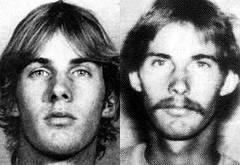 Patrick Purdy
Mass murderer · USA · 1989
January 17, 1989 — An anonymous person phoned the Stockton Police Department wa…
5 victims
Patrick Purdy
Mass murderer · USA · 1989
January 17, 1989 — An anonymous person phoned the Stockton Police Department wa…
5 victims
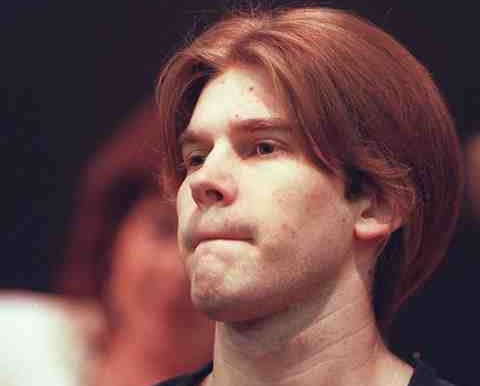 Jeremy Strohmeyer
Murderer · USA · 1997
Jeremy Strohmeyer (born October 11, 1978) was a Long Beach, California man who…
1 victim
Jeremy Strohmeyer
Murderer · USA · 1997
Jeremy Strohmeyer (born October 11, 1978) was a Long Beach, California man who…
1 victim
 Daniel Joseph Blank
Serial killer · USA · 1996
Daniel Joseph Blank was a mechanic and was described as a gifted mechanic and a…
6 victims
Daniel Joseph Blank
Serial killer · USA · 1996
Daniel Joseph Blank was a mechanic and was described as a gifted mechanic and a…
6 victims
 Jennifer Berman
Murderer · USA · 2014
Jennifer Berman was the mother of two teenagers, Alexander Berman and Jacquelin…
2 victims
Jennifer Berman
Murderer · USA · 2014
Jennifer Berman was the mother of two teenagers, Alexander Berman and Jacquelin…
2 victims
- Gender
- male
- Country
- Ukraine
- Location
- Ukraine
- Date of birth
- J uly 25, 1959
- Age at first offence
- 30
- Characteristics
- arson, armed robbery
- Victim profile
- Men, women and children
- Method of murder
- Shooting
- Date(s) of murder
- 1989 - 1996
- Years active
- 1989–1996
- Date of arrest
- April 16, 1996
- Status
-
Died in custody
Sentenced to death April 1999; commuted to life in prison August 1999; died in prison on August 27, 2013
Case details
Anatoly Yuriyovych Onoprienko was born July 25, 1959, and was also known by the nicknames "The Beast of Ukraine", "The Terminator" and "Citizen O".
Background
Anatoly Onoprienko was the youngest of two sons; his brother, Valentine, was 13 years his senior. His father, Yuri Onoprienko, had been decorated for bravery during the Second World War. When Anatoly was 4 years old, his mother died. He was cared for by his grandparents and aunt for a time before being handed over to an orphanage in the village of Privitnoe.
Onoprienko later said that being brought up in an orphanage predetermined his destiny and remarked that 70% of those brought up in orphanages ended up going to prison in later life. He was cared for by his grandparents and aunt before being handed over to an orphanage in Privitnoe.
In the custody period, Onoprienko was described as a former forestry student, a sailor, and a former mental hospital patient. He was also described as having a history of mental illness, including schizophrenia.
Onoprienko grew up without parents and was given up to an orphanage by his elder brother. He claimed he had been hearing voices and that he had been commanded to kill by inner voices.
Other details
Onoprienko was a native of Laski in the Zhitomirskaya Oblast district of Ukraine. He was described as an outpatient on an outpaitent program of a local psychiatric hospital department at the time of his arrest.
The offence
Onoprienko was a Soviet serial killer. After police arrested him on April 16, 1996, he confessed to killing 52 people. While in custody, he eventually confessed to eight killings between 1989 and 1995.
Police believed Onoprienko killed up to 52 people. Victims included families of four and five, and multiple additional people killed in shootings and bystanders killed after discovering the attack.
Onoprienko used a set pattern in killings. He chose an isolated house, gained the attention of occupants by creating a commotion, and then killed all occupants starting with the adult male. He went to find and kill the spouse and then the children. He would also kill any witness who crossed his path during the murderous rampages. After the killings, he usually set buildings alight in an attempt to cover his tracks.
Police described him as having a set method involving herding family members together and shooting them at point-blank range with a 12-gauge shotgun. In some accounts he was also described as sometimes using an axe or a hammer. On one occasion he confronted a young girl who was huddled on her bed, praying, and had seen him kill both her parents.
Quotations from Onoprienko were recorded, including:
"I just shot them. It's not that it gave me pleasure, but I felt this urge. From then on, it was almost like some game from outer space."
"Corpses are ugly," he said with distaste. "They stink and send out bad vibes. Once I killed five people and then sat in the car with their bodies for two hours not knowing what to do with them. The smell was unbearable."
"Seconds before I smashed her head, I ordered her to show me where they kept their money," he said. "She looked at me with an angry, defiant stare and said, 'No, I won't.' That strength was incredible. But I felt nothing."
Onoprienko also made statements to investigators and in court that he felt like a robot driven for years by a dark force and that he should not be tried until authorities determined the source. He told the court and investigators that he was driven by inner voices emanating "from above" and that he had received "permission" to kill from another world, while also making statements about hypnotic powers and telepathic control over animals.
Investigation
Police arrested Onoprienko after a manhunt. The investigation included extensive collection of evidence, including 99 volumes of photos and various items removed from murder victims. Authorities described the manhunt as one of the largest in Ukraine’s history, involving large numbers of police and troops.
Onoprienko’s arrest followed a tip-off. He was found to possess weapons, including a hunting rifle and a 12-gauge shotgun that could be linked to bullets found at murder scenes. Police also reported recovering jewellery and electrical equipment belonging to victims, and recovering a tape deck and multiple items that had been reported missing.
A list of missing items and their makes and serial numbers was described in the arrest narrative.
Arrest
On April 16, 1996, Onoprienko was arrested at his girlfriend’s house in Zhitomir, Western Ukraine.
The girlfriend was described as a hairdresser identified by police as "Anna Kazak" and later described as "Anna" in other accounts. Police stated the arrest followed an anonymous tip-off and a manhunt.
During the search of the apartment associated with the arrest, police found weapons and reported identifying items from murder victims. Police also recovered a sawed-off Tos-34 rifle described as used in killings, plus a pistol stolen from a murder scene in Odessa. Police reported that 122 items belonging to murder victims were recovered from the scene.
Trial
The trial took place in Zhytomyr. Psychiatrists ruled Onoprienko fit to stand trial.
A regional court in Zhytomyr ruled on February 12, 1999, that Onoprienko was mentally competent and could be held responsible for his crimes even though he claimed to have heard voices. The regional court said:
"Does not suffer any psychiatric diseases, is conscious of and is in control of the actions he commits, and does not require any extra psychiatric examination.”
The trial opened in February 12, 1999, and a televised appeal was described as leading to allocation of funds for the lengthy trial.
Judge Dmytro Lipsky was mentioned as presiding at key points of sentencing. On March 3, 1999, after more than 400 witnesses and 100 volumes of evidence, Onoprienko was sentenced to death. Later accounts stated a sentencing date of April 1, 1999, after a four-month trial.
Statements and courtroom exchanges included:
"No, nothing."
"This is your law, I consider myself a hostage."
"None."
When asked about nationality:
"Well, according to law enforcement officers, I'm Ukrainian."
Onoprienko was found guilty and sentenced to death. Judge Dmytro Lypsky stated:
"In line with Ukraine's criminal code ... Onoprienko is sentenced to the death penalty by shooting".
Onoprienko was confined to a metal cage during proceedings.
Onoprienko’s lawyer request included a demand to replace his state-appointed attorney, Ruslan Mashkovsky, with another lawyer who was "at least 50 years old, Jewish or half- Jewish, economically independent and has international experience." When the court refused, Onoprienko refused to testify further.
The co-defendant Sergei Rogozin was accused of helping in the first nine murders. Rogozin spoke and proclaimed his innocence and was sentenced to prison terms.
Prosecutor Yury Ignatenko argued for the death sentence, saying:
"In view of the extreme danger posed by (Anatoly) Onoprienko as a person, I consider that the punishment for him must also be extreme -- in the form of the death sentence,"
Onoprienko told the court:
"I would kill today in spite of anything."
"Today I am a beast of Satan."
Sentencing
On March 3, 1999, Onoprienko was sentenced to death after more than 400 witnesses and 100 volumes of evidence. Judge Dmytro Lypsky told the court:
Another account described sentencing on April 1, 1999, with the same judge describing death by shooting under Ukraine’s criminal code.
On April 1999, Onoprienko was sentenced to death. His death sentence was commuted to life in prison in August 1999.
Appeals
Ukraine’s Supreme Court upheld a death sentence on August 27, 1999. Onoprienko had asked for the sentence to be reduced to life in prison. The Supreme Court reduced Rogozin’s 13-year sentence to 12 years.
President Leonid Kuchma was mentioned as saying Ukraine should ask the Council of Europe for an exception to allow execution.
Outcome
Onoprienko died in prison on August 27, 2013.
Timeline
- July 25, 1959 — Anatoly Yuriyovych Onoprienko was born.
- April 16, 1996 — Onoprienko was arrested at his girlfriend’s house in Zhitomir.
- February 12, 1999 — A Ukrainian court ruled Onoprienko was mentally competent and could be held responsible for his crimes.
- March 3, 1999 — Onoprienko was sentenced to death after more than 400 witnesses and 100 volumes of evidence.
- April 1999 — Onoprienko was sentenced to death (death penalty by shooting).
- August 1999 — Onoprienko’s death sentence was commuted to life in prison.
- August 27, 1999 — Ukraine’s Supreme Court upheld a death sentence for Onoprienko.
- August 27, 2013 — Onoprienko died in prison.
Victims and incidents (as described)
Police listed killings and dates in a period including December 12, 1995 through March 22, 1996, plus earlier murders. Specific named victims included:
- A forestry teacher named Zaichenko, his wife, and two infant sons killed in Gamarnya, Zhitomirskaya Oblast on December 12, 1995; one child was described as 3 months old.
- A family in Bratkovichi including a middle-aged man by the last name of Kryuchkov, his wife, and two sisters; later that evening Malinsky was killed on the street.
- Odintsov and Dolinin shot in Energodar, Zaporozhskaya Oblast on January 5, 1996.
- A pedestrian named Garmasha and a patrolman named Pybalko killed in Vasilyevka-Dneiprorudny on January 5, 1996.
- Kasai, a taxi driver named Savitsky, and a kolkhoz cook named Kochergina killed on the Berdyansk-Dnieprovskaya highway on January 6, 1996.
- The Pilat family killed on January 17, 1996, including a 6-year-old boy; witnesses Kondzela and Zakharko were also killed.
- Zagranichniy (driver) and nurse Marusina and her two sons killed in Fastova, Kievskaya Oblast on January 30, 1996.
- The Dubchak family killed on February 19, 1996, in Olevsk, Zhitomirskaya Oblast, with the father and son shot and the mother and daughter mauled to death with a hammer.
- The Bodnarchuk family killed in Malina, Lvivskaya Oblast on February 27, 1996, with adults shot and children hacked to death with an axe; Tsalk was also shot and hacked to death outside his home.
- The Novosad family killed on March 22, 1996 in Busk, not far from Bratkovichi, with their home shot and burned; one child was described as ripped open from the stomach to the throat.
Other killings referenced included a first couple shot dead in June 1989 and a total of 52 murders confessed to after arrest, with killing spanning 1989 to 1996 and an account of 43 victims in six months and eight killings between 1989 and 1995 while in custody.
Aftermath
After sentencing, Onoprienko issued statements about wanting the death penalty and about future killing if released, including statements that he would start killing again and that he would escape from prison and harm Leonid Kuchma.
Onoprienko was described as remaining completely silent during court hearings but speaking in media interviews, including quoted statements attributed to him from jail.
Spotted an error, or have more information about this case?