Raymond Eugene Brown
Homicide - Murderer Dwaine Little
Homicide - Murderer · USA · 1964
Name: Dwaine Little (Dwain Lee Little) · Birth year: 1948 · Little raped and ki…
5 victims
Dwaine Little
Homicide - Murderer · USA · 1964
Name: Dwaine Little (Dwain Lee Little) · Birth year: 1948 · Little raped and ki…
5 victims
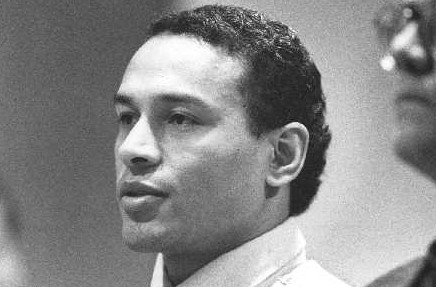 Richard Grissom
Homicide - Murderer · USA · 1966
Richard Grissom Jr. was sentenced to life in prison on November 20, 1990. In th…
4 victims
Richard Grissom
Homicide - Murderer · USA · 1966
Richard Grissom Jr. was sentenced to life in prison on November 20, 1990. In th…
4 victims
 John Lawrence Miller
Homicide - Murderer · USA · 1957
John Lawrence Miller was born about 1942 and was a native of Los Angeles. He wa…
3 victims
John Lawrence Miller
Homicide - Murderer · USA · 1957
John Lawrence Miller was born about 1942 and was a native of Los Angeles. He wa…
3 victims
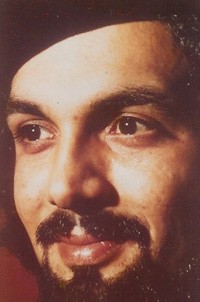 George del Vecchio
Homicide - Murderer · USA · 1965
Name: George del Vecchio · Current status: Executed by lethal injection in Illi…
2 victims
George del Vecchio
Homicide - Murderer · USA · 1965
Name: George del Vecchio · Current status: Executed by lethal injection in Illi…
2 victims
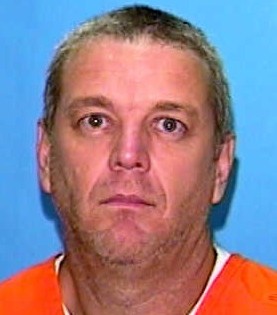 Samuel Smithers
Murderer · USA · 1996
Name: Samuel Smithers · Date of birth: 01/30/53 · Case information: SC96690 opi…
2 victims
Samuel Smithers
Murderer · USA · 1996
Name: Samuel Smithers · Date of birth: 01/30/53 · Case information: SC96690 opi…
2 victims
 Joseph Duncan III
Serial killer · USA · 1996
Joseph Edward Duncan III (born February 25, 1963) was an American convicted ser…
7 victims
Joseph Duncan III
Serial killer · USA · 1996
Joseph Edward Duncan III (born February 25, 1963) was an American convicted ser…
7 victims
 Joseph Wesbecker
Mass murderer · USA · 1989
Joseph Wesbecker committed suicide by shooting himself on September 14, 1989, a…
8 victims
Joseph Wesbecker
Mass murderer · USA · 1989
Joseph Wesbecker committed suicide by shooting himself on September 14, 1989, a…
8 victims
 Dennis Roark
Mass murderer · USA · 1989
Dennis Roark Roark returned to the home after a night of drinking at 5:00 a.m.…
4 victims
Dennis Roark
Mass murderer · USA · 1989
Dennis Roark Roark returned to the home after a night of drinking at 5:00 a.m.…
4 victims
 Alex Pagan
Murderer · USA · 1993
Alex Pagan (DOB: 03/25/69) was sentenced to death on October 15, 1998. Pagan wa…
2 victims
Alex Pagan
Murderer · USA · 1993
Alex Pagan (DOB: 03/25/69) was sentenced to death on October 15, 1998. Pagan wa…
2 victims
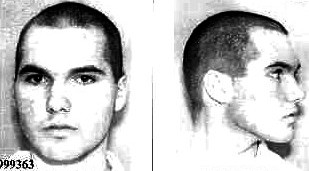 Whitney Lee Reeves
Homicide · USA · 1999
Whitney Lee Reeves (TDCJ Number 999363) was born on 08/21/1981. He was male, ha…
2 victims
Whitney Lee Reeves
Homicide · USA · 1999
Whitney Lee Reeves (TDCJ Number 999363) was born on 08/21/1981. He was male, ha…
2 victims
- Gender
- male
- Country
- USA
- Location
- Clay/Russell counties, Ala bama, USA
- Date of birth
- 1946
- Age at first offence
- 14
- Characteristics
- juvenile (14), robbery, rape
- Victim profile
- His grandmother, 63; great-grandmother, 83; and aunt, 31 / Linda LeMonte, 32, and her ten-year-old daughter, Sheila
- Method of murder
- St abbing with knife
- Date(s) of murder
- October 1960 / August 1987
- Years active
- 1960–1987
- Date of arrest
- —
- Status
-
Sentenced to death
Sentenced to three life terms in 1960; paroled in 1973; Alabama revoked his parole between 1980 and 1986 because Brown assaulted his landlady; released again in 1986; sentenced to death in 1988; conviction and death sentence were upheld on appeal
Background
Raymond Eugene Brown was fourteen years old when he killed three relatives in Clay County, Alabama. He used a six-inch knife to stab and slash his great-grandmother, his grandmother, and his aunt.
The offence
Brown targeted a home jointly occupied by his grandmother, great-grandmother, and great-aunt. He entered under cover of darkness and moved barefoot through the house searching for cash. He was roused by a sound that woke his great-grandmother. Fearing exposure, Brown picked up a butcher knife, killed the old woman, and then killed his other two relatives.
Detectives counted 123 stab wounds across the three victims. A purse containing forty dollars was left untouched.
Later after his release, Brown attempted to rape the manager of his apartment building. He choked her when she resisted and left her for dead; this time, the victim lived.
In connection with the later case involving Linda LeMonte, Brown was associated with killings in which Linda and her ten-year-old daughter were found dead in their home. Each was stabbed numerous times.
Investigation
Bloody footprints put investigators on Brown’s trail, and he was locked away for thirteen years.
In the later case, a neighbor told police that Raymond Brown had parked his car outside the night before. After the murders, criminalists found a thumbprint from Brown on a photograph that had been taken of Linda LeMonte’s body and left atop the television set. Investigators executed a search of Brown’s apartment and found traces of Linda’s blood.
Police went public with a search for Brown. Police described the crimes as “ritualistic murder” and warned the public that Brown was “psychopathic killer who killed for the pleasure of it” and “extremely dangerous.”
“What we found was probably one of the most hideous crimes we’ve seen in this area in a long time,” said Montgomery police Chief John Wilson. “This is somebody who would kill somebody because it is in their nature to do it.”
A piece of paper with the names “Raymond,” “Shelia,” and “me” written on it was found beside Linda LeMonte’s body near some playing cards. Detectives speculated that the slayer had assaulted Sheila first, attempting rape, and had been interrupted by her mother in the act.
Brown provided police with information after a traffic accident. He was involved in a traffic accident near Jordan Lake, about 20 miles north of Montgomery, at 6:15 a.m. on August 10 and confessed to the state trooper that he had been drunk when he ran his car off the road. The trooper let Brown walk away and towed his vehicle.
Arrest
Authorities launched a massive manhunt after Brown was last seen near the traffic accident. Brown avoided capture for 48 hours. He was arrested after he walked into a gas station in rural Wallsboro and was recognized by the attendant.
Trial
Brown was tried and convicted as an adult for the 1960 killings of his relatives. He said he could not recall the incident, but he confessed to the killings.
Before trial and during appeal, Brown pointed out the publicity and argued that it had a negative effect on his case. The Alabama Court of Appeals agreed that the trial judge erred and wrote:
The trial judge should have asked those jurors who had been exposed to the pretrial publicity in this case about the extent of their knowledge of the case. Then the trial judge could have independently determined whether any juror’s knowledge about this case had destroyed his or her ability to be fair and impartial.
The decision prompted a 12-year odyssey for Brown’s case that included a hearing before the United States Supreme Court. When all was argued and done, Brown’s conviction and death sentence was upheld. He awaited execution on Alabama’s death row.
Sentencing
In 1960, Brown was sentenced to three life terms. He was paroled in 1973.
Between 1980 and 1986, Alabama revoked his parole because Brown assaulted his landlady.
After Brown was released again in 1986, he later faced new sentencing. He was sentenced to death in 1988.
Appeals
Brown’s case involved an appeal in which the Alabama Court of Appeals found that the trial judge erred regarding pretrial publicity and juror knowledge. The litigation included a hearing before the United States Supreme Court. Brown’s conviction and death sentence were upheld.
Outcome
Brown received three life terms in 1960 and was paroled in 1973. Alabama revoked his parole between 1980 and 1986 due to an assault on his landlady. He was released again in 1986. He was sentenced to death in 1988, and his conviction and death sentence were upheld on appeal.
Aftermath
The attorney who represented Brown when he was tried for the murders in 1960 told the press that the appellant should never have been let out of prison. The district attorney’s office complained that it was never notified that Brown was living in Montgomery after he was paroled.
As a result of the case, a grand jury investigation was instigated to determine if the Parole Board was too lenient in granting parole to Brown.
The Victims of Crime and Leniency organization strongly protested the Board’s action and held several news conferences.
One newspaper wrote:
“By now everyone thinks he understands the mistake made with Raymond Eugene Brown. When an otherwise well-balanced 14-year-old boy carves up his 31-year-old aunt with 123 knife slashes leaving her laid open groin to throat, there’s a sexual screw loose somewhere.”
Michael Newton—An Encyclopedia of Modern Serial Killers—also described the case as killings of three relatives by a fourteen-year-old, and stated that Brown acquired the nickname “Blade” while in prison.
Other details
- Brown was locked away for thirteen years after the first set of killings.
- After parole in 1973, Brown found work in a garage at Ashland, Alabama, and rented a small apartment nearby.
- Brown met divorcee Linda LeMonte, 32, while working in Phoenix City; they began dating.
- Brown became familiar to LeMonte’s neighbors and spent evenings with LeMonte and her ten-year-old daughter, Sheila.
- The killings involving Linda LeMonte and Sheila LeMonte were discovered on August 10, 1987.
- Linda LeMonte’s mother was Beverly Evans.
- A six-year-old child named Aaron crawled from beneath his bed and opened the front door when Evans approached the house after learning that Linda had not come to work.
- The medical examiner reported that Linda LeMonte was killed by a nine-inch long slice to her throat, and that Sheila LeMonte was killed by multiple stab wounds to her chest, throat, and abdomen.
- Evans found the handle of a knife protruding from Sheila’s navel, with the blade completely embedded in the girl’s body.
- The autopsy revealed that Sheila had been sexually assaulted.
- Linda LeMonte had stab wounds to her breasts and genitalia, and a 27-inch cut from her throat to her pubic region exposed her abdominal cavity.
- A thumbprint from Brown was found on the photograph of Linda LeMonte’s body.
- Brown’s case included that “Blade” was his nickname while in prison.
- Brown was carted back to prison after his parole violation involving the apartment manager; his parole was revoked. Another thirteen years elapsed before he was once again paroled in June 1986.

Spotted an error, or have more information about this case?