
Robert Brown
Murderer? Mark Brandon Read
Murderer? · Australia · 1979
Mark Brandon “Chopper” Read (born 17 November 1954) was an Australian ex-convic…
19 victims
Mark Brandon Read
Murderer? · Australia · 1979
Mark Brandon “Chopper” Read (born 17 November 1954) was an Australian ex-convic…
19 victims
 Dr. Teet Härm
Murderer? · S weden · 1984
The District Court jury returned a guilty verdict, but the High Court overturne…
9 victims
Dr. Teet Härm
Murderer? · S weden · 1984
The District Court jury returned a guilty verdict, but the High Court overturne…
9 victims
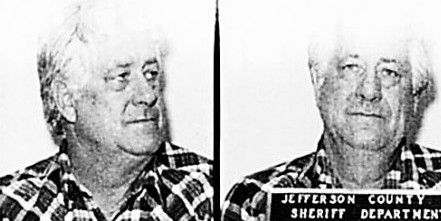 Thomas McCormick
Murderer? · USA · 1975
Thomas McCormick recruited homeless men from a Denver church mission to work on…
8 victims
Thomas McCormick
Murderer? · USA · 1975
Thomas McCormick recruited homeless men from a Denver church mission to work on…
8 victims
 Todd Warzecha
Murderer? · USA · 1972
Todd Warzecha was a prime suspect in two unsolved Mid-Michigan murders. Michiga…
6 victims
Todd Warzecha
Murderer? · USA · 1972
Todd Warzecha was a prime suspect in two unsolved Mid-Michigan murders. Michiga…
6 victims
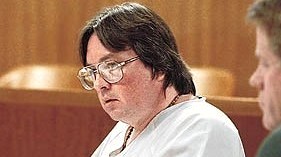 Floyd Tapson
Murderer? · USA · 1987
Floyd Tapson was convicted by a jury in the Thirteenth Judicial District Court,…
3 victims
Floyd Tapson
Murderer? · USA · 1987
Floyd Tapson was convicted by a jury in the Thirteenth Judicial District Court,…
3 victims
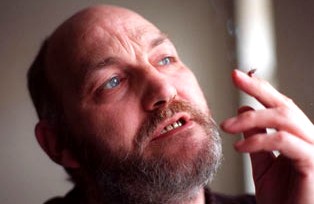 Robert Black
Serial killer · United Kingdom · 1969
Robert Black was sentenced to life in prison (minimum 35 years) on May 19, 1994…
4 victims
Robert Black
Serial killer · United Kingdom · 1969
Robert Black was sentenced to life in prison (minimum 35 years) on May 19, 1994…
4 victims
 Angela McAnulty
Murderer · USA · 2009
Angela McAnulty (mother of Jeanette Maples) Angela McAnulty was born in Califor…
1 victim
Angela McAnulty
Murderer · USA · 2009
Angela McAnulty (mother of Jeanette Maples) Angela McAnulty was born in Califor…
1 victim
 Stephen Johns
Murderer · USA · 1982
Name: Stephen Johns Other names in case: Steve Johns; Stephen K. Johns; Stephen…
1 victim
Stephen Johns
Murderer · USA · 1982
Name: Stephen Johns Other names in case: Steve Johns; Stephen K. Johns; Stephen…
1 victim
 Elizabeth Brownrigg
Murderer · United Kingdom · 1767
Elizabeth Brownrigg was an eighteenth century murderer. Her victim, Mary Cliffo…
1 victim
Elizabeth Brownrigg
Murderer · United Kingdom · 1767
Elizabeth Brownrigg was an eighteenth century murderer. Her victim, Mary Cliffo…
1 victim
- Gender
- male
- Country
- —
- Location
- —
- Date of birth
- 1957
- Age at first offence
- 20
- Characteristics
- —
- Victim profile
- Annie Walsh, 51
- Method of murder
- B ludgeoned to death Loca tion : Manchester, England, United Kingdom
- Date(s) of murder
- January 31, 1977
- Years active
- 1977
- Date of arrest
- —
- Status
-
Sentenced to life in prison in 1977; released in November 2002 after having his conviction quashed on appeal
Case details
Robert Brown was convicted of the murder of Annie Walsh in 1977 and was sentenced to life imprisonment. He was later released in November 2002 after his conviction was quashed on appeal.
Brown was from Glasgow and was 19 when he was jailed for life in 1977. The murder was of Annie Walsh, who was 51, and it occurred in the Hulme area of Manchester. Walsh was bludgeoned to death in her home. Brown was convicted of battering to death Ms Walsh at Manchester Crown Court in October 1977.
Timeline
- 1977 — Robert Brown was jailed for life for the murder of Annie Walsh.
- October 1977 — Robert Brown was convicted of battering to death Ms Walsh at Manchester Crown Court; he was sentenced to life imprisonment.
- 1978 — An application for leave to appeal against conviction was refused by the Court of Appeal.
- 1983 — Detective Chief Inspector Jack Butler was jailed for four years for corruption and conspiracy to pervert the course of justice between 1973 and 1975.
- 1988 — Robert Brown would have been eligible for parole 10 years earlier if he had “come to terms with his offending” by admitting the crime.
- June 2003 — Robert Brown met bosses at the Police Complaints Authority (PCA) to call for an independent inquiry into his case.
- November 2002 — Robert Brown was released after his conviction was quashed on appeal by three judges in London who ruled that the verdict could not be considered “safe”.
- 13 November 2002 — The Court of Appeal ruled that the verdict was unsafe and quashed it; the appeal was allowed.
The offence
Annie Walsh, a 51-year-old woman, was bludgeoned to death in her home in the Hulme area of Manchester. The murder took place in the same year as Brown’s conviction, and she was killed after speaking to a man with a Scottish or Irish accent shortly before the murder.
Brown’s conviction was for battering to death Ms Walsh.
Investigation
Investigators pursued the murder inquiry into Annie Walsh’s death, with concerns about the conduct of former Greater Manchester Police officers in the investigation and trial.
The appeal involved fresh evidence, including expert linguistic analysis commissioned by the Criminal Cases Review Commission.
A fibre found on the coat of the deceased was a subject of an issue raised to the Court of Appeal, involving a jumper seized from another suspect, Robert Hill.
Arrest
On the morning of 18 May, nearly four months after the murder of Annie Walsh, detectives set out early to apprehend another individual who had come to their attention. At that time, Robert Brown, who was 19, was arrested. Brown later claimed that six policemen took 30 hours to break him down and that he was threatened, intimidated, mocked, refused access to a lawyer, made to strip, and shown a pair of unfamiliar, blood-soaked jeans allegedly taken from his home which he was told proved his guilt.
Trial
Brown’s trial at Manchester Crown Court resulted in a guilty verdict on the strength of a confession. The judge told the jury that finding in Brown’s favour would be to accuse six policemen of lying.
Brown was sentenced to life imprisonment, with the judge’s minimum of 15 years mentioned in the account of the sentence following the jury’s conviction.
Brown’s conviction was quashed later, but during the trial his defence maintained that he had been bullied into signing a false confession.
Appeals
The Court of Appeal in London quashed Brown’s verdict. Lord Justice Rose, sitting with Mr Justice Gibbs and Mr Justice Davis, ruled that the verdict could not be regarded as safe.
Lord Justice Rose said:
"In our judgment, this verdict cannot be regarded as safe. "That is so because we could not possibly be sure on what we have heard that the jury, had they known what we know, would have reached the same verdict. "It is, to put it at its lowest, a possibility that they might have reached a quite different verdict. Accordingly, this verdict is unsafe. It is quashed. The appeal is allowed."
Benedict Emmerson QC, acting for Robert Brown, told the appeal judges that a confession had been obtained by "violence and threats of violence" and that Brown was the victim of "subsequently concocted accounts". Emmerson also said:
"The prosecution case against the appellant at trial essentially depended on the truth and reliability of a series of disputed confession statements the appellant was alleged to have made to the police. "Each of these confessions was said to have been contemporaneously recorded. "The appellant's case is, and always has been, that the only document ever recorded in his presence was a written confession statement. 'Concocted accounts' "He gave evidence at trial that this statement was the product of the officers deliberately putting words into his mouth - that none of the information contained in the statement came from him and that none of it was true. "He said that he was intimidated into signing the statement by threats of violence and a number of actual physical assaults; and that the other confession statements which the officers claimed were contemporaneously recorded were nothing of the sort. "They were subsequently concocted accounts based on the single confession statement that he had been intimidated into signing." Mr Emerson also told the judges: "The axis of credibility between the appellant on the one hand and the police officers on the other, thus lay at the very heart of this case."
Julian Bevan QC, for the Crown, told the judges:
"might reasonably have affected the decision of the jury to convict this appellant I have to say on behalf of the Crown that it might".
Brown also maintained his innocence throughout and had his conviction overturned.
Sentencing
Brown was sentenced to life imprisonment in 1977 for the murder of Annie Walsh.
He would have been eligible for parole 10 years earlier if he had admitted the crime and “come to terms with his offending”, but he did not apply for parole because he maintained his innocence.
Outcome
Five former police officers at the centre of a murder inquiry which led to Brown being jailed for 25 years were not prosecuted. The Independent Police Complaints Commission (IPCC) found insufficient evidence of misconduct.
The IPCC said:
"We have conducted our investigation and find that there is insufficient evidence to consider any misconduct action against any remaining serving officer connected to Robert Brown's case. "The IPCC has a much wider range of powers. But it's a closed door for any case which has been undertaken and concluded by the PCA. There's no possibility of it being reopened."
The five police officers interviewed as a result of an appeal were all retired and would not be liable to disciplinary action under the police discipline code.
Two other officers involved in the original murder investigation had since died.
Other details
Robert Brown claimed he had been bullied into signing a false confession, and he said he had been denied sleep during the ordeal.
Brown’s last recorded words in public after he was convicted were:
"I am innocent, I am innocent."
He told BBC Scotland:
"I did think I could get on my feet and fight these people with the truth and let the truth be revealed and let justice prevail. "But that's not going to happen. I've been let down and I'm disappointed but that's par for the course with miscarriages of justice. "People like me learn to cope with it the best way we can because we know that there's no truth and justice out there."
He also said after release:
"I would have fought this for the next 25 years if I'd had to. It's nothing to do with freedom, it's to do with justice, liberty and truth."
Outside the London court, Brown said:
"I'm a pretty well-balanced, level-headed individual,"
"I'm going to take things easy - I fancy a jacuzzi."
He said it had been “like living in an abyss of hell.” He said:
"It has been an absolute nightmare. That is a bit of a cliché, but words cannot convey what I have been through and what other miscarriage of justice cases are going through." He also said: "I am not bitter. I am not angry. "I had a depth of anger and it has diminished. "The truth prevails and I think over the last 12 or 15 months the whole of Britain knew I was innocent. "Every prisoner in every prison in Britain knew I was innocent. "The support I have had from prisoners and some prison staff have been overwhelming."
About compensation, Brown said:
"Money will not compensate me for the loss of my life. "It will not compensate my mother and it will not compensate the victim or the victim's family. "They have been forgotten in all this, they have not received justice," he said.
He said:
"Today was not a victory for justice. "My conviction is an indictment against the whole criminal justice system. "They buried documentation for almost 20 years that could have cleared my name."
He said:
Brown said that his 75-year-old mother Margaret was described as being “desperately” ill, and he said:
"I have just spoken to her. She's overwhelmed by emotion but she's happy and looking forward to us spending some time together. "They could have let me out on bail in July but they didn't show me any compassion, any humanity even during my mother's illness - and that absolutely disgusted me."
Investigative journalist Eamon O’Neill said:
"He's been left in a terrible predicament. "While he's out, the policemen who caused this whole miscarriage of justice are not behind bars, no-one has apologised and he now has been told he cannot ever pursue a prosecution against any of those policemen."
Robert Brown’s solicitor, Robert Lizar, said he would be urging Manchester police to reopen the investigation because the family of Annie Walsh had not been properly served by the justice system. Lizar also claimed Brown could be entitled to “very substantial” compensation estimated to run into millions.
The Court of Appeal appeal was heard by Lord Justice Rose, Mr Justice Gibbs and Mr Justice Davis.
Brown’s supporters stood and clapped when the conviction was overturned.
The Greater Manchester force later said it had noted the initial findings of the court and would re-examine the three main areas of concern raised at the appeal. Assistant Chief Constable Alan Green said:
"We have noted the initial findings of the court and will now re-examine the three main areas of concern raised at today's appeal." He also said: "No decision has yet been made whether to reinvestigate the murder of Annie Walsh or to review other cases investigated by the officers involved, but we would like to reassure the public of Greater Manchester that this matter is being treated with the utmost seriousness and the appeal findings will be thoroughly examined."
Brown claimed he was not happy about the review because “the police should not be investigating the police”.
A linguistics expert report by Professor Malcolm Coulthard concluded:
"In my opinion, it is likely that the statement was produced, at least in part, by a process of police questions and Brown’s answers being converted into and written down as monologue."
Brown’s case included claims of a “conspiracy of corruption” within Greater Manchester Police and that former Detective Chief Inspector Jack Butler was “deeply corrupt”. Brown was linked to the officer Jack Butler, who was jailed in 1983 for four years for corruption and conspiracy to pervert the course of justice between 1973 and 1975.
Brown’s conviction was quashed after being described as unsafe because it could not be sure the jury would have reached the same verdict had they known what was before the Court of Appeal.
Spotted an error, or have more information about this case?