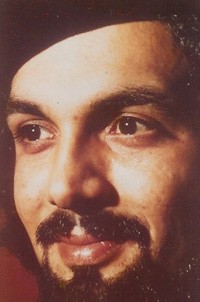
George del Vecchio
Homicide - Murderer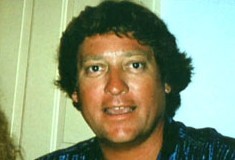 Carl Brandt
Homicide - Murderer · USA · 1971
Carl “Charlie” Brandt · Jan. 3, 1971 — Carl Brandt killed his pregnant mother a…
6 victims
Carl Brandt
Homicide - Murderer · USA · 1971
Carl “Charlie” Brandt · Jan. 3, 1971 — Carl Brandt killed his pregnant mother a…
6 victims
 Dwaine Little
Homicide - Murderer · USA · 1964
Name: Dwaine Little (Dwain Lee Little) · Birth year: 1948 · Little raped and ki…
5 victims
Dwaine Little
Homicide - Murderer · USA · 1964
Name: Dwaine Little (Dwain Lee Little) · Birth year: 1948 · Little raped and ki…
5 victims
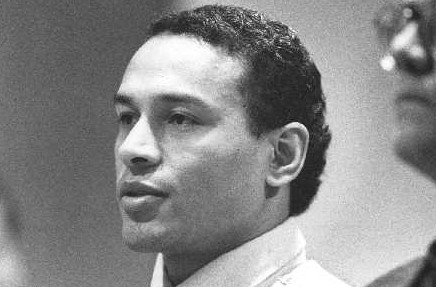 Richard Grissom
Homicide - Murderer · USA · 1966
Richard Grissom Jr. was sentenced to life in prison on November 20, 1990. In th…
4 victims
Richard Grissom
Homicide - Murderer · USA · 1966
Richard Grissom Jr. was sentenced to life in prison on November 20, 1990. In th…
4 victims
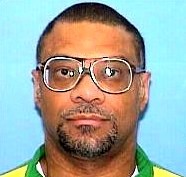 Henry Brisbon
Homicide - Murderer · USA · 1973
Henry Brisbon was a juvenile (17) when he was convicted for double murder. The…
3 victims
Henry Brisbon
Homicide - Murderer · USA · 1973
Henry Brisbon was a juvenile (17) when he was convicted for double murder. The…
3 victims
 Sterling Spann
Murderer? · USA · 1981
Sterling Spann was a former death row inmate whose death sentence was overturne…
1 victim
Sterling Spann
Murderer? · USA · 1981
Sterling Spann was a former death row inmate whose death sentence was overturne…
1 victim
 Peter Lucas Moses
Murderer · USA · 2010
Peter Lucas Moses led a small sect called the Black Hebrews in Durham. Prosecut…
2 victims
Peter Lucas Moses
Murderer · USA · 2010
Peter Lucas Moses led a small sect called the Black Hebrews in Durham. Prosecut…
2 victims
 Stanislaw Modzelewski
Serial killer · Pol and · 1952
Stanislaw Modzelewski (born 15 March 1929 in Szczepankowo near Łomża, died on 1…
7 victims
Stanislaw Modzelewski
Serial killer · Pol and · 1952
Stanislaw Modzelewski (born 15 March 1929 in Szczepankowo near Łomża, died on 1…
7 victims
 Eli Stutzman
Serial killer · USA · 1977
Eli Stutzman — accused; offender; later committed suicide on January 31, 2007.…
5 victims
Eli Stutzman
Serial killer · USA · 1977
Eli Stutzman — accused; offender; later committed suicide on January 31, 2007.…
5 victims
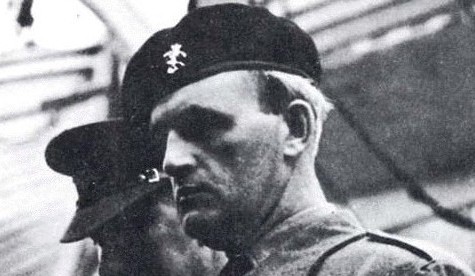 Frederick Emmett-Dunne
Homicide · Germany · 1953
Defendant: Frederick Emmett-Dunne Victim: Sergeant Reginald Watters Other named…
1 victim
Frederick Emmett-Dunne
Homicide · Germany · 1953
Defendant: Frederick Emmett-Dunne Victim: Sergeant Reginald Watters Other named…
1 victim
- Gender
- male
- Country
- USA
- Location
- Cook County, Illinois, USA
- Date of birth
- 1948
- Age at first offence
- 17
- Characteristics
- juvenile (16), rape
- Victim profile
- Fred Christiansen (elderly man) / Tony Canzoneri (male, 6)
- Method of murder
- Shooting / St abbing with knife
- Date(s) of murder
- 1965 / 1977
- Years active
- 1965–1977
- Date of arrest
- December 22, 1977
- Status
-
Executed
Executed by lethal injection in Illinois on November 22, 1995
Case information
- Name: George del Vecchio
- Current status: Executed by lethal injection in Illinois on November 22, 1995
- Age at juvenile conviction referenced: 16
Status and execution
George del Vecchio was executed by lethal injection in Illinois on November 22, 1995.
He died by lethal injection at Stateville Correctional Center, a prison 60 miles southwest of Chicago.
Prison authorities said he was executed early on the day of execution.
Timeline
- February 2, 1965 — George Del Vecchio was initially interrogated and confessed to the killing of Fred Christiansen.
- February 24, 1965 — George Del Vecchio pleaded guilty and was sentenced for the killing of Fred Christiansen.
- Early February 1965 — Del Vecchio and two young companions committed a crime spree; on the second day, they encountered Fred Christiansen, an elderly man, whom they decided to murder and rob.
- April 1973 — Del Vecchio was paroled.
- Late one morning (1977) — Del Vecchio broke into the apartment of Karen Canzonieri, Tony's mother.
- 1977 — Del Vecchio killed six-year-old Tony Canzonieri and raped Karen Canzonieri; he was arrested in connection with the Canzonieri murder.
- 1979 — Del Vecchio was convicted in the murder trial involving Tony Canzonieri and sentenced to death pursuant to a jury verdict of death.
- 1979 (time of Supreme Court action described) — The United States Supreme Court denied certiorari.
- October 7, 1985 — George W. Del Vecchio v. Illinois: rehearing denied (as stated in the material).
- Dec. 2, 1985 — Rehearing denied (as stated in the material).
- 1986 — Del Vecchio discovered that Judge Garippo had been involved in his 1965 prosecution.
- 1989 — The Illinois Supreme Court affirmed dismissal of a post-conviction petition.
- 1990 — The United States Supreme Court denied certiorari.
- May 5, 1993 — Argued in the United States Court of Appeals, Seventh Circuit (as stated).
- Oct. 26, 1993 — Decided in the United States Court of Appeals, Seventh Circuit (as stated).
- Feb. 8, 1994 — Argued en banc in the United States Court of Appeals, Seventh Circuit (as stated).
- July 19, 1994 — Decided in the United States Court of Appeals, Seventh Circuit (as stated).
- November 3 (year not specified in material) — Del Vecchio underwent an angioplasty to clear a blocked artery after suffering a heart attack late last month.
- November 22, 1995 — Executed by lethal injection in Illinois.
Background
George Del Vecchio was convicted and sentenced to death for the murder of 6-year-old Tony Canzonieri.
A 47-year-old child-killer who underwent surgery less than a month before execution was executed early on the day of execution, prison authorities said.
Dolores Kennedy wrote that she met George during one of her visits to death row with ICADP. She said Bill Heirens, an inmate serving a life sentence, was their common denominator as he and George had been friends when they were at Stateville Prison together, and she was Bill's friend and advocate.
Dolores Kennedy said she talked to George regularly on the phone and visited him when she could, and that she asked him to write his thoughts for her about his first night on death row. She said George had been trying to put the thoughts into words for a long time.
George recalled:
"In that instant that I stood in my death row cell that first night looking out the window, I think that for me it was the closest I could ever come to knowing a bit more about the agony of the cross of Christ. I felt utterly alone and hopeless, abandoned by man and God."
Dolores Kennedy wrote that George did not want to be buried in a death penalty state, and so his grave lies in Kenosha, Wisconsin.
The offence
1977 Canzonieri murder and related offences
George Del Vecchio was arrested for the murder of six-year-old Tony Canzoneri in 1977.
It was described that early one morning in 1977, Del Vecchio broke into the apartment of Karen Canzonieri, Tony's mother, apparently intending to rape her, and that he knew Karen.
The material stated that when Del Vecchio broke into the apartment the next morning, he came across young Tony on the first floor, and that Del Vecchio killed him. It stated that he brutally slashed the boy's throat, severing his trachea, carotid artery, jugular vein and vegus nerve, and fracturing his third and fourth vertebrae—a near decapitation.
The material stated that Del Vecchio stuffed Tony's body in a crawlspace and made his way upstairs to Karen's bedroom, where he raped her. Karen escaped and called the police when Del Vecchio left her alone for a moment.
When police arrived, they found Del Vecchio hiding on the roof.
Del Vecchio’s first words on being captured were, "I didn't kill nobody."
In a botched burglary 18 years ago, Del Vecchio nearly decapitated the boy with a knife and raped the boy's mother.
George Del Vecchio also was sentenced for burglary, sexual assault and rape, in connection with the Canzonieri murder.
1965 Christiansen murder and related offences
The first murder described involved Fred Christiansen, an elderly man.
It was stated that in early February of 1965, George Del Vecchio and two young companions were on a two-day crime spree. On the second day, they encountered Fred Christiansen, whom they decided to murder and rob.
The material stated that Del Vecchio shot Mr. Christiansen nine times, as his accomplices kicked the dying man to silence his cries for help. They recovered $11 from Mr. Christiansen's wallet.
The material stated that Del Vecchio was sixteen years old when he murdered Mr. Christiansen in early February of 1965, and that he was to turn seventeen on March 1, 1965.
Del Vecchio claimed that he was looking for drug money when he killed Mr. Christiansen.
It was stated that the police arrested Del Vecchio and that he admitted to the murder.
Del Vecchio provided prosecutors with a written confession.
The Cook County State's Attorney handled the prosecution.
The material stated that Louis Garippo was the chief of the criminal division in that office. It also stated that he assigned the case to his former trial partner and generally supervised the prosecution.
Del Vecchio stated that he was not advised of his right to counsel in the manner prescribed in Miranda v. Arizona, 384 U.S. 436, 86 S.Ct. 1602, 16 L.Ed.2d 694 (1966), which was decided the following year.
Investigation and arrest
When police arrived after the Canzonieri murder, they found Del Vecchio hiding on the roof.
It was also stated that he was arrested for the murder of six-year-old Tony Canzonieri in 1977.
Trial
1979 Canzonieri trial
The material stated that in 1979, at the time of the Canzonieri murder trial, Louis Garippo had left his job with the State's Attorney and had become a judge with the Cook County Criminal Division.
It stated that Garippo was randomly selected to preside over Del Vecchio’s trial for the murder of Tony Canzonieri, and that he neither recused himself from the case nor informed Del Vecchio’s attorneys about his involvement in the 1965 prosecution.
The material stated that Del Vecchio’s attorneys made motions in limine to exclude evidence pertaining to the 1965 conviction and confession, asserting three reasons:
- that the facts relating to the 1965 confession and conviction were irrelevant to the 1977 murder;
- that the 1965 confession had been involuntary and taken in violation of Miranda; and
- that the law in 1965 which allowed juveniles to be charged as adults was unconstitutional.
Judge Garippo withheld ruling on these matters, but let the defense know that he would likely allow evidence about the 1965 case if the defense introduced evidence that Del Vecchio was insane at the time of the murder.
The material stated that the defense laid the groundwork to argue Del Vecchio’s insanity, but never presented the defense, so the state never attempted to introduce the evidence about the 1965 murder during the guilt phase.
It stated that therefore Judge Garippo never officially ruled during the guilt phase on the motions to preclude the evidence.
The evidence presented against Del Vecchio at the trial was described as overwhelming, and the jury convicted Del Vecchio for Tony’s murder.
The case proceeded to a sentencing phase involving testimony and other evidence about whether Del Vecchio should be put to death.
Judge Garippo ruled the evidence admissible regarding the 1965 murder because he believed it was important for the jurors to consider Del Vecchio’s violent history when making the sentencing decision.
The material stated that pursuant to that ruling, the government introduced Del Vecchio’s 1965 written confession in which he discussed Mr. Christiansen’s killing and related events in great detail.
It stated that Judge Garippo did not grant Del Vecchio an evidentiary hearing to address the voluntariness of the confession and left Del Vecchio the opportunity to claim to the jury that the confession was not voluntary.
The material stated that the government presented evidence that Del Vecchio falsely claimed in 1965 that he killed because of drug use and argued that Del Vecchio’s tendency to blame his crimes on drugs was part of a recurring pattern.
After hearing the evidence, the jury found sufficient aggravating circumstances to warrant the death penalty and no mitigating circumstances to prevent it.
The court imposed the sentence of death, described as occurring fifteen years before Del Vecchio’s later proceedings.
Sentencing-hearing prosecutor-expert exchange
The material reproduced the exchange during the prosecutor’s closing argument at the sentencing hearing:
Prosecutor:
"You have a right, ladies and gentlemen, to protect yourself from people like George Del Vecchio . You should demand that you be protected from people like George Del Vecchio . You must, you can't leave it up to the experts. You can't trust the experts. People like George Del Vecchio -- Defense Attorney: Objection. The Court: He may argue. Prosecutor: --can fool the experts. He's a manipulator, he's a malingerer, he fools other people, he uses other people. Don't put the decision on somebody else, because you can't count on them, because you can bet a few years from now there will be another expert who will be willing to come along and say he's fine."
Sentencing
Canzonieri capital sentence
The material stated that George Del Vecchio was sentenced to death pursuant to a jury verdict of death for the Canzonieri murder.
The trial court imposed the sentence of death following the jury’s findings of sufficient aggravating circumstances and no mitigating circumstances.
Heart surgery and medication dispute
The material stated that George Del Vecchio underwent an angioplasty on Nov. 3 to clear a blocked artery after he suffered a heart attack late last month.
It stated that a jailer pronounced him fit, but his lawyers protested that the medication he was taking clouded his judgment and made him unfit to be executed.
Appeals
United States Supreme Court denial of certiorari and rehearing details
The material included:
- U.S. Supreme Court 474 U.S. 883 — George W. Del Vecchio v. Illinois. No. 84-7002. October 7, 1985. Rehearing denied Dec. 2, 1985.
- The petition for writ of certiorari was denied.
- Justice MARSHALL, with whom Justice BRENNAN joins, dissented (as stated).
Seventh Circuit habeas appeal and en banc decision (procedural history described)
The material stated that an Illinois state court sentenced George Del Vecchio to death after convicting him of murdering a six-year-old boy.
It stated that he filed a petition for a writ of habeas corpus in the district court, claiming constitutionally deficient proceedings leading to his death sentence.
The district court denied all constitutional claims except one. The district court determined Del Vecchio was entitled to an evidentiary hearing to test the voluntariness of a confession he had given for an earlier murder.
The district court remanded the case to state court with instructions to conduct an evidentiary hearing, placing the state under a burden to prove the confession was voluntary.
It stated that the case reached the United States Court of Appeals for the Seventh Circuit, with proceedings described as:
- The court affirmed the district court’s denial of the petition in part.
- The court reversed the district court’s remand for an evidentiary hearing.
- The court vacated an earlier opinion and decided to rehear the case en banc.
- On rehearing, the court considered:
- whether Del Vecchio was denied a fair trial because Judge Garippo presided, and
- whether Del Vecchio was entitled to an evidentiary hearing to test voluntariness of the 1965 confession.
- The court also addressed other previously mentioned issues raised by Del Vecchio that were not addressed in the vacated opinion.
The material stated the outcome of the en banc decision as:
- “Affirmed in part, reversed in part, and remanded with instructions to deny the petition.”
Illinois post-conviction proceedings
The material stated that in 1986, Del Vecchio discovered that Judge Garippo had been involved in his 1965 prosecution.
Based on that and other legal theories, Del Vecchio petitioned for a new trial under the Illinois Post-Conviction Hearing Act, Ill.Rev.Stat.1985, ch. 38, paras. 122-1 et seq.
The court dismissed that petition and the Illinois Supreme Court affirmed:
- 129 Ill.2d 265, 135 Ill.Dec. 816, 544 N.E.2d 312 (1989)
The United States Supreme Court denied certiorari:
- 494 U.S. 1062, 110 S.Ct. 1540, 108 L.Ed.2d 779 (1990)
Other details
Prior convictions and sentencing details described
The material stated that Del Vecchio had been convicted of another murder when he was 16.
It stated that Del Vecchio was sentenced to death originally in 1979 for the Canzoneri murder.
The material stated that he was convicted and sentenced to death in 1979 pursuant to a jury verdict of death.
Manslaughter context and “career criminal” framing
In the capital sentencing hearing summary presented in the material, the prosecutor urged as a statutory aggravating factor that in 1965, when George Del Vecchio was 16, he had been convicted upon a plea of guilty to charges of murder, robbery, and attempted robbery.
The prosecutor sought to introduce two confessions made by Del Vecchio to previous crimes.
The material stated that the jury found two aggravating circumstances and no mitigating circumstances sufficient to preclude a sentence of death and that Del Vecchio was sentenced to die.
Drug use theme and confession-related testimony
The material described that Del Vecchio was high on drugs when he killed young Tony Canzonieri and that he used that as a mitigating circumstance.
It described the state’s counter-evidence that Del Vecchio always blamed his violence on drug use.
Police officer John Motzny testified at the sentencing hearing, stating he investigated the 1965 murder of Fred Christiansen and that Del Vecchio had used the same excuse in 1965, that he was high on drugs at the time of the murder.
Motzny testified that he had questioned Del Vecchio’s mother, Yvonne Del Vecchio, in 1965 about whether she knew that her son used drugs, and that she stated she was unaware of any drug use.
Del Vecchio claimed Motzny committed perjury. The district court in these proceedings was not convinced that perjury occurred.
The material described that the district court concluded the evidence did not establish the type of “palpable testimonial contradiction or untruth” necessary to indicate perjury, and that Del Vecchio did not provide evidence that the prosecutors knowingly and intelligently introduced allegedly false testimony.
Experts on sanity and mental state
The material stated that the state called two experts at the sentencing hearing: Dr. Richard Rogers, a clinical psychologist, and Dr. James Cavanaugh, a psychiatrist.
Both testified in their opinions that Del Vecchio “was sane at the time of the offenses, was a sociopath and a malingerer who at the time of the offense was not suffering from extreme mental or emotional distress.”
The material stated that both had perused medical reports from other psychiatrists who had examined Del Vecchio and that the conclusions reached in those reports supported their opinions.
Del Vecchio claimed a Sixth Amendment right to confront witnesses was violated because the experts repeated conclusions of other psychiatrists not present to testify, and the material addressed the admissibility of hearsay at sentencing.
Miranda and confession issues discussed in appeals
The material stated that Del Vecchio challenged the use of his 1965 confessions at his capital sentencing hearing on grounds that they were induced through physical and psychological coercion and that their use was barred by the Fifth and Fourteenth Amendments.
It stated that the trial court denied the motion to suppress and refused even to conduct a hearing.
It stated that the prosecutor pointed to the 1965 confessions as evidence that petitioner was a career criminal who did not deserve to live.
It also stated that in his closing argument and the jury’s findings, the jury found aggravating circumstances and no mitigating circumstances sufficient to preclude death.
The material included Illinois Supreme Court reasoning quoted:
"While defendant contests the voluntariness of his inculpatory statement, he does not contend that the guilty plea was involuntarily entered. This court has held that 'a constitutional right, like any other right of an accused, may be waived, and a voluntary plea of guilty waives all errors or irregularities that are not jurisdictional.' (People v. Brown (1969), 41 Ill. 2d 503, 505[, 244 N.E.2d 159, 160].) Thus, the issue was waived by the voluntary plea of guilty. 105 Ill.2d 414, 432-433, 86 Ill.Dec. 461, 470, 475 N.E.2d 840, 849 (1985)."
Justice Marshall and Justice Brennan dissented from certiorari denial and discussed reliability concerns, but those were part of dissents and legal analysis contained in the material.
Attorney and remorse quotations
In the material, George’s remorse and statements included quotations:
“As a child,” George recalled,
“I knew more about pain and anger and fear than I knew about love. So I sought relief through alcohol and drugs, which only brought more pain and failure. The time came,” he continued, “when I had no control over my life. The night I killed Tony Canzoneri, I had taken great amounts of drugs and drink. I was out of my mind.”
George’s remorse was described as compounded by the fact that he had gone to high school with Tony’s dad, had helped the family move into their home, and had always liked the boy.
George said:
“I don’t think I have the proper words to express the sadness, remorse and grief in my mind and heart,”
and:
“The more I learn from God about the preciousness of life, the more my heart is torn to pieces. If my death could bring Tony back, I would offer my life.”
Regarding his time on death row, George said:
“With the help of good friends who believed in me and by the grace of my Lord, I am no longer slave to inner demons,”
and he said at the end of conversations:
“Dolores, I want to go home.”
Dolores Kennedy wrote that she spoke with George by phone a few hours before his execution. It stated he was calm and accepting, thanked her for her friendship, and told her that he loved her.
Execution-related assignment to Stateville and location description
The material described Stateville Correctional Center as a prison 60 miles southwest of Chicago.
Fifth and Fourteenth Amendments, reliability, and death sentence proportionality analysis included in dissents
The material included extensive legal discussion in dissenting and concurring opinions and appellate opinions, including references to:
- Woodson v. North Carolina, 428 U.S. 280 (1976),
- Jackson v. Denno, 378 U.S. 368 (1964),
- Caldwell v. Mississippi, 472 U.S. 320 (1985),
- Spano v. New York, 360 U.S. 315 (1959),
- Blackburn v. Alabama, 361 U.S. 199 (1960),
- Barefoot v. Estelle, 463 U.S. 880 (1983),
- Henry v. Mississippi, 379 U.S. 443 (1965),
- Harris v. Reed, 489 U.S. 255 (1989),
- Coleman v. Thompson, 501 U.S. 722 (1991),
- Stone v. Powell, 428 U.S. 465 (1976),
- Simmons v. South Carolina (as cited in the material).
The legal discussion and quotations were included in the material and were not separated into a different subsection.
Spotted an error, or have more information about this case?