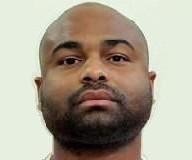
Carlos Ordway
Murderer Joshua Wayne Andrews
Murderer · USA · 2000
Joshua Wayne Andrews was a serial killer accused of killing several people in V…
5 victims
Joshua Wayne Andrews
Murderer · USA · 2000
Joshua Wayne Andrews was a serial killer accused of killing several people in V…
5 victims
 Juan Carlos Alvarez
Murderer · USA · 1998
Juan Carlos Alvarez, born on March 9, 1977, in San Luis, Mexico, was a Hispanic…
5 victims
Juan Carlos Alvarez
Murderer · USA · 1998
Juan Carlos Alvarez, born on March 9, 1977, in San Luis, Mexico, was a Hispanic…
5 victims
 Leon Davis Jr.
Murderer · USA · 2007
Leon Davis Jr. was sentenced to death on April 29, 2011, for the execution-styl…
5 victims
Leon Davis Jr.
Murderer · USA · 2007
Leon Davis Jr. was sentenced to death on April 29, 2011, for the execution-styl…
5 victims
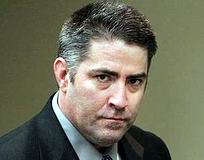 Raymond Lee Oyler
Murderer · USA · 2006
Raymond Lee Oyler was convicted for starting the 2006 Esperanza fire in Riversi…
5 victims
Raymond Lee Oyler
Murderer · USA · 2006
Raymond Lee Oyler was convicted for starting the 2006 Esperanza fire in Riversi…
5 victims
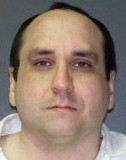 Terry Lee Hankins
Murderer · USA · 2000
Terry Lee Hankins was convicted by a jury of capital murder and was sentenced t…
5 victims
Terry Lee Hankins
Murderer · USA · 2000
Terry Lee Hankins was convicted by a jury of capital murder and was sentenced t…
5 victims
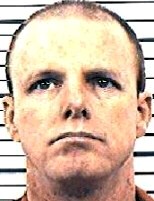 Earl Frederick
Murderer · USA · 1989
Earl Frederick was executed by lethal injection in Oklahoma on July 30, 2002. ·…
2 victims
Earl Frederick
Murderer · USA · 1989
Earl Frederick was executed by lethal injection in Oklahoma on July 30, 2002. ·…
2 victims
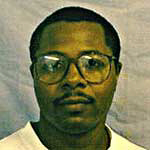 Bruce Kilgore
Murderer · USA · 1986
Bruce Kilgore was executed on June 16, 1999. Bruce Kilgore was convicted of fir…
1 victim
Bruce Kilgore
Murderer · USA · 1986
Bruce Kilgore was executed on June 16, 1999. Bruce Kilgore was convicted of fir…
1 victim
 David Gilroy
Murderer · United Kingdom · 2010
David Gilroy was charged with the murder of Suzanne Pilley and with attempting…
1 victim
David Gilroy
Murderer · United Kingdom · 2010
David Gilroy was charged with the murder of Suzanne Pilley and with attempting…
1 victim
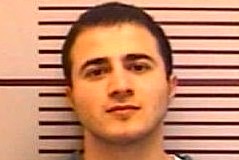 Alexander Pogosyan
Mass murderer · USA · 1998
Alexander Pogosyan was convicted murderer in the so-called Labor Day Massacre i…
5 victims
Alexander Pogosyan
Mass murderer · USA · 1998
Alexander Pogosyan was convicted murderer in the so-called Labor Day Massacre i…
5 victims
- Gender
- male
- Country
- USA
- Location
- Lexington, Fayette County, Kentucky, USA
- Date of birth
- June 21, 1981
- Age at first offence
- 26
- Characteristics
- drug dealer, armed robbery, carjacking, murder-suicide
- Victim profile
- Patrick Lewis, 21, and Rodriques Turner, 25 ( his alleged accomplices in a Louisville bank robbery)
- Method of murder
- Shooting
- Date(s) of murder
- August 11, 2007
- Years active
- 2007
- Date of arrest
- Same day
- Status
-
Sentenced to death
Sentenced to death on October 29, 2010
Case details
Carlos Lamont Ordway (DOB 6-21-81) was sentenced to death on October 29, 2010 in Fayette County for two counts of murder.
Timeline
- August 11, 2007 — Carlos Ordway killed two men in a gun fight in Lexington, KY; both victims were found in their vehicle, one was pronounced dead at the scene and one was pronounced dead at the hospital; Ordway fled the scene but was apprehended later on the same day.
- July 30, 2010 — A Fayette Circuit Court jury recommended the death penalty for the 2007 slayings of two men.
- October 29, 2010 — A sentencing hearing was held in which Judge Pamela Goodwine sentenced Ordway to death.
The offence
Carlos Ordway was accused of fatally shooting Patrick Lewis, 21, and Rodrieques Turner, 25, both of Louisville, while the two were inside a car on Appian Way in Lexington.
Prosecutors said Ordway fired a gun into a car that had crashed on Appian Way on Aug. 11, 2007. Lewis was hit five times and Turner three times.
The defense argued that Ordway acted in self-defense. Defense attorneys argued during the trial that Ordway grabbed Turner's gun and shot the two men after one of them put a gun to Ordway's head and took drugs from him. The defense also argued that Turner and Lewis robbed Ordway while in the area of Armstrong Mill Road and Appian Way.
The defense said Ordway handed Turner Ecstasy pills and gave Lewis cocaine. The defense said Lewis was not satisfied and that Ordway had no choice but to fight for his life. The defense said Ordway grabbed Turner's gun while Lewis was putting the drugs in his underwear and then shot Lewis. The defense said Ordway then shot Turner and the car crashed. The defense said Ordway shot the men again once he was outside the car because Lewis had started to get out of the vehicle and the other gun had fallen near Turner.
At least one witness said he saw Ordway open Lewis' door and shoot into the vehicle, while other witnesses could not recall how the door was opened.
Susan Jeffries of Lexington testified that she was traveling with her mother-in-law when a man she later identified as Ordway approached the car and pointed a gun at the window. Jeffries said Ordway wanted them to get out of the car. Defense attorneys said Ordway did not attempt to flee and did not try to steal any vehicles. Defense attorney Dennis Shepherd questioned whether Jeffries misread the situation by asking her whether she saw a difference between “Get out” and “Get out of the car.” Jeffries said she did not see the difference and said Ordway was pulling on the door handles.
After the shooting, prosecutors said Ordway attempted to car-jack two vehicles in the area by attempting to stop two passing vehicles and trying to force the occupants out of their cars.
Investigators said Ordway was riding in the front passenger seat of the vehicle driven by Turner. Lewis was seated directly behind Ordway as the trio traveled from Louisville to Lexington. Investigators said the three men were heading to Lexington because Ordway had drugs to sell and Turner had made the arrangements with the buyers. Defense attorney Sam Cox said Ordway did not know Lewis, a longtime friend of Turner, was also going to Lexington. Cox said they picked up Lewis before leaving town.
Investigation and apprehension
Investigators said Ordway fled the scene but was apprehended later on the same day.
Trial
The capital murder trial began Tuesday morning in Fayette Circuit Court before Judge Pamela Goodwine and was expected to end by July 29.
A Fayette Circuit Court jury returned a guilty verdict on two murder counts. Other potential sentences were 20 to 50 years, life in prison, life without parole for at least 25 years and life without parole.
Defense attorneys argued during the trial that Ordway acted in self-defense. Prosecutors and defense attorneys were given the chance to address the jury one last time before asking them to select a penalty. The jury rejected self-defense.
Assistant Commonwealth's Attorney Lori Boling told the jury that witnesses reported Ordway was standing outside the vehicle after it crashed and reached into the car and shot the two men.
Prosecutors said Ordway fired shots into a car that had crashed on Appian Way, killing Patrick Lewis, 21, and Rodrieques Turner, 25, both of Louisville.
In addition to murder, Ordway was charged with tampering with physical evidence and being a persistent felony offender.
Closing arguments and mitigation
Dennis Shepherd and Sam Cox argued during the trial that Ordway acted in self-defense.
During the trial, public defender Sam Cox focused on Ordway’s troubled childhood. Cox told jurors of a mother who didn't love Ordway, a father who wasn't there, and an 8-year-old Ordway who slept with hammers and screwdrivers in his bed to protect himself from visions.
Cox told jurors: "He was afraid," and "He saw things."
Commonwealth’s Attorney Ray Larson told jurors that the difficulties provided no excuse for the killings and that there were 13 other convictions in Ordway’s past involving using a gun in a crime.
Larson told jurors: "Practically all children raised in those kind of circumstances do not commit murder," and "We're sorry ... but that does not give him the right to take a life, let alone two."
Larson told jurors: "Carlos Ordway is a very dangerous man," and "His reaction is always to shoot first. "The only real appropriate penalty is death."
Cox asked the jury to consider mitigating circumstances when selecting a sentence for Ordway.
Cox told the jury: "mitigating circumstances" and said the death penalty would cause his family, including his mother, sisters and children, to suffer.
Key quotes during the sentencing hearing
At the sentencing hearing, Fayette Commonwealth's Attorney Ray Larson said: "juries don't want to sentence people to death. In this instance, the jury believed that the evidence was so strong against that defendant, that they believed that the was the appropriate punishment for what he did."
Judge Pamela Goodwine said: "the jury chose not to believe Mr. Ordway's self-defense theory."
Goodwine said: "the jury recommended the death penalty, "and this court is going to carry out the sentence of the jury," Goodwine said."
Goodwine said she had reviewed similar death-penalty cases involving multiple murders.
She said: "the evidence supports the finding of the jury on two counts of intentional murder."
Judge Pamela Goodwine rejected a defense argument about "conservation of the commonwealth's resources" during a time of recession and said: "I don't think anybody would argue that the commonwealth is in recession, and that there is an added cost to putting someone on Death Row. There is no question about that," and: "But quite honestly, I believe ... that is a debate that is more appropriate to be addressed in the legislature."
Goodwine rejected a defense motion that execution should be removed as a sentencing option based on a historical bias and said: "Obviously, you don't have to explain to me the historical predicament of African-Americans," and: "But, again, I think the job of a trial judge in imposing a sentence is to do so color-blind. ... I try to do that in any case, regardless of the race of the defendant."
Ordway spoke at the beginning of the hearing asking why he was handcuffed and shackled and why the courtroom had eight law enforcement officers watching him. Ordway said: "I ain't disrespected nobody."
Goodwine responded that as a convicted felon Ordway no longer had a presumption of innocence and that he was being treated as any similar defendant would.
During arguments, Dennis Shepherd said: "We had a thoroughly circumstantial case, and at the very best we had a guess as to what happened in that moving vehicle, in that neighborhood at 10 o'clock at night."
Jury recommendation
A Fayette Circuit Court jury recommended the death penalty Thursday night for Carlos Ordway for the slayings of two men in 2007.
Dennis Shepherd said he was "certain there would be an appeal."
Commonwealth's Attorney Ray Larson declined comment until after formal sentencing.
Sentencing
Judge Pamela Goodwine held a two-hour sentencing hearing and sentenced Carlos Ordway to death.
The jury recommended the death penalty, and Goodwine said she would carry out the sentence.
Goodwine said she reviewed similar death-penalty cases involving multiple murders and said the evidence supported the finding of intentional murder on two counts.
Goodwine rejected motions related to insufficient evidence to put Ordway to death, cost concerns during a recession, and removal of execution as a sentencing option due to historical bias against African-American defendants.
Appeals
Outcome
Carlos Ordway was sentenced to death on October 29, 2010 in Fayette County for two counts of murder.
Other details
Before sentencing, public defender Sam Cox noted that even Turner's mother, in a letter to the judge filed in the court record, said she would be satisfied with life without parole.
Judge Pamela Goodwine formal sentencing was scheduled Sept. 10, following the July 2010 jury recommendation.
Ordway spoke only during the beginning of the hearing when he asked why he was handcuffed and shackled and why eight law enforcement officers were watching him in the courtroom.
Other potential sentences considered at the time of jury selection included 20 to 50 years, life in prison, life without parole for at least 25 years, and life without parole.
The trial before Judge Pamela Goodwine resumed at 9 a.m. Wednesday and was expected to end by July 29.
Spotted an error, or have more information about this case?