
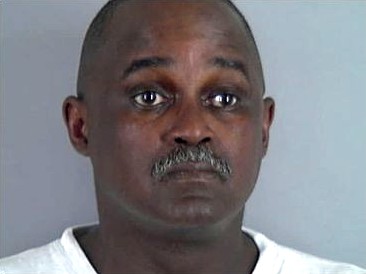
David Gilroy
Murderer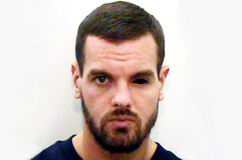 Dale Cregan
Murderer · United Kingdom · 2012
Dale Christopher Cregan (born 6 June 1983) was convicted in the United Kingdom…
4 victims
Dale Cregan
Murderer · United Kingdom · 2012
Dale Christopher Cregan (born 6 June 1983) was convicted in the United Kingdom…
4 victims
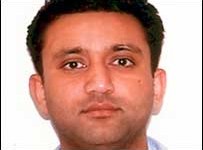 Rahan Arshad
Murderer · United Kingdom · 2006
Rahan Arshad (born 1970) was a taxi driver. He lived at Turves Road, Cheadle Hu…
4 victims
Rahan Arshad
Murderer · United Kingdom · 2006
Rahan Arshad (born 1970) was a taxi driver. He lived at Turves Road, Cheadle Hu…
4 victims
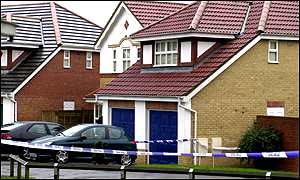 Anthony Smith
Murderer · United Kingdom · 2001
Anthony Smith was a former sergeant in the Coldstream Guards. He had left the C…
3 victims
Anthony Smith
Murderer · United Kingdom · 2001
Anthony Smith was a former sergeant in the Coldstream Guards. He had left the C…
3 victims
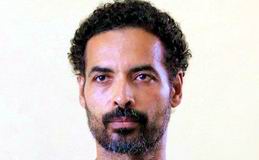 Arthur Simpson-Kent
Murderer · United Kingdom · 2015
Name: Arthur Simpson-Kent · Age at sentencing: 49 · Age at time of offence (as…
3 victims
Arthur Simpson-Kent
Murderer · United Kingdom · 2015
Name: Arthur Simpson-Kent · Age at sentencing: 49 · Age at time of offence (as…
3 victims
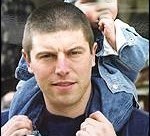 Karl Bluestone
Murderer · United Kingdom · 2001
Karl Bluestone was a Gravesend police officer. · 28 August 2001 — Karl Blueston…
3 victims
Karl Bluestone
Murderer · United Kingdom · 2001
Karl Bluestone was a Gravesend police officer. · 28 August 2001 — Karl Blueston…
3 victims
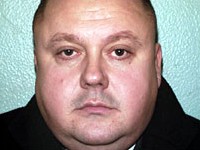 Levi Bellfield
Murderer · United Kingdom · 2003
Levi Bellfield (born 17 May 1968) was a British murderer. He was described by p…
3 victims
Levi Bellfield
Murderer · United Kingdom · 2003
Levi Bellfield (born 17 May 1968) was a British murderer. He was described by p…
3 victims
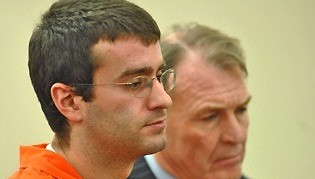 Christopher Porco
Murderer · USA · 2004
Christopher Porco (born July 9, 1983) was convicted of killing his father and a…
1 victim
Christopher Porco
Murderer · USA · 2004
Christopher Porco (born July 9, 1983) was convicted of killing his father and a…
1 victim
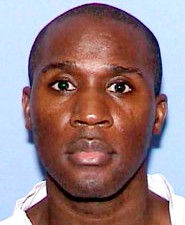 Curtis Moore
Murderer · USA · 1995
Curtis Moore was convicted of capital murder in Texas and was sentenced to deat…
3 victims
Curtis Moore
Murderer · USA · 1995
Curtis Moore was convicted of capital murder in Texas and was sentenced to deat…
3 victims
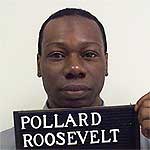 Roosevelt Pollard
Murderer · USA · 1985
Roosevelt Pollard · Maurice Alexander · Michael Hammon · Robert Sands · Howard…
1 victim
Roosevelt Pollard
Murderer · USA · 1985
Roosevelt Pollard · Maurice Alexander · Michael Hammon · Robert Sands · Howard…
1 victim
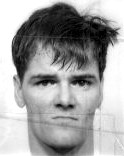 Jack Wade Clark
Murderer · USA · 1989
Jack Wade Clark was a Texas death row inmate whose petition for habeas corpus r…
1 victim
Jack Wade Clark
Murderer · USA · 1989
Jack Wade Clark was a Texas death row inmate whose petition for habeas corpus r…
1 victim
 John O'Shaughnessy
Murderer · United Kingdom · 1996
John O'Shaughnessy was born in 1965 in Chester, England. He was 31 at the time…
1 victim
John O'Shaughnessy
Murderer · United Kingdom · 1996
John O'Shaughnessy was born in 1965 in Chester, England. He was 31 at the time…
1 victim
- Gender
- male
- Country
- United Kingdom
- Location
- Edinburgh, Scotland, United Kingdom
- Date of birth
- 1963
- Age at first offence
- 47
- Characteristics
- —
- Victim profile
- Suzanne Pilley, 38 (his former girlfriend)
- Method of murder
- ????
- Date(s) of murder
- May 4, 2010
- Years active
- 2010
- Date of arrest
- June 23, 2010
- Status
-
Life imprisonment
Sentenced to life imprisonment on March 15, 2012
Case identification
David Gilroy was charged with the murder of Suzanne Pilley and with attempting to defeat the ends of justice in connection with her disappearance.
Timeline
- 4 May 2010 — Suzanne Pilley went missing after leaving Sainsbury's and was last seen on CCTV on North St David Street, about to turn into Thistle Street.
- 4 May 2010 — Suzanne Pilley was making her way to the offices of Infrastructure Managers Ltd in Thistle Street, Edinburgh, where she worked as a bookkeeper.
- 4 May 2010 — Suzanne Pilley was seen on CCTV leaving Sainsbury's at 8.51 am.
- 4 May 2010 — Suzanne Pilley was seen on CCTV on North St David Street at 8.54 am, about to turn into Thistle Street.
- 4 May 2010 — Suzanne Pilley failed to turn up for work.
- Afternoon of 4 May 2010 — Suzanne Pilley was reported missing to Lothian and Borders Police by her parents Robert and Sylvia Pilley.
- 11 May 2010 — Lothian and Borders Police initiated a high-profile public appeal for information, utilising digital screens in the centre of Edinburgh.
- 11 May 2010 — Police issued a statement saying that they believed Suzanne may have been the victim of a “criminal act”.
- 18 May 2010 — Suzanne Pilley's employers issued a statement saying that her disappearance “was completely out of character”.
- 19 May 2010 — Police issued a statement saying they were now treating the enquiry as a murder investigation.
- 20 May 2010 — Press reported that police expanded their investigation to a 400 sq mile area of Argyll, stretching from Tyndrum to Inveraray and the Argyll Forest.
- 23 June 2010 — David Gilroy was detained by Lothian and Borders Police under section 14 of the Criminal Procedure (Scotland) Act 1995 in connection with her disappearance.
- 23 June 2010 — Later that day, David Gilroy was arrested and charged with her murder.
- 24 June 2010 — Gilroy appeared on petition, in private at Edinburgh Sheriff Court, charged with the murder of Suzanne Pilley and various other offences relating to her disappearance; he made no plea or declaration.
- 24 June 2010 — A petition for bail was lodged and granted by Sheriff Deirdre MacNeill QC.
- 1 July 2010 — Gilroy appeared on petition, in private at Edinburgh Sheriff Court, for judicial examination; thereafter he was fully committed for trial.
- 1 July 2010 — A second petition for bail was lodged and granted by Sheriff Nigel Morrison QC.
- 20 February 2012 — The trial of David Gilroy began at the High Court of Justiciary, sitting in Court 11 at Edinburgh Sheriff Court.
- 20 February 2012 — The jury of eight men and seven women began hearing evidence on the afternoon of 20 February 2012.
- 24 February 2012 — Forensic imagery evidence was heard from Jacqueline Butterwick.
- 27 February 2012 — Andrea Gilroy, David Gilroy's wife, was cited as a witness and declined to give evidence.
- 1 March 2012 — Evidence was heard from Sgt Paul Grainger of Lothian and Borders Police.
- 6 March 2012 — Evidence was heard from forensic scientist Kirsty McTurk.
- 7 March 2012 — Forensic pathologist Dr Nathaniel Cary gave evidence to the jury.
- 8 March 2012 — Evidence was heard from a Lothian and Borders Police constable about a partially traced car journey to Lochgilphead on 5 May 2010.
- 9 March 2012 — The Crown withdrew a number of charges on the indictment relating to an assault, a breach of the peace and a contravention of the Computer Misuse Act 1990.
- 9 March 2012 — Charges 6 and 7 on the indictment, murder and attempting to defeat the ends of justice, remained.
- 12 March 2012 — The defence case began on the morning of 12 March 2012 and lasted half a day.
- 12 March 2012 — Advocate depute Alex Prentice QC began addressing the jury in closing.
- 13 March 2012 — Jack Davidson QC began summing up for the defence.
- 13 March 2012 — The jury were sent out to consider their verdict after deliberations began.
- 15 March 2012 — After two and a half days of deliberations, David Gilroy was found guilty by majority verdict of the murder of Suzanne Pilley and of attempting to defeat the ends of justice.
- 15 March 2012 — Lord Bracadale adjourned the diet for background reports and remanded David Gilroy in custody.
- 27 April 2012 — David Gilroy lodged an intimation of his intention to appeal against conviction under section 109(1) of the Criminal Procedure (Scotland) Act 1995 with the Clerk of Justiciary.
- 18 April 2012 — In court 3 at the High Court of Justiciary in Edinburgh, Lord Bracadale sentenced David Gilroy to life imprisonment with a punishment part of 18 years for the murder of Suzanne Pilley and for attempting to defeat the ends of justice.
- 18 April 2012 at 9.30 am — Lord Bracadale sentenced David Gilroy.
- 20 December 2012 — The Court of Criminal Appeal in Edinburgh rejected the appeal.
Background and disappearance
Suzanne Pilley was a 38-year-old bookkeeper from Edinburgh, Scotland, who went missing on the morning of 4 May 2010.
On 4 May 2010, she was making her way to the offices of Infrastructure Managers Ltd in Thistle Street, Edinburgh, where she worked. As part of her routine she would often call into the St Andrew Square branch of Sainsbury's en route to work.
At 8.51 am, she was seen on CCTV leaving Sainsbury's. At 8.54 am, she was seen on CCTV on North St David Street, about to turn into Thistle Street. This was described as her last public sighting. She failed to turn up for work.
On the afternoon of 4 May 2010, Suzanne Pilley was reported missing to Lothian and Borders Police by her parents Robert and Sylvia Pilley.
On 11 May 2010, Lothian and Borders Police initiated a high-profile public appeal for information, utilising digital screens erected in the centre of Edinburgh, playing footage of Suzanne's last known whereabouts. The police issued a statement saying that they believed Suzanne may have been the victim of a “criminal act”.
On 18 May 2010, her employers issued a statement saying her disappearance “was completely out of character”.
On 19 May 2010, police issued a statement saying they were now treating the enquiry as a murder investigation.
On 20 May 2010, press reported that police expanded their investigation to a 400 sq mile area of Argyll, stretching from Tyndrum to Inveraray and the Argyll Forest. Police were said to be keen to trace the movements of a silver vehicle driven by a man on remote roads across Argyll and Bute on the afternoon of 5 May 2010.
Investigation
Lothian and Borders Police made use of specially trained cadaver dogs from South Yorkshire Police to search the offices where David Gilroy and Suzanne Pilley worked. The dogs, which were described as springer spaniels, identified three areas of interest: one in the basement area of the offices, and two in the boot of David Gilroy's silver Vauxhall vectra.
Police also partially traced a car journey David Gilroy made to Lochgilphead on 5 May 2010, using CCTV footage. After analysing the footage, police recreated the journey there and back several times. Police found that Gilroy took 2 hours longer than their average time each way. Police also compared fuel consumption and found that 124 miles of the journey were unaccounted for.
The investigation included an 11-hour interview which David Gilroy gave to police on 6 May 2010. Sgt Paul Grainger told the court that during the interview he noticed a scar on Gilroy's forehead under his hairline and that there had been some sort of scratch on Gilroy's chin.
Police also addressed email account access and contact frequency between Gilroy and Suzanne Pilley. Alex Prentice QC produced phone records showing that Gilroy was in contact with Suzanne almost daily before her disappearance, with contact stopping the day before she went missing. It was revealed that Gilroy regularly texted Suzanne more than 50 times a day. The last contact between their phones occurred on 3 May 2010 with 15 text messages and one voicemail.
Police stated that they believed Gilroy drove to Lochgilphead on 5 May 2010 and that he took two hours longer than the average time. Officers were convinced he drove off road and found cuts and bruises on his hands and face.
After extensive searches during the police investigation and after the trial, Suzanne Pilley's body was never found.
Arrest and charges
On 23 June 2010, David Gilroy, described as a colleague and former boyfriend of Suzanne Pilley's, was detained under section 14 of the Criminal Procedure (Scotland) Act 1995 in connection with her disappearance. Later that day, he was arrested and charged with her murder.
On 24 June 2010, Gilroy appeared on petition, in private at Edinburgh Sheriff Court, charged with the murder of Suzanne Pilley and various other offences relating to her disappearance. He made no plea or declaration. A petition for bail was lodged and granted by Sheriff Deirdre MacNeill QC.
On 1 July 2010, Gilroy appeared on petition, in private at Edinburgh Sheriff Court for judicial examination. Thereafter he was fully committed for trial. A second petition for bail was lodged and granted by Sheriff Nigel Morrison QC.
The indictment principal charges were libelled as follows:
- On 4 May 2010, Mr Gilroy killed Ms Pilley at the offices of Infrastructure Managers Ltd in Thistle Street, Edinburgh, or elsewhere, by means to the prosecutor unknown.
- Mr Gilroy concealed Ms Pilley's corpse in the Thistle Street premises of Infrastructure Management Ltd, transported it to Argyll in the boot of a car, and various locations around Scotland, and thereafter disposed of it by means to the prosecutor unknown.
At 9 March 2012, the Crown withdrew charges relating to an assault, a breach of the peace and a contravention of the Computer Misuse Act 1990. Charges 6 and 7 on the indictment—murder and attempting to defeat the ends of justice—remained.
Trial
The trial began on 20 February 2012 at the High Court of Justiciary, sitting in Court 11 at Edinburgh Sheriff Court.
The presiding judge was Lord Bracadale.
- The prosecution was led by advocate depute Alex Prentice QC.
- The defence was led by Jack Davidson QC.
- David Gilroy's solicitor was Jim Wardlaw.
The indictment ran to 5 pages.
The jury consisted of eight men and seven women. The jury began hearing evidence on the afternoon of 20 February 2012. The trial lasted 24 days.
Prosecution case
The prosecution case was described as wholly circumstantial.
Suzanne Pilley's mother, Sylvia Pilley, gave evidence about her daughter and her “turbulent on-off relationship” with David Gilroy. She said her daughter had previously cohabited with Gilroy on a temporary basis.
The court heard from a Lothian and Borders Police constable on 23 February 2012 about specially trained cadaver dogs from South Yorkshire Police to search the offices where Gilroy and Suzanne Pilley worked.
On 24 February 2012, forensic imagery expert Jacqueline Butterwick testified. She said the CCTV footage of a person on Thistle Street bore enough similarities to other CCTV images of Suzanne Pilley taken that day to say that it definitely was Ms Pilley. She was described as 20 metres from the entrance to her work.
On 27 February 2012, Andrea Gilroy, David Gilroy's wife, was cited as a witness by the Crown. Lord Bracadale explained she had the right not to give evidence against her husband if she did not wish. Andrea Gilroy declined to give evidence.
The explanation provided in court was that she could only decline to give evidence because the events she would speak to took place before section 86 of the Criminal Justice and Licensing (Scotland) Act 2010 came into force. The act amended the law such that spouses and civil partners of an accused person in Scotland were described as competent and compellable witnesses for the prosecution.
On 1 March 2012, Sgt Paul Grainger gave evidence about the 11-hour police interview on 6 May 2010, including the scar on Gilroy's forehead and a scratch on his chin.
The court also heard that Gilroy had told police that on the evening of 2 May 2010 he and Suzanne Pilley decided to split up and then took part in a Buddhist style religious ceremony, writing their feelings down on pieces of paper and burning them.
On 6 March 2012, forensic scientist Kirsty McTurk testified. She conducted a search for DNA in Ms Pilley's workplace and in the boot of Mr Gilroy's car and confirmed she had been unable to find any trace of Ms Pilley's DNA anywhere in the building or in the car. She told the advocate depute that as she opened the boot, she noticed a fresh smell from inside, which could be either an “air freshener” or a “cleansing agent”.
A friend of Suzanne Pilley, Gayle Hawkins, gave evidence that Suzanne had previously told people she was worried Gilroy was hacking into her email account.
Alex Prentice QC produced phone records showing Gilroy's contact patterns with Suzanne, including the “more than 50 times a day” texting figure and the last contact on 3 May 2010 consisting of 15 text messages and one voicemail.
On 7 March 2012, forensic pathologist Dr Nathaniel Cary told the jury that David Gilroy had curved scratches on his hands, a cut on his forehead, bruises on his chest, and other scratches to his hands, wrist and forearms on 6 May 2010. Dr Cary testified that the scratches could have been caused by another person's fingernails, possibly in a struggle, and that this had happened around the time Ms Pilley went missing. He also testified that the injuries were consistent with what he had seen previously in cases involving strangulation, but that it was difficult to tell because the injuries had been covered with a make-up like substance. Under cross-examination, Dr Cary confirmed that the scratches on Gilroy's hands could have come from gardening activities.
On 8 March 2012, a Lothian and Borders Police constable described how police partially traced a car journey David Gilroy made to Lochgilphead on 5 May 2010 using CCTV footage. Police recreated the journey there and back several times, found he had taken two hours longer than the average time each way, and identified that 124 miles were unaccounted for.
Defence case
The defence case began on the morning of 12 March 2012 and lasted half a day.
The court heard from witnesses who worked in the offices of Infrastructure Managers Ltd and testified that they did not see anything out of the ordinary at the premises in Thistle Street on 4 May 2012.
David Gilroy declined to give evidence in his own defence.
Closing speeches and verdict
On the afternoon of 12 March 2012, advocate depute Alex Prentice QC began addressing the jury. He stated the Crown case was that Gilroy had killed Suzanne Pilley in the basement of her office before hiding her body in a recess. He argued that Gilroy brought his car from home, put Ms Pilley's body in the boot, and transported it the next day to a “lonely grave” somewhere in Argyll. He pointed to what he described as a “sudden interruption” in Suzanne Pilley's life since she vanished, highlighted that she made no contact with anyone, there was no activity on her credit cards, and she did not make any arrangements for her pet fish and cat.
The prosecution case presentation also described that the lack of calls and texts from Mr Gilroy after Ms Pilley went missing suggested he knew she was already dead and had her phone. It also reminded the jury that Mr Gilroy went on a journey of “no importance” the day after she disappeared instead of “assisting the police inquiry”.
On the morning of 13 March 2012, Jack Davidson QC began summing up for the defence. He urged the jury to assess the evidence “dispassionately” and said it would be unsafe to convict David Gilroy of murder because the Crown case was circumstantial.
On the afternoon of 13 March 2012, the jury of eight men and seven women were sent out to consider their verdict. After two and a half days of deliberations, on 15 March 2012, David Gilroy was found guilty by majority verdict of the murder of Suzanne Pilley and of attempting to defeat the ends of justice.
Sentencing
After the guilty verdict on 15 March 2012, Lord Bracadale adjourned the diet for background reports and remanded David Gilroy in custody.
On 18 April 2012 at 9.30 am in court 3 at the High Court of Justiciary in Edinburgh, Lord Bracadale sentenced David Gilroy to life imprisonment with a punishment part of 18 years, for the murder of Suzanne Pilley and for attempting to defeat the ends of justice.
Appeals
David Gilroy continued to maintain his innocence.
On 27 April 2012, he lodged an intimation of his intention to appeal against conviction under section 109(1) of the Criminal Procedure (Scotland) Act 1995 with the Clerk of Justiciary.
On 20 December 2012, the Court of Criminal Appeal in Edinburgh rejected the appeal.
Outcome
David Gilroy was found guilty by majority verdict of:
- the murder of Suzanne Pilley; and
- attempting to defeat the ends of justice.
The body of Suzanne Pilley was never found.
Aftermath
Despite extensive searches during the police investigation and after the trial, Suzanne Pilley's body was never found. Her remains were believed to be buried in a forest somewhere in Argyll.
Initially, David Gilroy was sent to HMP Edinburgh. The prison was described as not normally used to house prisoners serving life sentences; however, Gilroy declined to be segregated from the general prison population.
On 21 May 2012, it was reported that David Gilroy was moved to HMP Shotts following threats from fellow prisoners at HMP Edinburgh. It was later reported that Gilroy had been attacked on his first day at HMP Shotts by fellow inmates and was conveyed to hospital with a broken jaw.
Other details
Court filming and reporting
Following the guilty verdict, Scottish broadcaster STV wrote to the then Lord Justice General, Lord Hamilton, requesting permission to film the sentencing of Gilroy.
On 10 April 2012, it was announced that the sentencing diet would be filmed by a camera crew from STV and the footage made freely available to broadcasters for use on the same day.
The Lord Justice General stipulated:
- the camera should focus solely on the trial judge and court staff, and
- Gilroy himself could not be filmed. It was also reported that filming would only commence after Jack Davidson QC had finished delivering his plea in mitigation.
It was announced on 13 April 2012 that journalists attending the sentencing would be allowed to use live-text based communication services such as Twitter.
On 18 April 2012, a single camera, a cameraman, and an audio technician from STV were present in court. Following the sentencing diet, the recorded footage was analysed by staff from the Scottish Court Service and cleared for broadcast at 11.00 am. Edited versions of the footage were shown on various national news programmes that day.
Various national and international news websites made a “standardised” 4 minute 40 second video of the proceedings available online. On the evening of 18 April 2012, The Scotsman newspaper made available an extended 6 minute 23 second video of the proceedings. The extended version used visual footage from the standardised 4 minute 40 second video but used a different audio track. The extended version included 66 seconds of Jack Davidson QC's plea in mitigation and included 4 seconds of heckling from members of the public gallery as David Gilroy was led away. The majority of the heckling was described as inaudible, but someone could clearly be heard shouting “die” before a court room police officer said “quiet please”.
Relationship and contemporaneous context
It was described that Suzanne Pilley and David Gilroy had a “turbulent on-off relationship”. Sylvia Pilley testified about their relationship and temporary cohabitation.
It was also stated that Suzanne had been seeing someone else in the days before her disappearance.
The trial heard that Gilroy was described in court as possessive and manipulative, and it was stated that he had sent Suzanne more than 400 texts in the month before she went missing. Those texts stopped when she vanished.
Gilroy and Suzanne were described as having taken part in a Buddhist style religious ceremony on the evening of 2 May 2010 after deciding to split up.
It was also described that Gilroy had driven from Edinburgh to Lochgilphead the day after Suzanne Pilley went missing, taking two hours longer than the average time, and officers had found cuts and bruises on his hands and face.
Suzanne Pilley had previously been married for four years to ex-husband Peter Durrand. They married in Las Vegas in May 2004 and divorced in 2008.
David Gilroy had a reputation of exaggerating his military achievements and served as an engineer in the Royal Navy.
Persons and roles mentioned
Robert and Sylvia Pilley were Suzanne Pilley's parents. Sylvia Pilley gave evidence at trial.
Gayle Hawkins was described as a friend of Suzanne Pilley.
Andrea Gilroy was described as David Gilroy's wife and declined to give evidence.
Sgt Paul Grainger of Lothian and Borders Police gave evidence about Gilroy’s interview and injuries observed during the interview.
Forensic imagery expert was Jacqueline Butterwick.
Forensic scientist was Kirsty McTurk.
Forensic pathologist was Dr Nathaniel Cary.
Advocate depute was Alex Prentice QC.
Defence advocate was Jack Davidson QC.
Solicitor was Jim Wardlaw.
Sheriff Deirdre MacNeill QC granted bail on 24 June 2010.
Sheriff Nigel Morrison QC granted bail on 1 July 2010.
Lord Bracadale presided over the trial and imposed sentence.
Lord Hamilton was the Lord Justice General who received the request from STV.
Spotted an error, or have more information about this case?