Peter Westerstrom
Mass murderer Anders Behring Breivik
Mass murderer · Norway · 2011
Anders Behring Breivik (born 13 February 1979) was the perpetrator of the 2011…
77 victims
Anders Behring Breivik
Mass murderer · Norway · 2011
Anders Behring Breivik (born 13 February 1979) was the perpetrator of the 2011…
77 victims
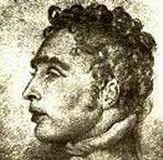 John Williams
Mass murderer · United Kingdom · 1811
John Williams (also known as Murphy) was a 27-year-old Scottish or Irish seaman…
7 victims
John Williams
Mass murderer · United Kingdom · 1811
John Williams (also known as Murphy) was a 27-year-old Scottish or Irish seaman…
7 victims
 William Zeigler
Mass murderer · USA
William Thomas Zeigler Jr. was prosecuted in Florida for the murders of four pe…
1975 victims
William Zeigler
Mass murderer · USA
William Thomas Zeigler Jr. was prosecuted in Florida for the murders of four pe…
1975 victims
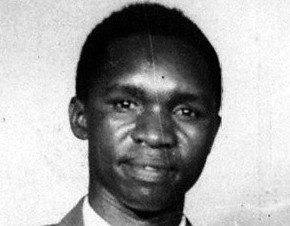 Joseph Kibweteere
Mass murderer · Uganda · 2000
Joseph Kibweteere led a breakaway sect known as the Movement for the Restoratio…
1000 victims
Joseph Kibweteere
Mass murderer · Uganda · 2000
Joseph Kibweteere led a breakaway sect known as the Movement for the Restoratio…
1000 victims
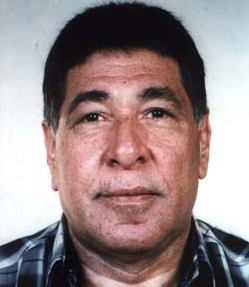 Gameel Al-Batouti
Mass murderer · USA · 1999
Gameel Al-Batouti (also rendered “Gamil ElBatouty” or “El Batouty” in U.S. offi…
216 victims
Gameel Al-Batouti
Mass murderer · USA · 1999
Gameel Al-Batouti (also rendered “Gamil ElBatouty” or “El Batouty” in U.S. offi…
216 victims
 Rommel Broom
Murderer · USA · 1984
Romell Broom was an American convicted of murder, kidnap and rape. He was born…
1 victim
Rommel Broom
Murderer · USA · 1984
Romell Broom was an American convicted of murder, kidnap and rape. He was born…
1 victim
 Marvin Lee Wilson
Murderer · USA · 1992
Marvin Lee Wilson was convicted of murdering Jerry Williams during the course o…
1 victim
Marvin Lee Wilson
Murderer · USA · 1992
Marvin Lee Wilson was convicted of murdering Jerry Williams during the course o…
1 victim
 James Homer Elledge
Murderer · USA · 1975
James Homer Elledge was executed by lethal injection in Washington on August 28…
2 victims
James Homer Elledge
Murderer · USA · 1975
James Homer Elledge was executed by lethal injection in Washington on August 28…
2 victims
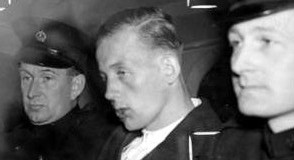 John Thomas Straffen
Serial killer · United Kingdom · 1951
John Thomas Straffen was sentenced to death on July 25, 1952. Home Secretary Si…
3 victims
John Thomas Straffen
Serial killer · United Kingdom · 1951
John Thomas Straffen was sentenced to death on July 25, 1952. Home Secretary Si…
3 victims
 Tina Resch
Murderer · USA · 1992
Tina Resch (pronounced "Resh"), born October 23, 1969, achieved some fame durin…
1 victim
Tina Resch
Murderer · USA · 1992
Tina Resch (pronounced "Resh"), born October 23, 1969, achieved some fame durin…
1 victim
 Masahiro Kanagawa
Murderer · Japan · 2008
Masahiro Kanagawa (金川 真大; Kanagawa Masahiro; born 1983) was a Japanese man. · M…
2 victims
Masahiro Kanagawa
Murderer · Japan · 2008
Masahiro Kanagawa (金川 真大; Kanagawa Masahiro; born 1983) was a Japanese man. · M…
2 victims
- Gender
- male
- Country
- Norway
- Location
- Saksebøl, Hobøl, Østfold county, Norway
- Date of birth
- 1779
- Age at first offence
- 30
- Characteristics
- robbery, beheading
- Victim profile
- Station manager Johannes Jensen and his three servants Lars Arvesen, Jens Svensen and Karen Olsdatter
- Method of murder
- Beating with an axe
- Date(s) of murder
- January 1, 1809
- Years active
- 1809
- Date of arrest
- February 6, 1809
- Status
-
Executed
Executed by beheading with axe on October 27, 1809
Case record: Peter Westerstrom
Background
Peter Westerstrøm (1779-1809) was a Swedish mass murderer who gained notoriety for the Saksebøl Slaughter in Norway during the Napoleonic wars.
Peter Westerstrøm was born in Ljungby in Sweden around 1778. His father Jonas was the local sexton, but he died when Peter was 8 years old. His mother died in 1804, and Peter was raised by her and her brother.
He started his professional carriere as a man-servant; later on he started training as a tailor, but never became more than an apprentice. He later claimed to have tried to have started an enterprise refining cotton, but he had to borrow money and the enterprise failed. This story was never corroborated as there was a state of war between Norway and Sweden at the time and serious doubt was cast on his curriculum.
By 1806 he had moved to Norway. By his own confession, the move was in order to avoid being thrown into the debtor's prison after his bankruptcy.
An unconfirmed rumour stated that he had fled Sweden after having murdered and robbed his late employer, Lieutenant General Liljehorn.
In Norway, he established himself as a tailor in the city of Moss, traveling around the local countryside to obtain work from the surrounding peasantry.
The offence
During the night between the 31st December 1808 and the 1st January 1809, Peter Westerstrøm killed the four inhabitants at the station Saksebøl in Hobøl.
The victims were the station manager Johannes Jensen and his three servants Lars Arvesen, Jens Svensen and Karen Olsdatter.
The murder weapon was an axe he had brought with him for the explicit purpose of murder.
The motive was greed; the station manager's strongbox was forced and the house robbed of valuables.
Peter Westerstrøm fled with 20 daler in cash, some slothes, some silver spoons, a pair of boots and a pipe.
After the crime, he tried to reach Sweden but was hindered by foul weather.
Investigation
The autopsy was undertaken by dr Hans Munk.
An investigative commission was established, consisting of Christian Magnus Falsen (judge i Follo), sheriff Jacob Wulfsberg in Christiania (now Oslo), Lieutenant Colonel Hans Jacob von Scheel and the judge in Moss, Ove Hiorth.
A reward of 1000 daler was offered for information that would lead to arrest of the guilty. This reward led to Peter Westerstrøm being snitched upon by friends.
Arrest
Monday 6th February 1809, Peter Westerstrøm was arrested at Moss and brought before the commission.
He confessed to the murders after some attempts at denial.
Trial
The case was open and shut; he was found in possession of much of the stolen goods and could lead the authorities to where he had hidden the rest.
As for the motive, Peter Westerstrøm first claimed mental depression, stating that he wanted to commit suicide and this way he could get the state executioner to do the job.
His second explanation stated that, as he was an unreformable criminal, he wanted to go down in history as the greatest crook in Norwegian history.
His third confession stated that the murder was done out of revenge, as he believed the station manager had been instrumental in breaking up his engagement to a rich heiress.
Sentencing
On the 24th July 1809, he was sentenced by the commission to be pinched five times with red-hot pincers by the executioner; after this his hand would be lopped off with an axe and finally he would be beheaded.
The head, the hand and the body would then be publicly displayed on poles until they rotted.
This was the punishment recommended for murders within the family (patricides, matricides, but also murders of employers).
On the 16th August 1809, this sentence was moderated in the Supreme Court. He was sentenced for premeditated homicide only, and the punishment was reduced to simple beheading with axe, the torture was dropped. Only his head would go on the pole.
On 23rd September 1809, king Frederik VI approved of the sentence of the Supreme Court.
Outcome
On the 27th October 1809, Peter Westerstrøm was executed in front of the prison in Moss.
With him at the scaffold was his parson Niels Wulfsberg.
The executioner was Anton Lædel, this being his fifth execution.
After 24 hours, the head was taken down again and buried next to the corpse.
Spotted an error, or have more information about this case?