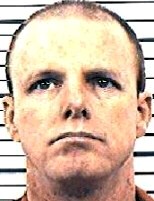
Earl Frederick
Murderer Brian Kevin Rosenfeld
Murderer · USA · 1985
Brian Kevin Rosenfeld Brian Kevin Rosenfeld was sentenced to three concurrent l…
23 victims
Brian Kevin Rosenfeld
Murderer · USA · 1985
Brian Kevin Rosenfeld Brian Kevin Rosenfeld was sentenced to three concurrent l…
23 victims
 Yahweh ben Yahweh
Murderer · USA · 1980
Yahweh ben Yahweh was born and legally named Hulon Mitchell Jr. (October 27, 19…
23 victims
Yahweh ben Yahweh
Murderer · USA · 1980
Yahweh ben Yahweh was born and legally named Hulon Mitchell Jr. (October 27, 19…
23 victims
 Russell Ellwood
Murderer · USA · 1991
Russell Ellwood was a former taxi driver. Authorities suspected him of killing…
20 victims
Russell Ellwood
Murderer · USA · 1991
Russell Ellwood was a former taxi driver. Authorities suspected him of killing…
20 victims
 Robert Martines Perez
Murderer · USA · 1994
Name: Robert Martines Perez · Other name used in proceedings: Robert Martinez P…
15 victims
Robert Martines Perez
Murderer · USA · 1994
Name: Robert Martines Perez · Other name used in proceedings: Robert Martinez P…
15 victims
 Gert Van Rooyen
Serial killer · South Africa · 1988
Cornelius Gerhardus van Rooyen, known as “Gert” van Rooyen, was a South African…
7 victims
Gert Van Rooyen
Serial killer · South Africa · 1988
Cornelius Gerhardus van Rooyen, known as “Gert” van Rooyen, was a South African…
7 victims
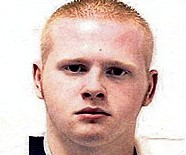 Bradley Mullins
Homicide · USA · 2005
Bradley Mullins was 19 during a trial in Tennessee for conduct involving drag r…
1 victim
Bradley Mullins
Homicide · USA · 2005
Bradley Mullins was 19 during a trial in Tennessee for conduct involving drag r…
1 victim
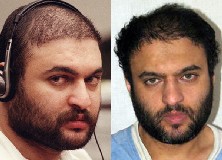 John Ghobrial
Murderer · USA · 1998
John Samuel Ghobrial was an Egyptian national and a panhandler in La Habra. He…
1 victim
John Ghobrial
Murderer · USA · 1998
John Samuel Ghobrial was an Egyptian national and a panhandler in La Habra. He…
1 victim
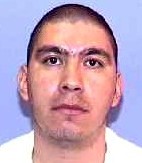 Rigoberto Avila
Murderer · USA · 2000
Rigoberto Avila, Jr. was convicted of capital murder in El Paso County, Texas.…
1 victim
Rigoberto Avila
Murderer · USA · 2000
Rigoberto Avila, Jr. was convicted of capital murder in El Paso County, Texas.…
1 victim
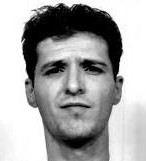 Edward Anthony Ellis
Murderer · USA · 1983
Edward Anthony Ellis was executed by lethal injection in Texas on March 3, 1992…
1 victim
Edward Anthony Ellis
Murderer · USA · 1983
Edward Anthony Ellis was executed by lethal injection in Texas on March 3, 1992…
1 victim
- Gender
- male
- Country
- USA
- Location
- Texas/Oklahoma, USA
- Date of birth
- June 4, 1951
- Age at first offence
- 38
- Characteristics
- robbery, mentally ill
- Victim profile
- Shirley C. Fox, 77 / Bradford Lee Beck, 41
- Method of murder
- Shooting / Beating
- Date(s) of murder
- 1989
- Years active
- 1989
- Date of arrest
- November 19, 1989
- Status
-
Executed
Executed by lethal injection in Oklahoma on July 30, 2002
Overview
Earl Frederick was executed by lethal injection in Oklahoma on July 30, 2002.
People
- Earl Frederick — defendant
- Bradford Lee Beck — victim; 41-year-old partially paralyzed Vietnam War veteran
- Shirley C. Fox — victim; 77-year-old
- Jeff — personality name referenced by Frederick
- Beatrice — Beck’s mother
- Mark Smith — Beck’s cousin
- Sandy Howard — Assistant Attorney General; recipient of Frederick’s February 2001 letter
- W.A. Drew Edmondson — Attorney General; requested an execution date
- ClarkProsecutor.org / Oklahoma Attorney General News Release — publication names appearing with quoted material attributed in the text
- Sandra Howell Elliott — Assistant district attorney in Oklahoma County
- Bradford Beck’s family — expected to witness the execution
- Frederick’s attorney — requested an extension to file an appeal to the U.S. Supreme Court and received it
- Texas officials — decided not to prosecute in the Texas case
- Oklahoma Court of Criminal Appeals — denied a pending post-conviction application and set an execution date
- U.S. Supreme Court — no petition for certiorari was filed
- Oklahoma Court of Criminal Appeals — reversed the conviction and ordered a new trial after reversal on appeal
- Trial judge — proceeded with the trial after expert testimony timing concerns
- Dr. Bennet Braun — expert found by Frederick’s legal team to examine and testify on Frederick
- Defense counsel — requested mental health expert relief and sought qualified mental health experts
Timeline
- November 1989 — Bradford Lee Beck befriended Earl Frederick; Beck let Frederick stay with him and told his family Frederick was an old war buddy; Frederick was a former assistant Noble, Oklahoma assistant police chief.
- Nov. 11, 1989 — Bradford Lee Beck was killed by a blow to the head.
- Nov. 19, 1989 — Earl Frederick was arrested in Texas (in the Amarillo, Texas bar); he also was arrested in Dallam County and accused in connection with the shotgun killing of Shirley C. Fox in Texline.
- January 1990 — Bradford Lee Beck’s body was found in a field (including near Spencer, Oklahoma, and in connection with the “8700 block of N.E. 23rd Street” location).
- 1992 — Earl Frederick was first convicted and sentenced to death.
- 1998 — After reversal on appeal and a new trial, Earl Frederick was again sentenced to death.
- February 2001 — Earl Frederick wrote a letter to Assistant Attorney General Sandy Howard.
- June 5, 2002 — Attorney General W.A. Drew Edmondson asked the court to set an execution date 30 days from June 5.
- January (year not specified) — The Oklahoma Court of Criminal Appeals denied Frederick’s then pending post-conviction application after the attorney general asked to be dismissed in January.
- July 30, 2002 — Earl Frederick was pronounced dead at 6:19 p.m. after receiving a lethal injection of drugs.
The offence
Killing of Bradford Lee Beck (Oklahoma case)
Prosecutors said Beck was robbed and then died of a blow to the head. Beck’s partially decomposed body was discovered in January 1990 in a field, with references including “a field in Midwest City” and “in a field in the 8700 block of N.E. 23rd Street,” and “in a field near Spencer, Okla.” The medical examiner listed the cause of death as undetermined head trauma and classified the manner of death as homicide.
Bradford Lee Beck befriended Earl Frederick in November of 1989. Beck let Frederick stay with him and told his family that Frederick was an old war buddy. Beck said the two had stayed together at a veterans hospital. Beck had “extended his friendship to Frederick” and repaid him by killing him and stealing his pickup and clothes.
Earl Frederick was wearing Beck’s clothes when he was arrested in an Amarillo, Texas, bar. Frederick told Texas authorities he had multiple personalities and he gave police four names, telling them one of his personalities, known as Jeff, made him do bad things. Frederick also claimed he had multiple personality disorder and amnesia and that another “personality” committed the killing. Prosecutors contended Frederick was faking multiple personality disorder.
Killing of Shirley C. Fox (Texas case)
Earl Frederick was charged in Texas in the death of Shirley C. Fox in Texline. Fox died after receiving a shotgun blast to his face and numerous hammer blows to the head during an apparent robbery attempt, authorities said. Prosecutors said Fox was robbed of some guns and coins he had framed. Frederick was originally arrested in the shotgun death of Shirley Fox, a small town in the northwest corner of the Texas Panhandle.
Texas officials chose not to prosecute Earl Frederick since Oklahoma was seeking the death penalty.
Authorities linked Fox’s murder and the Oklahoma killing after officers learned that a pickup found at the site of Fox’s death belonged to Beck.
Investigation
Court records showed Earl Frederick confessed to Beck’s death. Frederick gave police four names and told them one of his personalities, known as Jeff, made him do bad things.
The medical examiner listed the cause of death as undetermined head trauma and classified the manner of death as homicide.
Arrest
Earl Frederick was arrested in Texas on Nov. 19, 1989. He was wearing Beck’s clothes when he was arrested in an Amarillo, Texas, bar. Frederick was arrested in Dallam County on Nov. 19, 1989 and was accused of killing an elderly man. Frederick had originally been arrested in Texline in connection with the shotgun death of Shirley Fox.
Trial
First conviction and death sentence
Frederick was first convicted and sentenced to death in 1992.
Reversal and new trial
Following reversal on appeal on the grounds that Frederick was denied the right to further mental health experts, Frederick was again sentenced to death in 1998. The state Court of Criminal Appeals reversed the conviction and ordered a new trial.
During the process leading up to the new trial, after several false starts with unqualified psychiatrists, Frederick’s legal team eventually found an expert, Dr. Bennet Braun, to examine and testify on Frederick in November 1992, almost six months after the trial had begun. This was unacceptable to the trial judge, who proceeded with the trial anyway.
At the time of the second trial, a judge ruled Frederick was competent to stand trial again.
Prosecutors argued Frederick was faking multiple personality disorder.
Jurors deliberated for about 3 1/2 hours in one proceeding related to a first-degree murder conviction for Beck, and in another mention deliberated for 2 hours Wednesday before convicting Frederick, 46, of first-degree murder for the Beck slaying.
Sandra Howell Elliott, assistant district attorney in Oklahoma County, said:
“Beck had ''extended his friendship to Frederick'' and repaid him by killing him and stealing his pickup and clothes,” said Sandra Howell Elliott, assistant district attorney in Oklahoma County.
She also said:
“Frederick told neighbors he and Beck were war buddies, but there is no evidence Frederick served in Vietnam,” she said.
Frederick told neighbors he and Beck were war buddies, and there was no evidence Frederick served in Vietnam.
Frederick was found guilty in 1992 and given a death sentence; the state Court of Criminal Appeals later ordered a new trial.
Second conviction and death sentence
The second trial came in 1998 after the judge ruled Frederick was competent to stand trial again. Frederick was convicted and again sentenced to death.
Frederick said:
“I certainly feel the conviction and sentence I received the first time was justified,” Frederick said. “Just as it was (the second) time also.”
Sentencing
Frederick was sentenced to death in 1992 and again sentenced to death in 1998. He was convicted twice for killing Bradford Lee Beck.
Appeals
After reversal on appeal on the grounds that Frederick was denied the right to further mental health experts, the conviction was reversed and ordered a new trial, after which Frederick was again sentenced to death.
The Oklahoma Court of Criminal Appeals did not set an execution date at one point, but it denied Frederick’s then pending post-conviction application that the attorney general asked to be dismissed in January. Despite Frederick’s wishes, his attorney requested and received an extension of time in which to file an appeal to the U.S. Supreme Court. No petition for certiorari was filed with the U.S. Supreme Court.
Frederick chose to waive his rights to further appeals.
Frederick wrote to Assistant Attorney General Sandy Howard in a February 2001 letter:
“Mere words cannot begin to express the sorrow I feel over my actions,” Frederick said in a February 2001 letter to Assistant Attorney General Sandy Howard.
“I am guilty of the crime, let there be no doubt of that.”
Outcome
He was pronounced dead at 6:19 p.m.
The Oklahoma Court of Criminal Appeals set July 30 as the execution date.
Beatrice, Beck’s mother, and Mark Smith, Beck’s cousin, were expected to witness the execution. The Beck family statement said:
“I never thought I would live to see the execution carried out,” Beck's family said in a statement. “I am relieved to know that justice will be served this evening.”
Aftermath / final statements
Attorney General W.A. Drew Edmondson requested that the court set an execution date 30 days from June 5, and the brief asked the court to set the date 30 days from June 5. The brief said that if “competency proceedings are necessary,” the state “stands ready to utilize every resource at its disposal” to hold the hearing before the requested execution date.
Edmondson also said:
“It is the practice of this office, before an execution date is requested, to examine each case to determine if the testing of DNA evidence should occur,” said Edmondson.
“We have determined, after a thorough review of this case, that DNA testing would be of no value and would have no relevance as to actual innocence.”
Frederick had told the Oklahoma Attorney General’s office he wanted to waive any appeals to his sentence.
Final Meal: Fried chicken, biscuits and chocolate pie.
Final Words:
Other details
- Earl Frederick was described in the material as having multiple personalities.
- Frederick was described as a “volunteer for execution” having only entered the first stage of his appeals.
Spotted an error, or have more information about this case?