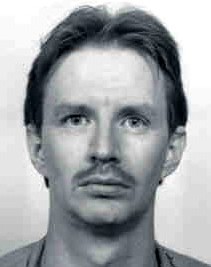
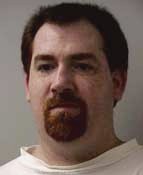
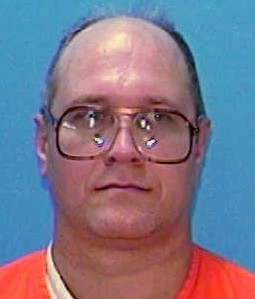
Michael Overstreet
Murderer Russell Ellwood
Murderer · USA · 1991
Russell Ellwood was a former taxi driver. Authorities suspected him of killing…
20 victims
Russell Ellwood
Murderer · USA · 1991
Russell Ellwood was a former taxi driver. Authorities suspected him of killing…
20 victims
 Robert Martines Perez
Murderer · USA · 1994
Name: Robert Martines Perez · Other name used in proceedings: Robert Martinez P…
15 victims
Robert Martines Perez
Murderer · USA · 1994
Name: Robert Martines Perez · Other name used in proceedings: Robert Martinez P…
15 victims
 Billy Frank Vickers
Murderer · USA · 1993
Billy Frank Vickers Vickers was executed by lethal injection in Texas on Januar…
14 victims
Billy Frank Vickers
Murderer · USA · 1993
Billy Frank Vickers Vickers was executed by lethal injection in Texas on Januar…
14 victims
 Julianne McCrery
Murderer · USA · 2011
Julianne McCrery was a Texas woman from Irving, Texas, who was 42 years old. Sh…
1 victim
Julianne McCrery
Murderer · USA · 2011
Julianne McCrery was a Texas woman from Irving, Texas, who was 42 years old. Sh…
1 victim
 Sheila Davalloo
Murderer · USA · 2002
Sheila Davalloo was an Iranian-American woman who worked as a pharmaceutical re…
1 victim
Sheila Davalloo
Murderer · USA · 2002
Sheila Davalloo was an Iranian-American woman who worked as a pharmaceutical re…
1 victim
 Renee Bowman
Murderer · USA · 2006
Renee Bowman was a foster parent to three adopted daughters. The children were…
2 victims
Renee Bowman
Murderer · USA · 2006
Renee Bowman was a foster parent to three adopted daughters. The children were…
2 victims
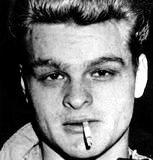 Charles Starkweather
Spree killer · USA · 1957
Charles Raymond Starkweather was born in Lincoln, Nebraska, on November 24, 193…
11 victims
Charles Starkweather
Spree killer · USA · 1957
Charles Raymond Starkweather was born in Lincoln, Nebraska, on November 24, 193…
11 victims
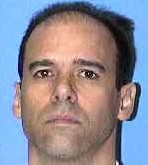 Reinaldo Dennes
Murderer · USA · 1996
Reinaldo Dennes was born in Havanna, Cuba, on 2/9/56. His family came to the US…
1 victim
Reinaldo Dennes
Murderer · USA · 1996
Reinaldo Dennes was born in Havanna, Cuba, on 2/9/56. His family came to the US…
1 victim
- Gender
- male
- Country
- USA
- Location
- Johnson County, Indiana, USA
- Date of birth
- November 18, 1966
- Age at first offence
- 31
- Characteristics
- rape
- Victim profile
- Kelly Eckart (female, 18)
- Method of murder
- Ligature strangulation with shoestring and overalls strap
- Date(s) of murder
- September 27, 1997
- Years active
- 1997
- Date of arrest
- November 6, 1997
- Status
-
Sentenced to death
Sentenced to death on July 31, 2000
Case record: Michael Dean Overstreet
Status
Michael Dean Overstreet was sentenced to death on July 31, 2000.
Background
Michael Dean Overstreet was identified as a white male (DOB: 11-18-66). The case involved a Johnson County Superior Court proceeding.
Kelly Eckart was an 18-year-old Franklin College student. She worked at the Franklin Wal-Mart before she disappeared.
The offence
On Sept. 26, 1997, Kelly Eckart left her job at the Franklin Wal-Mart and headed for her rural Boggstown home. She disappeared.
Four days later, on Sept. 30, her body was found in rural Brown County. Her body was reported to have been raped and strangled.
Police later described Overstreet as having DNA “in and on and around the victim.”
Investigation
Police took Michael Dean Overstreet of Franklin into custody as a suspect in Eckart's murder on Nov. 6, 1997.
Many of the hundreds of tips received by police implicated Overstreet. Police said their big break was a statement by Overstreet’s brother, Scott Overstreet.
Scott Overstreet told police he met Michael early on Sept. 27, 1997, and Michael told him he had “grabbed this girl.” Scott and Michael drove to Camp Atterbury, where Scott left Michael and the girl. Eckart’s belongings were found near that location.
Johnson County Prosecutor Lance Hamner decided to seek the death penalty against Overstreet following DNA testing.
Arrest and charges
Murder charges were officially filed against Overstreet on Nov.10.
The charges against Overstreet included rape, criminal deviate conduct, confinement, and felony murder.
Trial
Overstreet’s four children asked a judge to allow them to change their last name to their mother’s maiden name on Jan. 5, 2000. The request was initially denied because Overstreet had not yet been tried and convicted.
After the trial was over, the judge ruled that the “rights of a single mother outweigh those of an incarcerated father” and granted the name change request.
Overstreet’s trial began May 1, 2000, in Johnson County. His defense had asked for a change of venue, but that request was denied. The jury had been chosen in Clark County to hear the case.
On May 13, jurors found Overstreet guilty of all charges against him.
On May 18, the jury recommended he receive the death penalty. Johnson Superior Court Judge Cynthia S. Emkes agreed with the recommendation.
Sentencing
On July 31, 2000, Judge Cynthia S. Emkes sentenced Overstreet to Indiana’s death row.
Timeline
- Sept. 26, 1997 — Kelly Eckart left her job at the Franklin Wal-Mart and headed for her rural Boggstown home; she disappeared.
- Sept. 27, 1997 — Scott Overstreet met Michael early; Michael told him he had “grabbed this girl”; Scott later left Michael at Camp Atterbury.
- Sept. 30, 1997 — Kelly Eckart’s body was found in rural Brown County; she had been raped and strangled.
- Nov. 6, 1997 — Police took Michael Dean Overstreet of Franklin into custody as a suspect in Eckart’s murder.
- Nov.10 — Murder charges were officially filed against Overstreet.
- Jan. 5, 2000 — Overstreet’s four children asked a judge to allow them to change their last name to their mother’s maiden name; the request was initially denied.
- May 1, 2000 — Overstreet’s trial began in Johnson County.
- May 13, 2000 — Jurors found Overstreet guilty of all charges.
- May 18, 2000 — The jury recommended the death penalty.
- July 31, 2000 — Overstreet was sentenced to Indiana’s death row.
Outcome
The jury convicted Overstreet in a death penalty case. He was sentenced to Indiana’s death row.
Aftermath
In 2002, Eckart’s parents fought for the passage of “Kelly’s Law,” which gives family members of victims the option to give impact statements at sentencing hearings.
“It doesn’t have any impact on the criminal prosecution because it takes place after the sentencing, but I think it can have a cathartic effect for the family,” said Johnson County prosecutor Lance Hamner.
“When we went to trial for Kelly and Overstreet was convicted, I couldn't get up and call him a murderer in front of him,” said Sutton.
“He was convicted. He was a convicted murderer. But I couldn't say anything to him that day because it wasn't a law. Now it is.” said Sutton.
Connie Sutton received an honorary law degree from Franklin College where Kelly Eckart attended as a freshman.
“When I walked down that center aisle at graduation with gap and gown on, I felt like I was doing the walk for Kelly because she never got to do it,” said Sutton.
“She loved that school She wanted to go there more than any anything. So I feel like I finished the walk for her.” said Sutton.
In the aftermath, a tree was planted in honor of Kelly Eckart at Franklin College, and Nicole Hensley was described as walking in front of it.
“It is very beautiful in the spring once it blooms,” said Hensley.
“Walking by it, everyone notices how pretty it is. Not everybody knows what it means, but I know what it means.” said Hensley.
Hensley attended the same high school as Kelly Eckart and attended Franklin College in part because of Kelly. She said she was a recipient of the Kelly Eckart scholarship through Franklin College.
“I am a recipient of the Kelly Eckart scholarship through Franklin College,” said Hensley, who was in the fifth grade when Eckart was murdered.
“I remember posters all over the school about this missing girl,” Hensley recalls.
“While I didn't know her personally, I knew my community was greatly affected by this.” said Hensley.
Hensley said the scholarship helped students pay for tuition and that she would graduate in May.
“It's more than the money,” said Hensley.
“I help fulfill her legacy and what she would have wanted to accomplish by graduating from Franklin.” said Hensley.
At the Franklin Wal-Mart where Kelly worked, Kelly’s legacy was described as being on a “Missing Child” display.
“You will see her picture and hopefully pan down to see there's a whole bunch of other people whose lives have been unsolved,” said Chief Prosecutor Brad Cooper.
“Obviously, that was a very famous case of a missing person that everybody in this community knows about,” says Hensley.
“So having that associated with it brings attention to other missing child cases.” said Hensley.
The record also described Kelly Eckart’s legacy at Triton Central High School, where Kelly graduated as a member of the honor society, and where her mother helped lead the guard.
Connie Sutton was described as keeping Kelly’s memory alive and wearing Kelly’s ring with her birthstone and keeping items associated with Kelly’s last night.
“People have to remember what happened to her, so it doesn't happen to them,” said Sutton.
“Hopefully it reminds people to be careful, that not everybody out there is good,” added Sutton.
“If you're out in the middle of nowhere, and it's all dark and somebody tries to stop you, I don't care if he has a flashing light, put your flashers on to acknowledge that you see him and go place where you feel safe,” said Sutton.
“It is sometimes hard to touch it, because the last time she touched it, she wasn't breathing,” said Sutton.
Sutton watched home video of her daughter getting ready for a school dance, rollerblading on the driveway, and practicing for the Triton Central Color Guard.
The record included additional quotes connected to Overstreet’s case prosecution and sentencing. It included statements attributed to Chief Deputy Prosecutor Brad Cooper and Prosecutor Lance Hamner, and it included statements attributed to Connie Sutton.
“His DNA was in and on and around the victim,” said Chief Deputy Prosecutor Brad Cooper.
“He killed my daughter,” said Sutton.
“He took her. He killed her. He raped her and then dumped her down a ravine. He has no respect for life at all.” said Sutton.
“I think it won't happen in May,” said Sutton.
“I think he'll file federal appeals and so we'll be going through the same process that we did at the state level, we'll be going through a federal level too. It's going to be another four to ten years.” said Sutton.
“This was a very dangerous person who won't be on the street again,” said Prosecutor Lance Hamner.
“I think of a guy who was probably on his way to being a serial killer, who just happened to get caught the first time,” said Cooper.
“He was just one evil dude.” said Cooper.
Other details
- Overstreet was identified with Indiana Supreme Court opinion number 41S00-0306-PD-249.
- Overstreet was listed as OVERSTREET, MICHAEL DEAN and as #93 ON DEATH ROW SINCE 07-31-00.
- The record listed a DOC number: #993801.
- The trial judge was identified as Johnson Superior Court Judge Cynthia S. Emkes.
- The jury recommendation and acceptance by Judge Cynthia S. Emkes were described in connection with the death penalty sentencing.
Spotted an error, or have more information about this case?