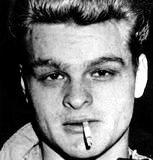
Charles Starkweather
Spree killer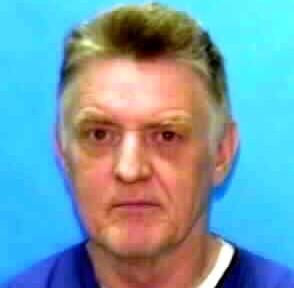 Dennis Whitney
Spree killer · USA · 1960
Dennis Whitney was convicted and sentenced in Florida after a course of killing…
7 victims
Dennis Whitney
Spree killer · USA · 1960
Dennis Whitney was convicted and sentenced in Florida after a course of killing…
7 victims
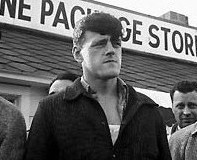 Joseph Taborsky
Spree killer · USA · 1951
Joseph “Mad Dog” Taborsky (March 23, 1924 – May 17, 1960) was a murderer who wa…
7 victims
Joseph Taborsky
Spree killer · USA · 1951
Joseph “Mad Dog” Taborsky (March 23, 1924 – May 17, 1960) was a murderer who wa…
7 victims
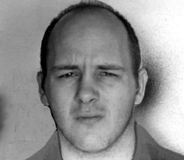 Myron Lance
Spree killer · USA · 1966
Myron Lance was 25 years old on Dec. 17, 1966, when he teamed up with fellow pa…
6 victims
Myron Lance
Spree killer · USA · 1966
Myron Lance was 25 years old on Dec. 17, 1966, when he teamed up with fellow pa…
6 victims
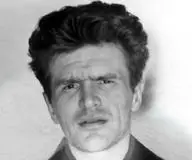 Walter Kelbach
Spree killer · USA · 1966
Walter Kelbach was 28 years old. Myron Lance was 25 years old. Kelbach and Lanc…
6 victims
Walter Kelbach
Spree killer · USA · 1966
Walter Kelbach was 28 years old. Myron Lance was 25 years old. Kelbach and Lanc…
6 victims
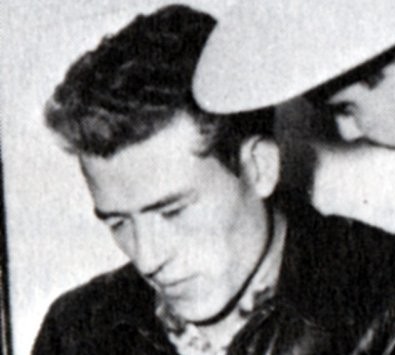 William Cook
Spree killer · USA · 1951
William Cook, also known as “Billy Boy” or “Cockeyed Cook,” committed a spree o…
6 victims
William Cook
Spree killer · USA · 1951
William Cook, also known as “Billy Boy” or “Cockeyed Cook,” committed a spree o…
6 victims
 Fred McManus
Spree killer · USA · 1953
Fred McManus was 18 years old and was described as a Marine from Long Island. H…
5 victims
Fred McManus
Spree killer · USA · 1953
Fred McManus was 18 years old and was described as a Marine from Long Island. H…
5 victims
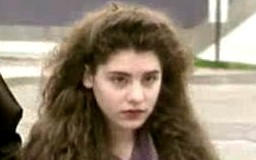 Melinda Loveless
Homicide · USA · 1992
Defendant: Melinda Loveless Victim: Shanda Renee Sharer Shanda Renee Sharer was…
1 victim
Melinda Loveless
Homicide · USA · 1992
Defendant: Melinda Loveless Victim: Shanda Renee Sharer Shanda Renee Sharer was…
1 victim
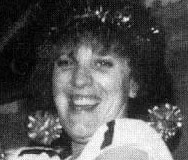 Susan Barber
Murderer · United Kingdom · 1981
Susan Barber married Michael Barber in 1970. Susan was 17 years old and had a d…
1 victim
Susan Barber
Murderer · United Kingdom · 1981
Susan Barber married Michael Barber in 1970. Susan was 17 years old and had a d…
1 victim
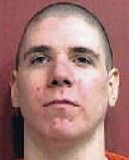 Douglas Turner
Homicide - Murderer · USA · 1987
Douglas Turner was a juvenile who was released from an alcohol treatment progra…
9 victims
Douglas Turner
Homicide - Murderer · USA · 1987
Douglas Turner was a juvenile who was released from an alcohol treatment progra…
9 victims
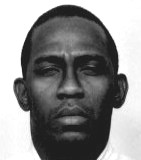 Gerald Cornelius Eldridge
Murderer · USA · 1993
Gerald Cornelius Eldridge (defendant) · Cynthia Bogany (former girlfriend; vict…
2 victims
Gerald Cornelius Eldridge
Murderer · USA · 1993
Gerald Cornelius Eldridge (defendant) · Cynthia Bogany (former girlfriend; vict…
2 victims
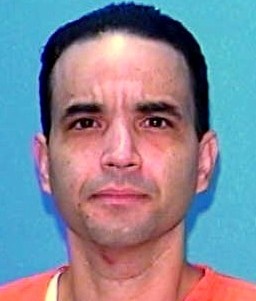 Marbel Mendoza
Murderer · USA · 1992
Marbel Mendoza (date of birth: 09/23/66) was sentenced to death on 08/02/94 in…
1 victim
Marbel Mendoza
Murderer · USA · 1992
Marbel Mendoza (date of birth: 09/23/66) was sentenced to death on 08/02/94 in…
1 victim
- Gender
- male
- Country
- USA
- Location
- Nebraska/Wyoming, USA
- Date of birth
- November 24, 1938
- Age at first offence
- 19
- Characteristics
- crime spree, spree killer
- Victim profile
- Robert Colvert (21), gas station attendant / Marion Bartlett (57), Caril Ann's stepfather; Velda Bartlett , Caril Ann's mother, and Betty Jean Bartlett (2), Marion and Velda's daughter / August Meyer (70), Starkweather's family friend / Robert Jensen (17), Carol King's boyfriend, and Carol King (16), Robert's girlfriend / C. Lauer Ward (47), wealthy industrialist; Clara Ward (46), C. Lauer Ward's wife, and Lillian Fencl (51), Clara Ward's maid / Merle Collison (37), traveling salesman
- Method of murder
- Shooting
- Date(s) of murder
- December 1957 - January 1958
- Years active
- 1957–1958
- Date of arrest
- January 29, 1958
- Status
-
Executed
Executed in the electric chair at the Nebraska State Penitentiary in Lincoln, Nebraska, on June 25, 1959
Case record: Charles Starkweather
Background
Charles Raymond Starkweather was born in Lincoln, Nebraska, on November 24, 1938. He was the third of seven children to Guy and Helen Starkweather.
The Starkweathers were described as a working class family that always had shelter and other resources. Guy Starkweather was described as a mild-mannered man and a carpenter who was often unemployed due to rheumatoid arthritis in his hands. During those periods, Starkweather’s mother supplemented the family income by working as a waitress.
Starkweather attended Saratoga Elementary School, Irving Middle School, and Lincoln High School in Lincoln. He was born with Genu varum, a mild birth defect that caused his legs to be misshapen. He also suffered from a speech impediment that led to constant teasing by classmates. He was considered a slow learner and was accused of never applying himself. In his teens, severe myopia was discovered that had drastically affected his vision for most of his life. The sole aspect of school in which he excelled was gym. Gym class was described as a physical outlet for his growing rage against those who bullied him.
His high school friend Bob von Busch later recalled:
"He could be the kindest person you've ever seen. He'd do anything for you if he liked you. He was a hell of a fun to be around, too. Everything was just one big joke to him. But he had this other side. He could be mean as hell, cruel. If he saw some poor guy on the street who was bigger than he was, better looking, or better dressed, he'd try to take the poor bastard down to his size."
After viewing the film Rebel Without a Cause, Starkweather developed a James Dean fixation and groomed his hairstyle and dress to look like Dean. He related to Dean’s rebellious screen persona, believing he had found a kindred spirit who had suffered torment. He developed a severe inferiority complex and became self-loathing and devoid of morals, believing he was unable to do anything correctly and that his failures would cause him to live in misery.
Relationship with Caril Ann Fugate
In 1956, Charles Starkweather was introduced to thirteen-year-old Caril Ann Fugate. In the narrative, he dropped out of Lincoln High School in his senior year and became employed at a Western Union newspaper warehouse. The warehouse was described as being near Whittier Junior High School in Lincoln, where Fugate was a student, allowing him to visit her every day after school.
Starkweather was considered a poor worker, and his employer later recalled:
"Sometimes you'd have to tell him something two or three times. Of all the employees in the warehouse, he was the dumbest man we had."
Starkweather taught Fugate how to drive. One day she crashed his 1949 Ford into another car. Starkweather’s father paid the damages because he was the legal owner of the vehicle. This caused an altercation between Starkweather and his father. Starkweather was banished from the household after his father refused to condone his son’s behavior. Starkweather quit his job at the warehouse and was employed as a garbage collector for minimum wage.
It was also described that one of the homes on his route was the residence of future talk show host Dick Cavett, and Starkweather had once met Cavett’s father.
The narrative described Starkweather beginning to plot bank robberies while employed on the garbage route, and it included the line:
"Dead people are all on the same level".
The offence
Starkweather was described as a spree killer who murdered eleven people in Nebraska and Wyoming during a two-month road trip with his 14-year-old girlfriend Caril Ann Fugate. The couple were captured on January 29, 1958.
First murder: Robert Colvert
On November 30, 1957, Starkweather went to a service station in Lincoln where he tried to purchase a stuffed toy dog for Fugate on credit. The station attendant, Robert Colvert, refused credit and Starkweather left enraged.
At 3:00 a.m. on December 1, 1957, Starkweather returned to the station with a 12-gauge shotgun. He initially left the weapon in the car, entered the station, and bought cigarettes from Colvert. He left, drove down the road, turned around, and returned, again leaving the weapon in the car. He purchased chewing gum and then left again.
He parked a distance away from the station, sported a red bandanna underneath a hat, and then walked to the station with the shotgun and a canvas bag. He held Colvert at gunpoint and stole $100 from the cash register before forcing Colvert to walk back to his car.
Starkweather drove Colvert to a remote area outside of Lincoln and forced him out of the car. Colvert struggled and attempted to get hold of the shotgun. The shotgun fired in the scuffle, shooting Colvert in his kneecaps. Starkweather then killed the wounded Colvert with a shotgun blast to the head.
Starkweather later claimed that after the murder he believed he had transcended his former self to reach a new place of existence above and outside the law. He confessed the robbery to Fugate immediately, claiming someone else had killed Colvert, which Fugate did not believe.
1958 murder spree
On January 21, 1958, Starkweather visited Fugate at her home in the Belmont neighborhood of Lincoln. He argued with Fugate’s mother and stepfather, Velda and Marion Bartlett, after not finding Fugate at home and after they told him to stay away from their daughter. He then fatally shot the Bartletts with his shotgun and proceeded to strangle and fatally stab their two-year-old daughter, Betty Jean. After Fugate arrived home, Starkweather told her of his actions and they hid the bodies in various locations behind the house.
They remained in the house for six days, turning people away with a note written by Fugate taped to the door that read: "Stay a Way Every Body is sick with the Flue. - Velda Bartlett. [ sic ]"
Fugate’s grandmother became suspicious and contacted the Lincoln Police Department. When police arrived on January 27, Starkweather and Fugate had fled the house.
Starkweather and Fugate drove to the Bennet, Nebraska farm house of seventy-year-old August Meyer, a Starkweather family friend, whom Starkweather killed with a shotgun blast to the head. As they were fleeing, Starkweather and Fugate drove their car into mud and abandoned the vehicle.
Robert Jensen and Carol King, two local teenagers, stopped to give them a ride. Starkweather forced them to drive back to an abandoned storm shelter in Bennet, where both were shot and killed. Starkweather admitted shooting Jensen and claimed Fugate shot King. The couple stole Jensen’s car and fled Bennet.
They drove into a wealthier section of Lincoln and entered the home of industrialist C. Lauer and Clara Ward. Both Clara Ward and maid Lillian Fencl were fatally stabbed. Starkweather later admitted throwing a knife at Ward but accused Fugate of inflicting multiple stab wounds found on her body, and he also accused Fugate of fatally stabbing Fencl, whose body also had multiple stab wounds. When Lauer returned home that evening, Starkweather shot him. Starkweather and Fugate filled Lauer’s black 1956 Packard with stolen jewelry from the house and fled Nebraska.
The narrative described law enforcement activity as a house-by-house search, with the governor contacting the Nebraska National Guard and the Lincoln chief of police calling for a block-by-block search. It also described frequent sightings and charges of incompetence against the Lincoln Police Department for inability to capture them.
Needing a new car, they found traveling salesman Merle Collison sleeping in his Buick along the highway outside Douglas, Wyoming. After waking Collison, he was shot, with Starkweather accusing Fugate of performing a coup-de-grace after his shotgun jammed. Starkweather claimed Fugate was the "most trigger happy person" he had ever met.
While attempting to drive away, the car stalled and a passing motorist stopped to help. Starkweather threatened him with a rifle and an altercation ensued. A deputy sheriff arrived at the scene at that moment. Fugate ran to him, yelling something to the effect of: "It's Starkweather! He's going to kill me!"
Starkweather tried to evade police, exceeding speeds of 100 miles per hour. A bullet shattered the windshield and flying glass cut Starkweather. Starkweather stopped abruptly and surrendered.
Converse County Sheriff Earl Heflin said:
"He thought he was bleeding to death. That's why he stopped. That's the kind of yellow son of a bitch he is."
Starkweather and Fugate were captured in Douglas.
Investigation, arrest, and trial
Captured and competing accounts
Starkweather first claimed Fugate was captured by him and had nothing to do with the murders. He later changed his story several times and, at Fugate’s trial, testified that she was a willing participant.
Fugate maintained that she had been holding hostage by Starkweather and that she was unaware that her family was already dead, stating she was terrorized while he attacked her family.
Judge Harry A. Spencer did not believe Fugate was held hostage by Starkweather, stating she had many opportunities to escape.
Charges and jury verdict
Starkweather received the death penalty for the murder of Robert Jensen, which was described as the only murder he was tried for. Fugate received a life sentence on November 21, 1958.
Starkweather’s plea and defence counsel
Starkweather’s trial began on May 5, 1958. He maintained that he was completely sane while his lawyers sought to build an insanity defense. His defence lawyers entered a plea of "innocent by reason of insanity."
T. Clement Gaughan and William F. Matschullat were appointed by the court as defence counsel for Starkweather. Elmer Scheele was described as the prosecutor. The narrative described Starkweather telling authorities that Fugate had nothing to do with the crimes and included his first words:
"Don't' be rough on the girl. She didn't have a thing to do with it."
Starkweather later suggested that Fugate was responsible for several murders and all mutilations. He said:
"She could have escaped at any time she wanted,"
"I left her alone lots of times. Sometimes when I would go in and get hamburgers she would be sitting in the car with all of the guns. There would have been nothing to stop her from running away."
One defence attorney made an emotional plea and stated:
"This boy is a product of our society. Our society that spawned this individual is looking for a scapegoat. Caril Fugate should get the same punishment as this lad, and I can tell you right now that she is never going to get the death penalty. His life, my life are almost parallels until our nineteenth birthday. I stand here and weep unashamedly. I hated everybody and everything and I could lick anybody. Society treated me exactly as it treated Charles Starkweather, but the good Lord gave me, possibly, a little better parents. "
"I will take you to the death house so you can see him with his trousers cut to the knees, with his arms bare, his head shaved, with electrodes attached. And when the switch is pulled, you will see the electricity snap and the smoke come from his head, his hair stand on end as the electricity goes through his body. You will see him jerk in the straps and see him fall forward. This is your responsibility, not mine. Ladies and gentleman, I ask you for the life of Charles Starkweather."
The narrative described the jury as deciding within twenty-four hours and returning guilty on both counts of first degree murder. The men and women of the jury specifically asked for the death penalty, which was granted on June 25, 1959.
Sentencing and execution
The narrative described Starkweather as receiving the death penalty for the murder of Robert Jensen, with the request granted on June 25, 1959.
Charles Starkweather was executed in the electric chair at the Nebraska State Penitentiary in Lincoln, Nebraska, at 12:01 a.m. on June 25, 1959.
Fugate’s sentence and later status
At Fugate’s trial, the defence was described as being built on Fugate being a hostage forced by Starkweather to go with him on his murder spree. Fugate was found guilty of murder on November 28, 1958.
Because she was a fourteen-year-old girl, she received a life sentence instead of the electric chair. She was sent to the Nebraska Center for Women and served her sentence until her parole in June 1976.
Fugate’s sentence was eventually commuted allowing her to be paroled in June 1976. The narrative also stated she served 18 years at the Nebraska Correctional Center for Women in York, Nebraska. She later settled in Lansing, Michigan, where she changed her name and worked as a janitor at a Lansing hospital. The narrative stated she never married and refused to speak of the murders.
Outcome
Starkweather’s conviction resulted in execution in the electric chair at the Nebraska State Penitentiary in Lincoln, Nebraska, on June 25, 1959.
Fugate received a life sentence, later had it commuted to allow parole in June 1976, and was paroled after serving 18 years.
Aftermath and cultural influence
Stephen King was described as being strongly influenced by reading about the Starkweather murders when he was a youth, keeping a scrapbook about them and later creating many variations on Starkweather. The narrative stated King said that the character The Kid in The Stand was modeled after Charles Starkweather.
The Starkweather-Fugate case inspired the films The Sadist (1963), Badlands (1973), True Romance (1993), Natural Born Killers (1994), and Starkweather (2004).
The made-for-TV movie Murder in the Heartland (1993) was described as a biographical depiction of Starkweather with Tim Roth in the starring role. The narrative stated that in 1983, Stark Raving Mad, starring Russell Fast and Marcie Severson, provided a fictionalized account of the Starkweather-Fugate murder spree.
Liza Ward, the granddaughter of victims C. Lauer and Clara Ward, wrote the 2004 novel Outside Valentine, based on the events of the Starkweather-Fugate murders. The 1974 book Caril was described as an unauthorized biography of Caril Ann Fugate written by Ninette Beaver.
Bruce Springsteen’s song "Nebraska", the title song of his solo album of 1982, was described as being based on these events and as a first-person narrative.
The Peter Jackson film The Frighteners was described as having a central plot element of a Starkweather-inspired killer who goes on a similar murder spree complete with a kidnapped female accomplice. The narrative said the murderer, who committed his crimes soon after Starkweather’s spree, was inspired to try and outdo Starkweather’s number of victims and, when hauled before the media, shouts out: "One more than Starkweather!" in triumph.
The song "Badlands" by Church of Misery on their album Houses of the Unholy was described as centering on the murders and being told from a first-person perspective.
The narrative stated that the "The Thirteenth Step" episode of Criminal Minds depicted a North Dakota and Montana newlyweds killing spree similar to Starkweather-Fugate.
The narrative also stated that the band Starkweather took its name from the spree killer and that Billy Joel mentions the Starkweather homicide in "We Didn't Start the Fire."
The final boss and main foe-character from the Rockstar game "Manhunt" was described as being called "Starkweather" and keeping a certain similitude in his physical aspect.
Victims
The narrative listed victims as: Robert Colvert; Marion Bartlett; Velda Bartlett; Betty Jean Bartlett; August Meyer; Robert Jensen; Carol King; C. Lauer Ward; Clara Ward; Lillian Fencl; and Merle Collison.
It also stated that Starkweather was buried in Wyuka Cemetery in Lincoln along with five of his victims: the Bartlett family and the Ward couple.
Other details
The narrative described additional items related to characterization and works: Stephen King’s The Stand, multiple film adaptations and portrayals, and references in songs and games.
The narrative also included a biographical entry listing: Starkweather, Charles Raymond (1938-59); Fugate, Caril Ann (1943-). It listed SEX: M/F and other metadata such as VENUE: Nebr/Wyo. and VICTIMS: 11, and it described DISPOSITION: "Starkweather executed in Nebr., june 25, 1959; Fugate sentenced to life, 1958 (paroled 1976)."
Spotted an error, or have more information about this case?