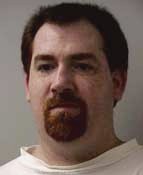
Jack Foster Outten
Murderer Brian Kevin Rosenfeld
Murderer · USA · 1985
Brian Kevin Rosenfeld Brian Kevin Rosenfeld was sentenced to three concurrent l…
23 victims
Brian Kevin Rosenfeld
Murderer · USA · 1985
Brian Kevin Rosenfeld Brian Kevin Rosenfeld was sentenced to three concurrent l…
23 victims
 Russell Ellwood
Murderer · USA · 1991
Russell Ellwood was a former taxi driver. Authorities suspected him of killing…
20 victims
Russell Ellwood
Murderer · USA · 1991
Russell Ellwood was a former taxi driver. Authorities suspected him of killing…
20 victims
 Robert Martines Perez
Murderer · USA · 1994
Name: Robert Martines Perez · Other name used in proceedings: Robert Martinez P…
15 victims
Robert Martines Perez
Murderer · USA · 1994
Name: Robert Martines Perez · Other name used in proceedings: Robert Martinez P…
15 victims
 Billy Frank Vickers
Murderer · USA · 1993
Billy Frank Vickers Vickers was executed by lethal injection in Texas on Januar…
14 victims
Billy Frank Vickers
Murderer · USA · 1993
Billy Frank Vickers Vickers was executed by lethal injection in Texas on Januar…
14 victims
 Richard Eberling
Serial killer · USA · 1946
Richard George Eberling (December 8, 1929 - July 25, 1998) was a petty thief an…
5 victims
Richard Eberling
Serial killer · USA · 1946
Richard George Eberling (December 8, 1929 - July 25, 1998) was a petty thief an…
5 victims
 Russell Lee Smith
Murderer · USA · 1975
February 6, 1947 — Russell Lee Smith was born in Bessemer, Alabama, United Stat…
2 victims
Russell Lee Smith
Murderer · USA · 1975
February 6, 1947 — Russell Lee Smith was born in Bessemer, Alabama, United Stat…
2 victims
 Yu Hagino
Murderer · Japan · 2005
Yu Hagino (萩野 裕, Hagino Yū, born 1982) was a teacher at a cram school in Uji, K…
1 victim
Yu Hagino
Murderer · Japan · 2005
Yu Hagino (萩野 裕, Hagino Yū, born 1982) was a teacher at a cram school in Uji, K…
1 victim
 Chai Soua Vang
Mass murderer · USA · 2004
Chai Soua Vang (born September 24, 1968) shot several deer hunters in northern…
6 victims
Chai Soua Vang
Mass murderer · USA · 2004
Chai Soua Vang (born September 24, 1968) shot several deer hunters in northern…
6 victims
 Catherine Hayes
Murderer · United Kingdom · 1726
Catherine Hayes (also spelled Catharine Hayes) was an English murderess. Cather…
1 victim
Catherine Hayes
Murderer · United Kingdom · 1726
Catherine Hayes (also spelled Catharine Hayes) was an English murderess. Cather…
1 victim
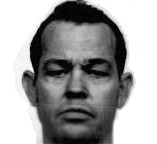 Jerry Walter McFadden
Murderer · USA · 1986
Jerry Walter McFadden nicknamed himself "Animal". He was a former telephone cab…
3 victims
Jerry Walter McFadden
Murderer · USA · 1986
Jerry Walter McFadden nicknamed himself "Animal". He was a former telephone cab…
3 victims
- Gender
- male
- Country
- USA
- Location
- Wilmington, Delaware, USA
- Date of birth
- March 23, 1966
- Age at first offence
- 26
- Characteristics
- alcohol, robbery, abuse, drug addict
- Victim profile
- Wilson Mannon (male, 64)
- Method of murder
- Hitting with a hammer
- Date(s) of murder
- January 12, 1992
- Years active
- 1992
- Date of arrest
- Same day
- Status
-
Sentenced to death
Sentenced to death April 30, 1993; conviction for first-degree murder resulted in death sentence, but the federal appellate court reversed and remanded for resentencing on the penalty phase due to trial counsel’s failure to conduct a reasonable investigation of Outten’s background in anticipation of capital sentencing; within 120 days of the judgment accompanying the opinion, the State of Delaware may conduct a new sentencing hearing in a manner consistent with the opinion or sentence Jack Outten to life imprisonment
Case details
Jack Foster Outten, Jr. was a white male born 03/23/1966. He was sentenced to death on 04/30/1993 for first-degree murder.
The offence
Outten, along with cousins Steven and Nelson Shelton, robbed and killed 64-year-old Wilson “Willie” Mannon after a night of drinking.
Mannon’s body was discovered along a road in a deserted area of East Wilmington at approximately 11:00 a.m. on 01/12/1992. Mannon was found lying on his back with his legs crossed and the top of his head shattered. Mannon’s pockets were turned inside-out, and loose change, his empty wallet, and his identification cards were scattered nearby. A broken ballpeen hammer handle rested a few feet away from his body and the head of that hammer was located behind a nearby fence along the road.
The evidence at trial included statements by Christina Gibbons about the events leading to Mannon’s beating and killing, including a claim that the older man, Willie, was beaten with a hammer and an object she thought was a sink.
Investigation
Christina Gibbons provided multiple statements to New Castle County and Wilmington law enforcement officers implicating Outten and Steven Shelton in the robbery and murder of Mannon. During the investigation, her story included the claim that the sink was discarded along Interstate 95 after the murder.
On 01/13/1992, Gibbons spoke about Mannon’s murder to her social worker, Sandra Nyce. In that account, she differed significantly from her prior statements and implicated Outten and both Shelton brothers in the beating and murder, telling Nyce that all three men had taken turns hitting Mannon and that they had killed a “nice old man.”
During trial, Gibbons was the State’s principal witness. Her testimony at trial conflicted with her earlier investigative accounts.
Arrest and police questioning
Nelson Shelton and Gibbons were stopped by New Castle County police later on the morning after Mannon’s body was discovered. The officers sought to question Nelson on an unrelated charge. Nelson was taken to police headquarters and found to be in possession of two gold rings that belonged to Mannon. Nelson’s winter jacket appeared to be stained with blood. Gibbons accompanied Nelson to the police station and provided statements implicating Outten and Steven Shelton.
Trial
Charges and trial setting
On 01/21/1992, a Delaware grand jury indicted Outten and the Sheltons for Mannon’s death. They were charged with, inter alia, first-degree murder, first-degree conspiracy, first-degree robbery, and possession of a deadly weapon during the commission of a felony.
The defendants were tried together in the Delaware Superior Court in New Castle County in January–February 1993.
Verdict
After deliberating for two days, the jury convicted the defendants of all offenses as charged.
Sentencing
Penalty hearing and mitigation testimony
A penalty hearing was held on 03/03/1993–03/05/1993. Counsel for both Outten and Steven Shelton made opening statements.
One of Outten’s counsel told the jury its decision was simple: choose life or death. He stated that he and his co-counsel were there “to beg for the life of [their] client.”
Steven Shelton’s counsel stated: “My client has instructed me to advise you that we will not be begging for his life in this case.”
The State presented evidence of Outten’s past criminal history, including:
- a house burglary conviction;
- seven convictions for non-violent crimes including forgery, issuance of a bad check, misdemeanor theft, felony theft, and criminal impersonation;
- his family court record; and
- his probation violations.
Outten presented mitigation evidence through witnesses including his mother (Carol Outten), two sisters (Robin Outten and Amanda Hart), brother (John Outten), friend (Ruperto Sanchez), and his former girlfriend and the mother of two of his children (Karen Julian).
Carol Outten testified about Outten’s relationship with his father, Foster Outten, who was described as his father was dying of cancer. Carol testified that Outten stayed in the parents’ home to care for his father for the last two years of his father’s life and continued to assist his father even when he was completely bed-ridden. She described Foster as “very strict” and testifying that he “punished [the] children as he saw fit.” Carol also testified that Outten had “started off in school okay but got into truancy trouble,” and only made it to the eleventh grade. Carol testified about Outten’s prior convictions for assault and confirmed on cross-examination that Outten physically attacked his sister Amanda.
Robin Outten testified next. She explained that Outten had cared for his father toward the end of his life and stated that “Outten was very upset by his father’s death and cried like she had never seen before.” Robin told the jury that Outten had a child with Karen Julian in 1991, but the baby died shortly after birth, and she testified: “[t]his too,” she said, “was most upsetting to Outten.”
On cross-examination, Robin admitted that she had accrued “theft and misdemeanor convictions,” and that those crimes “also involv[ed] Outten.”
Ruperto Sanchez testified that he observed “Outten being upset when his baby died” and that Outten “mentioned the good relationship Outten had with his father.” On cross-examination, Sanchez stated that he had been convicted in 1991 of a misdemeanor offense involving both Robin and Outten.
Amanda Hart then testified and described a 1989 physical altercation between Outten and Karen Julian. Hart testified that Outten punched her in the eye when she attempted to intercede. An affidavit of probable cause signed by Hart and introduced on cross-examination indicated that Outten had caused damage to her residence as well.
Hart testified that there were times she and Outten lived together and that during those times Outten was “helpful to her and others,” and treated her infant children well. She also discussed “how Outten took care of his father in the last years of his illness.”
Karen Julian testified that she and Outten had lived together for about four-and-a-half years prior to his arrest for the underlying offense. Julian testified that Outten had been working as a roofer but was laid off four to six weeks before the murder. She testified that Outten had not completed an alcoholic rehabilitation program because he would not provide the names of others who had broken rules.
Outten’s older brother John testified that their father became blind in one eye and suffered a speech impediment as a result of a mugging that occurred in 1974. John testified that Outten seemed to suffer the worst from their father’s frustration with his impaired condition. John stated it was his opinion that his brother’s relationship with their father “caused Outten to start stealing.”
Outten also spoke directly to the jury in allocution. He described his family as “close-knit,” but stated that he had been “semi-abused.” Outten stated that his father “chastened” him, making him run away. Outten reviewed his extensive criminal record, characterizing himself as “mischievous,” and pointed out that his convictions were for non-violent offenses such as forgery, theft, and criminal mischief. Outten described himself as a “kleptomaniac” and admitted that he drank alcohol and took drugs. He explained he had a regular roofing job and started his own company, but “[h]e stole . . . to buy tools needed for [his] work.” In closing, he told the jury he was caring, sharing, loving, and honest—“not cold, calculating, ruthless or heartless.” He testified that “his good qualities outweighed the bad.”
Prosecutor comments
In closing, the prosecutor remarked:
Another thing that judges, for me, the importance of what you do and what this all means is the remorse that has been shown in this case in the words of Jack Outten in allocution and Steven Shelton in allocution. And they told you or paid lip service that they had concerns for the families of the victim, but what did you hear about their remorse for their acts? What did you hear about that concern for the families of the victim whose life was taken innocently, without any wrong that he caused any of these individuals?
Outten’s counsel did not object to these comments.
Aggravating and weighing findings; recommendation
Consistent with the state death penalty statute in effect at the time of the sentencing hearing (11 Del. C. § 4209), the jury unanimously found beyond a reasonable doubt the existence of three aggravating factors:
- the murder was committed during a robbery (11 Del. C. § 4209(e)(1)(j));
- a motive for the murder was pecuniary gain (11 Del. C. § 4209(e)(1)(o));
- the victim was over sixty-two years old (11 Del. C. § 4209(e)(1)(r)).
By a vote of seven to five, the jury found by a preponderance of the evidence that the aggravating circumstances outweighed the mitigating circumstances presented by Outten, and it recommended a sentence of death.
Judge’s sentencing reasoning and sentence date
In sentencing Outten, the trial judge acknowledged that he had proposed four factors in mitigation: Outten’s age, his lack of violent felonies, his family status, and his amenability to lesser sanctions than death. The judge concluded that Outten’s relative youth (he was thirty) was diminished by his extensive appearances in the criminal justice system. The judge concluded that Outten’s long-standing substance abuse problem and the evidence of alcohol consumption on the evening of the murder were diminished as mitigation by his failure to complete substance abuse programs. The judge also recognized that the father’s disability, alcohol abuse, and strictness had a negative effect on Outten.
Ultimately, the judge independently concluded that the aggravating circumstances outweighed the mitigating circumstances and sentenced Outten to death for the murder of Mannon on 04/30/1993.
Other individuals mentioned in the case
Steven Shelton
Steven Shelton was also sentenced to death. Steven Shelton presented limited mitigation evidence and made allocution:
Ladies and gentlemen of the jury, I stand before you not to plead for my life. I feel that's wrong and improper and basically disrespectful to the victim's family and to mine. The State has painted a picture, and that picture is not very pretty, pertaining to me and my co-defendants. And I would just like to present to the jury a different side or a different meaning to Steven Shelton. The State has pictured me as being a monster, as being a rapist, as being a violent individual, but as you heard from my family, that's not so. The State only presents one side of the picture. There's two sides to every story. And the State just presents a negative side. The jury has found me guilty of these allegations, and now it's the jury's turn to render a verdict. And that verdict is either life in jail or death. Again, I'm not here to plead for my life, but just ask the jury to be fair in their decisions. That's all I have to say.
Nelson Shelton
Nelson Shelton was stopped by New Castle County police and found to be in possession of two gold rings belonging to Mannon. Nelson Shelton was sentenced to death and waived all appeals and/or post-conviction remedies, and he was executed on 03/17/1995.
Appeals
Delaware Supreme Court (direct appeal)
An automatic appeal was taken to the Delaware Supreme Court pursuant to 11 Del. C. § 4209(g). Outten argued that:
- the Superior Court erred by refusing to grant a severance of his trial from that of his co-defendants;
- the State’s use of a peremptory challenge to strike an African-American juror violated Batson v. Kentucky; and
- the Superior Court erred by not allowing him to introduce extrinsic evidence in support of the credibility of one of his witnesses at trial.
The Delaware Supreme Court rejected each claim and affirmed his conviction and sentence.
Delaware post-conviction proceedings
Outten filed an amended motion for post-conviction relief in the Delaware Superior Court, arguing ineffective assistance of counsel during both the guilt and penalty phases. He contended counsel erred by failing to:
- conduct an adequate pretrial investigation;
- move for severance of his guilt phase from that of his co-defendants;
- provide proper advice concerning his right to take the witness stand;
- move for severance of his penalty phase from that of his co-defendants;
- adequately investigate and prepare mitigating evidence; and
- move for a new trial.
Outten requested an evidentiary hearing. The Superior Court ruled that an expansion of the trial record was necessary, and asked Outten’s counsel to respond in affidavit form to a series of Court questions. After reviewing the newly submitted materials, the Superior Court concluded that an evidentiary hearing was unwarranted and denied Outten’s amended motion for post-conviction relief.
Outten appealed to the Delaware Supreme Court contending, among other things, that it erred by not holding an evidentiary hearing and that the Superior Court abused its discretion in denying his post-conviction claims of ineffective assistance of counsel. The Supreme Court of Delaware affirmed the denial of post-conviction relief. The Superior Court reinstated his death sentence and set the date of execution for March 18, 1999.
Federal habeas proceedings and outcome
On 12/28/1998, Outten filed in the United States District Court for the District of Delaware:
- a 28 U.S.C. § 2254 pro se petition for a writ of habeas corpus,
- a 28 U.S.C. § 2251 motion to stay state proceedings, and
- a motion to proceed in forma pauperis.
The Court granted a stay of execution and the motion to proceed in forma pauperis, appointed counsel, and set a schedule to file an amended petition.
In October 1999, Outten filed his first amended habeas petition to clarify his grounds for relief. He also filed a motion to supplement the record with the expert report of a post-conviction mitigation specialist, Lori James-Monroe, and a motion for an evidentiary hearing on his ineffective assistance of counsel claims during both the guilt and penalty stages.
In August 2000, Outten filed his second amended habeas petition and moved for an evidentiary hearing to expand the record as to:
- claims relating to Gibbons,
- a claim relating to trial counsel’s failure to present a coherent case of mitigation at sentencing, and
- a claim relating to Outten’s allocution at sentencing.
The District Court held a limited hearing on Outten’s guilt phase issues, but refused to allow him to cross-examine trial counsel about their efforts to prepare for, investigate, and present a case in mitigation at sentencing. The Court allowed Outten to supplement the record with documents retrieved by James-Monroe.
James-Monroe prepared an expert report after interviewing Outten, Carol Outten, Kathryn Outten, Robin Outten, Amanda Hart, John Outten, Debbie Coryell, Mary Owens, Kathy Belford, Karen Julian, and a Delaware Division of Child Protective Services employee, George Plerhopoles. She examined multiple documents including Outten’s first amended petition for habeas review, the psychiatric report of Dr. John O’Brien, III, William Penn High School records, Child Protective Service records, Governor Bacon Mental Health Center records, Delaware Correctional Center records, Family Court records, and the transcript of trial counsel’s mitigation presentation to the jury on March 2, 1993.
James-Monroe opined:
[i]n her professional opinion, no mitigation theme was prepared and only `sketchy' family dynamics were introduced in the way of testimony. There was no extensive personal history presented by an expert, family member or counsel.
She stated that she uncovered:
[t]he following mitigation information [that] was not reported during the original penalty phase, although readily available with minimal investigation efforts.
Mitigation evidence detailed in the expert report
Family issues
Outten was reared by his parents, Carol and Foster Outten. Carol described Foster as “abusive and scary.”
Carol testified that Foster physically abused her from the time they met in 1962 until approximately 1973, and that his physical assaults on her transferred to the children with emotional abuse felt by everyone in the home. Carol stated Foster “would control everyone through his violent rages brought on by drinking.”
Carol testified that she wanted to leave him or call police, but that Foster threatened on many occasions to kill her and the children.
Carol worked the 4 p.m.–12 a.m. shift at the Post Office, and the children were left in the care of their father until she arrived home. Carol testified that she often found the children in corners afraid to move, that many times they were there all day without food or completing homework, and that on one occasion Amanda had a “black and blue” bruise on her forehead from falling asleep in the corner.
Carol stated Foster implemented this practice because he did not want to “be bothered by the children while he drank and watched television.”
Carol testified she would gather the children and leave after one of Foster’s rages or abusive actions; many times they had nowhere to go and walked the streets or sought shelter in an abandoned home or apartment lobby, returning hours later hoping Foster had “passed out from drinking.”
The report stated: “Each Outten child has stories concerning the rage of their [sic] father and their [sic] mother's inability to protect them.”
John related an incident in which Foster choked him and Foster “exclaimed, `you left the dog tied up, I am going to show you how it feels to choke to death.'” John told James-Monroe:
Dad said[,] "I want you to feel what the dog felt." He was choking me so hard. Mom tried to stop him. He was drunk and had a bottle of rum sticking out of his pocket. I fell to the floor and I think I was unconscious for a little while. I'm not sure [who] called the police, but I remember we went to [F]amily [C]ourt because of this incident. They were going to lock my father up for maybe two years. After hearing that my mother dropped the charges. I left home after that.
The report stated that in 1974 Foster was attacked and mugged, and his injuries led to diagnosis with aphasia, which was described as an acquired disorder caused by brain damage that affects the ability to communicate. The report described that inability to function as he did in the past caused Foster to become more aggressive and abusive, that he became depressed and his drinking increased, that the depressed moods coupled with intensified drinking led to suicidal ideation and suicide attempts, and that children found him passed out after overdose of medication and/or after slitting his wrist.
The report stated that Outten had one brother (John) and two sisters (Amanda and Robin), and that each suffered from alcoholism and/or drug addiction, and that none of the children completed high school.
The report stated that Outten fathered three children: Crystal, Foster Jack, and Shane. It stated that he maintained contact with his daughter through letter writing. It stated that Shane resided in Pennsylvania and that Foster Jack was deceased.
The report included that Outten’s father died of bone cancer in 1991.
It stated that Outten cared for Foster entirely during the last six months of his life.
It stated that in July 1991 Outten fathered a child with Karen Julian, Jack Foster, who lived fourteen days before dying of many complications, and that the report said Julian was using illicit drugs during pregnancy resulting in non-development of certain organs.
Neurologic issues
- The report said Carol drank regularly during pregnancy, and that this was through her own admission. It said Carol physically and mentally abused by Foster, and that the physical abuse included “body blows and punches [to] her body and face.”
- It stated James-Monroe’s view that “Alcohol consumption during pregnancy coupled with physical abuse . . . have detrimental and long lasting effects on unborn children.”
- It stated Outten suffered two head trauma injuries as a child: one from being pushed into a porcelain tub causing him to strike his head and lose consciousness, and a second in which he was struck in the head with a wrench, also resulting in loss of consciousness and requiring medical attention.
School performance
- The report stated Outten’s school records placed him in a learning disabled class in 1976 at age ten, and that the referral was necessary due to hyperactivity and intellectual ability. It stated that in the eighth grade he was reading on a third grade level.
- It quoted a 1980 evaluation:
Jack is currently functioning at a low average level of intelligence. The difference between his verbal I.Q. part of the test and the performance section was significantly favoring the latter. . . . [His][p]oorest score (retarded level) was obtained in the area of concentration.
- It quoted a 1982 evaluation by Dr. David Pearl:
[Jack] was restless, moved his legs back and forth, had difficulty maintaining eye contact and gave the general impression that his problems were "none of my business." He did mention that he had been on medication for hyperactivity but had stopped taking the pills about a year ago. He also noted that he had difficulty relating to his father, [and] was frequently physically abused by him . . . . Jack made only cursory attempts to complete the House-Tree-Person drawings and the [s]entence completion test. His drawings were very small and located at the very top of the page on the left hand side[,] which is indicative of a restricted personality, frustrated in his attempts to attain goals which seem unattainable. After numerous foster care and treatment facility placements, Outten withdrew from school in the eleventh grade and never graduated from high school.
Psychological issues
- The report described Outten as a victim of violence, specifically childhood abuse by his father.
- It included a narrative about Outten running away at sixteen and being taken in by a foster family.
- The report stated that while being cared for by the foster family, Outten’s foster mother began to have inappropriate sexual contact with him, and that she initiated contact by placing his hand on her breast and coerced the sixteen-year-old to perform oral sex and fondle her.
- It stated that in July 1982 the foster father asked that Outten be removed, after discovering the foster mother’s conduct.
- It stated Outten was placed in the Franklin Street Shelter for run-away children for five days, then sent to Camelot Group Home, and by August 1982 committed to Governor Bacon Health Center. It included that Governor Bacon had the public reputation of being the “dumping ground for [children] that no one wanted or knew what to do with.”
- It stated Outten was released from Governor Bacon and returned home in August 1983, and that representatives described him as “depressed and hopeless,” with “difficulty expressing his feelings.”
Substance abuse
- The report stated Outten was a substance abuser and admitted use of alcohol, amphetamines, marijuana, crack cocaine, LSD, and the intravenous use of powder cocaine.
- It said his immediate family and friends acknowledged this use.
- It stated drug use began at age 10 with “sneaking” his father’s liquor and drinking with neighbors, and that by age 14 he was smoking marijuana leading to intravenous cocaine use and late stages of alcoholism. It stated substance abuse continued until the date of the underlying offense.
District Court decision
The District Court denied relief on all claims raised in Outten’s § 2254 petition, and it did grant a certificate of appealability as to three sentencing-related claims:
- trial counsel were ineffective for investigation and presentation of mitigating evidence,
- for failing to seek severance of Outten’s penalty phase from that of the Shelton brothers, and
- for failing to object to the prosecutor’s comments concerning Outten’s allocution to the jury.
Third Circuit decision (remand for resentencing)
The United States Court of Appeals for the Third Circuit decided that trial counsel’s failure to conduct a reasonable investigation of Outten’s background in anticipation of his capital sentencing violated the Sixth Amendment right to effective assistance of counsel. The court reversed and remanded for resentencing limited to the penalty phase.
The opinion included that Outten’s direct appeals and post-conviction claims in state court were unsuccessful and that the District Court denied the habeas petition. The court held that Outten was entitled to habeas relief and ordered a provisional writ of habeas corpus directed to the penalty phase. The court instructed that within 120 days of the judgment accompanying the opinion, the State of Delaware may conduct a new sentencing hearing in a manner consistent with the opinion or sentence Outten to life imprisonment.
Other details
Additional notes included in the opinion
- Gibbons’s initial testimony implicated only Outten and Nelson Shelton in Mannon’s murder. She retook the stand and conceded her prior testimony had been false, testifying that all three defendants participated in the beating and killing of Mannon.
- Outten was represented by the same two attorneys at trial and on direct appeal.
- The opinion stated that Nelson Shelton presented no evidence in mitigation, was executed on 03/17/1995, and waived all appeals and/or post-conviction remedies.
- The opinion noted that Mannon had no money with him at the time of the murder but was wearing the rings found in Nelson Shelton’s possession on the morning of 01/12/1992.
- The opinion addressed the claim that the Superior Court said the contentions raised against Outten’s trial counsel implicated decisions not in the trial record, and it included:
[T]he contentions raised against Outten's trial counsel implicated decisions they made and reasons for those decisions which were not in the trial record.
Spotted an error, or have more information about this case?