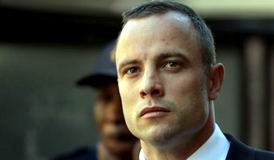
Oscar Pistorius
Homicide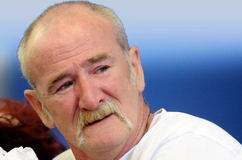 Mick Philpott
Homicide · United Kingdom · 2012
Michael “Mick” Philpott was an Englishman who had gained notoriety as a crimina…
6 victims
Mick Philpott
Homicide · United Kingdom · 2012
Michael “Mick” Philpott was an Englishman who had gained notoriety as a crimina…
6 victims
 Dyson Allen
Homicide · United Kingdom · 2012
Dyson Allen was convicted for starting a fire in a wardrobe in the children’s b…
4 victims
Dyson Allen
Homicide · United Kingdom · 2012
Dyson Allen was convicted for starting a fire in a wardrobe in the children’s b…
4 victims
 Nicholas Browning
Homicide · USA · 2008
Nicholas W. Browning — 15-year-old boy charged as an adult with four counts of…
4 victims
Nicholas Browning
Homicide · USA · 2008
Nicholas W. Browning — 15-year-old boy charged as an adult with four counts of…
4 victims
 Alec Kreider
Homicide · USA · 2007
Alec Devon Kreider (born February 4, 1991) was a Lancaster County, Pennsylvania…
3 victims
Alec Kreider
Homicide · USA · 2007
Alec Devon Kreider (born February 4, 1991) was a Lancaster County, Pennsylvania…
3 victims
 Cody Posey
Homicide · USA · 2004
Cody Posey was a New Mexico teenager who was born October 9, 1989. In 1992, whe…
3 victims
Cody Posey
Homicide · USA · 2004
Cody Posey was a New Mexico teenager who was born October 9, 1989. In 1992, whe…
3 victims
 Ronald Gene Simmons
Mass murderer · USA · 1987
Ronald Gene Simmons was a retired United States Air Force sergeant. Over the Ch…
16 victims
Ronald Gene Simmons
Mass murderer · USA · 1987
Ronald Gene Simmons was a retired United States Air Force sergeant. Over the Ch…
16 victims
 Ramon Torres Hernandez
Murderer · USA · 1994
Ramon Torres Hernandez was convicted in Bexar County, Texas, and sentenced to d…
3 victims
Ramon Torres Hernandez
Murderer · USA · 1994
Ramon Torres Hernandez was convicted in Bexar County, Texas, and sentenced to d…
3 victims
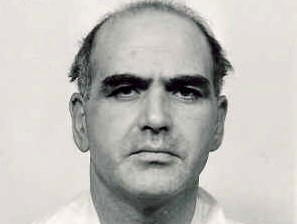 Abdelkrim Belachheb
Mass murderer · USA · 1984
Abdelkrim Belachheb was a Moroccan national. Marcelle Ford, a 32-year-old woman…
6 victims
Abdelkrim Belachheb
Mass murderer · USA · 1984
Abdelkrim Belachheb was a Moroccan national. Marcelle Ford, a 32-year-old woman…
6 victims
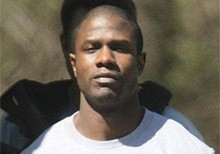 Brian Gene Nichols
Murderer · USA · 2005
Brian Gene Nichols was born December 10, 1971. He was known for his escape and…
4 victims
Brian Gene Nichols
Murderer · USA · 2005
Brian Gene Nichols was born December 10, 1971. He was known for his escape and…
4 victims
 Edward Adams
Murderer · USA · 1920
Edward J. "Eddie" Adams was born in 1887 on a farm in Hutchinson, Kansas as W.J…
7 victims
Edward Adams
Murderer · USA · 1920
Edward J. "Eddie" Adams was born in 1887 on a farm in Hutchinson, Kansas as W.J…
7 victims
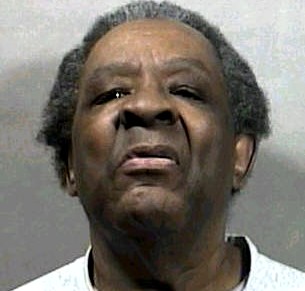 Leroy Snyder
Serial killer · USA · 1969
Leroy Snyder was a 38-year-old junkyard laborer. He was charged with the murder…
7 victims
Leroy Snyder
Serial killer · USA · 1969
Leroy Snyder was a 38-year-old junkyard laborer. He was charged with the murder…
7 victims
- Gender
- male
- Country
- South Africa
- Location
- Pretoria, Gauteng Province, South Africa
- Date of birth
- November 22, 1986
- Age at first offence
- 27
- Characteristics
- domestic violence
- Victim profile
- Reeva Steenkamp, 28 (his girlfriend)
- Method of murder
- Shooting
- Date(s) of murder
- February 14, 2013
- Years active
- 2013
- Date of arrest
- Next day
- Status
-
Sentenced to a maximum of five years in prison for culpable homicide on 21 October 2014; conviction for murder was not guilty and was replaced with conviction for culpable homicide on 12 September 2014
Case record: Oscar Pistorius
Background
Oscar Leonard Carl Pistorius was a South African sprint runner. He was born on 22 November 1986 in Johannesburg. Both of his legs were amputated below the knee when he was 11 months old. He competed in events for single below-knee amputees and for able-bodied athletes, and was described as a double amputee and a world renowned paralympian.
Reeva Steenkamp was a model and Pistorius’s girlfriend.
Pistorius believed he shot Steenkamp believing she was an intruder.
The offence
In the early morning of Thursday, 14 February 2013, Pistorius shot and killed Reeva Steenkamp at his Pretoria home. Pistorius acknowledged that he shot Steenkamp, and said that he mistook her for an intruder. He stated that when he fired shots at the toilet door and shouted to Steenkamp to phone the police, she did not respond. He later opened the toilet door and found her slumped over but alive. Pistorius then tried to render assistance and carried her downstairs; he said she died in his arms.
Pistorius was also sentenced for a separate incident involving firing a pistol under a table at Tasha’s restaurant in Johannesburg in January 2013. He was sentenced to three years, suspended for five years, for this second charge. The sentences were set to run concurrently.
Investigation
At the bail hearing, the Chief investigating officer Hilton Botha said that a witness had heard gunshots coming from Pistorius’s home followed by a female screaming and then more gunshots. Botha initially said the distance was 600 metres (2,000 ft) away, but later said it was 300 metres (980 ft). Botha also said the trajectory of the gunshots indicated they had been fired downward and directly toward the toilet, seemingly conflicting with Pistorius’s statement that he was not wearing his prosthetics at the time.
Botha acknowledged that procedural mistakes had been made during the crime scene investigation. He said police had found no evidence inconsistent with the version of events presented by Pistorius, adding later that equally nothing contradicted the police version.
On 22 February 2013, Botha was removed from the case after revelations that he was facing attempted murder charges stemming from a 2009 incident. Vineshkumar Moonoo replaced Botha, described as “the most senior detective” in the South African Police Service.
Police officers were also ordered by the court to depose affidavits about a missing electrical extension cord.
Arrest and charges
Pistorius was taken into police custody after the shooting and was formally charged with murder in a Pretoria court on 15 February 2013.
At the bail hearing, Pistorius was charged for the purposes of the bail hearing with a Schedule 6 criminal offence, relating to serious crimes including premeditated murder and requiring exceptional circumstances for release on bail.
On 4 June 2013 the court case was postponed to allow time for further investigation until a hearing at Pretoria Magistrate’s Court on 19 August 2013, when Pistorius was formally indicted on charges of murder and the illegal possession of ammunition. The indictment noted that even if Pistorius was mistaken in the identity of the person he shot, the intention was to kill.
Pistorius was also facing a charge of illegal possession of ammunition and two charges of firing a gun in a public space in the trial that commenced in March 2014.
Bail hearing
The bail hearing commenced on 19 February 2013 under Chief Magistrate of Pretoria Desmond Nair. During the hearing, both prosecution and defence said that Pistorius had fired four shots through a locked toilet door, hitting Steenkamp, who was inside, three times.
Prosecutor Gerrie Nel claimed that Pistorius had put on his prosthetic legs, walked across his bedroom to the bathroom, and intentionally shot Steenkamp through the door. Nel argued that the time required for this process was sufficient to establish the alleged murder as premeditated.
Pistorius said that he had thought Steenkamp was in the bed, and that the person in the toilet was an intruder.
On 22 February 2013, at the conclusion of the four-day bail hearing, Magistrate Nair said that the state had not convinced him that Pistorius posed a flight risk and fixed bail at R1 million (US$113,000).
Pistorius was too distraught to read out his own affidavit to the judge during the bail hearing; his attorney read it out. Pistorius’s affidavit included the following statements, verbatim:
I, the undersigned, Oscar Leonard Carl Pistorius, do hereby make oath and state: I am an adult male and a South African citizen with identity number [identity number redacted].
I am the Applicant in this application in which I seek relief from this Honourable Court to be released on bail.
I respectfully submit, as I will demonstrate herein, that the interests of justice permit my release on bail.
In any event, the dictates of fairness and justice in view of the peculiar facts herein warrant that I should not be deprived of my liberty and that I should be released on bail.
I make this affidavit of my own free will and have not in any way been unduly influenced to depose thereto.
The facts herein contained, save where expressly indicated to the contrary, are within my personal knowledge and belief, and are both true and correct.
The purpose of this affidavit is to provide the above Honourable Court with my personal circumstances and to address the allegations levelled against me (in so far as they are known to me), as well as to address the factors to be considered by the above Honourable Court as contained in Sections 60(4) to 60(9) of the Act.
I have been advised and I understand that I bear the burden to show that the interests of justice permit my release and that I am obliged to initiate this application.
I fail to understand how I could be charged with murder, let alone premeditated murder, as I had no intention to kill my girlfriend, Reeva Steenkamp ("Reeva").
However, I will put factors before the Honourable Court to show that it is in the interests of justice to permit my release on bail.
I state that the State will not be able to present any objective facts that I committed a planned or premeditated murder.
For this reason I will hereunder deal with the events which occurred that evening.
The objective facts will not refute my version as it is the truth.
I am a professional athlete and reside at [address redacted].
I was born on 22 November 1986, at Johannesburg.
I have resided in the Republic of South Africa ("the RSA") all my life, and although I frequently travel abroad to participate in international sporting events, I regard South Africa as my permanent place of abode.
I have no intention to relocate to any other country as I love my country.
I own immovable assets in South Africa, which consist of the following: …
On the 13th of February 2013 Reeva would have gone out with her friends and I with my friends.
…
I am acutely aware of violent crime being committed by intruders entering homes with a view to commit crime, including violent crime.
…
During the early morning hours of 14 February 2013, I woke up, went onto the balcony to bring the fan in and closed the sliding doors, the blinds and the curtains.
…
I believed that when the intruder/s came out of the toilet we would be in grave danger.
I felt trapped as my bedroom door was locked and I have limited mobility on my stumps.
I fired shots at the toilet door and shouted to Reeva to phone the police.
…
I phoned Johan Stander ("Stander") … and asked him to phone the ambulance.
I phoned Netcare and asked for help.
…
Downstairs, I tried to render the assistance to Reeva that I could, but she died in my arms.
…
In order to persuade the above Honourable Court that I should be released on bail, I provide the following additional facts and information in terms of Section 60 of the Act.
…
After the shooting I did not attempt to flee. Rather, I accepted Stander would contact the police, and I remained at the scene.
…
I accordingly submit that the interests of justice, considerations of prejudice and the balancing of respective interests favour my release on bail.
Trial
The trial of Oscar Pistorius began on 3 March 2014 in the High Court of South Africa in Pretoria, presided over by Judge Thokozile Masipa. The State and Pistorius were before the High Court of South Africa, Gauteng Division, Pretoria.
Judge Masipa appointed two assessors, Janette Henzen du Toit and Themba Mazibuko, to help her evaluate the case and reach a verdict.
There was no jury because the jury system in South Africa had been abolished during apartheid. Judge Masipa said the proceedings would be held in English with the assistance of interpreters, and confirmed that Pistorius spoke English.
The opening statement of prosecutor Gerrie Nel noted that the murder case against Pistorius was based largely on circumstantial evidence, as there were no eyewitnesses to the incident.
Pistorius pleaded not guilty to all charges against him, including murder and three gun-related charges.
The lead defence advocate in the case was Barry Roux. Pistorius’s family lawyer was Kenny Oldwage, who read Pistorius’s opening statement. In the opening statement, Pistorius said he believed Steenkamp was in bed when he shot at what he thought was an intruder behind the toilet door, and that he had spoken to her in bed shortly beforehand. He admitted to killing Steenkamp but denied the charge of murder.
Judge Masipa considered whether Pistorius made a mistake of identity that was reasonable; she said that if the mistake was unreasonable, the court would convict him of culpable homicide.
Evidence and witnesses
On the first and second day of trial, a witness testified to hearing sounds of arguing that lasted about an hour. Five witnesses testified to hearing what were described as a woman’s screams and gunshots on the night Steenkamp died.
On day three, the defence cross-examined witnesses who claimed to have heard a woman’s screams and gunshots. The defence sought to establish that this was Pistorius screaming for help and that the “explosive sounds” heard was the door to the toilet being battered down.
Christian Mangena, described as a police ballistics analyst, testified: “the shooter was most likely not wearing prosthetic legs”. Johannes Vermeulen, described as a police forensic analyst, testified Pistorius was not wearing his prosthetic legs when he broke the toilet door down with a cricket bat after the shooting.
On day four, Pistorius’s neighbour Johan Stipp, a radiologist, testified that he found Pistorius praying over Steenkamp’s body when he went over to help after being woken by what he described as the sound of gunshots and a woman screaming. Stipp testified that the first thing he remembered Pistorius saying when he saw him was: “I shot her. I thought she was a burglar. I shot her.”
Stipp also testified that the light was on in the bathroom and he saw a figure moving as a woman screamed.
On 24 March 2014, the court heard testimony about messages sent on iPhones between Pistorius and Steenkamp using WhatsApp. Ninety percent of them were described as loving and normal, but there were several accusing Pistorius of jealousy and possessiveness. One message, sent less than three weeks before her killing, included the text: “I’m scared of you sometimes, of how you snap at me” and described his behaviour as “nasty”.
The court heard testimony from witnesses including a former girlfriend of Pistorius and from a security guard at the estate where Pistorius lived, on duty the night of the events.
On 5 May 2014, Johan Stander testified that Pistorius called at 3.18 am saying: “Please, please come to my house. I shot Reeva, I thought she was an intruder. Please, please come quick.”
Stander also testified: “He was broken, he was screaming, he was crying, he was praying, I saw the truth that morning”
On 6 May 2014, a married couple who lived next to Pistorius’s house testified that they both heard a man crying loudly in a high-pitched voice and calling three times for help. Another immediate neighbour testified that she heard a man crying, describing the sounds as a “cry of pain”.
On 8 May 2014, professor Christina Lundgren, an anaesthesiologist, testified that estimates of the time Steenkamp last ate were not reliable.
The defence called Yvette van Schalkwyk, a social worker and probation officer assigned to Pistorius. She testified that in February 2013 she sat with him in the cells during his bail appearance, where he vomited twice, cried eighty percent of the time, and was in mourning and suffering emotionally, and that Pistorius told her that he missed Steenkamp a great deal. She testified: “He loved her. .. He couldn’t think what her parents must be going through”
Under cross-examination, Lundgren conceded that Pistorius had not told her he was sorry he killed Reeva.
On 9 May 2014, Tom Wolmarans testified: “The left hand cannot have been against her head because there were no wounds and no brain tissue on the inside of her hand”
On 12 May 2014, forensic psychiatrist Dr Merryl Vorster testified that Pistorius had a generalized anxiety disorder (GAD) and was “distrusting and guarded” and hyper-vigilant about security, and that in a fight or flight situation he was more likely to stand up to threatening situations than to flee due to his disability.
On 14 May 2014, Judge Masipa granted the prosecution’s application for Pistorius to be referred for mental evaluation.
On 20 May 2014, Judge Masipa ordered evaluation to take place as an out-patient at Weskoppies Psychiatric Hospital in Pretoria on weekdays between 9 am and 4 pm, starting 26 May and lasting up to thirty days. The evaluation found that Pistorius was not mentally incapacitated to the extent that he could not tell right from wrong, and that he suffered from anxiety and post-traumatic stress disorder and would need continuing psychiatric care or he could become suicidal.
Surgeon Gerald Versfeld testified on 30 June 2014 about the effects of Pistorius walking or standing on his stumps.
Acoustic engineer Ivan Lin testified that tests suggested that if Steenkamp was screaming in Pistorius’ toilet, it was “very unlikely” that the screams would be audible or intelligible from 177 metres (581 ft) away, and that “although we can typically distinguish male and female screams, you cannot do so reliably, without exception”. On 1 July 2014, Lin conceded it was possible that state witnesses heard screams from the Pistorius house from up to 177 metres (581 ft) away.
Peet van Zyl testified that Pistorius was in a “loving and caring relationship” with Reeva Steenkamp and that the sprinter was “hypervigilant” and rarely lost his temper.
On 2 July 2014, defence lawyer Roux read excerpts from a psychologist’s report that included: “Mr Pistorius has been severely traumatised by the events that took place on 14 February 2013, He currently suffers from a post-traumatic stress disorder, and a major depressive disorder ... The degree of anxiety and depression that is present is significant. He is also mourning the loss of Ms Steenkamp. Mr Pistorius is being treated and should continue to receive clinical care by a psychiatrist and a clinical psychologist for his current condition. Should he not receive proper clinical care, his condition is likely to worsen and increase the risk for suicide.”
The report included: “No evidence could be found to indicate that Mr Pistorius suffered from anxiety to the extent that it impaired his functioning prior to the incident in February 2013.”
The report also included: “There is evidence to indicate that Mr Pistorius was genuine with his feelings towards Miss Steenkamp and that they had a normal loving relationship. He did become insecure and jealous at times but this was normal for the specific situation. He would express his displeasure and irritation but would try and sort it out later by talking with Miss Steenkamp. Although the relationship was still young, there were no signs of abusive coercion like those often found in these kinds of relationships.”
Wayne Derman testified that Pistorius was “hyper-vigilant” and restless. Under cross-examination, Derman testified: “You’ve got a paradox of an individual who is supremely able, and you’ve got an individual who is significantly disabled”.
Derman also testified about Pistorius’s anxieties and included: “He has a specific fear of being trapped somewhere without being able to move very rapidly.”
Derman testified about the night he killed Steenkamp: “fleeing was not an option”
Prosecutor Nel suggested Derman could not give evidence against his patient, and Derman responded: “The truth would come before my patient,”
On 7 and 8 August 2014, closing arguments were heard. Prosecutor Nel stated that Pistorius concocted a “snowball of lies”. Defence lawyer Barry Roux stated the timeline proves Pistorius’s story is true, compared Pistorius’s reaction to danger to that of “an abused woman”, and argued Pistorius should only ever have faced culpable homicide charges, not murder.
On 8 July 2014, defence closed its case after Barry Roux protested: “We were unable to call a number of witnesses because they refused, and didn’t want their voices heard all over the world.”
Timeline
- 19 February 2013 — Bail hearing commenced under Chief Magistrate of Pretoria Desmond Nair.
- 22 February 2013 — Chief investigating officer Hilton Botha was removed from the case following attempted murder charges stemming from a 2009 incident; bail outcome set bail at R1 million (US$113,000).
- 15 February 2013 — Pistorius was formally charged with murder in a Pretoria court.
- 4 June 2013 — Court postponed for further investigation until a hearing at Pretoria Magistrate’s Court on 19 August 2013.
- 19 August 2013 — Pistorius was formally indicted on charges of murder and the illegal possession of ammunition.
- 3 March 2014 — Murder trial commenced in the High Court in Pretoria.
- 11–12 September 2014 — Judge Thokozile Masipa delivered verdict that Pistorius was not guilty of murder but guilty of culpable homicide of Steenkamp and reckless endangerment with a firearm at a restaurant.
- 12 September 2014 — Formal verdict was delivered.
- 13 October 2014 — Sentencing hearing began.
- 21 October 2014 — Pistorius received a prison sentence of a maximum of five years for culpable homicide and a concurrent three year suspended prison sentence for the reckless endangerment conviction.
Verdict
The formal verdict was delivered on 12 September 2014 by Judge Thokozile Masipa after the verdict was arrived at unanimously by Judge Masipa and her two assessors.
Judge Masipa dismissed much of the State’s circumstantial evidence and described Pistorius as a “very poor witness”.
Masipa said the State had not proved beyond a reasonable doubt that Pistorius was guilty of premeditated murder, and she also ruled out dolus eventualis. She said she accepted that he did not subjectively foresee that he would kill the person behind the door, “let alone the deceased as he thought she was in the bedroom”.
Masipa held that culpable homicide was a competent verdict. She said a reasonable person in the same circumstances would have “foreseen the possibility that if he fired four shots whoever was behind the toilet [door] might be struck and die as a result”. She said Pistorius “failed to take any steps to avoid the death” and “acted too hastily and used excessive force”, finding his actions were clearly negligent.
Judge Masipa found Pistorius not guilty of murder, but guilty of the culpable homicide of Steenkamp. She also found him guilty of reckless endangerment with a firearm at a restaurant in a separate incident.
Pistorius was found not guilty of the charges relating to discharging a firearm through the sunroof of a car and illegal possession of ammunition.
Pistorius was convicted of:
- Culpable homicide, defined as “the unlawful negligent killing of a human being”.
- Contravention of section 120(3)(b) of the Firearms Control Act, 2000 (reckless endangerment), namely: “discharge or otherwise handle a firearm, an antique firearm or an airgun in a manner likely to injure or endanger the safety or property of any person or with reckless disregard for the safety or property of any person”.
Judge Masipa adjourned the trial until 13 October for sentencing and granted Pistorius a bail extension.
Sentencing
The sentencing hearing began on 13 October 2014. Witnesses for the defence recommended a 3 year community sentence with 16 hours of community service per month.
Acting national commissioner of Correctional Services Zach Modise testified that being disabled Pistorius would be held in Pretoria Central Prison’s hospital wing if he received a prison sentence.
In a statement released on 15 October 2014, Steenkamp’s parents said they would not testify in the sentencing hearing and had decided not to proceed with a separate civil lawsuit.
Steenkamp’s cousin Kim Martin testified for the State about the impact on the family and asked the court to impose a prison sentence.
On 17 October 2014, closing arguments were heard. The defence argued against a prison sentence and the State requested a minimum prison sentence of 10 years.
On 21 October 2014, Pistorius received a prison sentence of a maximum of five years for culpable homicide. He also received a concurrent three year suspended prison sentence for the separate reckless endangerment conviction.
Appeals
The National Prosecuting Authority spokesman Nathi Mncube said after sentencing that the organisation would consider whether it may appeal the sentencing. He said the decision would be difficult because the case was “far from ‘straightforward’”.
Aftermath and reactions
After the verdict, Masipa received threats and personal attacks by people who disagreed with the verdict. The sentencing and the legal outcome led to critical social media comments, described as arising after it became evident Pistorius would not be found guilty of murder.
Nathi Mncube said the organisation was originally disappointed with the culpable homicide conviction but took solace in the fact that Pistorius would see some time behind bars. Mncube said he believed Pistorius would be taken straight to prison from the courthouse.
Other details
Judge Masipa thanked counsel on both sides for their help during the trial and the public gallery for their behaviour. Masipa said: “I want to thank the gallery. It was not an easy matter.”
Pistorius managed to hold hands with some family members before he was led down towards the cells.
Prosecution expert witness Christian Mangena testified that “the shooter was most likely not wearing prosthetic legs”. Prosecution expert witness Johannes Vermeulen testified Pistorius was not wearing prosthetic legs when he broke the toilet door down with a cricket bat.
On 7 and 8 August 2014, prosecutor Nel said Pistorius concocted a “snowball of lies” and asked for consequences for his actions; defence lawyer Barry Roux stated Pistorius should have only faced culpable homicide charges.
The defence lawyer Barry Roux protested earlier in the trial:
The judge described Pistorius as a “very poor” and “evasive” witness, and explained how she believed his account was consistent since moments after the shooting.
If Pistorius had any issues with accommodation if sent to prison, Judge Masipa said he had the right to approach the courts.
Steenkamp had close family relationships described through Barry and June Steenkamp, and the State witness Kim Martin summarised Steenkamp’s working and personal life.
Masipa said she was not impressed by Vergeer as a witness, describing her evidence as poor and outdated, and described the State’s description of her evidence as “sketchy” and biased for someone with 28 years of experience.
Masipa believed Modise’s testimony that disabled prisoners could be correctly looked after, and stated that pregnant women had been incarcerated in the past with the department able to care for them.
Masipa said it would be a major concern if there was a perception of one law for the poor, and another for the rich and famous.
Masipa said she hoped her ruling would provide closure for all concerned “so they could move on with their lives”.
Masipa said in comparison with another case similar to Pistorius’s that Pistorius was not trying to scare off an intruder, but rather trying to shoot him.
Judge Masipa said the sentence of correctional supervision recommended by defence witnesses was “not appropriate” because of the severe negligent behaviour of the athlete, while also saying that a long sentence was not appropriate.
On the second shooting incident at Tasha’s restaurant, Masipa said a sentence of direct imprisonment was not appropriate as no one was hurt.
Masipa sentenced Pistorius to five years in prison for cupable homicide and three years imprisonment for the second charge, but wholly suspended.
Spotted an error, or have more information about this case?