
Terry Pitchford
Murderer Robert Martines Perez
Murderer · USA · 1994
Name: Robert Martines Perez · Other name used in proceedings: Robert Martinez P…
15 victims
Robert Martines Perez
Murderer · USA · 1994
Name: Robert Martines Perez · Other name used in proceedings: Robert Martinez P…
15 victims
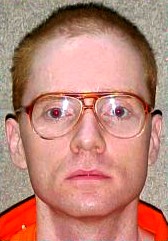 Robert Glen Jones
Murderer · USA · 1996
Defendant: Robert Glenn Jones (ADC#070566) · Co-defendant: Scott Nordstrom (ADC…
7 victims
Robert Glen Jones
Murderer · USA · 1996
Defendant: Robert Glenn Jones (ADC#070566) · Co-defendant: Scott Nordstrom (ADC…
7 victims
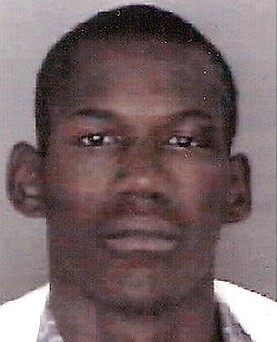 Joshua Wayne Andrews
Murderer · USA · 2000
Joshua Wayne Andrews was a serial killer accused of killing several people in V…
5 victims
Joshua Wayne Andrews
Murderer · USA · 2000
Joshua Wayne Andrews was a serial killer accused of killing several people in V…
5 victims
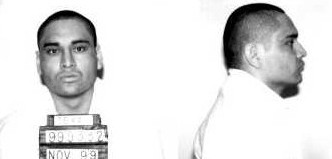 Juan Carlos Alvarez
Murderer · USA · 1998
Juan Carlos Alvarez, born on March 9, 1977, in San Luis, Mexico, was a Hispanic…
5 victims
Juan Carlos Alvarez
Murderer · USA · 1998
Juan Carlos Alvarez, born on March 9, 1977, in San Luis, Mexico, was a Hispanic…
5 victims
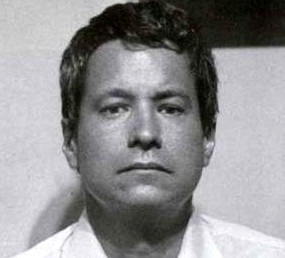 Robert Joseph Zani
Serial killer · USA · 1967
Robert Joseph Zani Current characteristics listed included: Parricide - Robberi…
6 victims
Robert Joseph Zani
Serial killer · USA · 1967
Robert Joseph Zani Current characteristics listed included: Parricide - Robberi…
6 victims
 Mario Swain
Murderer · USA · 2002
Mario Swain was a Black male. He had black hair and brown eyes. He was 5'7" tal…
1 victim
Mario Swain
Murderer · USA · 2002
Mario Swain was a Black male. He had black hair and brown eyes. He was 5'7" tal…
1 victim
 Jessie Dotson
Mass murderer · USA · 1994
Jessie Dotson was convicted of the shooting murders of his brother, his brother…
7 victims
Jessie Dotson
Mass murderer · USA · 1994
Jessie Dotson was convicted of the shooting murders of his brother, his brother…
7 victims
 Harold Amos Barnard
Murderer · USA · 1980
June 6, 1980 — Harold Amos Barnard, Jr., killed sixteen-year-old Tuan Nguyen du…
1 victim
Harold Amos Barnard
Murderer · USA · 1980
June 6, 1980 — Harold Amos Barnard, Jr., killed sixteen-year-old Tuan Nguyen du…
1 victim
 Randy Schoenwetter
Murderer · USA · 2000
Name: Randy Schoenwetter Date of birth: 10/27/81 Eighteenth Judicial Circuit: B…
2 victims
Randy Schoenwetter
Murderer · USA · 2000
Name: Randy Schoenwetter Date of birth: 10/27/81 Eighteenth Judicial Circuit: B…
2 victims
- Gender
- male
- Country
- USA
- Location
- Grenada County, Mississippi, USA
- Date of birth
- December 30, 1985
- Age at first offence
- 19
- Characteristics
- armed robbery, robbery
- Victim profile
- Ruben Britt (grocery store owner)
- Method of murder
- Shooting
- Date(s) of murder
- November 7, 2004
- Years active
- 2004
- Date of arrest
- Next day
- Status
-
Sentenced to death
Sentenced to death on February 9, 2006
Case name
Terry Pitchford v. State of Mississippi (No. 2006-DP-00441-SCT)
People
- Terry Pitchford — defendant
- Ruben Britt — store owner; victim
- Walter Davis — entered Crossroads Grocery with his son; victim’s witness context
- Walter Davis’s son — entered Crossroads Grocery with Walter Davis; witness context
- Eric Bullins — accomplice
- Demarcus Westmoreland — accomplice
- Quincy Bullins — accomplice
- Greg Conley — Grenada County Sheriff’s Department Investigator
- Robert Jennings — Investigator of the local district attorney’s office
- Shirley Jackson — Pitchford’s mother; signed consent form for search
- Carlos Fitzgerald Ward — struck prospective juror
- Linda Ruth Lee — struck prospective juror
- Christopher Lamont Tillmon — struck prospective juror
- Patricia Ann Tidwell — struck prospective juror
- Ray Baum — counsel appointed for Pitchford
- Ray Charles Carter — defense lawyer; joined defense team in June 2005; continued representing Pitchford on direct appeal
- Alison Steiner — attorney for appellant
- Clyde Hill — prosecutor
- Patrick Joseph McNamara, Jr. — attorney for appellee (as listed in the appellate matter)
- Alison R. Steiner, Ray Charles Carter — attorneys for appellant
- Dantron Mitchell — inmate; testified that Pitchford confessed his role
- James Hatchcock — inmate; testified that Pitchford confessed his role
- Dominique Hogan — mother of Pitchford’s child; testified during questioning
- Nettie Britt — decedent’s wife; testified during penalty phase
- Kim Lindley — decedent’s daughter; testified during penalty phase
- David Tidwell — Patricia Ann Tidwell’s brother; convicted in this court of sexual battery
- Marvin Fullwood — testified he gave Britt the .38 caliber revolver
- Dr. Rahn Bailey — mental-health expert retained by Pitchford; availability issues during penalty phase
- Dr. Steven Hayne — State’s expert in forensic pathology; performed autopsy on Reuben Britt
- Carver Conley — referenced in voir dire-related discussion
Timeline
- November 7, 2004 — Walter Davis and his son entered Crossroads Grocery, discovered the body of the owner, Reuben Britt, and called 911; Grenada County Sheriff’s Department Investigator Greg Conley responded.
- November 7 and 8, 2004 — Investigator Conley and Investigator Robert Jennings interviewed Pitchford; Pitchford confessed that he and Eric Bullin had gone to the store intending to rob it; Pitchford stated Bullin had shot Britt three times with a .22 caliber pistol and that Pitchford had fired shots into the floor; Pitchford also confessed he attempted to rob the same store a week and a half prior to the murder; Pitchford confessed his role to fellow inmates Dantron Mitchell and James Hatchcock.
- November 7, 2004 — Pitchford was indicted for capital murder by the Grenada County Grand Jury (as stated).
- January 11, 2005 — Grenada County Grand Jury indicted Pitchford for capital murder.
- February 9, 2005 — Pitchford was arraigned.
- February 6, 2006 — jury selection commenced.
- February 8, 2006 — jury found Pitchford guilty of capital murder.
- February 9, 2006 — case proceeded to the penalty phase; jury imposed a sentence of death by lethal injection.
- February 17, 2006 — Pitchford filed a motion for a new trial; the motion was denied.
- June 24, 2010 — Supreme Court of Mississippi issued opinion in Pitchford v. State (EN BANC).
- 2010 — Mississippi Supreme Court upheld Pitchford’s conviction.
- April 21, 2011 — U.S. Supreme Court declined to hear Pitchford’s appeal; the decision came without comment.
- January 19, 2006 — denial of Pitchford’s motion for a continuance was at issue in the appellate review (the motion was denied on this date as described).
Background
Pitchford and an accomplice killed a store owner in Grenada County during the course of an armed robbery. Pitchford was indicted, tried, and convicted of capital murder. The jury found that he should be executed by lethal injection. He appealed, raising seventeen issues.
The killing involved Crossroads Grocery in Grenada County. Walter Davis and his son discovered the body of the store owner, Reuben Britt, and called 911.
The offence
Prosecution’s description of the killing stated that Ruben Britt was shot numerous times inside his store. Prosecutors said one of the murder weapons was Britt’s own gun that he kept at the store for protection. Prosecutors said Britt’s gun was found in Pitchford’s car when he was arrested.
Investigator Conley observed at the scene that some of Britt’s wounds appeared to have been made by a projectile and others by pellets, suggesting to Investigator Conley that two different weapons were involved.
Missing from the store were a cash register, some cash, and a .38 caliber revolver loaded with “rat shot.” Pitchford’s confession stated that Eric Bullin shot Britt three times with a .22 caliber pistol and that Pitchford fired shots into the floor. Pitchford also confessed an earlier attempt to rob the same store a week and a half prior to the November 7, 2004 murder.
Investigation
Investigator Conley received information suggesting that a vehicle owned by Terry Pitchford matched the description of the car used by Britt’s assailants and that Pitchford had been part of a previous attempt to rob Crossroads Grocery.
At Pitchford’s home, Conley found a car matching the description. After a search of the vehicle produced the missing .38 caliber revolver, Pitchford was taken into custody.
Pitchford was interviewed on November 7 and 8, 2004. During those interviews, Pitchford confessed his role and provided details about the intended robbery and the shootings.
Pitchford also confessed his role in the murders to fellow inmates Dantron Mitchell and James Hatchcock.
Marvin Fullwood testified that he had given Britt the .38 caliber revolver approximately two years before the trial.
Investigator Conley testified that he recovered the same gun from Pitchford’s car.
Arrest and custody
After the search produced the missing .38 caliber revolver, Pitchford was taken into custody.
Trial
Charges and indictment
- Pitchford was indicted for capital murder.
- In the appellate discussion of the indictment, the indictment stated that, on or about the 7th day of November 2004, in Grenada County, Mississippi, while acting in concert with another or while aiding, abetting, assisting or encouraging another, Pitchford willfully, feloniously, intentionally, without authority of law and with or without the deliberate design to effect death, kill and murder Reuben Britt, a human being, while engaged in the felony crime of ARMED ROBBERY, as set forth in section 97-3-79 of MISS. CODE ANN. and in violation of section 97-3-19(2)(e) MISS. CODE ANN. as amended.
Pitchford was tried and convicted of capital murder.
Jury selection (Batson / death qualification / voir dire limits)
The appeal challenged alleged constitutional infirmities in jury selection, including claims of racial discrimination in peremptory strikes under Batson v. Kentucky and issues related to death qualification.
Pitchford argued the State used peremptory strikes in a racially discriminatory manner. In the trial proceedings described:
- The State exercised seven peremptory strikes.
- Pitchford struck twelve whites and no African-Americans.
- Of the twelve lowest-numbered jurors initially subject to peremptory strikes and the replacements, the final panel relevant to peremptory strikes resulted in discussion of the racial composition of the venire subject to the State’s peremptory strikes.
At trial, an exchange was recorded:
- MS. STEINER: “Allow us to state into the record there is one of 12-of fourteen jurors, are non-white, whereas this county is approximately, what, 40 percent?”
- MR. BAUM: “The county is 40 percent black.”
- THE COURT: “I don't know about the racial makeup, but I will note for the record there is one regular member of the panel that is black, African American race.”
Pitchford raised arguments about the exclusion of jurors for cause based on their views on capital punishment. The trial court excluded thirty of the thirty-five prospective black jurors for cause at the conclusion of voir dire, based on their inability to consider imposing a sentence of death.
Pitchford also argued the trial court improperly prevented the defense from questioning jurors about their ability to consider mitigating evidence. During the voir dire exchange described, defense counsel attempted to ask about whether events before the charge should count in deciding life or death; the prosecutor objected and the trial judge allowed a limitation on specifics.
Guilty phase verdict and jury findings
On February 8, 2006, the jury found Pitchford guilty of capital murder.
The Supreme Court’s discussion stated that the jury unanimously found that Pitchford actually killed Reuben Britt, attempted to kill Reuben Britt, intended the killing of Reuben Britt, and contemplated that lethal force would be employed.
Defense’s position
Pitchford’s defense response was that Pitchford did not commit the crime.
Sentencing
Penalty phase proceedings
The penalty phase proceeded on February 9, 2006. The jury imposed a sentence of death by lethal injection.
Pitchford filed a motion for a new trial on February 17, 2006, which was denied.
Continuance and mitigation expert availability
- In March 2004, the trial court appointed Ray Baum to represent Pitchford.
- Ray Carter joined the defense team in June 2005.
- The trial was rescheduled to begin on January 9, 2006, and then continued again to begin on February 6, 2006.
Pitchford filed a motion for yet another continuance alleging that additional time was needed to interview members of his family in California as possible mitigation witnesses and to analyze his psychiatric evaluation performed at the Mississippi State Hospital in Whitfield. On January 19, 2006, the trial court denied the motion.
Regarding mitigation, Pitchford retained the services of a mental-health expert, Dr. Rahn Bailey. Bailey was not available to testify at the start of the penalty phase on February 8, 2006 due to a scheduling conflict in Texas under subpoena. Counsel advised the court the following morning that Dr. Bailey was available but would not be called to testify.
Mitigation evidence and excluded materials
Pitchford challenged exclusions and refusals regarding mitigation evidence, including:
- Exclusion of testimony about the effect of Pitchford’s death on his two-year-old son (Pitchford sought Dominique Hogan testimony about the effect Pitchford’s death would have on the child; the trial court sustained the State’s objection).
- Exclusion of a “day-in-the-life” video of Pitchford and his son due to jail policy; Pitchford filed an ex-parte pretrial motion requesting an order to allow production; the trial judge refused to override jail policy.
- Exclusion of testimony intended to contextualize reactions to his father’s illness and death:
- Proposed brother testimony was excluded after the State objected; the trial court sustained the objection.
- Proposed mother testimony was excluded after the State objected; the trial judge indicated the need to restate the question.
Jury instructions at sentencing
Pitchford argued sentencing instructions were deficient in multiple respects. The Supreme Court reviewed various proposed instructions and found no merit in the arguments. The opinion described:
- Sentencing Instruction 1 regarding mitigating and aggravating circumstances and when death could be imposed.
- Refusal of instruction DS-7 as proposed by Pitchford.
- Refusal of DS-8, DS-13, and DS-15 on the grounds described in the appellate decision.
- Discussion that two “critical instructions” were on a separate page and Pitchford argued the placement suggested preference for death; the trial court rejected that argument and the Supreme Court agreed.
The Supreme Court also addressed the claim that a mitigating factor, “Mr. Pitchford had mental health problems as a child that were never treated,” could not be submitted because there was no supporting doctor testimony and nothing in the record supported the alleged mental health problems.
Appeals
Direct appeal to the Supreme Court of Mississippi
Pitchford appealed raising seventeen issues. The Supreme Court of Mississippi affirmed the conviction and sentence, finding no reversible error.
The opinion included extended discussion of:
- Batson challenges and race-neutral reasons for striking four black jurors:
- Carlos Fitzgerald Ward — prosecutor stated: “We have several reasons. One, he had no opinion on the death penalty. He has a two-year-old child. He has never been married. He has numerous speeding violations that we are aware of. The reason that I do not want him as a juror is he is too closely related to the defendant. He is approximately the same age as the defendant. They both have never been married. In my opinion he will not be able to not be thinking about these issues, especially on the second phase. And I don't think he would be a good juror because of that.”
- Linda Ruth Lee — prosecutor stated: “S-2 is black female, juror number 30. She is the one that was 15 minutes late. She also, according to police officer, police captain, Carver Conley, has mental problems. They have had numerous calls to her house and said she obviously has mental problems․”
- Christopher Lamont Tillmon — prosecutor stated: “S-3 is a black male, number 31. Christopher Lamont Tillmon. He has a brother who has been convicted of manslaughter. And considering that this is a murder case, I don't want anyone on the jury that has relatives convicted of similar offenses.”
- Patricia Anne Tidwell — prosecutor stated: “S-4 is juror number 43, a black female, Patricia Anne Tidwell. Her brother, David Tidwell, was convicted in this court of sexual battery. And her brother is now charged in a shooting case that is a pending case here in Grenada. And also, according to police officers, she is a known drug user.”
- Issues involving limitations on voir dire about specific mitigating evidence.
- Prosecutorial misconduct claims, including objections and rulings described in the appellate decision, and findings of harmless error for some inappropriate statements.
- Requests for mistrial after inadmissible testimony by a witness:
- During cross-examination of James Hathcock, the witness stated: “Well, he was selling me dope.”
- Pitchford moved for a mistrial, which the trial court refused.
- Suppression issues:
- Denial of suppression of .38 caliber revolver evidence obtained after a warrantless search of Pitchford’s automobile.
- Denial of suppression of five statements made to police officers after Pitchford’s arrest; the trial court found the statements were freely and voluntarily given beyond a reasonable doubt and beyond any doubt whatsoever.
- Admission of prior bad act evidence:
- Evidence of a previously thwarted attempt to rob the store was admitted under Rules 404(b) and 403.
- Expert testimony issues:
- Admission of forensic pathology opinions by Dr. Steven Hayne.
- Jury instruction disputes and mitigation-phase evidentiary exclusions.
- Constitutional challenges to lethal injection under Baze v. Rees.
The conclusion of the Supreme Court of Mississippi was to affirm conviction and sentence.
U.S. Supreme Court
Pitchford filed an appeal to the U.S. Supreme Court. The U.S. Supreme Court declined to hear the appeal.
The Associated Press article stated the U.S. Supreme Court declined to hear an appeal from Mississippi death row inmate Terry Pitchford. It stated Pitchford was convicted of killing a Grenada storekeeper in 2004; he was 18 when charged; he was convicted in 2006 and sentenced to death; and the Mississippi court upheld his conviction in 2010.
Outcome
The Supreme Court of Mississippi affirmed Pitchford’s conviction and sentence. The conviction and sentence of death by lethal injection were affirmed.
Aftermath
The U.S. Supreme Court declined to hear Pitchford’s appeal. The appellate materials also referenced other death row inmates and Mississippi Supreme Court actions regarding execution dates and releases of medical records for other cases, but Pitchford’s conviction and death sentence remained affirmed.

Spotted an error, or have more information about this case?