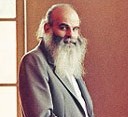
Ronald Gene Simmons
Mass murderer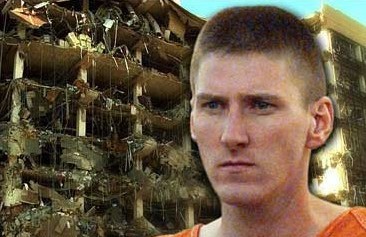 Timothy McVeigh
Mass murderer · USA · 1995
Timothy James McVeigh (April 23, 1968 – June 11, 2001) was a United States Army…
168 victims
Timothy McVeigh
Mass murderer · USA · 1995
Timothy James McVeigh (April 23, 1968 – June 11, 2001) was a United States Army…
168 victims
 Julio Gonzalez
Mass murderer · USA · 1990
Julio Gonzalez was sentenced to 174 twenty-five-year sentences (a total of 4,35…
87 victims
Julio Gonzalez
Mass murderer · USA · 1990
Julio Gonzalez was sentenced to 174 twenty-five-year sentences (a total of 4,35…
87 victims
 David Burke
Mass murderer · USA · 1987
David Augustus Burke (May 18, 1952–December 7, 1987) was an employee of USAir,…
43 victims
David Burke
Mass murderer · USA · 1987
David Augustus Burke (May 18, 1952–December 7, 1987) was an employee of USAir,…
43 victims
 George Jo Hennard
Mass murderer · USA · 1991
George Jo Hennard carried out a mass killing at a Luby’s Cafeteria in Killeen,…
23 victims
George Jo Hennard
Mass murderer · USA · 1991
George Jo Hennard carried out a mass killing at a Luby’s Cafeteria in Killeen,…
23 victims
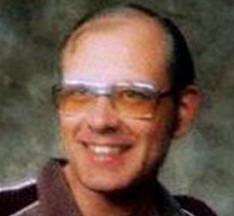 James Huberty
Mass murderer · USA · 1984
James Oliver Huberty was a 41-year-old unemployed security guard. He was born i…
21 victims
James Huberty
Mass murderer · USA · 1984
James Oliver Huberty was a 41-year-old unemployed security guard. He was born i…
21 victims
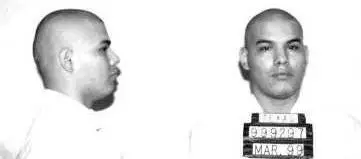 Pablo Lucio Vasquez
Murderer · USA · 1998
Pablo Lucio Vasquez was a Hispanic male from Texas Department of Criminal Justi…
1 victim
Pablo Lucio Vasquez
Murderer · USA · 1998
Pablo Lucio Vasquez was a Hispanic male from Texas Department of Criminal Justi…
1 victim
 Cal Coburn Brown
Murderer · USA · 1991
Cal Coburn Brown (born April 16, 1958) was convicted and sentenced to death in…
1 victim
Cal Coburn Brown
Murderer · USA · 1991
Cal Coburn Brown (born April 16, 1958) was convicted and sentenced to death in…
1 victim
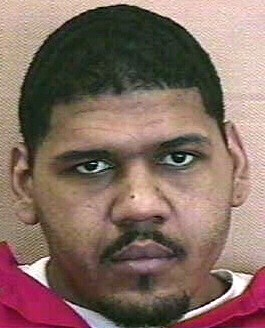 Robbie James Lyons
Murderer · USA · 1993
Robbie James Lyons (male, Black), death row inmate and defendant. · Stephen Wil…
1 victim
Robbie James Lyons
Murderer · USA · 1993
Robbie James Lyons (male, Black), death row inmate and defendant. · Stephen Wil…
1 victim
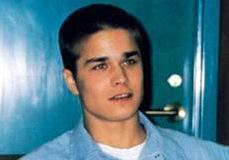 Brandon Hein
Homicide · USA · 1995
Brandon Wade Hein (born February 17, 1977) was sentenced to life imprisonment w…
1 victim
Brandon Hein
Homicide · USA · 1995
Brandon Wade Hein (born February 17, 1977) was sentenced to life imprisonment w…
1 victim
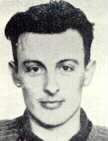 Werner Boost
Serial killer · Germany · 1953
Werner Boost was a German offender who carried out attacks on lovers’ lanes and…
5 victims
Werner Boost
Serial killer · Germany · 1953
Werner Boost was a German offender who carried out attacks on lovers’ lanes and…
5 victims
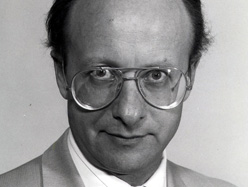 Valery Fabrikant
Mass murderer · Canada · 1992
Valery Fabrikant was a former associate professor of mechanical engineering at…
4 victims
Valery Fabrikant
Mass murderer · Canada · 1992
Valery Fabrikant was a former associate professor of mechanical engineering at…
4 victims
- Gender
- male
- Country
- USA
- Location
- Pope County, Arkansas, USA
- Date of birth
- J uly 15, 1940
- Age at first offence
- 47
- Characteristics
- parricide
- Victim profile
- Men, women and children (relatives)
- Method of murder
- Shooting / Strangulation
- Date(s) of murder
- December 22/28, 1987
- Years active
- 1987
- Date of arrest
- December 28, 1987
- Status
-
Executed
Executed by lethal injection in Arkansas on June 25, 1990
Overview
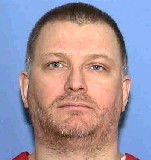
Ronald Gene Simmons was a retired United States Air Force sergeant. Over the Christmas holidays in 1987, he killed sixteen people, fourteen of whom were members of his family. He was convicted of capital murder and sentenced to death, refused to appeal, and was executed by lethal injection in Arkansas on June 25, 1990.
Timeline
- 22 December 1987 — Simmons killed his son Gene and his wife Rebecca at his home in Dover, Arkansas, then killed his granddaughter Barbara by strangulation.
- 22 December 1987 — Simmons killed his daughter Loretta by strangulation and held her under the water in a rain barrel.
- 22 December 1987 — Simmons killed his children Eddy, Marianne, and Becky by strangulation and/or drowning in a rain barrel.
- 26 December 1987 — Simmons killed his son Billy and his daughter-in-law Renata by shooting them, then killed their son Trae by strangling and drowning.
- 26 December 1987 — Simmons shot Sheila and Dennis McNulty, then strangled Simmons’s child Sylvia Gail.
- 26 December 1987 — Simmons strangled Michael.
- 28 December 1987 — Simmons drove into Russellville, Arkansas, and shot dead receptionist/secretary Kathy Kendrick and then shot dead J.D. (Jim) Chaffin, wounded Rusty Taylor, wounded Roberta Woolery and David Salyer, and shot and wounded a woman at Woodline Motor Freight Company.
- May 12, 1988 — Simmons was convicted of capital murder and sentenced to death in the Franklin County Circuit Court for the deaths of Kendrick and Chaffin.
- May 16, 1988 — Judge John Samuel Patterson sentenced Simmons to death by lethal injection plus 147 years.
- February 10, 1989 — Simmons was found guilty of fourteen counts of capital murder in the deaths of his family members in the Johnson County Circuit Court, with Judge Patterson presiding.
- March 1, 1989 — Simmons was found competent to waive his rights to appeal his conviction.
- March 16, 1989 — Simmons was sentenced to death by lethal injection.
- April 24, 1990 — The United States Supreme Court decided Whitmore, holding that Whitmore lacked standing.
- May 31, 1990 — Arkansas governor Bill Clinton signed Simmons’s second execution warrant for June 25, 1990.
- June 25, 1990 — Simmons was executed by lethal injection in Arkansas.
The offence
Family murders at Dover, Arkansas (Christmas 1987)
Simmons decided to kill all the members of his family. On the morning of 22 December 1987, he killed his son Gene and his long-suffering wife Rebecca at his home in Dover, Arkansas, by shooting them with a .22 caliber pistol. He then killed his three-year-old granddaughter Barbara by strangulation.
Simmons dumped the bodies in a cesspit he had made his children dig. He waited for his other children to return to the house. When they arrived, he told them he had presents for them but wanted to give them one at a time. He first gave his eldest daughter, seventeen-year-old Loretta, her “gift.” Simmons strangled Loretta and held her under the water in a rain barrel. Eddy, Marianne, and Becky were killed in the same way (strangulation and/or drowning in a rain barrel).
On 26 December 1987, the remaining members of the family arrived for their Christmas visit. Simmons’s son Billy and his wife Renata were shot dead. Their son Trae was strangled and drowned. Simmons shot Sheila and her husband, Dennis McNulty. Simmons shot and killed Dennis, and Simmons strangled Sylvia Gail, who was described as both his daughter and his child, and finally strangled Michael.
Simmons laid the bodies of his whole family in neat rows in the lounge. All the corpses were covered with coats except that of Sheila, who was laid in state covered by Rebecca Simmons’s best tablecloth. The bodies of the two grandsons were wrapped in plastic sheeting and left in abandoned cars at the end of the lane.
Murders in Russellville, Arkansas (two days later)
On the morning of Monday, 28 December 1987, Simmons drove into Russellville and at a law office shot dead the receptionist, Kathy Kendrick, a young woman with whom he had been infatuated and who had rejected him. He then went to an oil company office and shot dead J.D. (Jim) Chaffin and wounded the owner, Rusty Taylor. He next went to a convenience store where he shot and wounded two more people.
Afterwards he went to the office of Woodline Motor Freight Company, where he shot and wounded a woman. Simmons then sat in the office and chatted to one of the secretaries while waiting for the police. When the police arrived, Simmons handed over his gun and surrendered without any resistance.
Investigation and evidence
Medical and scene observations described after the killings
Authorities found bodies at Simmons’s house outside Dover later identified as family members and additional victims in Russellville. The killings included strangulation, shooting, and drowning.
Autopsies on the 14 dead family members revealed that the youngest of the seven children had been strangled, and that the older victims had been shot at least once in the head. Rebecca Simmons, 46, had two bullet wounds in her temple. Renada Simmons had drawn five bullets to the head and two to the neck. Investigators found five bodies inside the house with their coats still on, lying where they had dropped.
Authorities’ description of Simmons’s preparation and actions
Police said Simmons clearly knew who his targets were to be and drove to four different offices in his son’s brown Toyota Corolla to get them. At each site, the story was described as point-blank shots from two .22-caliber pistols, without hesitation or conversation. After the last shooting, Simmons allegedly offered his weapons and asked a former coworker to phone the police.
At Woodline Motor Freight Company, Simmons allegedly told Vicky Jackson to phone the police and stated: “I’ve come to do what I wanted to do. It’s all over now. I’ve gotten everybody who wanted to hurt me.”
Arrest and custody
After surrendering to Russellville police, Simmons was transported for psychiatric evaluation. Simmons was sent to the Arkansas State Hospital in Little Rock (Pulaski County) for a competency evaluation by staff psychiatrist Dr. Irving Kuo. Kuo found Simmons to be sane and capable of standing trial.
Public defenders Robert G. “Doc” Irwin and John Harris were appointed to represent Simmons. The prosecuting attorney was John Bynum.
Trial
Russellville crimes trial (Kendrick and Chaffin)
Simmons was charged with sixteen counts of murder and found guilty. In the Franklin County Circuit Court, he was convicted on May 12, 1988, in connection with the deaths of Kendrick and Chaffin. Jury selection for the first trial took less than six hours.
On May 16, Judge John Samuel Patterson sentenced Simmons to death by lethal injection plus 147 years.
Simmons refused all rights to appeal. He was also said to have made a statement before the court at his first trial supporting his sentence:
“To those who oppose the death penalty in my particular case, anything short of death would be cruel and unusual punishment.”
Family murders trial (fourteen family members)
Simmons was found guilty of fourteen counts of capital murder in the deaths of his family members on February 10, 1989, in the Johnson County Circuit Court, with Judge Patterson presiding. The prosecutor, John Bynum, offered a possible motive by presenting an undated note discovered in a safe deposit box at a Russellville bank. The letter was described as indicating a strong love/hate relationship between Simmons and his daughter Sheila.
After the judge ruled the letter admissible, Simmons lashed out at Bynum, punching him in the face, and then unsuccessfully struggled for a deputy’s handgun. Officers rushed Simmons out of the courtroom in chains.
Simmons was sentenced to death by lethal injection on March 16, 1989. Simmons again waived all rights to appeal.
Sentencing and competency to waive appeals
Competency finding
Simmons was found competent to waive his rights to appeal his conviction. On March 1, 1989, Simmons was found competent to waive his rights to appeal.
The trial court conducted a hearing concerning Simmons’s competence to waive further proceedings and concluded his decision was knowing and intelligent. The Supreme Court of Arkansas reviewed the competency determination and affirmed the trial court’s decision that Simmons had knowingly and intelligently waived his right to appeal.
Statement under oath refusing any appeal
Simmons made an additional statement, under oath, supporting his wish for execution:
“I, Ronald Gene Simmons, Sr., want it to be known that it is my wish and my desire that absolutely no action by anybody be taken to appeal or in any way change this sentence. It is further respectfully requested that this sentence be carried out expeditiously.”
Simmons was said to have rejected suggestions to appeal.
Appeals and related proceedings
Franz-related proceedings
Louis J. Franz, a Catholic priest who counsels inmates at the Arkansas Department of Corrections, petitioned the Supreme Court of Arkansas for permission to proceed as Simmons’s “next friend” and to prosecute an appeal on his behalf. The court held Franz did not have standing as “next friend” because Franz had not alleged facts showing that he had ever met Simmons or had a close relationship with the defendant. The court rejected arguments under the Arkansas Constitution as an aggrieved taxpayer and as a concerned citizen.
In dicta, the court stated that Arkansas law does not require a mandatory appeal in all death penalty cases, and that a defendant may forgo direct appeal only if the defendant has been judicially determined to have the capacity to understand the choice between life and death and to knowingly and intelligently waive the rights to appeal.
Whitmore v. Arkansas
Jonas Whitmore sought permission from the Supreme Court of Arkansas to intervene in Simmons’s proceeding both individually and “as next friend of Ronald Gene Simmons.” The court concluded Whitmore failed to show standing and denied the motion.
Whitmore then asked the United States Supreme Court to stay Simmons’s execution scheduled for March 16, 1989. The United States Supreme Court decided Whitmore v. Arkansas on April 24, 1990, holding that Whitmore lacked standing and dismissing certiorari for want of jurisdiction.
Execution and final status
On May 31, 1990, Governor Bill Clinton signed Simmons’s second execution warrant for June 25, 1990. Prison spokesman David White said the lethal injection process began at 9:02 p.m., and Simmons was pronounced dead 17 minutes later.
Simmons refused to appeal his death sentence and refused all visitors, including legal counsel and clergy.
Simmons’s last words were: “Justice delayed finally be done is justifiable homicide.”
Simmons was buried in a paupers’ plot at Lincoln Memorial Lawn in Varner (Lincoln County).
While on Death Row, Simmons was separated from other prisoners because his life was threatened constantly, attributed to other prisoners believing he was damaging their chances of beating their own death sentences.
Other details
Military career
Simmons was awarded a Bronze Star, the Republic of Vietnam Cross for his service as an airman, and the Air Force Ribbon for excellent marksmanship. He retired on November 30, 1979, at the rank of master sergeant.
Personal background described
Simmons was born on July 15, 1940, in Chicago, Illinois, to Loretta and William Simmons. William Simmons died of a stroke on January 31, 1943. Simmons’s mother later married William D. Griffen, a civil engineer for the U.S. Army Corps of Engineers, and the family moved to Little Rock (Pulaski County) in 1946.
Simmons dropped out of school on September 15, 1957, and joined the U.S. Navy. He met Bersabe Rebecca “Becky” Ulibarri, and they married in New Mexico on July 9, 1960. Over the next eighteen years, the couple had seven children. In 1963, Simmons left the navy and approximately two years later joined the air force. Simmons retired from the air force on November 30, 1979.
Incest allegations and related charges described
On April 3, 1981, Simmons was being investigated by the Cloudcroft, New Mexico, Department of Human Services for allegations that he had fathered a child with his seventeen-year-old daughter Sheila. Fearing arrest, Simmons fled to Ward (Lonoke County) in late 1981 and then to Dover (Pope County) in the summer of 1983.
Authorities later said Simmons was indicted in Alamogordo, New Mexico, in 1981 on three counts of incest with his daughter Sheila. The indictment was later dropped after authorities were unable to find the family.
Property and living arrangements described
The residence in Dover was described as two older-model mobile homes joined to form one large home and surrounded by a makeshift privacy fence up to ten feet tall in some places. The home did not have a telephone or indoor plumbing. Simmons worked a string of low-paying jobs in the nearby town of Russellville. He quit a position as an accounts receivable clerk at Woodline Motor Freight after numerous reports of inappropriate sexual advances. He later worked at a Sinclair Mini Mart for approximately a year and a half before quitting on December 18, 1987.
Simmons’s property was described as having a thirteen-acre tract and an area called “Mockingbird Hill.” It was also described as having “No Trespassing” signs and barbed-wire and concrete block fencing.
Bodies were described as laid out in rows and some grandsons’ bodies were said to have been wrapped in plastic sheeting and left in abandoned cars at the end of the lane.
Spotted an error, or have more information about this case?