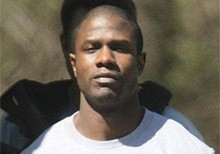
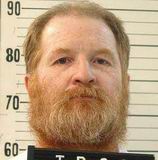
Brian Gene Nichols
Murderer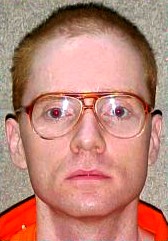 Robert Glen Jones
Murderer · USA · 1996
Defendant: Robert Glenn Jones (ADC#070566) · Co-defendant: Scott Nordstrom (ADC…
7 victims
Robert Glen Jones
Murderer · USA · 1996
Defendant: Robert Glenn Jones (ADC#070566) · Co-defendant: Scott Nordstrom (ADC…
7 victims
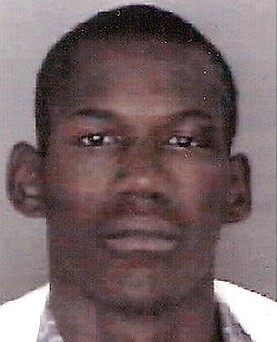 Joshua Wayne Andrews
Murderer · USA · 2000
Joshua Wayne Andrews was a serial killer accused of killing several people in V…
5 victims
Joshua Wayne Andrews
Murderer · USA · 2000
Joshua Wayne Andrews was a serial killer accused of killing several people in V…
5 victims
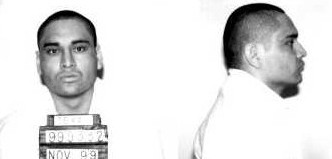 Juan Carlos Alvarez
Murderer · USA · 1998
Juan Carlos Alvarez, born on March 9, 1977, in San Luis, Mexico, was a Hispanic…
5 victims
Juan Carlos Alvarez
Murderer · USA · 1998
Juan Carlos Alvarez, born on March 9, 1977, in San Luis, Mexico, was a Hispanic…
5 victims
 Leon Davis Jr.
Murderer · USA · 2007
Leon Davis Jr. was sentenced to death on April 29, 2011, for the execution-styl…
5 victims
Leon Davis Jr.
Murderer · USA · 2007
Leon Davis Jr. was sentenced to death on April 29, 2011, for the execution-styl…
5 victims
 Robert Newland
Murderer · USA · 1986
Robert Newland (male) was convicted and sentenced to death in Georgia for the k…
1 victim
Robert Newland
Murderer · USA · 1986
Robert Newland (male) was convicted and sentenced to death in Georgia for the k…
1 victim
 Suzane von Richthofen
Murderer · Brazil · 2002
Suzane Louise Freiin von Richthofen was born on November 3, 1983. She was descr…
2 victims
Suzane von Richthofen
Murderer · Brazil · 2002
Suzane Louise Freiin von Richthofen was born on November 3, 1983. She was descr…
2 victims
 Adam Leroy Lane
Murderer · USA · 2007
Adam Leroy Lane was a former trucker who committed knife attacks on women in Ne…
2 victims
Adam Leroy Lane
Murderer · USA · 2007
Adam Leroy Lane was a former trucker who committed knife attacks on women in Ne…
2 victims
 Nikole Flagg
Murderer · USA · 2003
Nikole Flagg (defendant) Myrvinia Lowe (victim; 61-year-old; employee at Cincin…
2 victims
Nikole Flagg
Murderer · USA · 2003
Nikole Flagg (defendant) Myrvinia Lowe (victim; 61-year-old; employee at Cincin…
2 victims
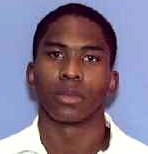 Christopher Solomon
Homicide · USA · 1997
Christopher Julian Solomon (TDCJ Number 999311) was born on 01/30/1980. He was…
1 victim
Christopher Solomon
Homicide · USA · 1997
Christopher Julian Solomon (TDCJ Number 999311) was born on 01/30/1980. He was…
1 victim
- Gender
- male
- Country
- USA
- Location
- Atlanta, Georgia, USA
- Date of birth
- December 10, 1971
- Age at first offence
- 34
- Characteristics
- escape, rape, carjacking, kidnapping
- Victim profile
- Rowland W. Barnes (the judge presiding over his trial) / Julie Brandau (a court reporter) / Sgt. Hoyt Teasley (a Sheriff's Deputy) / David G. Wilhelm (U.S. Immigration and Customs Enforcement Agent)
- Method of murder
- Shooting
- Date(s) of murder
- March 11-12, 2005
- Years active
- 2005
- Date of arrest
- March 13, 2005
- Status
-
Life imprisonment
Sentenced to multiple life sentences with no chance of parole, and to hundreds more years on more than 50 charges on December 13, 2008
Case record: Brian Gene Nichols
Background
Brian Gene Nichols was born December 10, 1971. He was known for his escape and killing spree in the Fulton County courthouse in Atlanta, Georgia on March 11, 2005.
Nichols came from a middle class family. He graduated from the Cardinal Gibbons School in Baltimore, Maryland in 1989. He attended college at Kutztown University of Pennsylvania in Kutztown, Pennsylvania, for three semesters from 1989 to 1990, and played linebacker on their football team. Nick Pergine, who played football with Nichols at Kutztown, said Nichols’ massive physical presence and martial-arts skills earned him a reputation as someone to be careful around. Jake Williams, who coached Nichols at Kutztown, compared Nichols’ physique (6'1" and 210 lbs) with that of NFL star John Mobley, who also played at the university.
Berks County records showed that Nichols had been arrested at least three times during his short stay at the university. In 1990, he was charged with terroristic threats, simple assault, disorderly conduct and harassment, stemming from an incident in a university dining hall, according to court documents. He pleaded guilty to the two lesser charges and the others were dropped. The next year, Nichols was arrested twice in a month for criminal trespassing, misdemeanor criminal mischief and disorderly conduct, and those charges were later dropped.
After his brief stay at Kutztown, Nichols went to Newberry College from 1992 to 1993, and played football there. Athletic spokesman Ryan Gross said that during that time Nichols was kicked off the football team for stealing from a dorm room.
After dropping out of school, Nichols moved to Georgia in 1995. He worked for Hewlett-Packard for eight years as a UNIX systems engineer. Nichols’ last employment was working as a computer engineer for a logistics subsidiary of Atlanta-based shipping giant UPS. Company spokesman Norm Black said Nichols joined the unit in March 2004 and left in September 2004, which was when he was arrested in the rape case.
According to his brother, Nichols earned a six-figure income and regularly attended church.
Nichols was arrested after being charged with the brutal assault of his former girlfriend of 8 years after their break up. After discovering that she was dating Chris Rowell, a minister from their church, Nichols forced his way into her home, bound her with duct tape at gunpoint and raped her. He was charged with rape, aggravated assault with intent to rape, aggravated sodomy, burglary, false imprisonment and possession of a firearm during commission of a crime. The first case ended in a mistrial with a hung jury.
Nichols told people in the courthouse, "I'm not going to go lying down" when he learned that he would be retried.
Nichols’ friends warned the DA’s office he might try to escape, including a friend who told prosecutors that Nichols planned to escape and asked him to leave a credit card in the pocket of the suit jacket he would wear to court. Nichols’ mother also emailed the Fulton County Sheriff’s Office to tell them she believed her son may try to take an officer's weapon.
The retrial began the next week. Two days before the crime spree, deputies escorting Nichols from the courthouse to his jail cell noticed something in his shoes. They found two sharp "shanks," common jailhouse weapons fashioned out of metal which possibly came from a door hinge. Nichols also taunted Assistant District Attorney Gayle Abramson and Assistant District Attorney Ash Joshi during the retrial by saying "you're doing a much better job this time" and he was apparently aware that his case was going poorly. The actions prompted Judge Barnes to have a meeting the day before the escape with counsel, and he asked for extra security during Nichols scheduled testimony that Friday since the prosecution in the rape case had planned to call its last witness that day and jury deliberations were upon him. Nichols would have faced life in prison if convicted.
Timeline
- March 11, 2005 — Nichols escaped from custody during trial proceedings in the Fulton County courthouse in Atlanta, Georgia, killing Judge Rowland W. Barnes, court reporter Julie Anne Brandau, Sheriff’s Deputy Cynthia Hall, and later U.S. Immigration and Customs Enforcement Agent David G. Wilhelm, after an extended escape and carjacking spree.
- March 12, 2005 — Carpenters arriving for work found U.S. Wilhelm dead in his unfinished house.
- March 12, 2005 (9:50 a.m.) — Gwinnett County 9-1-1 received a call saying Nichols was at the Bridgewater Apartments in Duluth, Georgia.
- March 12, 2005 — Nichols surrendered peacefully to the SWAT team 26 hours after the rampage began.
- March 12, 2005 — Nichols made video-recorded statements to police after his arrest.
- March 25, 2005 — Ashley Smith received $70,000 in reward money for helping with Nichols capture.
- May 5, 2005 — Nichols was indicted by a Fulton County grand jury on 54 counts.
- May 17, 2005 — Nichols pleaded not guilty to the charges.
- January 2007 — Jury selection began.
- Mid-September 2007 — Nichols’ pre-trial hearing commenced.
- January 30 — Superior Court Judge Hilton Fuller’s remarks were incorporated into an article published in The New Yorker.
- September 22, 2008 — Nichols entered a plea of not guilty by reason of insanity.
- November 7, 2008 — A jury found Nichols guilty of all 54 counts.
- December 13, 2008 — Nichols was sentenced to multiple life sentences with no chance of parole and to hundreds more years on more than 50 charges.
The offence
The prosecution charged Nichols with committing 54 crimes during his escape. The events included the courthouse shootings and escape, followed by a series of carjackings, a kidnapping attempt at the Summit at Lenox apartments, and the killing of U.S. Wilhelm.
During the escape and shootings on March 11, 2005, Cynthia Hall, a 5'1″, 51-year-old sheriff’s deputy, was assigned to guard Nichols during his two trials under Judge Barnes. Nichols arrived at the courthouse on a bus, and Hall escorted him from a basement detention area to a holding cell on the 8th floor of the Fulton County Justice Tower.
Deputy Dilcie Thomas said that on the morning of the attack, she urged Hall three times to get another deputy to go with her upstairs to a holding cell with Nichols, where he was going to change from jail garb before appearing in court. Hall told Thomas, “No, I got him.” Thomas said Hall seemed to trust him and did not require that he wear the customary leg shackles, even though, the day before his attack, he had been caught with door hinges hidden in his shoes. The hinges could have been used as weapons.
Hall escorted Nichols to the holding area to remove his handcuffs so he could change into civilian clothes. Hall released one cuff and turned Nichols around to unhook the remaining cuff, which was dangling from his wrist. Nichols attacked the deputy, pushing her into another open cell. Video surveillance recorded that he overpowered the deputy and hit her so hard in the face that her feet left the ground. Nichols emerged from the cell with her gun belt, which included her radio and weapon magazines. He retrieved her keys from the floor and locked Deputy Hall in the cell.
Nichols entered another cell and changed into his street clothes and was seen about 4 1/2 minutes later leaving the holding cell area. He used the keys to open a lock box where he armed himself with her Beretta .40 cal. semi-automatic pistol. According to hospital sources, the deputy sustained significant brain injury, facial fractures and a large laceration to her forehead. After the attack, her condition was reported as critical, but she survived. Her injuries were so severe that doctors at Grady Memorial Hospital initially believed that she had sustained a gunshot wound to the face.
Nichols then crossed over to the old courthouse via a skybridge and entered the private chambers of Judge Rowland W. Barnes. He encountered case managers Susan Christy and Gina Clarke Thomas along with attorney David Allman. Nichols made them all sit on the floor and held them at gunpoint while inquiring as to where Judge Barnes was.
Sgt. Grantley White, the court bailiff, entered the chambers and was met by an armed Nichols. Sgt. White tried to disarm Nichols but failed. Nichols continued to point the gun at him and stated "Don't do nothing Sarge. I’ve got nothing to lose". Nichols was held at gunpoint and disarmed Sgt. White. Nichols forced Sgt. White to handcuff Christy, Thomas and Allman but not before Sgt. White was able to push an emergency button in the chambers. When Nichols heard court security trying to contact Sgt. White, he responded to dispatch on the radio trying to dispel the alarm. This alerted other deputies because they heard someone using Sgt. White's radio number but did not recognize the voice. Nichols handcuffed Sgt. White and forced him into a bathroom and exited the chambers.
Nichols entered courtroom 8-F from a door behind the judge’s bench. He found Judge Barnes presiding over motions in a civil trial. He shot him at close range in the back of the head. Witnesses said the judge never knew Nichols was behind him. Nichols scanned the prosecution table and, when he saw the assistant district attorneys were not in the courtroom, he lowered the gun and shot Julie Brandau, the court reporter, in the head.
Sgt. White accessed his radio where he put in the first radio transmission letting responding officers know there had been "shots fired" and gave a description of the armed Nichols. Nichols then walked down from the bench and checked a side room where witnesses were held before trial began, apparently seeking his rape victim, but the room was empty.
Nichols ran into an emergency stairwell and was seen by Sgt. Hoyt Teasley. Sgt. Teasley pursued Nichols. The two ran down seven flights of stairs and out of the old courthouse via an emergency exit onto Martin Luther King Drive. When Nichols exited the building he sounded a door alarm. He fired several gun shots in the air, creating a chaotic situation on the crowded street. He started across Martin Luther King when the door alarm sounded again as Sgt. Teasley exited the building. Nichols pointed one of the guns at Teasley and fired 2 shots before the deputy could draw his own gun. Sgt. Teasley fell to the ground and Nichols fled.
Sgt. Teasley was pronounced DOA due to bleeding from a single gunshot wound to his abdomen at Grady Memorial Hospital. Barnes and Brandau died at the scene.
Nichols ran across the street into the Underground parking garage across from the courthouse and carjacked at least five vehicles. He first took a 2002 Mazda Tribute from Deputy Solicitor General Duane Cooper entering the parking garage. Nichols reportedly walked up to Cooper, pointed a gun at him, and said "Give it up, mother….." Cooper exited the car and Nichols got in, backed out, and sped away in the vehicle down Martin Luther King Blvd.
Larry McCrary, who works in the Fulton County juvenile court, saw Nichols fleeing and followed him as he turned on Peachtree Street and then into a parking garage near Underground Atlanta. McCrary parked his vehicle to block the entrance and exit to the parking deck and flagged down three Atlanta Police officers. After the officers went inside the parking deck, McCrary saw Nichols calmly walk out at an entrance down the street and approach a tow truck at the corner of Peachtree and Wall streets. Nichols pointed a gun at the driver, Deronta Franklin, and ordered him out.
Nichols sped off in the tow truck and traveled north briefly on Peachtree Street, then turned left onto Walton, a one-way street, heading the wrong way and entered the Imperial parking garage on Cone Street. On the fourth floor of the garage, Nichols hijacked a 2004 Mercury Sable owned by Almeta Kilgo, an Atlanta Journal-Constitution software developer. Pointing the gun at her, he demanded she move to the passenger seat. Kilgo froze and he said "I’m not playing with you. Can’t you see the blood on my hands?" He drove a short distance and then stopped and told her to get in the trunk. She escaped.
Nichols left the car and headed north on Spring Street. He drove inside the parking lot at the Apparel Mart and confronted Sung Chung in his 1997 Isuzu Trooper. Chung worked at a jewelry store there. Chung said Nichols put a gun to his head and ordered him to get in the passenger seat and then to the floor board. Chung said that as Nichols was pulling out of the garage, Nichols ordered him to give him his jacket so he could change his appearance. While Nichols was changing into the jacket, Chung unlocked the passenger door, jumped out, and Nichols drove off.
Nichols drove to the Centennial Tower parking deck across from CNN Center at 9:20 a.m. and only 15 minutes after the first carjacking, AJC reporter Don O’Briant became the final carjack victim. As O’Briant parked his SUV in a handicapped space, Nichols, who was not wearing a shirt, got out of Chung’s car and asked for directions to Lenox Square. Nichols then pulled a gun and said "Give me the keys or I'll kill you". He ordered O'Briant out of his car and told him to get into the trunk. O’Briant refused and Nichols hit him with the gun and took O’Briant’s 1987 Honda Accord. O’Briant sustained a broken wrist and received 15 stitches above his eye.
Later that day the Honda was located on the first level of the same parking deck from which it was reported stolen. Investigators suspected Nichols may have abandoned the car after spotting an easier target, taking the owner with him to avoid being reported.
Police recovered security camera images taken Friday morning inside a stairwell in the parking deck showing a shirtless Nichols putting on a jacket taken from O’Briant’s car as he went to a lower level and disappeared. Security camera images did not yield clues as to how Nichols left the parking garage.
Nichols was featured on America’s Most Wanted that night and the manhunt expanded. Fulton County District Attorney Paul Howard’s office announced that a 911 call had been received from a man claiming to be Nichols as the late-afternoon news conference was being televised. Nichols threatened to kill Assistant District Attorney Gayle Abramson and Assistant District Attorney Ash Joshi.
There was an incident at approximately 10:18 p.m. where Nichols attacked 2 people at the Summit at Lenox (now the Heights at Lenox) apartments at 3200 Lenox Road. The apartments were near the Lenox MARTA station in northern Atlanta’s Buckhead neighborhood. Nichols tried to kidnap Iman Adan as she was walking towards her apartment after leaving the gym. He pulled a gun on her and told her he needed to use her apartment as a hiding place. After taking her to the apartment, Shelton Warren, the woman’s boyfriend, was inside. Warren pushed Adan inside and started to wrestle with Nichols in the hallway. Warren could hear hysterical Adan talking to a 911 operator. Nichols heard Adan calling police. Warren said, “If I heard it, he heard it,” and Nichols struck Warren in the forehead with the gun he was holding and then fled.
The morning of Saturday, March 12, carpenters arriving for work found U.S. It was reported that Wilhelm had been shot and killed late Friday night at his new home at 962 Canter Road in the Buckhead section of Atlanta. Canter Road was located across the street from the Summit at Lenox apartments. At the time of his slaying, Wilhelm had been working alone laying tiles in the bathroom of the home, which was under construction, according to Kenneth Smith, special agent in charge of the ICE office. Wilhelm’s body was found in a back bedroom and he had been shot one time in the abdomen. It was apparent he had been robbed because the pockets in his pants were turned inside out and some loose change was scattered on the floor. One spent shell casing was found next to the body. Wilhelm’s wallet with his badge, his gun and his blue Chevrolet pickup truck were stolen.
Investigation
A large-scale manhunt was launched in metro-Atlanta and Nichols was taken into custody 26 hours later.
Georgia Governor Sonny Perdue announced a reward of approximately $65,000 for information leading to Nichols’ arrest. The city of Atlanta went into a lock down following the shootings. Hundreds of officers in cruisers and helicopters swarmed the area, setting up roadblocks at major intersections in downtown and midtown. More than 100 state troopers and officers from several agencies, including the FBI, assisted in the search. G.D. Stiles, a Fulton County deputy chief, said there were few leads. Police officers helped out even while off-duty.
Law enforcement also cast a net outside the city, and patrol cars were positioned on median strips along I-75 and I-85. Public schools in the area were secured, and people inside the courthouse were not allowed to leave until around 11:30 a.m. Friday after authorities locked everyone inside and performed a thorough check of the building.
Atlanta Police Chief Richard Pennington announced that it was believed that Nichols took a MARTA train north. It was learned that Nichols traveled on foot from Centennial Parking garage to the Five Points MARTA station, which was less than a block from the parking deck. Police later located a witness, Michal Taylor, who said she was on the train with Nichols that morning. Taylor said Nichols was wearing a jacket that did not fit, no shirt and he was sweating profusely. Taylor did not recognize Nichols because she had not seen news coverage. Surveillance video later recovered showed Nichols walking through the station at 9:57 a.m.
There was additional reporting of a 911 call received from a man claiming to be Nichols as the late-afternoon news conference was being televised.
Arrest
At 9:50 a.m., Gwinnett County 9-1-1 received a call saying Nichols was at the Bridgewater Apartments in Duluth, Georgia, approximately 27 miles north of Atlanta and 15 miles north of Buckhead, in Gwinnett County. Gwinnett Police, the Georgia Bureau of Investigation, the Federal Bureau of Investigation, and the Bureau of Alcohol, Tobacco, and Firearms responded to the scene.
Gwinnett PD SWAT team quickly surrounded the apartment. After some time, Nichols walked out waving a white towel and surrendered peacefully to the SWAT team 26 hours after the rampage began. Police chief Richard Pennington admitted surprise that Nichols surrendered peacefully.
Authorities recovered three stolen firearms and Agent Wilhelm’s wallet from inside the apartment. Wilhelm’s Chevrolet truck was found about two miles away from the apartment at a nearby industrial complex.
It was later learned that around 2:00 a.m. on March 12, Nichols approached a woman named Ashley Smith in the parking lot of the Bridgewater Apartments. He pointed a gun at her and said "If you do what I say, I won't kill you". He forced her inside her apartment and reportedly told her that he was a wanted man. Nichols forced her into the bathroom and tied her up with an electrical cord and duct tape. He placed a hand towel over her head while he took a shower so that she would not have to watch him. She was sitting on a stool with the towel around her eyes when she told him about her five-year-old daughter Paige and how she was supposed to visit her that day.
When news of his crimes was reported on television, Nichols looked to the ceiling and asked the Lord to forgive him.
Nichols requested marijuana, but Smith told him she only had "ice" (methamphetamine). In her book Unlikely Angel: The Untold Story of the Atlanta Hostage Hero, Smith revealed that she “had been struggling with a methamphetamine addiction when she was taken hostage,” and the last time she used meth “was 36 hours before Nichols held a gun to her and entered her home.” Nichols wanted her to use the drug with him, but she refused. Instead, she chose to read to him from the Bible and Rick Warren's The Purpose Driven Life.
Smith tried to convince Nichols to turn himself in by sharing with him how her husband "had died in her arms four years earlier after being stabbed during a brawl."
Smith also wrote that she asked Nichols “if he wanted to see the danger of drugs and lifted up her tank top several inches to reveal a five-inch scar down the center of her torso — the aftermath of a car wreck caused by drug-induced psychosis. She says she let go of the steering wheel when she heard a voice saying, ‘Let go and let God." When news of his crimes was reported on television, Nichols looked to the ceiling and asked the Lord to forgive him.
Nichols said he needed to get the stolen truck away from the apartments so he told Smith to follow him in her car while he drove Agent Wilhelm’s pickup truck away from the apartment complex. She asked whether she could bring her cell phone and he said she could but she never placed a call for help. She picked him up after he dropped off the truck and drove back to her home with him, she said. She said her decision had been to end the manhunt and feared that he would kill more people if she did not do what he said.
After they returned to her apartment, Smith cooked breakfast for Nichols. She began to ask him if she could leave to go see her daughter and he finally agreed. When Nichols let Smith leave her apartment that morning to visit her daughter, Smith placed a call to 9-1-1 at 9:50 a.m.
Police initially thought Smith might have had a prior relationship with Nichols but later learned she was chosen at random. Maj. Bart Hulsey, commander of Gwinnett County's SWAT team, said: "She's a remarkable lady." He added: "She managed to make a rapport with him and made herself a person, not just an object, and she has an amazing capability for survival."
Smith downplayed her efforts and later said: "Throughout my time with Mr. Nichols, I continued to rely [on] my faith in God. God has helped me through tough times before, and he'll help me now," she told reporters in Augusta, Georgia. She also said: "It's natural to focus on the conclusion of any story, but my role was really very small in the grand scheme of things. The real heroes were the judicial and law enforcement officials who gave their lives and those who risked their lives to bring this to an end," she said.
On March 25, 2005, Ashley Smith received $70,000 in reward money for helping with Nichols’ capture. She received $25,000 from the U.S. Marshals Office, $20,000 from the FBI, $10,000 from Georgia Gov. Sonny Perdue’s office, $5,000 from the Georgia Sheriffs’ Association, $5,000 from the Georgia Fraternal Order of Police and $5,000 from the city of Atlanta. She previously received $2,500 from the Georgia Association of Chiefs of Police.
Trial
After his arrest, Nichols was taken to a FBI field office in Decatur, Georgia and held on a federal charge of possession of a firearm by a person under indictment. He was then transferred to the Atlanta Police station where he was interviewed by Atlanta Police Detective Vincent Velazquez.
Nichols confessed on video and detailed his crimes over the three-and-a-half-hour statement he made to police without any lawyer present. Nichols was in custody for about two hours when he signed a waiver and agreed to make a videotaped statement about the courthouse shootings.
Nichols told police he felt like a "soldier on a mission" exacting revenge on a judicial system he felt was unfair to African-Americans. He feared he was about to go to prison for a rape he claimed he did not commit and grew weary of awaiting trial in jail. He described flinging a smaller female deputy into the concrete wall like a rag doll. He said after taking her weapon, instead of escaping down nearby stairs, he ran across a sky bridge to hunt down the judge in his rape case. He said Barnes was nice but part of a larger system of injustice. He said he killed the judge’s court reporter when she stood to check on the judge. He said he shot the sheriff’s sergeant outside the courthouse so he could escape and later shot the federal agent in Buckhead while attempting to steal his car. He also admitted holding Ashley Smith hostage in her apartment before he surrendered.
Nichols said in the videotaped interview on March 12, 2005: "I was actually very impressed that they didn't shoot me when I walked out the door." Velazquez said: "He was very up front and very detailed and meticulous in telling me what happened," and "It was one of the easiest interviews I’ve ever done."
Fulton County District Attorney Paul Howard said he saw Nichols shortly after he was taken into custody and said he appeared to be "someone who was proud of what he had done -- that he did not show remorse."
On May 5, 2005, Nichols was indicted by a Fulton County grand jury on 54 counts including murder, felony murder, kidnapping, armed robbery, aggravated assault, aggravated battery, theft, carjacking, and escape from authorities. Nichols pleaded not guilty to the charges on May 17.
Jury selection began in January 2007. Nichols’ attorneys disclosed at that time that they wanted to defend Nichols on the basis of mental health, and they did not disclose any further information. Nichols’ pre-trial hearing commenced mid-September 2007. His defense attorneys submitted that they were not receiving enough funding. They attributed this to the Georgia legislature limiting state funding for defense attorneys, the prosecution continuing to interview witnesses, and the complication of factoring in the mental health defense. His trial was expected to commence October 2, 2007, but was delayed.
The trial judge Hilton Fuller disqualified himself in January 2008. Fuller suspended the trial indefinitely because the state public defender's office, amid a budget crunch, had cut off funding to Nichols’ lawyers. Fuller agreed to be interviewed by CNN legal analyst Jeffrey Toobin, who incorporated remarks made during the interview into an article published in the January 30 issue of The New Yorker. In that interview, Fuller said the "only defense" open to Nichols’ defense attorneys was an insanity defense, "because everyone in the world knows he did it." In his letter to the chief judge for Fulton County Superior Court, Fuller stated that "judicial impartiality, real and perceived, is a critical element of the trial process," and "in light of recent media reports, I am no longer hopeful that I can provide a trial perceived to be fair to both the state and the accused."
Nichols’ eventual trial was scheduled to take place in July in the very courtroom where two of his murders were committed. Superior Court Judge James Bodiford, brought in from nearby Cobb County, ruled that "fundamental fairness" made it necessary to move the trial to another location in Fulton County within 10 days.
While awaiting trial it was discovered Nichols was suspected of plotting a second escape attempt. District Attorney Paul Howard’s office confirmed that the Attorney General was asked to appoint an outside prosecutor to investigate Nichols’ security at the Fulton County jail. The independent investigation so far discovered that Nichols allegedly got direct and indirect help while in custody in Fulton County, not only from his girlfriend, but also from two deputies reportedly paid cash for favors, a paralegal who worked for Nichols’ lawyers and Nichols’ brother. Reports said Nichols asked his long-distance girlfriend Lisa Meneguzzo to go to a Home Depot store and make a purchase of construction tools including a masonry saw, a circular saw, and a jack. Nichols was said to have plotted an escape by sawing his way out of a cement block and exiting. The reported plot did not get past the planning stages and Nichols was moved to DeKalb County jail in October 2006.
On September 22, 2008, roughly 3 1/2 years after the crimes, Nichols’ trial began in courtroom 6B of the Atlanta Municipal Court in front of Bodiford. At 11:12 a.m., Nichols officially entered a plea of not guilty by reason of insanity. Nichols’ defense team moved again to delay the trial, but Bodiford refused. Bodiford said: “It is no surprise to the lawyers and to any observers that I am denying the continuance,” and “There has got to be a deadline… and we have reached our deadline."
Nichols’ counsel Henderson Hill acknowledged in his opening statement to the jury that the "terrible, almost unspeakable things that happened on March 11" were "at Mr. Nichols' hands." Hill also acknowledged that Nichols was guilty of the rape and aggravated assault of his longtime girlfriend, the crime for which Nichols was being tried in front of Barnes. Hill argued instead that Nichols was not guilty by reason of insanity, claiming he believed he was in a war in which he was a slave rebelling against the United States and plantation politics.
Hill said Nichols’ mental illness manifested in an addiction to video games in which he came to believe he was a real superhero.
The jury included a jury of six black women, two white women, two black men, one white man and one Asian man. They were selected after a nine-week process in which more than 240 prospective jurors were questioned.
Hill acknowledged the prosecution opening included the playing of an audiotape of the gunshots that killed Fulton County Superior Court Judge Rowland W. Barnes and court reporter Julie Anne Brandau. The tape preserved her last moments of life. In opening statements, lead prosecutor Kellie Hill called Barnes a "conniving, vicious, cold-blooded, remorseless, evil and extremely dangerous killer" who carefully planned the attack and methodically sought out his targets. Hill said: "He's not insane," and "He had a plan. And we're going to bring you proof of the plan." Hill also said: "He's not insane," and “He had a plan. And we're going to bring you proof of the plan.”
Earlier in the trial, the prosecution sought to challenge the plea that Nichols was not guilty by reason of insanity. On the stand, Gayle Abramson Csehy, the former Fulton County prosecutor who tried Nichols twice in 2005 on charges he raped his former girlfriend, said she never saw signs of mental illness in Nichols when she met with him and his attorney during the rape trial, and that Nichols’ attorney never mentioned his client’s alleged mental illnesses either. Asked what Nichols’ demeanor was like during the rape trial, she replied: “Confident. I hate to use a cliche', but cool, calm and collected.” She said he seemed constantly alert and “Far from seeming delusional, he seemed constantly alert.” During an afternoon exchange, Defense Attorney Henderson Hill probed her again until she finally lost her cool. Csehy said: “I’m an attorney, and I know what your defense is,” and "And it is B.S."
The prosecution stated that a primary witness Cynthia Hall would not be able to testify due to her lack of memory of the last day she trusted Brian Nichols. The beating left her an invalid. She was blind in her right eye, her eyelid drooped, and she had brain damage causing confusion, memory problems, difficulty with speech and difficulty walking unassisted, according to Dr. Gerald Bilsky, the assistant director for the brain injury unit at the Shepherd Center.
Witnesses testified Hall had become friendly with Nichols and seemed to trust him. Former Fulton County sheriff’s deputy Sharon Pauls testified: “They seemed to be quite familiar with each other,” and “They talked about the case, what had happened in court, they talked about their children.”
The prosecution put forensic expert Ross Gardner on the stand to offer findings on the crime scene at the Wilhelm home. Nichols admitted to the shootings in a statement to police but claimed he fired on Wilhelm only after the off-duty federal agent pointed a gun at him.
Gardner found in his report: "At the moment of the gunshot to his abdomen, Mr. Wilhelm was either kneeling or standing with his upper torso leaning toward the shooter." Gardner told jurors Wilhelm was shot at a downward angle through the stomach which severed Wilhelm’s spine and paralyzed him. Gardner said the bullet struck the thumb, before entering. Gardner said this thumb injury was not possible if Wilhelm had been gripping the pistol. Gardner said Wilhelm’s Glock pistol was found undamaged when recovered. Gardner said when Wilhelm fell he was face down but not for long. Gardner also contended that a trail in the drywall dust on the floor showed Nichols turned Wilhelm over and dragged him after shooting him. Gardner said the agent’s pockets were turned inside out as if they had been rifled when he was dying on the floor.
Prosecutors concluded their 54-count case against Nichols on October 14, 2008 by showing autopsy photos of his four victims. They took 17 days and called 76 witnesses to present evidence.
The defense began its case attempting to show Nichols was insane and should not be held accountable. They called Nichols’ former girlfriend as their first witness. She recounted how Nichols had impregnated another woman, leading her to end their seven-year relationship. She testified Nichols told her he was going to kill himself because he couldn’t handle their break-up, and she quoted him as saying "He told me he was going to commit suicide, and would I take care of his dog". She said three weeks later she began seeing an assistant pastor at their church.
She testified Nichols was waiting for them when they got home from dinner one night and there was an angry confrontation before Nichols left. She testified she went to bed, but at 5:00 that morning, she woke up to find Nichols in the door of her bedroom pointing a gun at her instructing her to disarm the alarm. She said he brought two guns, duct tape, nunchuks and lighter fluid. She said: "He duct-taped my ankles and wrists together and told me if I complied, he would not harm me and would let me go — but if I didn't, it would be a murder-suicide," and "He would kill me, and then himself." She also said: "He also said he would cover me with lighter fluid — I would be burned to death." She described a terrifying seven hours in which Nichols videotaped her naked and raped her, but let her go, telling her if she went to police he would get her and her family and friends even if he went to jail for a long time.
Attorney Barry Hazen, who represented Nichols in his rape trial, testified that Nichols insisted the former girlfriend still loved him and would not testify against him, even though she brought rape charges and the rape was so violent she was injured. Hazen recounted a meeting that he and Judge Barnes had in chambers on March 10 about Nichols’ increasingly erratic behavior. Hazen testified Nichols turned down a plea deal Judge Barnes had agreed to, which would have given him 15 years in prison instead of the 25 or more years he was likely to get if convicted. Hazen said he expected that. Hazen testified Nichols believed he was such a ladies’ man he could win over the jury in the second trial. Hazen testified Nichols said: “A jury’s going to love me,” and "'I'm a handsome man. All we need is women on the jury, and, Barry, you don't have to worry."
Hazen testified: "The defense called psychiatrist Mark Cunningham to the stand to testify about Nichols mental condition." Cunningham said Nichols had an emotionally distant relationship with his parents because they worked long hours and were seldom home. Cunningham said Nichols’ father routinely drank alcohol and also smoked marijuana, leading Nichols to begin abusing the same substances as a child. Cunningham said Nichols was sexually abused by a cousin and his older brother and that he was bullied as a child. Cunningham said: “The stresses of his childhood is what carries forward into adulthood.”
Cunningham said Nichols began to show extreme beliefs in college and presented college essays in 1992. Cunningham read an essay quote: "If violence can be a righteous tool for the white man, then surely it can be used as a righteous tool for the black man. If violence can be used to murder defenseless women and children in South Africa and Vietnam, then surely it can be used to defend the human rights of dark-skinned people all over the world." Cunningham said Nichols wrote he believed blacks should use violence to rebel, arguing that if violence was right in Vietnam and the Middle East it “surely it can be used in South Central Los Angeles.”
Cunningham said those beliefs “are the seeds of what later grew into a delusional disorder" as Nichols was confined in the Fulton County jail. Cunningham said Nichols argued that conditions paralleled slavery, including labor without pay, poor sanitation and chains, and he compared his white judge, Rowland Barnes, to a slavemaster. Cunningham said Nichols eventually became so delusional he thought he was at war with the government and that he did not know right from wrong even as he pulled the trigger. Cunningham read an excerpt from Nichols’ confession: "I felt as though I was a slave rebelling. I was a slave rebelling against the government of the United States. And as a soldier, I don't feel as though I committed any war crimes.... Slaves have a tendency to rebel. And as a result, I felt as though it was my right as a human being, basically, to rebel as a slave. And I felt that it was my right to declare war on the United States government."
Sentencing
The jurors deliberated for twelve hours over two days before finding Nichols guilty of all 54 counts on November 7, 2008. Prior to the verdict being read, Bodiford sternly warned those in attendance that any emotional outburst would bring a contempt of court finding and up to 20 days in jail. Spectators burst into tears when the verdicts were read.
On December 13, 2008, Nichols was sentenced to multiple life sentences with no chance of parole, and to hundreds more years on more than 50 charges. Bodiford handed down the maximum sentence on each charge, to run consecutively. Nichols was spared multiple death sentences when the jury failed to reach a unanimous decision as required by Georgia law, recommending that punishment. Bodiford said: "If there was any more I could give you, I would."
Outcome
Nichols was found guilty of all 54 counts on November 7, 2008 and was sentenced on December 13, 2008.
Aftermath
The shooting deaths of three people in a courthouse by Nichols led to intense debate about the state of security in public buildings, especially courtrooms. Intense controversy about security practices and staffing unfolded over the next few months.
- March 24, 2005: Fulton County judges ordered their own security review of courthouse security.
- March 27, 2005: A security audit of the Fulton County Courthouse began.
- March 31, 2005: The union representing Fulton County deputies recommended courthouse safety upgrades, including improving training and equipment.
- April 22, 2005: A 25-member task force began looking into courthouse security.
- May 9, 2005: The task force announced key recommendations to improve courthouse security, including installing cameras in all courtrooms, using two deputies to escort high-risk inmates, using proper restraints on inmates, and special doors in courthouse holding cells that allowed deputies to handcuff inmates before they entered the cell.
- July 8, 2005: The Fulton County Courthouse Security Commission released its report outlining security mistakes made on March 11, 2005. The report found the courthouse was understaffed by security personnel. While about 235 deputies were assigned to courthouse, the report said there should be over 300. The report recommended that civilian bailiffs be used for administrative duties so deputies could focus on security, and recommended panic buttons under courtroom desks and an emergency plan in case of a security breach.
- August 8, 2005: Eight Fulton County deputies were fired due to their actions during the courthouse shootings.
- October 5, 2005: The Fulton County Sheriff’s Department internal review of the courthouse shootings was released.
An episode of American Justice titled "Murder in the Court" dealt with famous legal-related murders including Nichols and the attack on the Chicago federal judge.
Nichols’ family reaction included statements from various relatives and friends. Nichols’ parents were traveling abroad in Africa where Nichols’ mother works. She was a former agent for the Internal Revenue Service and helping set up a tax system. She became aware of her son’s case via a CNN broadcast while in Tanzania and remained in contact with Nichols’ criminal attorney Barry Hazen via email. Nichols’ father was retired from the restaurant business.
Nichols’ brother Mark was very upset, quoting: "Everyone knows me as the brother of the person who killed those people". Reginald Smalls, Nichols’ uncle, said: "Everyone knows me as the brother of the person who killed those people" and also said: "The only thing I can say is, our hearts go out to the people in Georgia," and "I really mean that ... Brian is a nice young man, as far as we know. I don't know what happened."
Childhood friend Maxine Glover described Nichols as a "normal young child playing with the other kids in the block, very well mannered, had no problems with him at all". Nichols’ daughter who was in high school said she was shocked.
Nichols’ father Gene Nichols was interviewed at the start of the death penalty trial. He said he had been surrounded by sadness every day since the March 11, 2005 killings and quoted: "It never leaves you," and "I don't think it's going to get any better." He said: "You try to go to sleep at night, and if you can, that's the only time it leaves you." Gene Nichols said he and his wife had reached out to the widow of Judge Barnes to let her know they were sorry for her loss. He said Nichols was mentally ill the day he shot a judge, court reporter, sheriff's sergeant and federal agent. Gene Nichols said he prayed at least one juror would decide to spare his son’s life. He also said he believed a life in prison could be worse and quoted: "I really don't know if he's afraid of death," and "I'm not. Death sometimes is better than living."
Other details
The judge and Standards Council assigned Nichols four attorneys. The source described Georgia taxpayers paid the bill for Nichols’ case, with some estimates that it ultimately cost taxpayers at least $5 million to prosecute and defend Nichols. The source also described Fulton County’s budget being depleted, with Fulton County on the hook for at least $10 million in settlement fees to victims’ families.
Barnes’ widow won a $5.2 million lawsuit and county commissioners agreed to pay $5 million to Brandau’s daughter, Christina Scholte, who also sued.
Prior to the verdict, Superior Court Judge Hilton Fuller disqualified himself due to friendship with the murdered judge.
In the prosecution opening, the audiotape began with what lead prosecutor Kellie Hill called a moment of “regular courtroom tranquility” of a lawyer's argument, until the first gunshot rang out. A woman's voice was heard saying: "Don't hurt me, please don't hurt me, help please don't hurt me." The tape recorded screams of Barnes’s staff attorney as Brandau fell across her and was fatally shot through the head. During opening statements, Hill said the prosecution produced proof of Nichols’ plan, and she called him "conniving, vicious, cold-blooded, remorseless, evil and extremely dangerous killer".
Deputy Sharon Pauls testified about familiarity with Nichols and their conversations, and witnesses testified Hall seemed to trust him and chatted in the manner of friends. Nichols seemed to have won special concessions from Hall, including that he did not require leg shackles as was customary.
The report included details about Nichols’ threatened escape plan and later second escape attempt allegations, including the involvement of his long-distance girlfriend Lisa Meneguzzo and proposed tools including a masonry saw, circular saw, and jack. The alleged plot did not get past planning stages and Nichols was moved to DeKalb County jail in October 2006.
Spotted an error, or have more information about this case?