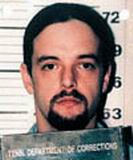
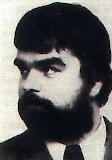
David Scott Poe
Murderer Brian Kevin Rosenfeld
Murderer · USA · 1985
Brian Kevin Rosenfeld Brian Kevin Rosenfeld was sentenced to three concurrent l…
23 victims
Brian Kevin Rosenfeld
Murderer · USA · 1985
Brian Kevin Rosenfeld Brian Kevin Rosenfeld was sentenced to three concurrent l…
23 victims
 Yahweh ben Yahweh
Murderer · USA · 1980
Yahweh ben Yahweh was born and legally named Hulon Mitchell Jr. (October 27, 19…
23 victims
Yahweh ben Yahweh
Murderer · USA · 1980
Yahweh ben Yahweh was born and legally named Hulon Mitchell Jr. (October 27, 19…
23 victims
 Russell Ellwood
Murderer · USA · 1991
Russell Ellwood was a former taxi driver. Authorities suspected him of killing…
20 victims
Russell Ellwood
Murderer · USA · 1991
Russell Ellwood was a former taxi driver. Authorities suspected him of killing…
20 victims
 Charles Edward Roche
Murderer · USA · 1983
May 11, 1990 — Charles Edward Roche Jr. shot and killed two men in Roche's Hamm…
8 victims
Charles Edward Roche
Murderer · USA · 1983
May 11, 1990 — Charles Edward Roche Jr. shot and killed two men in Roche's Hamm…
8 victims
 Richard Scott Baumhammers
Spree killer · USA · 2000
Richard Scott Baumhammers (born May 17, 1965) was an American immigration attor…
5 victims
Richard Scott Baumhammers
Spree killer · USA · 2000
Richard Scott Baumhammers (born May 17, 1965) was an American immigration attor…
5 victims
 Danny Dean Thomas
Murderer · USA · 1981
Danny Dean Thomas was a Texas death row inmate. He died in prison on August 29,…
1 victim
Danny Dean Thomas
Murderer · USA · 1981
Danny Dean Thomas was a Texas death row inmate. He died in prison on August 29,…
1 victim
 Madumetsa Jack Mogale
Serial killer · South Africa · 2008
Madumetsa Jack Mogale (born 1968/9) was a South African serial killer dubbed th…
16 victims
Madumetsa Jack Mogale
Serial killer · South Africa · 2008
Madumetsa Jack Mogale (born 1968/9) was a South African serial killer dubbed th…
16 victims
 Manuel Vasquez
Murderer · USA · 1998
Manuel Vasquez (Hispanic male) was convicted of capital murder and was sentence…
1 victim
Manuel Vasquez
Murderer · USA · 1998
Manuel Vasquez (Hispanic male) was convicted of capital murder and was sentence…
1 victim
 Jeffrey Mailhot
Serial killer · USA · 2003
Jeffrey Mailhot lived in Woonsocket and was described by neighbours as a “nice…
3 victims
Jeffrey Mailhot
Serial killer · USA · 2003
Jeffrey Mailhot lived in Woonsocket and was described by neighbours as a “nice…
3 victims
- Gender
- male
- Country
- USA
- Location
- Montgomery County, Tennessee, USA
- Date of birth
- June 6, 1967
- Age at first offence
- 19
- Characteristics
- robbery
- Victim profile
- Private Michael James Marlowe, 18
- Method of murder
- Beating
- Date(s) of murder
- April 4, 1986
- Years active
- 1986
- Date of arrest
- April 25, 1986
- Status
-
Sentenced to death
Sentenced to death on March 28, 1987
Case overview
David S. Poe was convicted of felony-murder in the Criminal Court of Montgomery County, Tennessee, and was sentenced to death by electrocution for the murder of Private Michael James Marlowe on the night of April 4, 1986.
Poe was tried with a co-defendant, Jay A. Cameron, for the murder of Private Michael James Marlowe on the night of April 4, 1986. The victim and both defendants were regular Army personnel assigned to active duty with an infantry division at Ft. Campbell, Kentucky.
Marlowe reached his eighteenth birthday just eight days before his death. Poe lacked two months of being nineteen years of age, and Cameron was twenty-one.
The Ft. Campbell military reservation lay partly in Kentucky and partly in Tennessee. The death occurred during off-duty hours after the victim and the two defendants had been drinking beer together at a tavern near the military base.
The robbery and murder occurred in a large vacant field located a few blocks from the tavern. The exact time of death was not established, but it apparently occurred after darkness and probably between the hours of 9:30 p.m. and midnight.
Statements taken by military and civilian authorities from Poe and Cameron provided sufficient evidence to warrant their conviction of felony-murder. Both admitted being involved in the merciless beating and robbery of Marlowe. Both denied any intention to kill the victim.
Cameron testified at trial, admitted being involved in the robbery, and implicated Poe in the homicide. Although Cameron was also convicted of felony-murder, he received a sentence of life imprisonment rather than the death penalty.
The Tennessee Supreme Court affirmed both the conviction and the sentence. The opinion was delivered by William J. Harbison, C.J., with Concur: Fones, Cooper, Drowota and O'Brien, JJ.
Timeline
- April 4, 1986 — Marlowe was murdered during off-duty hours after Poe and Cameron drank beer together with him at a tavern near Ft. Campbell; the robbery and murder occurred in a vacant field a few blocks from the tavern.
- April 7, 1986 — When Marlowe did not report for duty, his absence was noted, and he was carried on military records as being absent without official leave.
- April 20 or 21 (year not specified in text) — Private Gregory L. Gray testified that Poe stated “he had been involved in a murder.”
- April 25, 1986 — Gray reported what Poe had told him to a special agent of the Criminal Investigation Division at Ft. Campbell; special agent Steve Chancellor went to the field where the homicide was understood to have occurred and found the badly decomposed corpse of Marlowe; Chancellor ordered other military officers to arrest both Poe and Cameron on the base at Ft. Campbell; Poe and Cameron were brought to headquarters and gave taped interviews and signed written statements admitting involvement in the robbery of Marlowe on April 4.
- March 28, 1987 — Poe was sentenced to death by electrocution.
- July 18, 1988 — The Tennessee Supreme Court affirmed Poe’s conviction and death sentence.
- October 26, 1988 — The sentence was to be carried out as provided by law on this date unless stayed by order of the Court or other appropriate authority.
Background
Marlowe was a youth who had reached his eighteenth birthday just eight days before his death.
Campbell, Kentucky.
Marlowe was on a weekend pass. When Marlowe did not report for duty on Monday, April 7, his absence was noted and he was carried on military records as being absent without official leave.
During the evening of April 4, the group drank beer at the Red Carpet tavern during what was described as the “happy hour.”
The offence
The death occurred during off-duty hours after Poe, Cameron, and Marlowe had been drinking beer together at a tavern near Ft. Campbell.
and midnight.
Poe and Cameron decided to “roll” Marlowe and induced him to accompany them into the vacant field behind a grocery store.
They beat Marlowe to death and robbed him. A leather thong or shoe lace was tied tightly around his neck. Cameron insisted that Poe had the shoe lace and placed it around the neck of the victim who by that time had been beaten into unconsciousness. Cameron insisted that the thong was not tied while he was present at the scene and stated that he refused to assist Poe in tying it.
Cameron also stated that he declined to hold the victim’s head while Poe “rammed” the victim’s nose into his brain.
When Marlowe’s remains were discovered three weeks later, the thong was tied tightly and firmly in place with a circumference of about 12 inches. Marlowe was shown to have a neck size of about 15 to 15 1/2 inches.
A physician testified that if the thong were tied this tightly around the victim’s neck, it would produce strangulation. By the time the body was found, the corpse was so decomposed that the string or thong was hanging loosely and all of the soft tissue in the neck area had disappeared.
The remains of Marlowe’s skull showed a fracture of the jaw in two places and the displacement of several teeth. Experts testified that these injuries resulted from very severe force. The force of the blows sufficient to inflict such injuries could also have been sufficient to produce death.
Poe and Cameron placed responsibility upon each other for the actual homicide, although both admitted participating in the assault and battery of the victim and in the robbery.
Marlowe had $14.00 in cash in his pocket, which Cameron took, and Cameron later gave Poe $10.00 of this amount. Marlowe also had a wallet and a watch.
Poe took these items according to Cameron and later discarded the wallet. The wallet contained an identification card and a check for $50.00, which had been sent to Marlowe by his grandmother as a present. After leaving the scene Poe and Marlowe burned the check and partially burned the identification card.
Because both defendants had blood on their jerseys or t-shirts, they discarded these and threw them into a pond near a construction site. The discarded wallet of Marlowe was found at the edge of this pond. The shirts and wallet were retrieved after Poe and Cameron gave statements to investigating CID agents and a Montgomery County deputy sheriff. The partially burned identification card was also found where the statements indicated it would be. No remnants of the check were ever found.
Both Poe and Cameron stated that the body of Marlowe was left near a path running through the vacant field, but it was found 30 to 40 feet from the path when discovered on April 25. The jury were not bound to believe that Poe and Cameron left the body near the path, because Cameron testified that Poe had warned him during the course of the assault that the path was travelled fairly frequently.
At the guilt phase, Poe and Cameron claimed that the victim was not dead when they left him in the field. The jury rejected those claims, and also rejected attenuated theories that the other came back to the scene and committed the homicide independently or separately to prevent the victim from identifying or giving evidence against them.
The evidence supported the conclusion that Poe and Cameron committed the homicide while beating and robbing Marlowe, then strangling him with a leather thong or shoe lace.
Investigation
Gray testified that on or about April 20 or 21 Poe stated that “he had been involved in a murder.”
Gray testified:
Q. Well, specifically what did he tell you?
A. He told me that he broke someone’s neck.
Q. That he broke someone’s neck?
A. Yes, Sir.
Gray testified further:
He told me that him and Jay Cameron had met a 'newby' at a bar, and this guy had just gotten to Fort Campbell, just got out of basic training and he had been flashing some money around, buying people drinks. He said that the kid had bought them some drinks, and that eventually they turned around and he was gone. So, they went outside and found him passed out in the back of a truck, I believe he said. And with the intention to roll him, they took him into a field behind a local grocery store and I believe exactly what he said -- said to me, was -- it went too far and I broke his neck.
On the morning of April 25, Gray reported what Poe had told him to a special agent of the Criminal Investigation Division at Ft. Campbell. Special agent Steve Chancellor later testified at trial and actively participated in the investigation.
On April 25, Chancellor went to the field where he understood the homicide had occurred and found the badly decomposed corpse of Marlowe. This point was located in Montgomery County, Tennessee, about 600 ft. south of the Tennessee-Kentucky state line.
Chancellor ordered other military officers to arrest both Poe and Cameron on the base at Ft. Campbell during the morning of April 25. Poe and Cameron were brought to headquarters of the Criminal Investigation Division. Both gave taped interviews and signed written statements admitting involvement in the robbery of Marlowe on April 4.
Arrest
Poe’s appeal argued that his arrest on April 25, 1986, three weeks after the homicide date, was made without a warrant and was illegal.
The appeal also argued that the arrest violated the posse comitatus statute, 18 U.S.C. § 1385.
The appeal further argued that the statement taken from Poe was obtained in violation of his right to counsel, which right was not intelligently, voluntarily and knowingly waived.
The court addressed the warrantless arrest issue as follows: at the time of Poe and Cameron’s arrest on the base, no Tennessee warrant had yet been issued, but civilian authorities promptly requested such a warrant. The court explained that military officials were initially not certain whether to retain the case under military jurisdiction for court martial or turn the offenders over to civilian authorities for prosecution.
The court found nothing illegal about the arrest of the individuals at the instance of military authorities on the military base. It also found no violation of the posse comitatus statute under the circumstances and found no illegal action in cooperating with civilian officials or turning over the arrested individuals and information concerning them.
A passage addressed the applicable military authority and stated: The military code specifically permitted the arrest of persons by authorized officials based upon reasonable belief that an offense had been committed and that the person apprehended committed it. 10 U.S.C. § 807(b). No warrant was required as appellant insisted.
The court quoted the posse comitatus statute:
Whoever, except in cases and under circumstances expressly authorized by the Constitution or Act of Congress, willfully uses any part of the Army or the Air Force as a posse comitatus or otherwise to execute the laws shall be fined not more than $10,000 or imprisoned not more than two years, or both.
The court found no substance to the Sixth Amendment claim. At the time of interrogation, both Poe and Cameron were repeatedly advised of their right to counsel and other constitutional rights. They waived their right to counsel several times after full advice. The trial court held a lengthy suppression hearing and found no basis for suppression of the statement of either defendant.
Trial
Poe’s conviction and sentence were affirmed, and the judgment was upheld on multiple issues.
Jury selection issues
Poe insisted that the trial court erred in denying individual examination of prospective jurors concerning pre-trial publicity and in refusing to permit defense counsel to question jurors regarding their feelings about the death penalty.
The opinion stated that the trial judge permitted individual examination with respect to whether jurors met the qualifying test of Witherspoon v. Illinois, 391 U.S. 510 (1968). The opinion stated that no error was insisted in that connection and that there was no showing prospective jurors had been exposed to potentially prejudicial material in a way that mandated individual examination.
The opinion stated that the scope and extent of jury examination were within the sound discretion of the trial judge and that no abuse had been shown.
On the question of restricting “feelings” questions about the death penalty, the opinion stated that it did not constitute error and was not shown to warrant reversal.
Poe argued that the trial judge erred by not sequestering the veniremen tentatively accepted prior to their being sworn. The opinion stated jury examination consumed more than two full days, that the veniremen were not sequestered until the panel had been sworn, and that the trial judge repeatedly admonished prospective jurors regarding their duties. The opinion stated sequestering tentatively selected jurors was a matter committed to the trial court’s discretion, and no abuse was shown.
Poe argued that the trial judge erred by not providing counsel a list of prospective jurors containing background information until after the start of trial. The opinion stated a jury list was furnished before the first day of jury selection in accordance with Rule 24(g), Tennessee Rules of Criminal Procedure. It stated the initial list was exhausted during jury examination on the first and second days of trial and additional jurors were impaneled. It stated counsel were furnished a list of these persons as soon as names had been drawn. The opinion stated Poe showed no prejudice.
The opinion also addressed Poe’s claim in his brief that the trial judge did not follow statutory requirements in opening the jury selection box pursuant to T.C.A. § 22-2-308(a)(12). The opinion stated there was no evidence of such violation in the record and no showing that any irregularity could have affected proceedings so as to constitute reversible error.
A fourth jury-related issue involved a prospective juror who spoke to a potential witness. The opinion stated this was brought to the trial judge’s attention. The prospective juror explained he thought he might have known the individual and expected voluntarily to disclose any acquaintance. The juror was not challenged for cause or peremptorily, was seated, and participated. The opinion stated the evidence did not warrant granting a mistrial.
Trial errors during the guilt phase
Poe argued that the trial court should have granted a mistrial during the guilt phase because Cameron’s taped interview referenced previous criminal misconduct of Poe. The trial judge provided cautionary instructions directing the jury to disregard the reference. The opinion stated the reference was extremely brief and that the trial judge viewed counsel should have moved for redaction before it was read because the contents of statements were known to counsel after suppression hearings. The trial judge instructed counsel to write out curative instructions and gave these verbatim as requested. The opinion stated no reversible error occurred, given the overwhelming evidence of Poe’s guilt during the guilt phase. It stated the refusal to repeat curative instructions in the general charge was not error, and that even if error occurred it could not have affected the verdict in the guilt phase.
The opinion stated the criminal conduct referred to was later stipulated and admitted into evidence at the sentencing phase. During the guilt phase, the details of the alleged prior conduct were not developed.
Poe argued error in limitation of cross-examination of a taxicab driver, David Brown. The opinion stated Brown testified that at about midnight on April 4, 1986, he picked up Cameron and another individual near the field where Marlowe’s body was found, and that Brown did not identify Poe as having been present. During cross-examination, defense counsel stated:
“like this witness to view some other person to see whether or not this might have been the person with the defendant, Cameron.”
The opinion stated counsel did not identify the other person at that time, and the trial judge denied the proffered examination because the witness already said he could not identify the other person.
The opinion stated it later developed the person counsel wanted the witness to view was Chris Bajema. The opinion stated Poe’s counsel called Bajema at trial so the jury had a full opportunity to see and observe him, and counsel did not interrogate Bajema as to whether Bajema rode in a taxicab driven by Brown on the night of April 4. During cross-examination, Bajema denied being with Cameron at all on that occasion and testified he had been with Cameron on other occasions, including in January three months earlier when he and Cameron talked about robbing an intoxicated individual but did not do so.
The opinion stated no error occurred in limiting cross-examination of Brown. It described defense theories: counsel attempted to develop a theory that Cameron and Bajema returned to the scene and murdered the victim, while Cameron attempted to develop a theory that Poe returned alone and committed the homicide. The opinion stated the jury rejected both theories, which were supported by very little evidence.
Poe argued the trial court committed error by requiring trial to proceed past 5:30 p.m. on the fifth day. The opinion stated evidence concluded at about 5:30, counsel for both defendants requested final arguments be delayed until the following morning, and the trial judge directed arguments to proceed. The opinion stated at least two recesses were called during the evening and court adjourned at about 9:30 p.m. The opinion stated no contention existed that the trial judge unduly limited final summation by any attorney or limited counsel in developing theories and stated the matter lay within the trial judge’s discretion with no reversible error shown.
Sufficiency of the evidence
Poe argued he was entitled to a judgment of acquittal.
The opinion stated there was overwhelming proof supporting the jury’s finding of guilt of felony-murder.
It summarized the events: Poe and Cameron drank at the Red Carpet tavern during the early evening of Friday, April 4, 1986, during “happy hour” with beer sold at about one-half price. Marlowe, newly arrived at Ft. Campbell, met Sgt. Dan McIntire at a recreation center on the post. McIntire took McIntire to the Red Carpet so that Marlowe might meet more young men of his age. McIntire knew Cameron but did not know Poe. McIntire introduced Poe at the tavern and introduced Marlowe to Poe and Cameron.
McIntire left between 8:30 and 9:00 p.m. Before leaving, the group drank several pitchers of beer, with Marlowe purchasing two and other group members purchasing others. Marlowe became intoxicated and went out of the tavern, where Poe and Cameron were later found lying in the back of McIntire’s truck. The vehicle had been left at the site when McIntire departed with his wife.
The opinion reiterated that Marlowe had some money on his person during the evening, and it described the defendants blaming each other for initiating the scheme to rob him but agreeing they decided to “roll” him, induce him into the field, beat him to death, and rob him.
The opinion described strangulation using the leather thong or shoe lace tied around his neck and the medical evidence related to the injuries. It also described the robbery items: cash, wallet, watch, check, identification card, and the burning and discarding described earlier.
The opinion described the thong’s placement at discovery and the decomposition of the neck tissue.
It addressed jury credibility: the jury did not have to accept that Poe and Cameron left the body near the path, and did not have to accept that the victim was not dead when they left him.
It concluded the trial court properly denied acquittal and that issues were for the jury.
The opinion stated no issues were raised about the sentencing hearing or the fact that Cameron received a life sentence while Poe received the death penalty. It stated there was a basis in the record for that decision by the jury.
It stated Poe did not testify at the guilt phase and offered no evidence at the sentencing phase. It stated it was stipulated he had previously been convicted of a felony under the Uniform Code of Military Justice for assault with a dangerous weapon, a knife.
In imposing the death penalty, the jury found three aggravating circumstances:
- the homicide was committed during the perpetration of robbery (T.C.A. § 39-2-203(i)(7));
- the previous conviction of a felony involving violence to the person (T.C.A. § 39-2-203(i)(2));
- the murder was especially heinous, atrocious, or cruel because it involved torture or depravity of mind (T.C.A. § 39-2-203(i)(5)).
The opinion stated no issue was made as to the sufficiency of the evidence for the latter aggravating circumstance.
It also pointed out that during the assault, Marlowe told his assailants to take his money and that it was not necessary for them to beat him, according to Cameron. It stated Marlowe was conscious during the severe beating, regardless of whether he was still conscious after the ligature was tied around his throat.
The opinion described sentencing comparisons: Cameron had character witnesses including family members and introduced evidence of his social history. It stated Cameron had no prior criminal convictions. It stated Cameron testified that Poe took the lead in initiating the assault against Marlowe and in the eventual killing. It stated evidence was offered about Cameron’s previous religious affiliation and activity and that there was evidence from which the jury could have been convinced Cameron was capable of rehabilitation.
The opinion stated that while it might be concluded Cameron was fortunate to escape the death penalty, it could not be concluded the imposition of the death penalty upon Poe was arbitrary or disproportionate.
Sentencing
Poe received a sentence of death by electrocution.
During the sentencing phase, it was stipulated Poe had previously been convicted of a felony under the Uniform Code of Military Justice for assault with a dangerous weapon, a knife.
The jury found three aggravating circumstances:
- homicide committed during perpetration of robbery (T.C.A. § 39-2-203(i)(7));
- previous conviction of a felony involving violence to the person (T.C.A. § 39-2-203(i)(2));
- especially heinous, atrocious, or cruel murder involving torture or depravity of mind (T.C.A. § 39-2-203(i)(5)).
No issue was made as to the sufficiency of the evidence for the aggravating circumstance under T.C.A. § 39-2-203(i)(5).
Appeals
Poe appealed the conviction and sentence. The Tennessee Supreme Court reviewed and found no merit in any of the eleven issues presented for review and found no basis for disturbing the conviction or sentence.
Suppression issues
Poe insisted that:
- the arrest on April 25, 1986, was made without a warrant and was illegal;
- the arrest violated the posse comitatus statute, 18 U.S.C. § 1385;
- a statement taken from Poe was obtained in violation of his right to counsel, and that the right was not intelligently, voluntarily and knowingly waived.
The opinion addressed these issues, finding no violation regarding warrantless arrest on the military reservation, finding no violation of posse comitatus under the circumstances, and finding no Sixth Amendment substance, including that Poe and Cameron waived counsel rights after repeated advice and after a suppression hearing found no basis for suppressing the statements.
The opinion also stated there was no claim the statement, if otherwise admissible, should have been suppressed because of inadequate warning or other Fifth Amendment violation.
Jury selection issues (appeal)
Poe’s appeal argued errors in jury selection regarding pre-trial publicity, questioning prospective jurors about their feelings on the death penalty, sequestration of tentatively selected jurors, timing of provision of juror background information, statutory compliance in opening the jury selection box, and denial of a mistrial after a prospective juror spoke to a potential witness.
The Tennessee Supreme Court found no reversible error and stated a motion for mistrial was properly disallowed.
Trial errors (appeal)
Poe’s appeal argued:
- mistrial should have been granted during the guilt phase due to a reference in Cameron’s taped interview to previous criminal misconduct of Poe, but curative instructions were given and the reference was brief;
- the trial court erred by limiting cross-examination of taxicab driver David Brown, with later opportunity for the jury to see Chris Bajema at trial;
- the trial court erred by requiring trial to proceed past 5:30 p.m. on the fifth day.
The Tennessee Supreme Court found no reversible error.
Outcome
The judgment and sentence were affirmed. The sentence was to be carried out as provided by law on October 26, 1988, unless stayed by order of this Court or other appropriate authority.
The opinion stated it found no merit in any of the issues presented for review and affirmed both the conviction and the sentence.
Spotted an error, or have more information about this case?