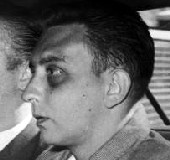
Guenther Podola
Murderer Harry Maurice Roberts
Murderer · United Kingdom · 1966
Name: Harry Maurice Roberts Birth year: 1936 Birthplace: Kennington, London, En…
3 victims
Harry Maurice Roberts
Murderer · United Kingdom · 1966
Name: Harry Maurice Roberts Birth year: 1936 Birthplace: Kennington, London, En…
3 victims
 Albert Goozee
Murderer · United Kingdom · 1956
Albert William Goozee was a British murderer and paedophile. His crimes inspire…
2 victims
Albert Goozee
Murderer · United Kingdom · 1956
Albert William Goozee was a British murderer and paedophile. His crimes inspire…
2 victims
 Alfred Charles Whiteway
Murderer · United Kingdom · 1953
Alfred Charles Whiteway was a serial rapist. Both girls had very deep stab woun…
2 victims
Alfred Charles Whiteway
Murderer · United Kingdom · 1953
Alfred Charles Whiteway was a serial rapist. Both girls had very deep stab woun…
2 victims
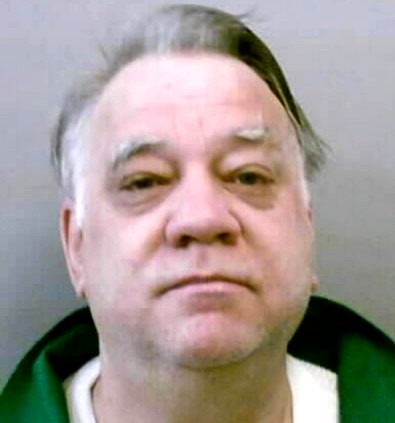 Luke Williams
Murderer · USA · 1991
Luke Williams was convicted of murdering his wife, Linda Williams, and his 12-y…
2 victims
Luke Williams
Murderer · USA · 1991
Luke Williams was convicted of murdering his wife, Linda Williams, and his 12-y…
2 victims
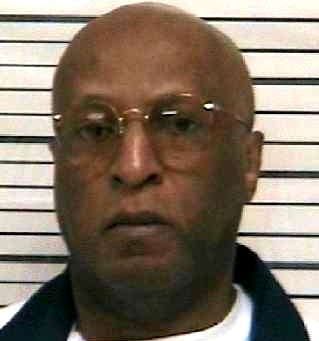 Carzell Moore
Murderer · USA · 1976
Carzell Moore was tried in the Superior Court of Monroe County, Georgia, for th…
1 victim
Carzell Moore
Murderer · USA · 1976
Carzell Moore was tried in the Superior Court of Monroe County, Georgia, for th…
1 victim
 Lee Ann Reidel
Murderer · USA · 2001
Lee Ann Reidel was sentenced to 25 years to life in prison on April 28, 2004 fo…
1 victim
Lee Ann Reidel
Murderer · USA · 2001
Lee Ann Reidel was sentenced to 25 years to life in prison on April 28, 2004 fo…
1 victim
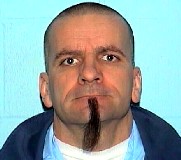 Niels Nielsen
Murderer · USA · 1995
Niels Christian Nielsen was convicted of killing his ex-wife, Sue Marshel, and…
2 victims
Niels Nielsen
Murderer · USA · 1995
Niels Christian Nielsen was convicted of killing his ex-wife, Sue Marshel, and…
2 victims
 Karen McCarron
Murderer · USA · 2006
Karen McCarron was convicted in Illinois of killing her three-year-old daughter…
1 victim
Karen McCarron
Murderer · USA · 2006
Karen McCarron was convicted in Illinois of killing her three-year-old daughter…
1 victim
- Gender
- male
- Country
- United Kingdom
- Location
- London, England, United Kingdom
- Date of birth
- February 8, 1929
- Age at first offence
- 30
- Characteristics
- to avoid arrest, history of mental illness, torture, escape attempt, abuse
- Victim profile
- Detective Sergeant Raymond Purdy, 43
- Method of murder
- Shooting (Radom 9mm semi-automatic pistol)
- Date(s) of murder
- July 13, 1959
- Years active
- 1959
- Date of arrest
- 3 days after
- Status
-
Executed
Executed by hanging at Wandsworth Prison on 5 November 1959
Case identification
Guenther Podola.
STATUS and case outcome
Guenther Podola was executed by hanging at Wandsworth Prison on 5 November 1959.
The offence
Officer Raymond Purdey was shot in the heart at point blank range while attempting to arrest a blackmailer who claimed to have compromising pictures of an American model. The incident took place in Kensington, London. Podola was apprehended after an escape attempt and was taken into custody.
The prosecution and defence used Podola’s memory loss as a central issue at trial.
Investigation
The killer, Guenther Podola, evaded capture for a time, and the police determined he would not escape. After apprehension, Podola claimed he had lost his memory and also claimed he had been house-breaking at the time of the murder. He also claimed he had a “double” called Bob Levine. This claim was investigated by the police, but they did not find any such character, neither in Canada nor elsewhere described in the case narrative.
Police enquiries led to a hotel in Queen’s Gate, South Kensington, where officers charged into Podola’s room. During a scuffle, Podola was knocked over. The automatic pistol which killed Purdey was found in the hotel’s attic.
Purdy’s partner Detective Sergeant John Sandford testified that he had seen the shooting. A fatal bullet was proved to have been fired from a gun found among Podola’s possessions.
A palm-print was found on the window-sill where Podola was cornered, and a copy of it was sent to the Royal Canadian Mounted Police. The Royal Canadian Mounted Police reported that it belonged to Guenther Podola, who had been deported as an undesirable alien, and supplied Scotland Yard with his photograph.
The manager of a South Kensington hotel reported that “one of his guests, Paul Camay, of Montreal had booked in on June 25th,” and stated that since “July 13th — the day of the shooting — he had not left his room.” Shown the photo of Podola, the manager said: “That’s Paul Camay — he’s in Room Fifteen.”
Arrest and events leading to trial
Podola moved to London on 21 May 1959 and spent his time unemployed, staying in various hotels in the Kensington area. He assumed the alias of Mike Colato and pretended to be a gangster.
Podola broke into the house of an American model, Verne Schiffmann, and stole jewellery and furs worth £2,000. He tried to blackmail her in return for her possessions, asking for £500, and she notified the police.
On 12 July 1959 in Kensington, detectives attempted to arrest Podola. Podola shot Detective Sergeant Raymond Purdy in the heart with a pistol. After the shooting, Podola escaped.
Later on 16 July 1959, the police were led to Podola’s hotel room in Queen’s Gate, South Kensington. When police entered, there was a scuffle and Podola was knocked over.
After being arrested, Podola was taken to Chelsea Police Station. At the police station, Podola seemed to be shocked and appeared to be fainting. He was then taken under guard to St. Stephen’s Hospital, Fulham Road.
A pistol was found among Podola’s possessions, and the automatic pistol which killed Purdy was found in the hotel’s attic.
Trial
Court and judge
Podola’s trial opened at the Central Criminal Court, London. It took place before Mr. Justice Edmund Davies, with the prosecution led by Mr Maxwell Turner and Podola represented by Mr Frederick Lawton.
Fitness to plead / amnesia dispute
The start of the trial was delayed while a jury heard evidence of whether Podola was medically fit to stand trial. The jury considered whether his loss of memory was genuine.
Podola’s counsel stated that he had been unable to get any instructions from his client and therefore confined himself to testing the prosecution’s evidence. He suggested that the automatic pistol had gone off accidentally as Podola handed the gun to Purdy. The evidence of Mr. Nickolls of the Metropolitan Police Forensic Laboratory eliminated this theory.
Podola replied to the court when asked for his plea: “I do not remember the crime for which I stand accused ... I am unable to answer the charges.”
After deliberations of 3½ hours, the jury decided that Podola’s loss of memory was faked. A fresh jury was called to hear the trial itself.
Neurologist Michael Ashby gave evidence as an expert medical witness, and psychiatrist Archibald Leigh gave evidence as an expert witness, claiming Podola was feigning his illness.
In his evidence from the dock, Podola stated: “I cannot put forward any defence. The reason for this is that I have lost my memory of all these events. I cannot remember the crime. I do not remember the circumstances leading up to it or to this shooting. I do not know if I did it or whether it was an accident or an act of self-defence. I do not know if at that time I realised the man was in fact a detective. I do not know in fact whether I was provoked in any way. For these reasons I am unable to admit or deny the charge against me.”
The jury took 38 minutes to find Podola guilty of capital murder. After the guilty verdict, Mr. Justice Edmund Davies sentenced Podola to death.
Before sentencing, the judge told Podola: “You have been convicted on evidence of the most compelling character and certainty of the capital murder* of a police officer by shooting him down in the prime of his manhood. For that foul and terrible deed but one sentence is prescribed, and that I now pronounce.”
Defence statement in court
Frederick Lawton QC told the court at the outset: “I rise at the very outset of this case because this case is not a usual case at all. It has one very, very unusual feature. I stand here today, my learned friend by my side, Podola’s solicitor in front of me, and the three of us have no idea what his defence is at all. We have no idea whether he wishes to say the witnesses for the prosecution are mistaken, inaccurate or lying; no idea whether he wishes to say the gun was discharged accidentally. “We have no idea whether he wishes to say he was provoked, and we have no information about his past. This is because he has been unable to give us any instructions, unable to tell us because he has lost his memory. And the consequences, members of the jury, of losing his memory are that he is unable to defend himself.”
Sentencing
Podola was sentenced to death.
Appeals
Podola did not appeal his conviction. The Home Secretary referred the case to the Court of Criminal Appeal under section 19(a) of the Criminal Appeal Act 1907 for consideration of the question whether the onus of proof of unfitness (or fitness) to plead rested on the prosecution or defence.
On 15 October 1959, the Court of Criminal Appeal dismissed the appeal, reserving its judgment for a later date. Podola’s request for an Attorney-General’s Fiat was rejected.
The Home Secretary established a Medical Committee consisting of Drs. Snell, Mather and Pearce, to examine Podola’s mental condition. The committee reported unanimously that Podola’s amnesia had been faked and that they had no medical recommendation to make.
After the Medical Committee findings, Podola claimed that his memory had recovered and that he had been house-breaking at the time of the murder. He also claimed he had a “double” called Bob Levine; the police did not find such a character.
On 20 October 1959, the Court of Criminal Appeal announced its judgment in the Podola case. It stated that Podola’s trial was fair and just.
On 2 November 1959, the Home Secretary decided that the law should take its course.
Timeline
- 12 July 1959 — Detectives attempted to arrest Podola in Kensington; he shot Detective Sergeant Raymond Purdey in the heart.
- 16 July 1959 — Police were led to a hotel in Queen’s Gate, South Kensington; police charged into Podola’s room and arrested him after a scuffle.
- 18 July 1959 — Podola’s capital murder trial commenced at the Central Criminal Court, London, before Mr. Justice Edmund Davies; a jury considered evidence on whether he was medically fit to stand trial.
- 19 July 1959 — Podola’s trial began before the same judge with a fresh jury.
- 15 October 1959 — The Court of Criminal Appeal dismissed the appeal, reserving its judgment for a later date.
- 20 October 1959 — The Court of Criminal Appeal announced its judgment stating that the trial was fair and just.
- 2 November 1959 — The Home Secretary decided that the law should take its course.
- 5 November 1959 — Podola was hanged at Wandsworth Prison.
Other details
Guenther Fritz Erwin Podola was born on 8 February 1929. He was German-born and was described as a petty thief. He was the last man to be hanged in Britain for killing a police officer.
Podola was sentenced to 10 days’ imprisonment following a conviction for burglary in Montreal on 1 March 1957. On 26 March 1957, he was sentenced for another 11 counts of theft and burglary and imprisoned for 2 years. On 25 July 1958, he was released and deported back to West Germany.
Podola applied at The Allied Travel Office in West Berlin to travel to Canada on 17 June 1952. He obtained his Canadian Immigrant’s Visa on 4 July 1952 and arrived at Halifax, Canada, on 14 August 1952. Employment periods described included: general labourer at the Mount Gabriel Club, Quebec; farm labourer for Mr. McArthur Kelly in Huntingdon, Quebec; auto mechanic with Messrs. Budd & Dyer in Montreal; shipping labourer with St. Lawrence Warehouse in Montreal; welder with Canadair in Montreal; delivery man with Messrs. Photographs Ltd in Montreal; shipper with Messrs. Segals Regd in Montreal; shipper with Messrs. Molly Clare Lingerie in Montreal; shipper with Messrs. Popular Gowns in Montreal.
On 4 August 1958, Podola arrived back in West Germany and lived in Gerlingen and Stuggart working as an unskilled labourer.
Podola’s mother was Elizabeth, who died in Berlin on 12 February 1955 at the age of 62. His father was a barber by trade and was killed fighting with the German army on the Russian Front during World War Two. Podola grew up in the working-class district around Alexander Square, Berlin, and was described as a fanatical member of the Hitler Youth movement.
On 13 July 1959, Podola was in a telephone box by South Kensington Tube Station attempting to blackmail Mrs. Schiffman. Detective Sergeants Purdy and Sandford arrested Podola in the phone box area. As they were walking to the police car, Podola escaped and ran into the hall of a block of flats in Onslow Square, Kensington, where he was re-captured.
Detective Sergeant Sandford went to get the police car, leaving Detective Sergeant Purdy guarding Podola in the hall. While Purdy was distracted, Podola pulled out an automatic pistol and shot Purdy in the heart. Detective Sergeant Purdy died almost immediately, and Podola escaped.
After being arrested and taken to Chelsea Police Station, he was examined by the police surgeon described him as “dazed, frightened and exhausted.” He was then removed to St. Stephen’s Hospital where he seemed only vaguely aware of his surroundings.
A note was described as being among Purdy’s personal possessions returned to his widow, containing phone numbers. Calling those numbers led detectives to learn that Purdy’s killer was a German who had spent time in Canada.
Police information was described as having been traced through a telephone tap placed on Mrs. Schiffman’s telephone after she informed the police. Mrs. Schiffman managed to keep Podola talking while the call was traced. She heard him say: “Hey, what do you want?” and then after sounds of a scuffle, a man said to her: “This is Detective Sergeant Purdy. Remember my name.”
After Podola was apprehended at the station and recaptured in the hall of the flats, he was placed on a window ledge. When Detective Sergeant Sandford went to summon assistance and was unable to find him, called out to Purdy to tell him; Podola took advantage of the policeman’s loss of attention, drew a gun described as “a 9mm FB Radom V15,” shot Purdy in the heart, and fled.
Podola was buried in the prison graveyard (grave 59) later that day after the inquest.
Spotted an error, or have more information about this case?