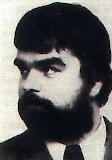
Norbert Poehlke
Murderer Jim Jones
Murderer · Guyana · 1978
James Warren "Jim" Jones (May 13, 1931 – November 18, 1978) was the American fo…
900 victims
Jim Jones
Murderer · Guyana · 1978
James Warren "Jim" Jones (May 13, 1931 – November 18, 1978) was the American fo…
900 victims
 Dr. Wouter Basson
Murderer · 1992
Wouter Basson (born July 6, 1950) was a South African cardiologist and the form…
230 victims
Dr. Wouter Basson
Murderer · 1992
Wouter Basson (born July 6, 1950) was a South African cardiologist and the form…
230 victims
 Ershad Sikder
Murderer · Bangladesh · 1990
Ershad Sikder was an influential political figure in the south-western city of…
30 victims
Ershad Sikder
Murderer · Bangladesh · 1990
Ershad Sikder was an influential political figure in the south-western city of…
30 victims
 Brian Kevin Rosenfeld
Murderer · USA · 1985
Brian Kevin Rosenfeld Brian Kevin Rosenfeld was sentenced to three concurrent l…
23 victims
Brian Kevin Rosenfeld
Murderer · USA · 1985
Brian Kevin Rosenfeld Brian Kevin Rosenfeld was sentenced to three concurrent l…
23 victims
 Marvin Gray
Murderer · USA · 1975
Marvin Gray was convicted killer who claimed responsibility for 23 slayings and…
23 victims
Marvin Gray
Murderer · USA · 1975
Marvin Gray was convicted killer who claimed responsibility for 23 slayings and…
23 victims
 Thomas Miller-El
Murderer · USA · 1985
Defendant: Thomas Joe Miller-El, convicted of capital murder in Texas state cou…
1 victim
Thomas Miller-El
Murderer · USA · 1985
Defendant: Thomas Joe Miller-El, convicted of capital murder in Texas state cou…
1 victim
 Ernest Martin
Murderer · USA · 1983
Ernest Martin was convicted of the aggravated murder of Robert Robinson during…
1 victim
Ernest Martin
Murderer · USA · 1983
Ernest Martin was convicted of the aggravated murder of Robert Robinson during…
1 victim
 Beltrán Cortés
Murderer · Costa Rica · 1934
21 November 1908 — Beltrán Dalay Cortés Carvajal was born. · 1 June 1928 — Dr.…
4 victims
Beltrán Cortés
Murderer · Costa Rica · 1934
21 November 1908 — Beltrán Dalay Cortés Carvajal was born. · 1 June 1928 — Dr.…
4 victims
 Philip Markoff
Murderer · USA · 2009
Philip Haynes Markoff (February 12, 1986 – August 15, 2010) was an American med…
1 victim
Philip Markoff
Murderer · USA · 2009
Philip Haynes Markoff (February 12, 1986 – August 15, 2010) was an American med…
1 victim
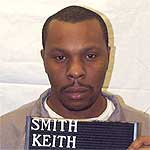 Keith Smith
Murderer · USA · 1991
Keith Smith was prosecuted in the case styled State of Missouri v. Keith A. Smi…
2 victims
Keith Smith
Murderer · USA · 1991
Keith Smith was prosecuted in the case styled State of Missouri v. Keith A. Smi…
2 victims
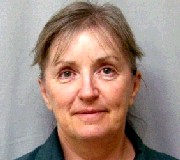 Diane Borchardt
Murderer · USA · 1994
Court: Court of Appeals of Wisconsin, District IV; State of Wisconsin v. Diane…
1 victim
Diane Borchardt
Murderer · USA · 1994
Court: Court of Appeals of Wisconsin, District IV; State of Wisconsin v. Diane…
1 victim
- Gender
- male
- Country
- Germany / Italy
- Location
- Germany / Italy
- Date of birth
- September 15, 1951
- Age at first offence
- 33
- Characteristics
- police officer, bank robbery, parricide
- Victim profile
- Siegfried Pfitzer, 47 / Eugene Wethey, 37 / Wilfried Scheider, 26 / His wife Ingeborg Poehlke and his sons Adrian and Gabriel
- Method of murder
- Shooting
- Date(s) of murder
- 1984 - 1985
- Years active
- 1984–1985
- Date of arrest
- —
- Status
-
Died in custody
Committed suicide by shooting himself on October 23, 1985
Case record: Norbert Poehlke
Background
Norbert Poehlke was a German police officer known as “The Hammer-Killer”. He was described as a veteran officer of 14 years in Stuttgart. Police later investigated robberies and murders linked to him after he died on October 23, 1985.
Poehlke’s family situation became part of the investigation when anti-terrorist officers found a police uniform traced to him in a Ludwigsburg railway station locker. Poehlke claimed the uniform had been left there for a quick change after a relative’s funeral. Investigation revealed no recent deaths in his family, but one of his daughter’s had died of cancer in March 1984 after a long siege. The illness and death left Poehlke with debts of some $400,000, which authorities connected to motives for robbery.
The offence
Poehlke was linked to several bank robberies and murders.
On May 3, 1984, Siegfried Pfitzer, age 47, was found dead at a highway rest stop near Marbach, West Germany, shot in the head. His missing car was linked to a bank robbery in Erbstetten on the same day. In that robbery, the assailant smashed the teller window with a sledgehammer to reach the money inside and took the money on the other side. After the robbery, Pfitzer’s vehicle was abandoned less than a quarter-mile from the murder scene.
On December 21, Eugene Wethey, age 37, was found shot dead at a rest stop near Nuremberg. On December 28, a hammer-wielding bandit used Wethey’s car to flee a bank robbery in Cleebroun/Cleebronn.
On July 22, 1985, Wilfried Schneider, age 26, was found shot dead in a parking lot in Beilstein-Schmidhausen. He was shot with a Walther P5 pistol, described as a common police issue pistol/routinely carried by many police officers. Schneider’s car turned up at the scene of an attempted bank robbery in Spiegelberg, seven miles to the northwest. In that incident, a quick-draw teller forced the thief to flee without the customary loot.
In addition to the killings of the bank robbery victims, Poehlke was found to have killed members of his own family. After police entered his home, they found his wife, Ingeborg, shot twice in the head in the bathroom. In one of the bedrooms, police found his son Adrian, also shot dead. Later, Poehlke and his other son, Gabriel, were found shot dead in Poehlke’s car.
Investigation
On September 29, anti-terrorist officers were searching the Ludwigsburg railway station for bombs when they happened upon a police uniform in one of the lockers. The uniform was traced to Chief Inspector Norbert Poehlke, a 14-year veteran of the Stuttgart constabulary.
Police became suspicious when they discovered no recent family deaths, while learning that Poehlke’s daughter had died of cancer in 1984. The long illness and death left Poehlke in debt for $400,000. Authorities considered this sufficient to establish a motive for robbery. They also considered recent deviations in Poehlke’s behavior as indicating a potential for sudden, unpredictable violence.
The investigation was gathering steam when Poehlke requested sick leave on October 14, 1985. Several days later, detectives stopped by his home to ask questions but found no one answering. Fearing Poehlke had fled, police entered the house and found the bodies of Poehlke’s wife and son.
Three days later, investigators found Poehlke and his missing son, Gabriel, shot dead in Poehlke’s car near Brindisi, Italy.
Ballistics tests confirmed that Poehlke’s pistol was the murder weapon in the murder series, and the case was closed.
Arrest
No arrest was described; the case ended with suicide.
Sentencing
No sentencing was described.
Appeals
No appeals were described.
Outcome
Poehlke died by suicide by shooting himself on October 23, 1985. Authorities described the deaths as a murder-suicide.
Poehlke’s pistol was confirmed as the murder weapon in the murders, and the case was closed.
Other details
Pfitzer’s body was found on May 3, 1984 at a highway rest stop near Marbach, West Germany. His car was found a quarter-mile from his body, and it was linked to the bank robbery in Erbstetten the same day.
Eugene Wethey’s death was described as occurring on December 21, 37-year-old Wethey found shot dead in a rest stop near Nuremburg. A week later, Wethey’s car was used in a bank robbery in Cleebronn by a man wielding a sledgehammer.
Wilfried Schneider was found shot dead on July 22, 1985 in a parking lot in Beilstein-Schmidhausen. He was shot with a Walther P5 pistol.
Poehlke’s wife was named Ingeborg. Poehlke’s sons were named Adrian and Gabriel.
Poehlke requested sick leave on October 14, 1985. A week later, detectives stopped by his home and found corpses. Poehlke and his missing son were found three days later on October 23 near Brindisi, in southern Italy. They were found together in Poehlke’s car, both shot with his Walther service pistol in an obvious murder-suicide.
Spotted an error, or have more information about this case?