
Jesse Clarence Pratt
Murderer Brian Kevin Rosenfeld
Murderer · USA · 1985
Brian Kevin Rosenfeld Brian Kevin Rosenfeld was sentenced to three concurrent l…
23 victims
Brian Kevin Rosenfeld
Murderer · USA · 1985
Brian Kevin Rosenfeld Brian Kevin Rosenfeld was sentenced to three concurrent l…
23 victims
 Yahweh ben Yahweh
Murderer · USA · 1980
Yahweh ben Yahweh was born and legally named Hulon Mitchell Jr. (October 27, 19…
23 victims
Yahweh ben Yahweh
Murderer · USA · 1980
Yahweh ben Yahweh was born and legally named Hulon Mitchell Jr. (October 27, 19…
23 victims
 Russell Ellwood
Murderer · USA · 1991
Russell Ellwood was a former taxi driver. Authorities suspected him of killing…
20 victims
Russell Ellwood
Murderer · USA · 1991
Russell Ellwood was a former taxi driver. Authorities suspected him of killing…
20 victims
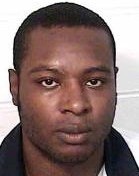 Alexander Williams
Homicide · USA · 1986
Alexander Williams was 17 years old at the time of the offense and was diagnose…
1 victim
Alexander Williams
Homicide · USA · 1986
Alexander Williams was 17 years old at the time of the offense and was diagnose…
1 victim
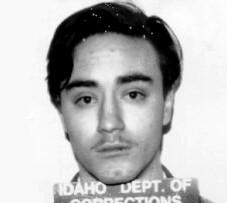 James Hairston
Murderer · USA · 1996
James Hairston was 27 years old and was of Grand Junction, Colo. James Hairston…
2 victims
James Hairston
Murderer · USA · 1996
James Hairston was 27 years old and was of Grand Junction, Colo. James Hairston…
2 victims
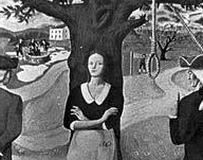 Bathsheba Spooner
Murderer · USA · 1778
Bathsheba Ruggles Spooner (February 15, 1746 – July 2, 1778) was executed by ha…
1 victim
Bathsheba Spooner
Murderer · USA · 1778
Bathsheba Ruggles Spooner (February 15, 1746 – July 2, 1778) was executed by ha…
1 victim
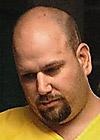 Michael Anthony Mullen
Murderer · USA · 2005
Michael Anthony Mullen was an inmate at Stafford Creek Corrections Center. He w…
2 victims
Michael Anthony Mullen
Murderer · USA · 2005
Michael Anthony Mullen was an inmate at Stafford Creek Corrections Center. He w…
2 victims
 Jacob Tyler Roberts
Murderer · USA · 2012
Jacob Tyler Roberts committed suicide by shooting himself the same day of a sho…
2 victims
Jacob Tyler Roberts
Murderer · USA · 2012
Jacob Tyler Roberts committed suicide by shooting himself the same day of a sho…
2 victims
- Gender
- male
- Country
- USA
- Location
- Klamath County, Oregon, USA
- Date of birth
- J uly 4, 1934
- Age at first offence
- 52
- Characteristics
- rape
- Victim profile
- Carrie L. Love
- Method of murder
- Stabbed, asphyxiated, and run over by a vehicle
- Date(s) of murder
- June 16, 1986
- Years active
- 1986
- Date of arrest
- —
- Status
-
Sentenced to death
Sentenced to death on February 22, 1988; conviction and sentence were affirmed on direct review; post-conviction relief was denied and the denial was affirmed on appeal
Case record: Jesse Clarence Pratt
Status
Jesse Clarence Pratt was sentenced to death on February 22, 1988. His conviction and sentence were affirmed on direct review. His petition for post-conviction relief was denied by the post-conviction court, and the denial was affirmed on appeal.
Background
Jesse Clarence Pratt owned and operated a trucking company in Seattle. Carrie Love, one of Pratt’s employees, agreed to accompany him in his truck on a trip to Los Angeles to open a new office.
Love was concerned that Pratt might make sexual advances toward her during the trip, and she told her boyfriend that, if Pratt did make such advances, she would get out of the truck and call her boyfriend.
Pratt and Love left Seattle on June 16, 1986.
The offence
On June 17, a passerby discovered a sleeping bag and a pillowcase in a ditch beside Highway 97 north of Klamath Falls. The pillowcase contained Love’s purse and identification. The passerby turned the items over to the Oregon State Police.
The next day, the police found Love’s nude body at a truck turnout along Highway 97 south of the location where her purse was found.
Love had been stabbed, asphyxiated, and run over by a vehicle.
After Pratt’s arrest, he told a police officer that he had had sex with the victim at a truck stop and then arranged for her to fly to Los Angeles to meet him. Pratt subsequently told several people that he had killed the victim.
Pratt was convicted of aggravated murder.
Investigation
Arrest
Pratt was arrested and later told a police officer about having had sex with the victim at a truck stop and arranging for her to fly to Los Angeles to meet him.
Trial
Pratt was convicted in 1991 of the aggravated murder of Carrie Love and was sentenced to death.
The conviction and sentence were affirmed on direct review.
Penalty phase evidence
During the penalty phase of the trial, the trial court admitted evidence concerning prior instances of Pratt’s violence toward women, including beating, threatening, and kidnapping women and forcibly promoting prostitution.
Evidence was also admitted concerning Pratt’s violence and threats toward men.
Several of Pratt’s family members testified that Pratt had threatened to harm his mother, one of his half-sisters, and his half-sister’s children.
Expert testimony during the penalty phase
Pratt’s evidence during the penalty phase included testimony by psychologists Faulder Colby and Ralph Underwager.
Faulder Colby was a neuropsychologist who examined Pratt to determine whether he had brain damage. Colby explained to the jury how various parts of the brain are responsible for various functions and how injury to various parts of the brain can cause behavioral problems. He observed that behaviors that some might simply consider mean could be the result of brain dysfunction.
Colby described the tests he administered and described in general Pratt’s performance on those tests. Colby tested Pratt’s full-scale IQ as 77, which he described as “borderline.” Colby observed that Pratt did quite poorly on tests involving the frontal lobe, which concerns executive functioning or behavior control.
The test results indicated organic brain damage, but Colby was unable to tell when the damage had occurred. Colby rendered the opinion that Pratt had a severe cognitive disorder and gave a provisional diagnosis of an explosive type of organic personality disorder.
Although Colby believed Pratt had organic brain damage, he speculated that Pratt’s brain damage was caused by a closed head injury that did not involve a massive contusion to the brain. The results of a CT scan test performed at Colby’s request were insufficient to confirm such a condition.
Colby opined that, although Pratt was dangerous and could not function well in society, he historically had been able to function well within a structured prison environment. Colby also indicated that he believed medication can reduce assaultive behaviors.
Ralph Underwager was a clinical psychologist who specialized in sexual abuse cases. He testified that he had interviewed and tested Pratt and concluded that Pratt had suffered from extensive childhood sexual abuse.
Underwager’s opinion was that the abuse had resulted in Pratt engaging in dysfunctional and abusive sexual relationships, some of which involved a certain type of sadomasochistic sexual behavior.
Underwager further explained that individuals exposed to violent, long-term sexual abuse are more likely to have anger and aggression problems.
Underwager’s tests also showed evidence of brain damage.
Jury note and mistrial during guilt phase
During jury deliberations in the guilt phase of the trial, the jury sent the court a note, stating: “Why is this the second trial? Would you give us an exact reason.”
Trial counsel moved for mistrial, citing “Williams” for the proposition that “nothing could be more damning to an accused” than the jury’s knowledge of a prior trial and conviction.
The court responded that it was denying the motion based on Patton v. Yount, 467 US 1025, 104 S Ct 2885, 81 L Ed 2d 847 (1984), and “State v. Cole.”
Trial counsel replied that he believed Patton and “Cole” supported his position.
The court subsequently gave a cautionary instruction telling the jury that its inquiry was “not material to your decision in this case[.]”
Mistrial issues referenced on appeal
The appeal addressed multiple mistrial denials, including:
- the denial of a motion for mistrial based on the content of a note from the jury during guilt phase deliberations;
- the denial of a motion for mistrial after a witness in the penalty phase referred to Pratt having been on death row;
- the denial of a motion for mistrial based on an alternate juror’s remarks; and
- a jury instruction on the meaning of “beyond a reasonable doubt.”
Sentencing
Pratt was sentenced to death.
Appeals
Direct review (Pratt II)
State v. Pratt, 316 Or 561, 853 P2d 827, cert den, 510 US 969 (1993) (“Pratt II”).
Pratt II briefly recounted the circumstances of Love’s murder, including Love’s concern about potential sexual advances, the dates of leaving Seattle and discovery of items, the discovery of Love’s nude body, and the injuries inflicted.
Pratt II also addressed the jury note during guilt phase deliberations. It rejected the assignment of error regarding the denial of the motion for mistrial, concluding: “[T]he jury's question did not necessarily mean that the jury was considering extraneous information. The jury could have deduced from various factors, including references to prior testimony, that this was defendant's second trial. Furthermore, the trial court acted swiftly to rectify any possible prejudice to defendant by instructing the jury to consider only the evidence produced during this trial and the court's instructions.”
Pratt II held that the trial court did not abuse its discretion in denying the motion for mistrial after a witness in the penalty phase referred to Pratt having been on death row, and it rejected the alternate juror mistrial issue. It also rejected the federal constitutional arguments related to the jury instruction on “beyond a reasonable doubt.”
Post-conviction proceedings
In 1994, Pratt initiated an action for post-conviction relief, alleging that trial counsel in his 1991 trial and appellate counsel in the ensuing direct review provided constitutionally inadequate assistance.
The post-conviction court denied relief, making extensive findings of fact and conclusions of law.
Pratt filed an emergency motion to remand shortly before oral argument, seeking to amend his petition to allege a claim based on Atkins v. Virginia, 536 US 304, 122 S Ct 2242, 153 L Ed 2d 335 (2002), that he was ineligible to receive the death penalty on the ground that he was mentally retarded.
The appellate court denied the emergency motion and affirmed the decision of the trial court.
The appeal and grounds raised
Pratt appealed the denial of his petition for post-conviction relief, asserting that the post-conviction court erred in rejecting his claim of inadequate assistance of counsel at his criminal trial and on direct appeal.
Pratt argued four different ways trial counsel were constitutionally inadequate:
- inadequate assistance during the penalty phase because counsel failed to adequately investigate Pratt’s mental condition by having an event-related potential brain function test performed;
- inadequate assistance during the penalty phase for failing to present additional evidence concerning Pratt’s brain damage;
- inadequate assistance for failing to request a hearing to determine whether Pratt was unfit to proceed to trial due to incapacity, pursuant to ORS 161.630; and
- inadequate assistance because counsel did not assert an insanity defense during the guilt phase.
Event-related potential testing and additional brain damage evidence
Pratt was represented at trial by Kenneth Hadley and Enver Bozgoz.
At the post-conviction trial, Pratt presented evidence from Joel Alexander, who conducts research on cognitive and brain functions. Alexander testified about event-related potential testing.
Alexander testified that he performed both electroencephalogram and “event-related potential” tests on Pratt in 1997 and determined that there was an unusual length of time between the onset of a stimulus and the brain’s reaction to the stimulus during the event-related potential tests.
Based on test results and answers provided by Pratt on a survey, Alexander concluded there was a significant possibility that Pratt had brain damage, but Alexander was unable to determine when that brain damage had occurred. Alexander agreed that his findings were consistent with Colby’s and Underwager’s findings that the brain damage was of undetermined origin.
Pratt argued that if his criminal trial counsel had obtained event-related potential testing, the jury might have been less likely to believe testimony from several of his relatives that Pratt claimed he could fake mental problems and more likely to accept that Pratt had brain damage.
The post-conviction court rejected the argument, finding that additional testing “would have shown nothing more than what was already observed by Dr. Colby during his two-day examination of petitioner.”
The post-conviction court made the following findings: “13. Following his evaluation, Dr. Colby recommended that counsel obtain an imaging study of petitioner's brain. Counsel followed the recommendation and obtained a CT scan. ” “14. Dr. Colby did not tell counsel that a CT was not a sufficient imaging study. In [the] absence of any indication from the expert they had retained to evaluate petitioner's mental health that the imaging study they had obtained was not an adequate follow-up on his recommendation to obtain an imaging study, counsel reasonably concluded a CT scan was adequate to follow up on Dr. Colby's recommendation.”
The appellate court agreed that counsel’s reliance on Colby’s testimony, Underwager’s testimony, and the CT scan did not amount to constitutionally deficient performance. It held that the additional evidence Pratt sought would have supplemented existing expert testimony with additional expert testimony as to the same conclusion that Pratt had brain damage.
Pratt also argued that trial counsel should have presented expert testimony that the particular sadomasochistic sexual behavior was often the product of psychosis and could be a symptom of brain injury. Underwager had testified in the penalty phase that he believed that the sadomasochistic behavior was the result of childhood sexual abuse.
The appellate court concluded it was a reasonable tactical choice not to present contradictory evidence about a different cause for the behavior.
In its discussion, the appellate court noted the evidence that the state presented during the penalty phase, including prior violence toward many people, primarily against women, and the evidence that Pratt presented including that he had headaches, experienced childhood sexual abuse, often erupted quickly into anger for no apparent reason, and would often make up stories, along with the evidence from Colby and Underwager that Pratt had borderline intelligence, a type of brain damage resulting in impaired ability to control behavior, and a history of violence toward women possibly related to childhood sexual abuse.
Competency to aid and assist counsel; ORS 161.630 hearing
Pratt argued his trial counsel were inadequate for failing to ask for a hearing under ORS 161.630 regarding fitness to proceed due to incapacity.
The appellate court described that under ORS 161.360 to ORS 161.370, if a court had reason to doubt a defendant’s fitness to assist and cooperate with trial counsel, it was required to obtain a psychiatric or psychological examination and make a determination as to fitness to proceed. If not fit to proceed, the criminal proceedings were suspended and the person was remanded to a state mental hospital or released on supervision.
The post-conviction evidence showed that before the 1991 criminal trial, the court entered an order authorizing Pratt’s examination by a psychologist at state expense, at trial counsel’s request. Pratt was referred to Dr. Art Norman, who referred Pratt’s case to Colby.
Colby evaluated Pratt for two days and issued a 35-page psychological evaluation. Colby’s evaluation included the following statement: “ Mr. Pratt appeared to understand how the court procedure worked as well as to have a solid understanding of how his relationship should be with his attorneys . He trusts his attorneys, although perhaps Mr. [Bozgoz] more than Mr. Hadley. He likes Mr. [Bozgoz's] coarse and tough style. He said he thought his best defense would be an insanity case. He knows he is not crazy, but he also knows that something is wrong. He does not know what is wrong, but he gets angry quickly and then becomes calm. He said these things did not happen before the truck hit him. If found guilty, Mr. Pratt said he would prefer death to a long prison sentence, since he would be 67 years old when he got out after 20 years and the world would have changed too much for him to make anything of himself. He did not understand why no one would take into account the things about him which were good such as his running a trucking business.” (Emphasis added.)
Seven years later, in the post-conviction proceeding, Colby testified that it was quite possible that a more thorough investigation of fitness to proceed would have resulted in Pratt being found unfit to proceed.
Underwager testified that he believed Pratt had the ability to assist and cooperate with counsel, saying: “I had no question that he was able to assist and cooperate with the counsel. He was doing it.”
Hadley testified that it was his understanding that Colby had determined Pratt was competent to proceed and had ruled out the likelihood that any mental disease or defect defense would have a realistic chance with the jury.
Bozgoz testified that as far as he could remember, Pratt understood what was going on and insisted “we go to trial.” Bozgoz also testified that he felt Pratt actively participated in creating and presenting his defense.
Pratt argued that his rejection of a plea bargain showed incompetence to stand trial. The post-conviction evidence included that Hadley thought the plea offer was good and advised Pratt to accept it, while Bozgoz told Pratt he would rather die than spend 30 years in prison.
Pratt felt more comfortable with Bozgoz than with Hadley and declined the plea offer, although Bozgoz later recommended that Pratt accept it.
The post-conviction court found: “23. Petitioner did assist with his defense by, among other things, directing the investigator to individuals or places that might yield testimony or evidence beneficial to his defense in the guilt phase. ” “24. Petitioner did assist with his defense by, among other things, directing the investigators to people from his past who might have been able to offer mitigating evidence. ” “25. The investigators' investigation of matters or people suggested by petitioner sometimes yielded favorable results. ” “26. Petitioner's ability to assist his attorneys with his defense is demonstrated by his cooperation with Dr. Underwager's evaluation, in which petitioner revealed private and embarrassing information about himself. ” “27. Petitioner's ability to assist in his own defense is demonstrated by petitioner's participation in decisions regarding which witnesses to call and his continued consultations with counsel, effected by petitioner's frequent telephone calls to Mr. Bozgoz's home during the trial. ” “28. Petitioner's deposition testimony reveals he has a sharp memory concerning the details of his trial and pre-trial investigation, which contradicts his assertion in this proceeding that he did not understand what was going on at the time. ” “* * * * * ” “37. Mr. Hadley discussed with petitioner at length the possibility of a plea agreement. ” “38. Mr. Hadley reasonably believed that petitioner understood the plea offer and the consequence of not accepting it. ” “39. Petitioner had been previously convicted of aggravated murder and sentenced to death. Petitioner understood the consequence of rejecting the state's plea offer.”
The appellate court concluded that Pratt did not establish that the choice to proceed to trial demonstrated inability to assist and cooperate with counsel in a way that would require further investigation, and it rejected the argument.
Insanity defense and ORS 161.295
Pratt argued his trial counsel were inadequate because they did not assert a defense of “mental disease or defect” under ORS 161.295(1).
The appellate court noted that before the 1991 trial, Colby examined Pratt and rendered diagnoses including a provisional diagnosis of “organic personality disorder, explosive type.” The post-conviction testimony included that Hadley understood Colby to have advised that a mental disease or defect defense would not have a realistic chance and that Hadley did not pursue such a defense because he did not believe Pratt’s diagnoses would support it.
Bozgoz testified similarly that he understood Colby to conclude Pratt would not likely have a viable mental disease or defect defense, and he stated he did not think such a defense would be successful in Klamath County given the nature of the charged crime.
Pratt argued that counsel misconstrued ORS 161.295 because it excluded abnormalities manifested only by repeated criminal or otherwise antisocial conduct and excluded abnormalities constituting solely a personality disorder.
Pratt relied on Mueller v. PSRB, 325 Or 332, 937 P2d 1028 (1997), concluding that organic personality disorder and organic brain syndrome were not diagnoses that fall within the solely-a-personality-disorder exclusion.
The appellate court rejected the argument based on a concrete finding: the post-conviction court specifically found that Pratt told his trial counsel he did not want to assert an “insanity” defense.
The appellate court stated that a criminal defendant could not be found guilty but insane if the defendant had not asserted the affirmative defense, and it relied on State v. Peterson, 70 Or App 333, 339, 689 P2d 985 (1984), and State v. Bozman, 145 Or App 66, 929 P2d 1019 (1996).
Accordingly, it concluded trial counsel could not be ineffective for not asserting such a defense over Pratt’s objection.
The appellate court rejected Pratt’s remaining arguments concerning trial counsel’s performance.
Appellate counsel in Pratt II
Pratt argued his appellate counsel in Pratt II provided inadequate assistance in various respects by failing to present federal constitutional arguments in support of several assignments of error in Pratt II:
- denial of mistrial based on the content of a note from the jury during guilt phase deliberations;
- denial of mistrial after a witness in the penalty phase referred to Pratt having been on death row;
- denial of mistrial based on comments made by an alternate juror; and
The appellate court described competing standards for assessing prejudice and said it did not need to resolve the substantive standard in this case because it agreed with the post-conviction court that appellate counsel did not breach the standard of constitutionally adequate representation.
Jury note / denial of mistrial
The appellate court described that during 1991 guilt phase deliberations, the jury sent the note. Trial counsel moved for mistrial citing “Williams,” and the trial court denied the motion, relying on Patton v. Yount and “State v. Cole.” The court gave a cautionary instruction that the jury’s inquiry was “not material to your decision in this case[.]”
For the direct review in Pratt II, counsel assigned error to the denial of the motion for mistrial citing only Oregon authority and making no reference to the cases cited to the trial court. Pratt II rejected the assignment of error, stating that the jury’s question did not necessarily mean extraneous information.
In the post-conviction proceeding, the post-conviction court made findings: “88. Petitioner did not establish the jury impermissibly considered extraneous information during their deliberations. ” “89. Counsel made thorough arguments in favor of the assignments of error raised on appeal. Appellate counsel covered the issues necessary for an adequate appeal. ” “* * * * * ” “92. Appellate counsel reasonably did not advance arguments on appeal that were not advanced at petitioner's trial. ” “93. Petitioner's allegations that appellate counsel made inadequate arguments concerning issues raised * * * when the jury sent out a note during the guilt-phase deliberations * * * are based on an unsupported assertion that the jury considered extraneous information in reaching their verdicts. Because no evidence establishes the jury considered extraneous information in reaching their verdict, appellate counsel reasonably did not include multiple citations to federal cases discussing the [e]ffect of the jury's consideration of extraneous information.”
Pratt argued that obtaining information outside the courtroom mid-trial and not reporting it violated constitutional guarantees, including confrontation, being present at trial, and the right to counsel, and that he had a due process right to inquiry.
The appellate court rejected the argument by focusing on the narrow issue that was before the post-conviction court: whether mistrial should have been granted after the jury sent the note. It concluded Pratt’s arguments depended on an unsubstantiated premise because there was no evidence the jury considered extraneous information.
The appellate court also concluded appellate counsel reasonably did not raise unpreserved matters, and that trial counsel’s references at the time did not plausibly preserve the federal constitutional contentions that Pratt asserted should have been raised on appeal.
Witness penalty phase reference to death row
Pratt argued appellate counsel was inadequate for failing to make federal constitutional arguments concerning the denial of a mistrial when a witness during the penalty phase referred to Pratt being on death row.
The appellate court noted that Pratt II held the trial court did not abuse its discretion in denying the mistrial. It concluded the post-conviction claim failed for the same reasons as with the other mistrial denial.
To the extent any federal argument had been preserved, the appellate court found it was by way of cross-referencing arguments made earlier, including a reference to Patton, and it concluded appellate counsel reasonably did not advance an argument based on Patton because it was materially distinguishable.
Alternate juror comments
Pratt argued appellate counsel was inadequate for failing to make federal constitutional arguments regarding denial of mistrial based on comments by an alternate juror.
The appellate court noted Pratt II rejected the assignment of error, concluding the trial court had not abused its discretion. It also noted that appellate counsel reasonably did not contend a federal constitutional violation where trial counsel had not raised and preserved such a contention.
Jury instruction on “beyond a reasonable doubt”
Pratt argued appellate counsel was inadequate for failing to assert federal constitutional arguments regarding the jury instruction on the meaning of “beyond a reasonable doubt.”
The appellate court stated appellate counsel had advanced federal constitutional arguments and that Pratt II rejected them. It concluded that counsel’s failure to raise unpreserved additional federal constitutional contentions did not constitute inadequate assistance.
Outcome
The appellate court affirmed the denial of post-conviction relief.
The appellate court denied Pratt’s emergency motion to remand so that he could amend his petition to allege a claim under Atkins v. Virginia on the ground that he was mentally retarded.
The appellate court affirmed.
Other details
The emergency motion to remand was supported by Pratt’s current appellate counsel, who assumed sole responsibility for the case in September 2004. Counsel asserted she came to believe there was a legitimate issue whether Pratt was mentally retarded under Atkins and thus ineligible for execution.
Counsel acknowledged that most medical definitions indicate mild mental retardation may be diagnosed in individuals with IQ scores of 70 or below. Counsel pointed out that at various points in Pratt’s life, IQ tests had indicated an IQ of anywhere from 70.5 to the low 80s, and that the standard error of measurement for IQ tests may be as much as five points. Counsel argued that under Atkins’s analysis, Pratt’s cognitive deficiency at the time of the crime might have been sufficiently severe to preclude a death sentence.
The defendant opposed the emergency motion by arguing that remand would cause extraordinary delay because the case had been pending in the post-conviction court for about five years and had been pending on appeal for an additional five years. The defendant also cited ORS 138.550(3) as providing the only means to bring the Atkins claim and argued that any grounds not asserted in an original or amended petition were deemed waived unless the court found grounds could not reasonably have been raised in the original or amended petition.
In discussing authority for remand, the appellate court reviewed ORS 138.650, ORS 138.010, ORS 138.220, and ORS 138.240 and concluded it lacked authority to vacate the post-conviction judgment and remand for the sole purpose of allowing amendment to raise a new claim.
Spotted an error, or have more information about this case?