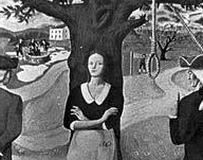
Bathsheba Spooner
Murderer Diane Spencer
Murderer · USA
Diane Louise Spencer was sentenced to life in prison in Michigan on March 13, 1…
1990 victims
Diane Spencer
Murderer · USA
Diane Louise Spencer was sentenced to life in prison in Michigan on March 13, 1…
1990 victims
 Miranda Barbour
Murderer · USA · 2013
Miranda Barbour, 19, defendant. · Elytte Barbour, 22, defendant and husband of…
100 victims
Miranda Barbour
Murderer · USA · 2013
Miranda Barbour, 19, defendant. · Elytte Barbour, 22, defendant and husband of…
100 victims
 Bobbie Sue Terrell
Murderer · USA · 1984
Bobbie Sue Dudley Terrell was a Pinellas County nurse and worked as the night s…
12 victims
Bobbie Sue Terrell
Murderer · USA · 1984
Bobbie Sue Dudley Terrell was a Pinellas County nurse and worked as the night s…
12 victims
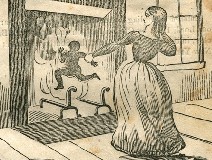 Patty Cannon
Murderer · USA · 1821
Martha “Patty” Cannon (circa 1760 – May 11, 1829) led a gang in the early 19th…
11 victims
Patty Cannon
Murderer · USA · 1821
Martha “Patty” Cannon (circa 1760 – May 11, 1829) led a gang in the early 19th…
11 victims
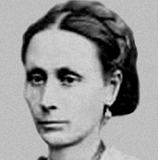 Lydia Sherman
Murderer · USA · 1864
Lydia Sherman was also known as “The Derby Poisoner.” She was born in 1824 in B…
10 victims
Lydia Sherman
Murderer · USA · 1864
Lydia Sherman was also known as “The Derby Poisoner.” She was born in 1824 in B…
10 victims
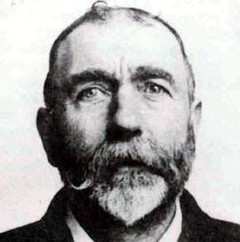 Samuel Herbert Dougal
Murderer · United Kingdom · 1898
Samuel Herbert Dougal was tried for the murder of Camille Cecile Holland, a qui…
1 victim
Samuel Herbert Dougal
Murderer · United Kingdom · 1898
Samuel Herbert Dougal was tried for the murder of Camille Cecile Holland, a qui…
1 victim
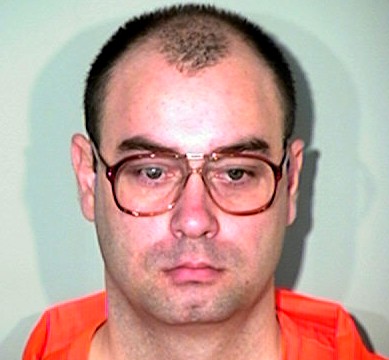 Roger Wayne Murray
Murderer · USA · 1991
Roger Wayne Murray was sentenced to death on October 26, 1992. The case involve…
2 victims
Roger Wayne Murray
Murderer · USA · 1991
Roger Wayne Murray was sentenced to death on October 26, 1992. The case involve…
2 victims
 Hiroaki Hidaka
Serial killer · Japan · 1996
Hiroaki Hidaka (日高 広明; Hidaka Hiroaki; April 1962 – December 25, 2006) was a Ja…
4 victims
Hiroaki Hidaka
Serial killer · Japan · 1996
Hiroaki Hidaka (日高 広明; Hidaka Hiroaki; April 1962 – December 25, 2006) was a Ja…
4 victims
 Arnfinn Nessett
Serial killer · Norway · 1980
Arnfinn Nesset was born October 25, 1936, in Norway. He was a Norwegian nurse a…
22 victims
Arnfinn Nessett
Serial killer · Norway · 1980
Arnfinn Nesset was born October 25, 1936, in Norway. He was a Norwegian nurse a…
22 victims
- Gender
- female
- Country
- USA
- Location
- Brookfield, Worcester County, Massachusetts, USA
- Date of birth
- February 15, 1746
- Age at first offence
- 32
- Characteristics
- parricide, rape
- Victim profile
- Joshua Spooner (her husband)
- Method of murder
- Beating
- Date(s) of murder
- March 1, 1778
- Years active
- 1778
- Date of arrest
- Next day
- Status
-
Executed
Executed by hanging on July 2, 1778
Case details
Bathsheba Ruggles Spooner (February 15, 1746 – July 2, 1778) was executed by hanging on July 2, 1778. She was the first woman executed in the United States by Americans rather than the British. She was the daughter of Brigadier General Timothy Ruggles.
Bathsheba Spooner was married to the wealthy gentleman farmer Joshua Spooner of Brookfield, Massachusetts. Ezra Ross was a sixteen-year-old soldier in the Continental Army who had been nursed by Spooner from injury and later became involved with her. Private Williams Brooks and Sergeant James Buchanan were escaped British prisoners of war who were invited to stay at the Spooner home.
Timeline
- March 1, 1778 — Brooks committed the murder of Joshua Spooner in his dooryard, and Buchanan and Ross helped hide the body down the well.
- April 24, 1778 — The trial took place.
- April 25, 1778 — The verdict was returned; all were sentenced to death and execution was set for June 4, 1778.
- July 2, 1778 — Bathsheba Spooner was hanged alongside Ezra Ross, Williams Brooks, and James Buchanan, before a crowd of 5000 spectators in Worcester’s Washington Square.
- After the execution (post-mortem) — An autopsy revealed she had indeed been pregnant and found “a perfect male fetus of the growth of five months.”
Background
Bathsheba Ruggles Spooner was the daughter of Brigadier General Timothy Ruggles, a lawyer who had served as chief justice of the Court of Common Pleas in Worcester, Massachusetts, from 1762 to 1764, and founder and most eminent citizen of Hardwick, Massachusetts. Timothy Ruggles married Bathsheba Bourne of Sandwich, Massachusetts on September 18, 1736.
Timothy Ruggles was a strong-willed and determined man. He was an avowed Loyalist or Tory and threatened to raise an army to protect his and other Loyalist farms and livestock against Patriot attacks. He was ultimately banished from Massachusetts for joining forces with the British Army in Boston and ultimately Staten Island, New York. After the war, he was given a stipend and extensive land grant in Wilmot, Nova Scotia by King George III.
The marriage between Bathsheba Ruggles and Joshua Spooner was arranged on January 15, 1766, but no documentation was found to explain why Bathsheba married a man she very soon came to hate. Joshua Spooner was a well-to-do Brookfield farmer. The Spooners lived in a two-story house in Brookfield and were described as living in relative affluence.
Bathsheba and Joshua Spooner had their first child, Elizabeth, on April 8, 1767. Three more children followed between 1770 and 1775:
- Joshua (February 21, 1770 – September 18, 1801), who died in London, England
- Daughter Bathsheba Spooner (January 17, 1775 – 1858)
- John, born February 26, 1773 and died March 19, 1773
Bathsheba became unhappy in the marriage. She was described as developing “an utter aversion” to her husband. Reportedly, she confessed to an “aversion” to her husband.
The offence
Bathsheba Spooner became involved with Ezra Ross, a sixteen-year-old soldier in the Continental Army, whom she nursed from injury. She became pregnant by Ezra Ross.
Bathsheba Spooner convinced Ezra Ross and two escaped British prisoners of war, Private Williams Brooks and Sergeant James Buchanan, to kill her husband, Joshua Spooner. After beating Joshua Spooner to death, the three men dumped his body down a well.
On March 1, 1778, after Joshua Spooner walked home from a local tavern, Brooks committed the murder and Buchanan and Ross helped hide the body down the well.
After the murder, Bathsheba Spooner distributed paper money from her husband’s lock box and articles of his clothing to the three men. The three men then took one of the Spooner horses to Worcester, 14 miles distant.
The murder was discovered and the group was arrested in Worcester within 24 hours.
Investigation and arrest
Brooks and Buchanan spent the remainder of the night drinking, and the next morning Brooks showed off Joshua Spooner’s silver shoe buckles engraved with Spooner’s initials. Ezra Ross was discovered hiding in the attic of the same tavern and immediately asked for a confessor.
The trio implicated Bathsheba Spooner and three of her household servants:
- Sarah Stratton
- Jesse Parker (her son)
- Alexander Cummings
Charges were brought as follows:
- Brooks was charged with the assault on Joshua Spooner.
- Buchanan and Ross were charged with aiding and abetting in the murder.
- Bathsheba Spooner was charged with inciting, abetting, and procuring the manner and form of the murder.
All were arraigned and pleaded not guilty.
Trial
The trial took place on April 24, 1778. Household servants Sarah Stratton, Jesse Parker, and Alexander Cummings testified for the prosecution.
The prosecution was conducted by Robert Treat Paine, who later became Massachusetts’s first Attorney General. Levi Lincoln was assigned to defend the accused. Lincoln was later to become the United States Attorney General under Thomas Jefferson.
According to the defence argument, Lincoln contended:
- Ross had no intention of harming Joshua Spooner and was not aware of the plan until a few hours before the murder.
- Ross had not assisted in the murder and pretended to support it to stay on good terms with his lover.
- Bathsheba Spooner had a “disordered mind,” and her actions were irrational.
- The plan was poorly conceived with no plans for the perpetrators to escape.
Lincoln also argued that there was little he could do to defend Brooks or Buchanan because they, with Ezra Ross, had dictated and signed a lengthy written confession to the crime. Despite this, Lincoln mounted a credible defence in support of Ezra Ross and Bathsheba Spooner.
A panel of five judges presided over parts of the trial:
- Chief Justice William Cushing
- Jedediah Foster
- Nathaniel Peaslee Sargeant
- David Sewall
- James Sullivan
A second account of the trial describes the trial as having a main part that began at 8:00 a.m. and ended at midnight.
The verdict came in the next day after April 24, 1778. All four were sentenced to death and execution was set for June 4, 1778.
Sentencing and pregnancy examinations
Bathsheba Spooner petitioned for a postponement citing extenuating circumstances due to her pregnancy and relied on common law that protected the life of a fetus if it had quickened.
A panel of 12 women and two male midwives examined her and all swore that she was not “quick with child.” A second examination occurred after Spooner and her confessor, the Reverend Thaddeus Maccarty, protested the midwives’ report.
Four examiners joined by another midwife and Spooner’s brother-in-law, Dr. John Green, conducted a second examination and supported the claim of pregnancy. The findings were not accepted, and Spooner was hanged alongside Ross, Brooks, and Buchanan on July 2, 1778.
A post-mortem examination requested by Spooner showed she was pregnant:
- It found “a perfect male fetus of the growth of five months.”
A separate narrative describes further examiners as a continuation of the process and reports that “a five-month male fetus was found in her womb.”
Verbatim letter
Spooner wrote the following letter requesting a second examination:
May it please Your Honors With unfeigned gratitude I acknowledge the favor you lately granted me of a reprieve. I must beg leave, once more, humbly to lie at your feet, and to represent to you that, though the jury of matrons that were appointed to examine into my case have not brought in my favor, yet that I am absolutely certain of being in a pregnant state, and above four months advanced in it, and the infant I bear was lawfully begotten. I am earnestly desirous of being spared till I shall be delivered of it. I must Humbly desire your honors, not withstanding my great unworthiness, to take my deplorable case into your compassionate consideration. What I bear, and clearly perceive to be animated, is innocent of the faults of her who bears it, and has, I beg leave to say, a right to the existence which God has begun to give it. Your honors’ humane Christian principles, I am very certain, must lead you to desire to preserve life, even in this miniature state, rather than destroy it. Suffer me, therefore, with all Earnestness, to beseech your honors to grant me such a further length of time, at least, as that there may be the fairest and fullest opportunity to have the matter fully ascertained; and as in duty bound, shall, during my Short Continuance, pray.
Outcome
Bathsheba Spooner was hanged alongside Ross, Brooks, and Buchanan on July 2, 1778. The execution took place before a crowd of 5000 spectators in Worcester’s Washington Square.
Spooner was carried to the place of execution in a chaise and appeared calm but very weak; she could not walk and crawled up the steps to the gallows on her hands and knees.
Her last words were:
“I justly die. I hope to see my Christian friends that I am leaving behind in Heaven but hope that none of them go there in the ignominious manner that I do.”
Other details
A dispute arose concerning Spooner’s petition for a delay in sentence because of her pregnancy. Her plea was rejected after the examiners’ findings were not accepted.
Historians questioned the motivation and validity of the opinions of the panel who examined Spooner for pregnancy, as well as the motivation of the Massachusetts Executive Council, suggesting that Spooner was executed based on hostility in the community against her father’s British Loyalist stance.
The deputy secretary and leader of the Massachusetts Executive Council who signed Spooner’s death warrant was John Avery Jr. He was part of a group of Patriots called “The Loyal Nine” who opposed Timothy Ruggles and all Loyalists. John Avery Jr. was a close relation of the murder victim, Joshua Spooner’s stepbrother.
During the events leading to the murder, Bathsheba Spooner had invited Brooks and Buchanan to stay at the Spooner home and discussed ideas for killing her husband with them.
The trio implicated Bathsheba Spooner and three household servants. Sarah Stratton was a household servant, Jesse Parker was her son, and Alexander Cummings was also a household servant.
In addition to the allegations of murder, Bathsheba Spooner’s characteristics include the label “rape” in the provided classification.


Spotted an error, or have more information about this case?