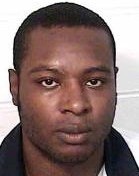
Alexander Williams
Homicide Jack Kevorkian
Homicide · USA · 1990
Jack Kevorkian (born May 26, 1928) was a controversial American pathologist. He…
130 victims
Jack Kevorkian
Homicide · USA · 1990
Jack Kevorkian (born May 26, 1928) was a controversial American pathologist. He…
130 victims
 David Koresh
Homicide · USA · 1993
David Koresh (born Vernon Wayne Howell; August 17, 1959 – April 19, 1993) led t…
79 victims
David Koresh
Homicide · USA · 1993
David Koresh (born Vernon Wayne Howell; August 17, 1959 – April 19, 1993) led t…
79 victims
 Todd Hall
Homicide · USA · 1996
Todd Hall was described by neighbors as "mentally slow" and was said to have su…
9 victims
Todd Hall
Homicide · USA · 1996
Todd Hall was described by neighbors as "mentally slow" and was said to have su…
9 victims
 Edward Charles Allaway
Homicide · USA · 1976
Edward Charles Allaway Edward Charles Allaway was found not guilty by reason of…
7 victims
Edward Charles Allaway
Homicide · USA · 1976
Edward Charles Allaway Edward Charles Allaway was found not guilty by reason of…
7 victims
 Clinton Bankston
Homicide · USA · 1987
15 August 1987 — Ann Morris (63), her sister Sally Nicholson (59), and Sally’s…
5 victims
Clinton Bankston
Homicide · USA · 1987
15 August 1987 — Ann Morris (63), her sister Sally Nicholson (59), and Sally’s…
5 victims
 Yvonne Chevallier
Homicide · France · 1951
Yvonne Chevallier Yvonne Chevallier went on trial on November 5, 1952, and a ju…
1 victim
Yvonne Chevallier
Homicide · France · 1951
Yvonne Chevallier Yvonne Chevallier went on trial on November 5, 1952, and a ju…
1 victim
 Ronald Keith Allridge
Murderer · USA · 1975
Ronald Keith Allridge was convicted by a jury of capital murder and sentenced t…
4 victims
Ronald Keith Allridge
Murderer · USA · 1975
Ronald Keith Allridge was convicted by a jury of capital murder and sentenced t…
4 victims
 Jack Owen Spillman
Murderer · USA · 1994
Jack Owen Spillman III was known as “The Werewolf Butcher.” Crimes evidence dev…
3 victims
Jack Owen Spillman
Murderer · USA · 1994
Jack Owen Spillman III was known as “The Werewolf Butcher.” Crimes evidence dev…
3 victims
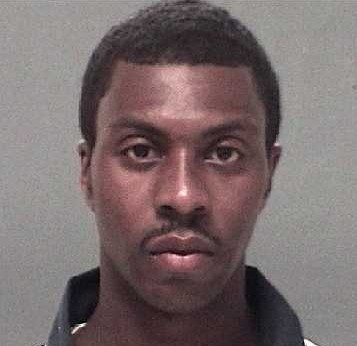 Richard Jameswhite
Serial killer · USA · 1992
Richard Jameswhite was a 19-year-old man wanted in Brooklyn for killings and al…
15 victims
Richard Jameswhite
Serial killer · USA · 1992
Richard Jameswhite was a 19-year-old man wanted in Brooklyn for killings and al…
15 victims
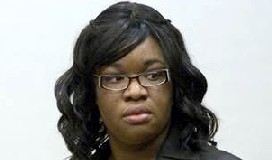 Jessica Tata
Murderer · USA · 2011
Jessica Tata was a Houston home day care owner who fled to Nigeria after a fire…
4 victims
Jessica Tata
Murderer · USA · 2011
Jessica Tata was a Houston home day care owner who fled to Nigeria after a fire…
4 victims
- Gender
- male
- Country
- USA
- Location
- Augusta, Georgia, USA
- Date of birth
- 1968
- Age at first offence
- 18
- Characteristics
- juvenile (17), mentally ill, kidnapping, rape
- Victim profile
- Aleta Bunch, 16
- Method of murder
- Shooting
- Date(s) of murder
- March 4, 1986
- Years active
- 1986
- Date of arrest
- 8 days after
- Status
-
Sentenced to death
Committed suicide by hanging himself with his shirt at the Georgia State Prison on November 25, 2002; sentence commuted to life in prison without the possibility of parole on February 25, 2002 after being sentenced to death on August 29, 1986
Background
Alexander Williams was 17 years old at the time of the offense and was diagnosed with schizophrenia. He had begun having hallucinations and hearing voices several months prior to the crime, and his father described him as disconnected from reality and living in a “dream world.” Williams believed he was able to communicate with others telepathically and expressed strange and obsessive religious thoughts to family members, including that actress Sigourney Weaver was God and that she spoke to him. He was also described as having paranoid schizophrenia and schizoaffective disorder with bipolar features.
Williams experienced repeated and continuous physical abuse as a child. His mother shook him hard and often when he was an infant. When he was a toddler, she struck him with cooking utensils, sticks, branches, and the spiked edge of her glass shoes. As a child and young adolescent, Williams suffered frequent beatings at the hands of his closest caregivers, his mother and grandmother. He was punished with “bed restriction,” being forced to remain on his bed for days—sometimes even weeks—completely isolated from others while receiving only one meal a day. His mother also forced Williams to stand naked outside of his house and locked the front door behind him. Williams was sexually assaulted by his step father.
Williams’ mental illness and history of abuse by his mother and stepmother were described as never being brought up in trial in clemency discussions.
The offence
On March 4, 1986, 16-year-old Aleta Carol Bunch left school at noon and drove her blue 1984 Mustang automobile to the Regency Mall in Augusta. She prepared for a modeling assignment, shopped at several stores in the mall, and left at 3:30 p.m.
Her body was found in a remote, wooded area 11 days later.
On the evening of March 4, Alexander Williams drove a blue Mustang to a game room on Windsor Springs Road. He told his friends that it belonged to “a girl.” With their assistance, he disposed of the car by abandoning it on a dirt road. Williams retrieved from the car a .22 caliber pistol, a pocketbook, and a shopping bag. He took the credit cards out of the purse, and threw the purse and its remaining contents into a dumpster. The next day, he treated his friends to a shopping spree at the mall using the victim’s credit cards. He also distributed items of jewelry the victim had been wearing when last seen alive, as well as items she had purchased the day of her death.
Williams told his friend John Jones that “she would never tell” and that he “didn't feel a thing about that night [and] what he had done to the girl.” He told Leon Bacon that he had met the girl at the mall and followed her outside to her car. He told her to get in the car and he drove. Then “he had sex with her . . . [and] . . . she was moaning . . . so to keep her quiet he shot her.” He first told Harold Lester that he had merely found the credit cards. The next day, however, Williams admitted to Lester that “he had killed this girl.” He asked Jerry Smith if he had ever shot anyone before. When Smith answered yes, Williams asked him what he had done with the body. Williams then admitted to Smith that he had killed a girl he had met at the mall. Williams also admitted to Margaret Jeffords that he had killed the girl. When Jeffords threatened to report him, Williams replied, “Well have you ever heard of kill and kill again? . . . I did it once and you damn well better believe I'll do it again.”
The victim was shot five times—once in the chest and four times in the head. Her body was nude below the waist, and the crime scene showed signs of a struggle. The murder weapon was not recovered. One of Williams’ friends took investigators to an area where Williams had shot his gun, and investigators recovered some empty cartridge cases consistent with having been fired from the same gun—an RG .22 caliber revolver—as the bullets recovered from the body of the victim.
The autopsist testified that the victim had engaged in sexual intercourse at some indeterminable time in the past. The autopsist further stated there was a small contusion or bruise on the back of the vaginal wall, suggesting that sexual intercourse “occurred immediately surrounding the time of death.”
In appellate discussion, the jury was described as authorized to conclude that Williams accosted the victim in the mall parking lot, forced her to accompany him to a secluded area where he raped and murdered her, then took her jewelry, pocketbook and automobile, and used her credit cards the next day. The evidence was described as supporting Williams’ conviction on all counts.
Investigation
On March 4, Alexander Williams disposed of a blue Mustang by abandoning it on a dirt road, and he retrieved a .22 caliber pistol, a pocketbook, and a shopping bag. He took credit cards from the purse, and threw the purse and its remaining contents into a dumpster. The next day he used the victim’s credit cards at the mall.
Investigators later recovered empty cartridge cases from an area where Williams had shot his gun; the cases were consistent with being fired from an RG .22 caliber revolver as the bullets recovered from the victim’s body.
Arrest
Alexander Williams was arrested on March 12. He was advised of his rights under Miranda v. Arizona, 384 U. S. 436 (86 SC 1602, 16 LE2d 694) (1966) by investigator Ronnie Strength.
Williams waived his rights orally and stated that he wanted to talk to Strength alone, in another room, because he did not like the one they were in. After relocating, Williams asked Strength “what kind of prison time” he would serve “if he talked . . . about the missing girl.” Strength advised him that he “wasn't in the deal-making business, and. . . was not authorized to make any deals in this case.”
Strength testified:
He told me that it wasn't a kidnapping, and, again, wanted me to write out some type of deal on paper if he talked to me about the girl; of course, again I refused. I further questioned him on the credit cards that were used at the mall. He told me that he was at the mall and saw a purse in a blue car; that the door was unlocked, and that he took the purse and the credit cards, and that he had gone to the mall and used them and bought him some tennis shoes, and that the tennis shoes were at his home under the bed. I asked him a little further about the car, and he told me that he had left the car in the parking lot. . . of the mall. . . . He again, for the third time, asked me about making a deal if he would talk to me about the missing girl. Of course, for the third time I told him that I could not make a deal; that I was not authorized to make any deals. I asked him about his whereabouts on the date and time of the incident, and, of course, he said that he did not know. At that point he told me that he had better talk to a lawyer, and that after he talked to a lawyer that he would talk to me again about the missing girl. And, of course, at this time, once he requested a lawyer, I terminated the interview.
Williams refused to sign a written waiver because he “didn't want to sign anything.” His oral waiver was described as valid nonetheless. The account described that Williams’ refusal to sign the waiver and his attempt to make a “deal” were not an invocation of his right to a lawyer. When the defendant invoked his right, the interrogator terminated the interview.
Williams also discussed the crime and then invoked his right to a lawyer, rather than remaining silent.
Williams’ attorneys argued in connection with clemency that his paranoid schizophrenia was in its early stages when he committed the crime, but that in later years his illness became severe enough that he believed Weaver was God and spoke to her.
Trial
Williams was sentenced to death after a four-day trial in August 1986.
He was convicted of the 1986 kidnapping, raping and killing of 16-year-old Aleta Bunch. At trial, it was later stated in clemency context that mental illness and history of abuse were never brought up.
Sentencing
Alexander Williams was sentenced August 29, 1986.
In appellate discussion, after the jury had been deliberating for half an hour on the question of sentence, the foreman reported:
[O]ne of my jurors has asked that he would rather not decide this case. I don't know what else to do, he said he don't want no part of it. So I knew nothing else to do but to address the court with it.
The court responded:
It is the juror's obligation to decide the case. Now what the jury wants to decide is of no concern to the Court, as I have previously instructed you; but it is the obligation of the jurors to decide the case. That doesn't mean that you would necessarily agree, you might not be able to agree. I don't say that you will or you won't, but it is necessary that the verdict be unanimous. And under your oath as a juror you're not supposed to go back and just decide, "I don't want to have anything to do with it." You're in the jury box.
The jury found that the murder was committed while the defendant was engaged in the commission of kidnapping with bodily injury, armed robbery and rape. The death sentence was described as not imposed under the influence of passion, prejudice, or other arbitrary factor, and it was described as neither excessive nor disproportionate to sentences imposed in similar cases.
In clemency discussions, it was stated that the entire sentencing/presentation by Williams’ defense attorney lasted less than 15 minutes, and that only two witnesses (his mother and a female friend) were presented by the defense lawyer. It was also stated that the defense did not present mitigating evidence about Williams’ youth, severe mental illness, and chronic childhood abuse. The defense counsel named in clemency context was O.L. Collins, and counsel named in appellate materials for appellant was Richard E. Allen.
Appeals
The case name was “WILLIAMS v. THE STATE,” docket number 45389, with citation to 258 Ga. 281 and 368 SE2d 742 (1988). The decision was described as “DECIDED JUNE 9, 1988.” The justice listed was WELTNER, Justice. The court was Richmond Superior Court before Judge Fleming.
In appellate claims described in the record:
- Williams contended that evidence was insufficient; the appellate discussion stated “We disagree,” and described that the jury was authorized to conclude the sequence of events and that the evidence supported conviction on all counts.
- Williams argued issues regarding his arrest interview and his invocation of his right to counsel and alleged improper testimony; the appellate discussion stated the defendant did not remain silent and that Doyle v. Ohio did not apply.
- Williams argued evidentiary issues including admission of a photograph and jury instructions; these claims were addressed in the appellate discussion.
- Williams argued attorney-client privilege was violated by testimony identifying Doug Flanagan as Alex Williams’ lawyer at the time and directing investigators to where the body was found; the appellate discussion disapproved offering such testimony but concluded any error was harmless due to Williams’ admissions.
- Williams raised an issue of discrimination in peremptory challenges; the appellate discussion described the racial composition of panels and the final jury composition and stated the facts did not support Williams’ contention.
- Williams raised ineffective assistance of counsel issues; after hearing evidence, the trial court determined Williams received effective assistance of counsel, and the appellate discussion addressed Strickland v. Washington standards and listed specific alleged deficiencies by counsel. The appellate discussion concluded Williams was not denied effective assistance of counsel.
- Williams argued that because he was 17 at the time of the crime, the trial court should have refused to allow a death sentence; the appellate discussion stated OCGA 17-9-3 bars death penalty imposition when under age 17, and that Williams’ death sentence did not violate the provision.
- Williams argued instructions on aggravating and mitigating circumstances were erroneous; these were addressed in the appellate discussion.
- Williams challenged the trial court response to a juror’s reluctance to decide; the appellate discussion stated there was no error.
- Williams challenged the finding regarding circumstances supporting the death sentence; the appellate discussion stated the evidence supported the jury’s finding.
- Williams challenged that the death sentence was influenced by passion, prejudice, or arbitrary factors and argued disproportionality; the appellate discussion stated it was neither and referred to similar cases in an appendix.
The appendix provided procedural history:
- The defendant was sentenced August 29, 1986.
- He filed a motion for new trial September 23, 1986, and two amendments thereto on October 2 and October 13, 1987.
- The hearing took place on October 14 and 15, 1987.
- The motion was denied November 12, 1987.
- The case was docketed in this court on January 13, 1988, and was orally argued March 7, 1988.
- The appendix listed: Sam B. Sibley, Jr., District Attorney; Michael J. Bowers, Attorney General; Leonora Grant for appellee; Richard E. Allen for appellant.
Outcome
Alexander Williams’ death sentence was commuted to life in prison without the possibility of parole on February 25, 2002.
In clemency context, Georgia’s parole board issued a decision late in the afternoon after hearing a psychiatric report. The board’s statement included: “After hearing the psychiatric report this morning the board deliberated and reached its decision late this afternoon.” The five-member parole board described the decision.
Williams was 33 at the time of the clemency discussion. Williams’ conviction described in clemency context remained that he was convicted of the 1986 kidnapping, raping and killing of 16-year-old Aleta Bunch, and that he was 17 at the time of the murder.
Parole board chairman Walter Ray said:
We have the deepest sympathy for the family of Aleta Bunch and especially her mother, Mrs. Carolyn Bunch,
“By making sure that Williams will remain in an 8-foot by 10-foot prison cell for the rest of his life with absolutely no hope for parole, we hope that the certainty of our decision will give Mrs. Bunch the closure she so deserves.
During clemency discussions, it was stated that former first lady Rosalyn Carter raised attention in part because Williams suffered from paranoid schizophrenia, and that Carter told CNN’s Wolf Blitzer:
“I've been interested in the case of mentally ill people being executed for a very long time,”
In clemency context, it was stated that Williams’ mental illness and history of abuse by his mother and stepmother were never brought up in trial, and that Carter said Williams’ defense representation was “woeful,” including the quoted claim:
“To my understanding it lasted 15 minutes in the courtroom, and that's not fair. He should have had good defense.”
An American Civil Liberties Union statement quoted in clemency context included:
“His attorney did almost no research into his background. Had he done so, he would have been able to show the jury evidence both of Mr. Williams's mental illness, and of the incredible abuse that he suffered as a child. Five of the eight surviving original trial jurors said that they would not have voted for the death penalty had they heard more about Mr. Williams,”
In clemency context, Amnesty International described Williams’ condition and issued quoted claims, including:
“synthetically sane.”
Amnesty International also said:
“Williams ‘was denied his right to adequate trial representation, and he suffers from serious mental illness for which he has been forcibly medicated on death row,”
In clemency context, Aleta Bunch’s mother Carolyn Bunch was quoted describing her anxiety about the outcome:
“I'm really anxious about it,”
and:
“It would be such a relief if I could just get a little peace of mind.”
It was also stated that February 20, 2002 Georgia Board of Pardon and Paroles granted a five day stay of execution, and that February 25, 2002 granted clemency by commuting the sentence.
Aftermath
After his death sentence was commuted, Georgia Bureau of Investigation planned a probe to confirm whether Williams’ death was a suicide.
On November 25, 2002, Alexander Williams committed suicide in his cell at the Georgia State Prison. He hanged himself with his shirt late Monday at the Georgia State Prison in Reidsville, according to Peggy Chapman, a spokeswoman for the Georgia Department of Corrections:
“A killer whose death sentence was commuted to life in prison earlier this year because of his severe psychosis has apparently killed himself in his cell, prison officials said.” and: “Alexander Williams, 34, of Augusta, hanged himself with his shirt late Monday at the Georgia State Prison in Reidsville, said Peggy Chapman, a spokeswoman for the Georgia Department of Corrections.”
In connection with his clemency and planned execution, it was stated that he would have been the first person in the United States who had to be forcibly medicated to be executed.
In clemency context, it was stated that February 20, 2002 he received a five-day stay and that February 25, 2002 his sentence was commuted to life imprisonment without possibility of parole.
Other details
Williams’ attorneys argued in connection with clemency that his paranoid schizophrenia was in early stages when he committed the crime and later became severe enough that he believed Weaver was God and spoke to him.
Clemency-related narrative also stated that his father described him as living in a “dream world,” and it included quoted affidavit language from 1990 written by his sister:
“My mother made him strip naked, and she whipped him with extension cords or fan belts over and over again... Once she got mad at Alex and she called him downstairs. She had a hammer in one hand and a screwdriver in the other. She made [Alex] stand still and she pounded the screwdriver into his toes with the hammer.”
The appellate decision discussion included details about police interrogation and evidentiary rulings, including references to OCGA 17-8-57, OCGA 17-10-30 (b) (2), OCGA 17-10-35 (c) (1), (c) (2), (c) (3), OCGA 17-9-3, and OCGA 24-9-21, 24-9-24, and 24-9-25.
The appellate decision also included discussion of juror selection and peremptory challenges under Batson v. Kentucky, 476 U. S. (106 SC 1712, 90 LE2d 69) (1986), and referenced Witherspoon grounds for juror exclusion.
It was also stated that a jury deliberation started prematurely concern was handled by an instruction from the court not to begin deliberations until after all evidence and law instructions were given.
The report described that Williams was represented at trial by appointed counsel and then after trial attorney Richard Allen was appointed for post-conviction proceedings.
Williams’ appellate narrative listed that the trial court determined he received effective assistance of counsel after a hearing on the issue of effective assistance of counsel raised on motion for new trial.

Spotted an error, or have more information about this case?