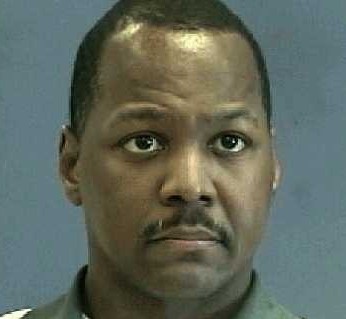
Raymond Burgess
Murderer Ervil LeBaron
Murderer · USA · 1972
Ervil Morrell LeBaron (1925 to August 16, 1981) was the leader of a polygamous…
35 victims
Ervil LeBaron
Murderer · USA · 1972
Ervil Morrell LeBaron (1925 to August 16, 1981) was the leader of a polygamous…
35 victims
 Brian Kevin Rosenfeld
Murderer · USA · 1985
Brian Kevin Rosenfeld Brian Kevin Rosenfeld was sentenced to three concurrent l…
23 victims
Brian Kevin Rosenfeld
Murderer · USA · 1985
Brian Kevin Rosenfeld Brian Kevin Rosenfeld was sentenced to three concurrent l…
23 victims
 Marvin Gray
Murderer · USA · 1975
Marvin Gray was convicted killer who claimed responsibility for 23 slayings and…
23 victims
Marvin Gray
Murderer · USA · 1975
Marvin Gray was convicted killer who claimed responsibility for 23 slayings and…
23 victims
 Yahweh ben Yahweh
Murderer · USA · 1980
Yahweh ben Yahweh was born and legally named Hulon Mitchell Jr. (October 27, 19…
23 victims
Yahweh ben Yahweh
Murderer · USA · 1980
Yahweh ben Yahweh was born and legally named Hulon Mitchell Jr. (October 27, 19…
23 victims
 Beth Ann Markman
Murderer · USA · 2000
Beth Ann Markman was convicted in connection with the October 2000 murder of Le…
1 victim
Beth Ann Markman
Murderer · USA · 2000
Beth Ann Markman was convicted in connection with the October 2000 murder of Le…
1 victim
 Gary Lawrence McKinley
Murderer · New Zealand · 1986
Gary Lawrence McKinley was sentenced to life imprisonment in June 1987 after th…
1 victim
Gary Lawrence McKinley
Murderer · New Zealand · 1986
Gary Lawrence McKinley was sentenced to life imprisonment in June 1987 after th…
1 victim
 Lee Roy Martin
Serial killer · USA · 1967
Name: Lee Roy Martin Lee Roy Martin was sentenced to four life sentences in 196…
4 victims
Lee Roy Martin
Serial killer · USA · 1967
Name: Lee Roy Martin Lee Roy Martin was sentenced to four life sentences in 196…
4 victims
 John Jerry Jancar
Homicide · USA · 1983
John Jerry Jancar was a 17-year-old high school student when he was convicted i…
2 victims
John Jerry Jancar
Homicide · USA · 1983
John Jerry Jancar was a 17-year-old high school student when he was convicted i…
2 victims
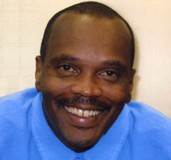 Jarvis Jay Masters
Murderer · USA · 1985
Jarvis Jay Masters (born 1962) was an African American man from Long Beach, CA.…
1 victim
Jarvis Jay Masters
Murderer · USA · 1985
Jarvis Jay Masters (born 1962) was an African American man from Long Beach, CA.…
1 victim
- Gender
- male
- Country
- USA
- Location
- Fulton County/Douglas County, Georgia, USA
- Date of birth
- 1958
- Age at first offence
- 19
- Characteristics
- armed robbery, burglary, kidnappings, sexual assault, drug addict
- Victim profile
- Danny Earl Cotton / Liston Chunn, 44
- Method of murder
- Shooting
- Date(s) of murder
- September 28, 1977 / July 16, 1990
- Years active
- 1977–1990
- Date of arrest
- —
- Status
-
Sentenced to death
Sentenced to death on February 25, 1992
Overview
Raymond Burgess was sentenced to death on February 25, 1992. His case involved a robbery spree with co-defendant Norris Young, in which Burgess shot and killed Liston Chunn.
Other legal proceedings referenced in the case
Burgess v. the State involved felony murder and life sentences for other related defendants, including a separate judgment sequence. Burgess’s state appeal challenging the fairness of his trial was pending since August 1995. The case materials also referenced earlier convictions and evidentiary issues, including a confession and identification procedures, and included appellate discussion of multiple enumerations of error.
Timeline
- February 25, 1992 — Raymond Burgess was sentenced to death.
- August 1995 — Burgess’s state appeal challenging the fairness of his trial was pending.
- January 4, 1979 — Decided in Burgess v. the State, 242 Ga. 889.
- January 23, 1979 — Rehearing denied in Burgess v. the State, 242 Ga. 889.
- December 5, 1994 — Decided in Burgess v. the State, 264 Ga. 777.
- December 20, 1994 — Reconsideration denied in Burgess v. the State, 264 Ga. 777.
- September 15, 1978 — Submitted in Burgess v. the State, 242 Ga. 889.
- October 1978 — Raymond Burgess and others were indicted in Fulton County for the murder of Danny Earl Cotton.
- September 27, 1978 — The co-indictees were together in Atlanta on the night that preceded the motel robbery and murder of Danny Earl Cotton.
- October, 1978 — The indictment for murder of Danny Earl Cotton was returned.
- July 16, 1990 — Crimes involving Laura and Randall Nuttle at the Best Western Motel in Douglas County; the shooting of Liston Chunn; and related robberies.
- Approximately two weeks prior to July 16, 1990 — Billy McNutt was robbed at a Days Inn in DeKalb County.
- Several days prior to July 16, 1990 — Two African-American men forced their way into Linda Pfeifer’s La Quinta Inn room in College Park.
Background
Raymond Burgess was 38 at the time he was sentenced to death on February 25, 1992.
Burgess previously was paroled from a life sentence for murder only eight months before July 16, 1990. The record reflected that he was convicted in 1977 of armed robbery and sexual assault.
As a young child, Burgess was placed in the custody of the Fulton County Department of Family and Children Services (DFCS). Prior to trial, defense counsel subpoenaed all of Burgess’s DFCS records to determine whether there was evidence in mitigation of the sentence to be imposed. The trial court conducted an in camera inspection of the entire DFCS file pursuant to OCGA 49-5-41(a)(2) and provided only a portion of the records to Burgess; the remainder was sealed for review by the court. The appellate discussion addressed the handling of potentially mitigating information from the sealed records.
The offence
Murder of Danny Earl Cotton (felony murder case)
In October 1978, appellant Raymond Burgess, Michael Dixon, Michael Anthony Booker and Terri Jean Jones were indicted in Fulton County for the murder of Danny Earl Cotton.
The evidence showed that the four co-indictees were together on the night of September 27, 1978, in Atlanta in a car borrowed by Burgess. They drove to Decatur to Michael Dixon’s home and then decided to drive to Macon. They proceeded toward Macon but stopped at a motel in Henry County where the three men entered a motel room and robbed the occupants of money and a pistol. They left the motel and proceeded to drive along I-285, where they picked up a young man walking home along the expressway. The young man testified that he sat in the back with Burgess and Jones, and that the driver and the passenger in the front seat asked him questions about service stations, including which ones were open late and at which the attendants were armed. After he got out of the car, the four co-indictees proceeded to the Union 76 gas station at Paces Ferry Road. There, the three men, one of whom brandished a pistol, robbed the attendant, Danny Earl Cotton, and a friend visiting him, forced Cotton to open a floor safe, and then drove away from the area, taking Cotton and his friend with them. They proceeded to the Bankhead Court apartments where all four co-indictees got out of the car; the murder victim, Danny Earl Cotton, and his friend also got out and were ordered to run for some nearby woods. As they ran, shots were fired and Danny Earl Cotton was fatally wounded.
The note indicated some evidence suggested an attempted rape occurred during the incident.
Murder of Liston Chunn (capital case)
On July 16, 1990, the jury was authorized to find that Burgess and co-defendant Norris Young first approached Laura and Randall Nuttle as they were entering their room at the Best Western Motel in Douglas County. As Young attempted to engage the Nuttles in conversation, Burgess forced his way into their room. Burgess was armed with a gold-plated revolver. Burgess and Young made the Nuttles lie down on the bed, tied them up, and began rummaging through their personal belongings.
Laura Nuttle testified that when she heard voices outside the motel room, the man with the revolver left, but the taller man remained in the room. The Nuttles testified that the two men were African-American and that one of the men was taller with longer curly hair and carried no weapon, while the other displayed the gold-plated revolver, wore a baseball cap, and had a gold front tooth. After two shots were fired, Laura and Randall Nuttle testified that the man in their room left. Laura Nuttle identified Young as the man who stayed in their room until the shots were fired. Neither Nuttle was able to make a positive identification of Burgess as Young’s accomplice.
Regina Thomas, the fiancée of the murder victim Liston Chunn, testified that on July 16, 1990 she and Chunn were staying with her children in the same Best Western Motel. That evening, Thomas noticed two African-American men standing in the doorway of the room next to hers. One man forced his way into her room with a gold-plated revolver; her two children were sent to the bathroom. The gunman told Thomas and Chunn to lie on the floor, but Chunn did not do so. Thomas testified that the gunman shot Chunn after Chunn failed to follow the gunman’s order to remove his hand from the pocket of his pants. After the fatal shot, Thomas heard a second person tell the gunman to get out of the room. Thomas testified that Chunn had a soft drink cup which spilled when the shots were fired. She stated that Chunn “may have thrown” the cup, but that she “was never able to realize the sequence, whether he threw it at the shooter or if he dropped it when he was shot.”
Laura and Randall Nuttle and Regina Thomas identified features of the perpetrators, including the gold-plated revolver and other described characteristics. While Thomas was not able to identify the gunman, her son picked Burgess out of a lineup.
After the shots, a repairman working at the motel noted the license number of a Volvo speeding away after he heard screaming. The vehicle’s registration showed Burgess’s address.
In addition to the July 16, 1990 evidence, the State offered evidence that several days prior thereto, two African-American men forced their way into Linda Pfeifer’s La Quinta Inn room in College Park. One man held a gold-plated gun to her head and demanded money, and the robbery was thwarted when her husband and children returned. Her husband had been shot as the men fled, but he was able to see them drive away in a tan Volvo. Burgess was identified from a photo array as one of the robbers.
The State also offered evidence of a similar robbery involving two African-American men and a gold-plated revolver at the Days Inn in Clayton County. Burgess was placed at the scene of this crime by a Days Inn employee who identified him as someone who had been seeking information about a guest at the time of the robbery.
Approximately two weeks prior to July 16, 1990, Billy McNutt was robbed at a Days Inn in DeKalb County by two African-American men, one of whom threatened McNutt with a “yellow” gun. A watch taken from McNutt later was recovered from Burgess.
The appellate court found that a rational trier of fact could have found Burgess guilty of the crimes charged beyond a reasonable doubt.
Investigation
The appellate materials addressed issues including admissibility of Burgess’s confession and suppression of identification from a motel robbery lineup, as well as authentication and prejudicial effect of photographs of a victim’s body.
Pursuant to Jackson v. Denno, the trial court held a hearing outside the jury’s presence and determined Burgess’s confession was voluntarily given before allowing it to be presented to the jury. The evidence presented by the state supported the trial court’s determination.
The appellate materials also addressed that a motion to suppress identification of Burgess had been made on the ground that a victim attended a lineup held outside of the presence of Burgess’s attorney; the court stated that this was a pre-indictment lineup and found no evidence of abuse in the identification procedures.
The court also addressed objections to photographs of the victim’s body, finding truth and accuracy were testified to by witnesses, and that the pictures were all taken at the scene.
The appellate materials also included denial of suppression relating to identification of the gunman in the capital case proceedings, including the lineup where Burgess was picked by Thomas’s son.
Arrest
No separate arrest date, method, or location was stated in the provided text.
Trial
Felony murder proceedings and related jury findings
In the 1978 Fulton County case, Burgess and Jones were tried jointly; both were found guilty of felony murder and received life sentences.
One juror-related matter included that the jury authorized finding of guilt in the related capital case.
Capital trial evidence (July 16, 1990 incident)
The capital trial materials described multiple items of evidence presented to the jury. Burgess and Young were described as forcing their way into Laura and Randall Nuttle’s motel room and using a gold-plated revolver. Jewelry recovered from Burgess’s home was determined to belong to Laura Nuttle. Burgess’s fingerprints were found on a credit card taken from Randall Nuttle.
Janice Burgess, Burgess’s wife, testified that Burgess gave her a diamond ring on the night the crimes were committed, and it was determined that this ring had been taken from Laura Nuttles. Janice Burgess also testified that Burgess had a gold tooth which he sometimes wore.
In addition to items taken during various robberies, a gold-plated revolver was found in a search of Burgess’s home. A firearms expert from the GBI Crime Laboratory testified that the bullet which killed Chunn had been fired from this weapon.
Young told police that Burgess had confided that he shot Chunn and had done so because Chunn “was reaching for something.” Burgess admitted participating in the armed robberies but denied being the triggerman.
Jury composition and voir dire issues
Burgess made a motion for funds to hire an expert on jury composition to determine whether African-Americans were underrepresented on the grand and traverse juries. The denial of this motion was discussed on appeal. The record showed a 3.4 percent racial disparity as to the grand jury and a zero percent racial disparity as to the traverse jury. The appellate court held these disparities were sufficient to withstand any attack and found that Burgess failed to show a reasonable probability that the denial rendered the trial unfair.
Burgess also urged that inquiry into the issue of his parole eligibility was erroneously restricted on voir dire. The record showed that he was allowed great latitude to pose questions regarding parole even though such questioning generally is not permitted. The appellate court discussed that parole eligibility was not an appropriate matter for jury consideration when a specific statute was inapplicable, and that prospective jurors’ personal views on parole eligibility were extraneous unless they would seriously impair performance of duties. The appellate court found no such showing.
The appellate court stated it was permissible to inform prospective jurors of the victim’s race to question them about racial bias. It also discussed refusals to strike prospective jurors for cause based on alleged racial bias, bias in favor of the death penalty, and opposition to returning a verdict of “guilty but mentally retarded.”
A voir dire issue involved a prospective juror whose wife had been a desk clerk at the motel at the time of the crimes and later became a manager. The court addressed kinship disqualification arguments, reasoning that mere employment by an entity that was not the victim was not automatic disqualification, and held the trial court did not err in refusing to strike the prospective juror for cause.
Jury tampering and Batson motion
The appellate court discussed that the trial court struck potential jurors for cause after evidence showed jury tampering related to prospective jurors. The court addressed the State’s motion to excuse Barbara James for cause based on evidence that members of the appellant’s circle assisted in contacting at least two three-way telephone conversations involving a juror named “Barbara.” The court held the trial court’s decision to strike Barbara James for cause would not be overturned absent manifest abuse of discretion.
The appellate materials also discussed replacement of jurors, including that the State ultimately used a peremptory strike to remove Ellison from the jury, after agreeing to replace Barbara James with the only other African-American member of the venire, Morey Ellison. After Ellison was peremptorily struck, Burgess made an unsuccessful Batson motion. The appellate court addressed the State’s reasons for striking Ellison, including his strong opposition to the death penalty, inability to state whether he could put aside preconceived notions about the death penalty, his prior criminal charge of driving under the influence for which he was acquitted, and the fact that he had a mentally retarded brother who died at the age of 21. The appellate court held Burgess did not show the reasons were pretextual and supported the trial court’s determination that discriminatory purpose was not involved.
Other trial issues and jury instructions
The appellate discussion included:
- sequestering jurors at a motel short distance from where the crimes occurred, while ensuring minimal exposure to the crime scene;
- no substantiated impairment due to bailiffs wearing customary uniforms;
- failure to provide a police sketch requested through a Brady motion and related arguments about the cup location;
- admission of an “Identikit” sketch of a man wearing sunglasses resembling Burgess, with testimony regarding its preparation at the detective’s request;
- admission during the guilt-innocence phase of evidence of attempts to tamper with jury selection related to whether Burgess had sufficient mental capacity to engage in manipulation or whether he had “significantly subaverage general intellectual functioning resulting in or associated with impairments in adaptive behavior”;
- admission of crime scene photographs and a bloody shirt worn by the murder victim, and admission during sentencing of a photograph of the murder victim Burgess had been convicted of murdering in 1978;
- admission of evidence of appellant’s commission of a similar armed robbery in 1977, including testimony from an accomplice and a certified copy of Burgess’s conviction, and discussion of sexual assault testimony as part of the events involved in the prior armed robbery;
- review of prosecutor closing arguments and related objections, including disapproved victim-place argument while finding overwhelming evidence did not make the statement contribute to the verdict;
- other closing argument matters, including arguments characterized as “ludicrous,” a statement about jury discussions and advice not to treat telephone numbers as part of counsel activity, and denial of a motion for mistrial;
- the trial court’s charge on “guilty but mentally retarded” including the statutory requirement for beyond a reasonable doubt findings;
- an issue that the trial court charged that a guilty but mentally retarded verdict would result in life imprisonment as to the murder charge, and that Burgess himself requested the charge;
- refusal to give an instruction regarding credibility of a witness who testifies under a grant of immunity, because there was no evidence of any witness testified under a grant of immunity;
- refusal of requested instruction on voluntary manslaughter, because there was no evidence to authorize it and the “may have” tossing of a soft drink cup was insufficient to create serious provocation;
- refusal of a charge on self-defense because evidence about refusal to remove a hand from a pocket and possible cup throwing was not sufficient to support justification;
- adequacy of the reasonable doubt instructions, including use of “moral and reasonable certainty” language;
- DFCS record access and sealed records, including discussion of harmlessness as to any error and mention that expert witnesses had access to the entire file;
- trial court error in permitting juries to consider five counts of kidnapping as aggravating circumstances, while stating the invalidity would not affect validity of remaining aggravating circumstances.
Sentencing
At the sentencing phase, the jury returned a death sentence. The appellate court addressed challenges to death sentence issues including passion, prejudice, or arbitrary factor, and proportionality.
The appellate discussion set out aggravating circumstances found by the jury:
- the murder was committed by a person with a prior record of conviction of murder, OCGA 17-10-30(b)(1);
- the murder was committed by a person with a prior record of conviction for armed robbery, OCGA 17-10-30(b)(1);
- the murder was committed while Burgess was engaged in commission of armed robberies against three separate victims, OCGA 17-10-30(b)(2);
- the murder was committed while Burgess was in commission of a burglary, OCGA 17-10-30(b)(2);
- the murder was committed for the purpose of receiving money or other things of monetary value, OCGA 17-10-30(b)(4).
The appellate court held it did not find the death sentence imposed under the influence of passion, prejudice or other arbitrary factor, and it held the death sentence was not excessive or disproportionate to penalties in similar cases.
Appeals
Challenges to trial fairness and evidentiary rulings
Burgess’s appeal in the capital case included enumerations of error covering sufficiency of evidence, admission of his confession, identification suppression and lineups, authentication of photographs, admission of evidence concerning motel robbery, leading of the alleged triggerman Michael Dixon, and cross-examination questions using the word “getaway.”
The appellate court in the felony murder case held:
- insufficient evidence challenge was without merit, including denial of motions for directed verdict;
- confession was voluntarily given after a Jackson v. Denno hearing;
- identification suppression arguments failed because the lineup was pre-indictment and there was no evidence of abuse;
- photographs were properly authenticated and admission was not reversible error;
- admission of motel robbery evidence was proper as closely connected in time and involved the same perpetrators;
- no merit in objections to the trial court allowing the prosecutor to lead Michael Dixon;
- no merit in the objection to cross-examination using “getaway.”
Simmons parole instruction issue
Burgess urged that at sentencing the trial court erred in failing to charge on parole eligibility, citing Simmons v. South Carolina. The appellate majority discussed Simmons and concluded OCGA 17-10-31.1(d) was not applicable; it held a parole instruction was not required because Georgia law would not prohibit release on parole and the effect on jury decision-making was speculative.
A separate concurring opinion by Hunt, Chief Justice, stated agreement only in part regarding Division 33 on Simmons’s interpretation, and referenced OCGA 42-9-39(b). The concurring opinion explained that evidence suggesting possible parole did not arise from the sentencing phase except through state cross-examination of a defense expert witness, and said the objection was sustained by the trial court with appropriate instructions to the jury.
Mental retardation instruction issues
Burgess urged error in the trial court failing to instruct the jury at the sentencing phase that it could not recommend death if it found by a preponderance of the evidence that Burgess was mentally retarded. The majority discussion held the trial court properly conducted the statutory procedure at guilt-innocence phase and that the sentencing phase did not require the requested instruction that would bar death if mental retardation was found by a preponderance of the evidence.
A separate opinion by Benham, Presiding Justice, concurred in affirmance of conviction but dissented as to affirmance of the death sentence. The dissent argued Burgess was entitled to an instruction that a sentence of death could not be recommended if mental retardation was established by a preponderance of the evidence, and contended that constitutional preclusion against execution of mentally retarded offenders required such a life sentence if found by preponderance. The dissent also argued that failure to give an instruction and improper exclusion of potentially mitigating DFCS material from the sentencing jury supported dissenting.
Outcome
Burgess’s conviction was affirmed in the capital appeal materials, and the death sentence was upheld. The appellate opinion reflected that the evidence supported aggravating circumstances and that there was no finding that the death sentence was imposed under passion, prejudice, or other arbitrary factor. The appellate decision also discussed that errors related to five counts of kidnapping as aggravating circumstances were invalid but would not affect the validity of remaining aggravating circumstances found by the jury.
Aftermath
No post-sentence events were stated in the provided text.
People and roles mentioned
- Raymond Burgess — appellant; defendant; co-defendant in related robberies; convicted and sentenced to death.
- Norris Young — co-defendant; sentenced to life in prison.
- Liston Chunn — murder victim.
- Danny Earl Cotton — murder victim in the earlier case.
- Laura Nuttle — robbery victim witness.
- Randall Nuttle — robbery victim witness.
- Regina Thomas — fiancée of Liston Chunn.
- Michael Dixon — co-indicted in the earlier case; alleged triggerman referenced in appellate discussion; pled guilty to murder.
- Michael Anthony Booker — co-indicted in the earlier case; tried, convicted of felony murders, sentenced to life imprisonment.
- Terri Jean Jones — co-indicted in the earlier case; tried jointly with Burgess; found guilty of felony murder and received life sentence.
- Michael Anthony Booker — appellate note included that Booker’s appeal appears at Booker v. State.
- Barbara James — prospective juror excused for cause.
- Morey Ellison — prospective juror.
- Billy McNutt — robbery victim at Days Inn in DeKalb County.
- Linda Pfeifer — victim of robbery attempt at La Quinta Inn in College Park.
- Chunn’s husband — identified in testimony as shot when the robbers fled (husband’s name not provided).
- Janice Burgess — Burgess’s wife; testified about a diamond ring and Burgess’s gold tooth.
- Detective — described as the detective who identified an “Identikit” sketch at his request by another detective certified to do so.
- Arline S. Kerman — for appellant.
- David McDade — District Attorney; for appellee.
- Michael J. Bowers — Attorney General; for appellee.
- Susan V. Boleyn — Senior Assistant Attorney General; for appellee.
- Paige M. Reese — Assistant Attorney General; for appellee.
- Judge McKenzie — judge in the felony murder case proceedings.
- Judge James — judge in the capital case proceedings.
- HILL, Justice — authoring the felony murder appellate portion.
- CARLEY, Justice — authoring the capital case appellate portion.
- Hunt, Chief Justice — concurring opinion author.
- BENHAM, Presiding Justice — concurring in part and dissenting in part.
Verbatim quotations
- Regina Thomas, fiancée of the murder victim Liston Chunn, testified:
“may have thrown” “was never able to realize the sequence, whether he threw it at the shooter or if he dropped it when he was shot.”
- Young told police that Burgess had confided that he shot Chunn and had done so because Chunn:
“was reaching for something.”
- Prosecutor’s cross-examination question included the word “getaway”:
“Didn't you drive the getaway car after Danny Cotton was killed?”
- The prosecutor referenced conning of “lawyers” and related statements (quoted in the materials as fragments):
“ludicrous” “credibility of the lawyer” “involved some conning of some lawyers, some conning of some lawyers in this courtroom. . . .”
- The description of mental capacity terminology included:
“significantly subaverage general intellectual functioning resulting in or associated with impairments in adaptive behavior.”
- The dissent referenced the “Eighth and Fourteenth Amendments” in quotations to prior case law:
“the sentencer . . . not be precluded from considering, as a mitigating factor, any aspect of a defendant's character. . . .” “the Eighth and Fourteenth Amendments require that the sentencer . . . not be precluded from considering, as a mitigating factor, any aspect of a defendant's character. . . .”
- The dissent included a quotation to constitutional analysis:
“A juror may find no ‘reasonable’ doubt, yet some degree of doubt persists. Such a doubt benefits the defendant in the penalty phase of trial, ‘for the juror entertaining doubt which does not rise to reasonable doubt can be expected to resist those who would impose the irremedial penalty of death.’” (The quotation was presented within the dissent’s discussion; the cited quoted language was used in the text.)
Distinct prior convictions and other crime references
Burgess was described as having been convicted in 1977 of armed robbery and sexual assault.
The appellate discussion also referenced evidence of a similar armed robbery committed in 1977 and discussed that an accomplice in that crime made reference to appellant’s commission of a sexual assault upon the female victim.
In the capital case, the appellate record also referenced that Burgess had previously been convicted of murdering in 1978, and that during sentencing phase the trial court admitted a photograph of that earlier murder victim.
Notes included in the materials
- In the felony murder portion, notes stated:
- Michael Dixon pled guilty to murder.
- Michael Anthony Booker was tried by a jury, convicted of felony murders, and sentenced to life imprisonment.
- The appeal by Booker appears at Booker v. State, 242 Ga. 773 (1979); Jones’s appeal appears at Jones v. State, 242 Ga. 892 (1979).
- There was some evidence suggesting attempted rape occurred during the incident.
- According to statements by Burgess and Jones, Burgess was driving at that time and for the rest of the evening.
- A witness in the earlier case was shown only one of the five photographs of the body.
- In the capital case, notes included:
- The crimes occurred on July 16, 1990.
- Appellant was indicted during the April 1990 term by John R. Martin, Edwards & McLeod, Jennifer McLeod for appellant.
Spotted an error, or have more information about this case?