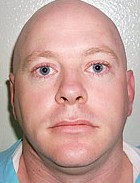
James Earl Patterson
Murderer Brian Kevin Rosenfeld
Murderer · USA · 1985
Brian Kevin Rosenfeld Brian Kevin Rosenfeld was sentenced to three concurrent l…
23 victims
Brian Kevin Rosenfeld
Murderer · USA · 1985
Brian Kevin Rosenfeld Brian Kevin Rosenfeld was sentenced to three concurrent l…
23 victims
 Yahweh ben Yahweh
Murderer · USA · 1980
Yahweh ben Yahweh was born and legally named Hulon Mitchell Jr. (October 27, 19…
23 victims
Yahweh ben Yahweh
Murderer · USA · 1980
Yahweh ben Yahweh was born and legally named Hulon Mitchell Jr. (October 27, 19…
23 victims
 Russell Ellwood
Murderer · USA · 1991
Russell Ellwood was a former taxi driver. Authorities suspected him of killing…
20 victims
Russell Ellwood
Murderer · USA · 1991
Russell Ellwood was a former taxi driver. Authorities suspected him of killing…
20 victims
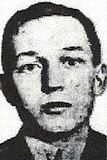 Paul Geidel
Murderer · USA · 1911
Paul Geidel (April 21, 1894 - May, 1987) was an American prison inmate whose se…
1 victim
Paul Geidel
Murderer · USA · 1911
Paul Geidel (April 21, 1894 - May, 1987) was an American prison inmate whose se…
1 victim
 John Maden
Murderer · United Kingdom · 2010
John Maden was convicted after pleading guilty to the rape and murder of his si…
1 victim
John Maden
Murderer · United Kingdom · 2010
John Maden was convicted after pleading guilty to the rape and murder of his si…
1 victim
 Frank Winfield Anderson
Murderer · USA · 1996
Frank Winfield Anderson was a defendant identified as Caucasian. The victims we…
3 victims
Frank Winfield Anderson
Murderer · USA · 1996
Frank Winfield Anderson was a defendant identified as Caucasian. The victims we…
3 victims
 Jesse Timmendequas
Murderer · USA · 1994
Jesse Timmendequas (born April 15, 1961) raped and murdered his neighbor, seven…
1 victim
Jesse Timmendequas
Murderer · USA · 1994
Jesse Timmendequas (born April 15, 1961) raped and murdered his neighbor, seven…
1 victim
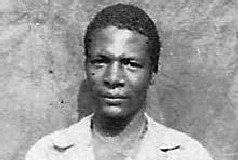 Herman Perry
Murderer · India · 1944
Herman Perry (May 16, 1922 - March 15, 1945) was an American World War II soldi…
1 victim
Herman Perry
Murderer · India · 1944
Herman Perry (May 16, 1922 - March 15, 1945) was an American World War II soldi…
1 victim
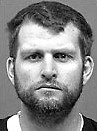 Keith Jesperson
Serial killer · USA · 1990
Name: Keith Jesperson · Also known as: “Happy Face Killer” · Born: April 6, 195…
8 victims
Keith Jesperson
Serial killer · USA · 1990
Name: Keith Jesperson · Also known as: “Happy Face Killer” · Born: April 6, 195…
8 victims
- Gender
- male
- Country
- USA
- Location
- Prince George County, Virginia, USA
- Date of birth
- January 31, 1967
- Age at first offence
- 20
- Characteristics
- rape, robbery, drugs
- Victim profile
- Joyce Snead Aldridge (female, 56)
- Method of murder
- St abbing with knife
- Date(s) of murder
- January 11, 1987
- Years active
- 1987
- Date of arrest
- March 1999
- Status
-
Executed
Executed by lethal injection in Virginia on March 14, 2002
Case details
James Earl Patterson was convicted in Virginia of capital murder in the commission of a rape, and he was sentenced to death. He also entered guilty pleas to other charges and received additional life sentences.
Timeline
- October 11, 1987 — The Prince George County Police Department received a telephone call at approximately 11:35 p.m. from a person identifying herself as Joyce Aldridge stating that she had been raped and stabbed.
- March 1999 — Patterson became a suspect in the Aldridge murder when DNA evidence taken from the crime scene was matched to Patterson’s blood.
- 1998 — The evidence was resubmitted to the Virginia DNA Laboratory and yielded a “cold hit” match to a DNA profile maintained by the Virginia DNA Data Bank.
- March 2000 — Patterson agreed to discuss the crime with a police officer if an agreement could be reached regarding his ability to see his family at the prison, and after the family visit was arranged, he confessed to raping and murdering Ms. Aldridge.
- June 15, 2000 — Patterson was on death row.
- October 16, 2000 — Patterson through counsel filed a “Motion Not to Pursue Appeal” with this Court.
- November 15, 2000 — The matter was returned to the trial court for a determination whether Patterson’s decision not to appeal was made voluntarily and intelligently.
- January 4, 2001 — A competency hearing was held, and Patterson signed a waiver under oath stating he did not want his case reviewed for “any alleged errors of the trial” and waived his right to file an opening brief and to have his attorney present any oral arguments or otherwise pursue appellate review.
- September 14, 2001 — Opinion in James Earl Patterson v. Commonwealth of Virginia was issued by Justice Elizabeth B. Lacy.
- March 14, 2002 — Patterson was executed by lethal injection in Virginia.
- March 15, 2002 — Patterson was pronounced dead at 9:10 p.m. EST at the Greensville Correctional Center.
Background
Patterson had been serving a 25-year sentence for rape unrelated to the rape of Ms. Aldridge at the Greensville Correctional Center. He met Ms. Aldridge through her daughter, with whom he was partying. Patterson later confessed that on October 11, 1987 he went to Ms. Aldridge’s home to steal money for drugs.
At the sentencing phase, two psychologists determined that Patterson was competent to tender a guilty plea and to make his own decisions. Prior to the entry of the guilty pleas, Patterson was examined by two psychologists who determined he was competent to tender a guilty plea and to make his own decisions in the case. Against the advice of counsel, Patterson entered the guilty plea.
The offence
On October 11, 1987, the Prince George County Police Department received a telephone call at approximately 11:35 p.m. from a person identifying herself as Joyce Aldridge. Ms. Aldridge stated that she had been raped and stabbed.
When officers arrived at Ms. Aldridge’s home, they found the front door ajar and a screen “knocked out” of the bathroom window at the rear of the house. The officers announced themselves and, when there was no reply, entered the house. They found Ms. Aldridge’s partially clothed body on the floor of the bathroom. Her dress had been ripped from the neck, and cloth ligatures, cut from bedding in the room, remained tied to her right wrist. She had been stabbed multiple times and could not be resuscitated by the emergency medical crew.
In the kitchen, officers found signs of a struggle with a chair knocked over and a drawer containing knives left open, and Ms. Aldridge’s eyeglasses on the floor. The door to Ms. Aldridge’s bedroom had been kicked open and footprints were found on the door. Footprints of the same type were found in the blood on the floor of the bedroom. The contents of Ms. Aldridge’s purse had been dumped on the floor, dresser drawers were open and ransacked, and the nightstand had been knocked over. There was a large amount of blood on the bed and pillows and “[c]ast-off” blood spatters were on the wall next to the bathroom.
The telephone cord had been pulled from the wall and the doorknob to the bathroom door had been pulled off the door. Ms. Aldridge’s blood was found on the telephone, the bathroom doorknob, and the latch on the window screen found in the backyard. These conditions indicated that she had attempted to flee her attacker by escaping through the window in the bathroom.
The medical examiner found seventeen stab wounds. Eight of the wounds were to Ms. Aldridge’s neck, four to her upper back, one in her chest and several clustered in her abdominal area. The wounds ranged in depth from two to six inches. Two stab wounds to her aorta were fatal. The medical examiner also found a number of defensive wounds. Seminal fluid was recovered from the victim’s rectum and vagina, and a semen stain was found on the bed.
Patterson later described the circumstances of the assault and killing. He said he went to her home on October 11, 1987 to steal money for drugs. He said he had planned to enter through a basement window but the window was locked. While he was looking for a utility knife he had dropped in the yard, Ms. Aldridge let her dog out in the yard. Patterson said he went to the door and asked Ms. Aldridge if he could borrow a flashlight on the pretext of needing it to search for lost car keys. When Ms. Aldridge opened the door, he forced his way into the house, kicked the door shut, and demanded her pocketbook. He pushed her to the bedroom to get the purse. When the purse contained only coins, Patterson said he became “even more violent.”
Patterson stated he tied her hands behind her back with strips cut from the bed linen, and then he raped her. He went to the kitchen looking for a knife because he “wasn't going to leave any witnesses behind.” He found a knife and stabbed Ms. Aldridge three times in the abdomen. Patterson said he went back outside to find the lost utility knife, but reentered the house to make sure “she's gone.” He said he kicked in the bedroom door which was shut and saw a telephone cord leading to the bathroom. Patterson said he forced the bathroom door open and Ms. Aldridge came out, and he “hit[] her with the knife 4 or 5 times.” After she “went down the wall,” he left by way of the front door.
Other descriptions in the materials stated that Patterson stabbed her 3 times in the abdomen and then fatally stabbed her 14 more times, and fled the scene. Another portion stated that he stabbed her 17 times. The appellate opinion’s medical examiner description stated seventeen stab wounds.
Investigation
The perpetrator was not identified until over ten years later. In 1998, the evidence was resubmitted to the Virginia DNA Laboratory, and the subsequent testing yielded a “cold hit” match with a DNA profile maintained by the Virginia DNA Data Bank. The tested DNA matched Patterson, who was serving a twenty-five year sentence at the Greensville Correctional Center for a rape unrelated to the rape of Ms. Aldridge.
Police obtained a search warrant for a fresh sample of Patterson’s blood, and additional testing confirmed that the DNA material found at Ms. Aldridge’s house and that of the defendant were consistent. The probability of finding someone else with the same DNA profile was less than 1 in 5.5 billion.
When confronted with this information by the police, Patterson denied knowing Ms. Aldridge or ever being in her house. Patterson later agreed in March 2000 to discuss the crime with one of the police officers involved in the investigation if an agreement could be reached regarding his ability to see his family at the prison. After the family visit was arranged, Patterson confessed to raping and murdering Ms. Aldridge.
Arrest and confinement
Patterson was serving a twenty-five year sentence at the Greensville Correctional Center. He was on death row since June 15, 2000.
Trial
Patterson received a death sentence upon a plea of guilty to a charge of capital murder in the commission of a rape, under Code § 18.2-31(5), in the death of Joyce Sneed Aldridge.
Patterson also pled guilty to charges of abduction with intent to defile under Code § 18.2-48 and rape under Code § 18.2-61. Patterson entered an “Alford plea,” North Carolina v. Alford, 400 U.S. 25 (1970), to a charge of forcible sodomy under Code § 18.2-67.1. He was sentenced to consecutive terms of life imprisonment for the abduction and sodomy convictions. Patterson did not appeal those convictions.
The trial court ordered a pre-sentence report after finding Patterson guilty of capital murder. At the sentencing hearing, the Commonwealth asserted the killing was vile in that it involved torture, depravity of mind, and aggravated battery. The Commonwealth relied on testimony given at the guilt phase that the victim did not die instantaneously, that the knife attack was carried out in a “savage[,] methodical manner,” and that many more stab wounds were inflicted than necessary to accomplish the murder. The Commonwealth also asserted Patterson would be a future danger to society, presenting evidence of felony convictions for rape and grand larceny based on a 1988 incident in which Patterson asked two women for a ride home from a party.
According to the appellate opinion’s description of the 1988 incident, when the driver exited the car, Patterson shoved her to the ground, got back in the car, and broke the handle of the passenger door to trap the other woman in the car. Patterson “punched” the passenger in the face, drove the car to another location, and then raped her. The Commonwealth relied on these crimes committed after the rape and murder of Ms. Aldridge, together with Patterson’s extensive juvenile record and fourteen instances of institutional offenses, including fighting, assault, and possession of drugs and intoxicants, to support its position that Patterson was a continuing danger to society.
Patterson refused to present evidence in mitigation of his sentence and instructed his attorney not to do so. In his exercise of elocution, Patterson expressed sorrow and remorse and requested a sentence of death, stating that if he received a life sentence he could not promise that “sometime that I may not spark out and ruin more lives.”
In imposing the death sentence, the trial court found that aggravating factors of vileness in the commission of the crime and of future dangerousness to society were both supported by the evidence. Patterson asked for the death sentence, and Judge James F. D’Alton Jr. imposed it.
Sentencing
The appellate opinion stated that Patterson was sentenced to death after pleading guilty to capital murder in the commission of a rape in the death of Joyce Sneed Aldridge. The trial court also imposed additional consequences: Patterson was sentenced to consecutive terms of life imprisonment for the abduction and sodomy convictions.
A portion of the materials included the statement by Prince George County Circuit Judge James F. D’Alton Jr. that he granted Patterson’s request for the death sentence because of the vileness of the crime and the threat that Patterson would commit future offenses.
During sentencing, Patterson told Judge D’Alton:
“I pray today that it will be some type of closure for these families.”
The appellate opinion described Patterson’s waiver and its effect on appellate review. It stated that even though Patterson waived his right of appellate review and instructed his attorneys to refrain from seeking a commutation of his death sentence, a defendant may not waive the review process mandated by Code § 17.1-313(C). It noted that Patterson’s counsel filed a brief limited to the issues required by Code § 17.1-313(C) and participated in the process as an officer of the Court.
Appeals
Patterson filed a “Motion Not to Pursue Appeal” with the appellate court on October 16, 2000. By order dated November 15, 2000, the matter was returned to the trial court to determine whether Patterson’s decision not to appeal was made voluntarily and intelligently.
At a competency hearing held on January 4, 2001, Patterson signed a waiver under oath stating he did not want his case reviewed for “any alleged errors of the trial” and waived his right “to file an opening brief and to have my attorney present any oral arguments or to otherwise in any manner pursue appellate review.” The trial court found that Patterson knowingly, voluntarily, and intelligently waived his right to appeal.
The appellate opinion dated September 14, 2001 affirmed the death sentence. It stated it would review whether the death sentence was imposed under the influence of passion, prejudice, or any other arbitrary factor, and whether it was excessive or disproportionate compared to similar cases. The opinion concluded there was no indication the trial court’s sentencing decision was influenced by passion, prejudice, or any arbitrary factor, and it concluded the sentence was neither excessive nor disproportionate, affirming. It ended with “Affirmed.”
Outcome
Patterson’s death sentence was affirmed on direct review. He also remained convicted on the related guilty pleas resulting in consecutive life sentences for abduction and sodomy, with no appeal filed for those convictions.
Aftermath
Patterson executed by lethal injection. The materials stated that he filed no last-minute appeals or request for clemency and asked relatives for forgiveness before being put to death. He was pronounced dead at 9:10 p.m.
Patterson’s final words were reported as:
“I want it to be known that my heart goes out to the Aldridge family and all that I put them through. I pray that they (the families) will all find God as I have found him. I am at peace now and ready to meet my maker. God bless each and every one of you who is here tonight.”
The materials also included a statement attributed to Governor Mark R. Warner:
“Mr. Patterson was convicted with the assistance of DNA evidence of the capital murder of Joyce Aldridge in the commission of rape, abduction with the intent to defile, and forcible sodomy. He was found to be competent to assist in his own defense by two separate psychiatric evaluations prior to entering a plea of guilty.
“I have not been asked to intervene in the case of James Earl Patterson, there are no legal challenges to this scheduled execution, and accordingly, I decline to intervene.”
A quote attributed to Patterson was also included describing his view prior to sentencing:
“As I look around this courtroom, I see lives that I've wrecked. To say I'm sorry to these people is a hollow statement,”
and additional remarks attributed to Patterson included:
“These families were touched by me because, in some instances, they befriended me. In befriending me, it turned into their worst nightmare,”
“Your honor, I've thought about the death sentence, and I beg you to give me the death sentence,”
“I pray today that it will be some type of closure for these families. I'm deeply sorry. . . . I just pray the Lord touches their lives and take away the pain I brought upon them.”
The materials also included comments attributed to family members of Ms. Aldridge. They included:
“The only thing we've been able to put together and come up with is, this is senseless.”
and:
“The feelings of loneliness and emptiness have never gone away,”
“There are feelings that are too difficult to express into words, but they're in our hearts.”
The materials also stated Patterson’s final meal included five cheese turkey burgers with lettuce, tomato, onion, ketchup and mustard, French fries (lots of mayo and ketchup on the side), a tossed salad with French dressing, cooked apples and sweet tea.
Legal citations mentioned in the materials
- Patterson v. Com., 551 S.E.2d 332 (Va. 2001) (Direct Appeal)
- Chabrol v. Commonwealth, 245 Va. 327, 335, 427 S.E.2d 374, 378 (1993)
- Hoke v. Commonwealth, 237 Va. 303, 316, 377 S.E.2d 595, 603, cert. denied, 491 U.S. 910 (1989)
- Akers v. Commonwealth, 260 Va. 358, 364, 535 S.E.2d 674, 677 (2000)
- Payne v. Commonwealth, 257 Va. 216, 509 S.E.2d 293 (1999)
- Beck v. Commonwealth, 253 Va. 373, 484 S.E.2d 898 (1997)
- Williams v. Commonwealth, 248 Va. 528, 450 S.E.2d 365 (1994)
- Mason v. Commonwealth, 219 Va. 1091, 254 S.E.2d 116 (1979)
- North Carolina v. Alford, 400 U.S. 25 (1970)
Spotted an error, or have more information about this case?