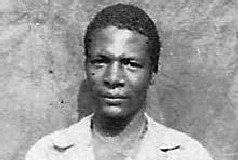
Herman Perry
Murderer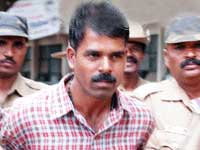 Umesh Reddy
Murderer · India · 1998
Umesh Reddy was sentenced to death on October 27, 2006. The Karnataka High Cour…
18 victims
Umesh Reddy
Murderer · India · 1998
Umesh Reddy was sentenced to death on October 27, 2006. The Karnataka High Cour…
18 victims
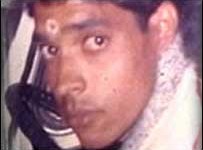 Dhananjoy Chatterjee
Murderer · India · 1990
Dhananjoy Chatterjee was born in Kuludihi, West Bengal, India on August 14, 196…
1 victim
Dhananjoy Chatterjee
Murderer · India · 1990
Dhananjoy Chatterjee was born in Kuludihi, West Bengal, India on August 14, 196…
1 victim
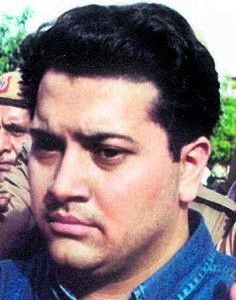 Manu Sharma
Murderer · India · 1999
Manu Sharma Manu Sharma — son of the India politician Venod Sharma; model-killi…
1 victim
Manu Sharma
Murderer · India · 1999
Manu Sharma Manu Sharma — son of the India politician Venod Sharma; model-killi…
1 victim
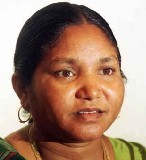 Phoolan Devi
Murderer · India · 1981
Phoolan Devi was shot dead by three masked gunmen outside her Delhi bungalow on…
20 victims
Phoolan Devi
Murderer · India · 1981
Phoolan Devi was shot dead by three masked gunmen outside her Delhi bungalow on…
20 victims
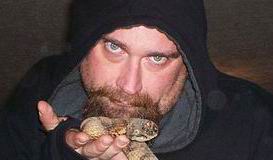 Gregory Hale
Murderer · USA · 2014
Gregory Hale was known among his neighbors and acquaintances as a “devil worshi…
1 victim
Gregory Hale
Murderer · USA · 2014
Gregory Hale was known among his neighbors and acquaintances as a “devil worshi…
1 victim
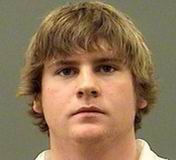 Cody Legebokoff
Serial killer · Canada · 2009
Cody Legebokoff (born c. 1990) was tried in the Supreme Court of British Columb…
4 victims
Cody Legebokoff
Serial killer · Canada · 2009
Cody Legebokoff (born c. 1990) was tried in the Supreme Court of British Columb…
4 victims
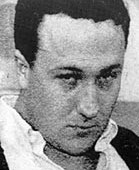 Steven Oken
Spree killer · USA · 1987
Steven Oken (defendant) Steven Oken was adopted at birth and was raised in a st…
3 victims
Steven Oken
Spree killer · USA · 1987
Steven Oken (defendant) Steven Oken was adopted at birth and was raised in a st…
3 victims
 Anton Probst
Mass murderer · USA · 1866
Anton Probst was born in Germany in 1843 and came to the United States in 1863,…
8 victims
Anton Probst
Mass murderer · USA · 1866
Anton Probst was born in Germany in 1843 and came to the United States in 1863,…
8 victims
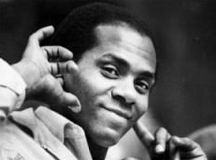 Franklin Lynch
Serial killer · USA · 1987
Franklin Lynch was involved in the case prosecuted as a serial murder matter co…
3 victims
Franklin Lynch
Serial killer · USA · 1987
Franklin Lynch was involved in the case prosecuted as a serial murder matter co…
3 victims
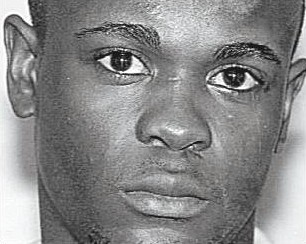 Carlton Jerome Pope
Murderer · USA · 1986
Carlton Jerome Pope was convicted of capital murder in the commission of robber…
1 victim
Carlton Jerome Pope
Murderer · USA · 1986
Carlton Jerome Pope was convicted of capital murder in the commission of robber…
1 victim
- Gender
- male
- Country
- India
- Location
- Tinsukia distric, Assam, India
- Date of birth
- May 16, 1922
- Age at first offence
- 22
- Characteristics
- abduction, abuse, fugitive, rape, rape?
- Victim profile
- Lieutenant Harold Cady, 28
- Method of murder
- Shooting ( .30-calibre M1)
- Date(s) of murder
- March 3, 1944
- Years active
- 1944
- Date of arrest
- March 9, 1945 (final capture)
- Status
-
Executed
Executed by hanging by the United States Army in Ledo, India, on March 15, 1945
Case information
Herman Perry (May 16, 1922 - March 15, 1945) was an American World War II soldier. He served in the China Burma India Theater of World War II constructing the Ledo Road with the 849th Engineer Battalion. He was convicted of murder by a military court-martial and became a fugitive from the army in India and Burma.
Timeline
- March 3, 1944 — Lieutenant Harold Cady attempted to apprehend Perry for dereliction of duty and to place him in the area’s military prison.
- March 4, 1944 — Perry sneaked out of camp and spent hours getting stoned on “native intoxicants” and returned nearly dawn, missing the 6am reveille.
- March 5, 1944 — Perry refused repeated orders to relinquish his .30-calibre M1 rifle and shot and killed Lieutenant Harold Cady.
- July 20, 1944 — Perry was shot and captured.
- September 4, 1944 — Perry received his death sentence by a military court during his second capture.
- Just before Christmas 1944 — Perry escaped from the Ledo Stockade.
- March 10, 1945 — Perry was captured near the town of Namrup, India.
- March 15, 1945 — Perry was executed by hanging by the United States Army in Ledo, India.
- 2008 — Perry’s story was recounted in 2008 in “Now the Hell Will Start: One Soldier’s Flight from the Greatest Manhunt of World War II” by Brendan I. Koerner.
Background
Perry was born just outside Monroe, North Carolina. During World War II, American military officials built a road along the Burma-India border to ferry supplies to aid China. Perry served in the 849th Engineer Aviation Battalion (with 750 black soldiers and about 50 white officers, according to one account). The majority of black soldiers were not told their destination.
While building the Ledo Road, Perry served in the China Burma India Theater of World War II constructing the Ledo Road. The road was described as being built from Assam Province in India across Burma to get supplies to China.
Perry became a fugitive from the army. He lived out a fugitive’s life of jungle survival and discovered and adapted to the lifestyle of the Naga people of northeastern India and northern Burma.
The offence
Lieutenant Harold Cady attempted to apprehend Perry and place him in the military prison. Perry repeatedly warned Cady not to approach. Cady continued his advance. Perry shot and killed Cady.
Perry later fled into the jungle after killing Cady. He was described as wanted for the murder of an officer, an offence punishable by hanging.
Investigation and manhunt
After Cady was killed, Perry fled into tiger-infested terrain in the Patkais. A 1,000-rupee reward was posted for his capture, either dead or alive.
The military police combed the brothels of Calcutta several hundred miles to the south-west. During the search, frustration set in as nothing turned up.
As the manhunt continued, there were references to roadblocks and communiqués sent over telegraph wires. Searchers considered Perry might have been devoured by tigers or fallen victim to headhunters.
Perry’s repeated capture attempts included occasions where he was caught twice by the Army and escaped both times.
General Joe Cranston ordered Earl O. Cullum to “bring him in, dead or alive.” Cullum was a then thirty-year-old major from Dallas, Texas, and led a manhunt aided by teams from his own 159th MP Battalion for eighteen days and nights, trailing Perry through remote jungles and across unbridged rivers.
A native told about an American asleep in a jungle hut still wearing his army uniform. An approach was made in darkness: when the hut was found empty, Cullum grabbed a native standing nearby, and an American voice said, “You got me.” Cullum held the person’s wrists and wrestled him down while searching for his gun. His uniform and gun were hidden nearby out of reach. The other two MPs came across the river and tied Perry’s hands as he admitted who he was. The party recrossed the hip-deep river in darkness and proceeded to their hidden jeeps, then to an American Field Hospital where Perry’s accumulated wounds were treated. Perry was then confined in an escape-proof stockade.
Arrest and captures
Perry was arrested following the events around his missing reveille and refusal to surrender his rifle. He was found holding a rifle and repeatedly warned Cady not to approach.
Later, an armed posse was sent high into the Patkais and Perry was shot and captured on 20 July, 1944. He survived his grievous wounds and was found guilty of murder by a military court-martial.
Perry was captured again on March 10, 1945 near the town of Namrup, India. His execution followed five days later.
Trial
Perry was tried by an Army Court-Martial and sentenced to be hanged. His sentence was described as the death sentence given by a military court on September 4, 1944 during his second capture.
Another account described his court-martial beginning in early September 1944 at a tea plantation in Ledo, India, lasting six hours, with a verdict of “guilty” and a sentence of death by hanging.
Perry awaited execution in the Ledo stockade shackled to a log.
Sentencing
Perry’s sentence was death by hanging by the United States Army. Judicial foot-dragging delayed completion of the required review of the death sentence.
Appeals
An appeal delay occurred while the Army completed review of the death sentence. One account described the appeal as automatic, with further delay as the Army misplaced documents.
Escape and re-capture history
After being sentenced, Perry escaped from the barbed-wire Ledo Stockade. Just before Christmas 1944, he wriggled his way through a drainage ditch and fled back into the Indo-Burmese wilderness.
After that escape, Perry was described as trying to get back to Tgum Ga to see his infant son.
Cullum and others continued to search, with Perry being spotted multiple times:
- On New Year’s Day 1945, Perry was seen at a woodcutter’s camp; shots were fired and one grazed Perry’s ankle; he escaped again.
- On Feb. 20, 1945, Perry was spotted again; he was wounded in his Achilles tendon after shots were fired.
- A day later, Perry popped up from jungle bush after hearing yapping dogs; a bullet nicked the tip of his nose; he hobbled away quickly.
- Days later, surrounded again, Perry said, “You got me,” and was taken into custody.
Execution
On March 15, 1945, Perry was driven in the dark to his date with the gallows. The convoy included 17 military police officers.
Before the execution, Perry turned to his guard and uttered a grim farewell: “Now,” he said, “the Hell will start”.
Perry was executed by hanging by the United States Army in Ledo, India, on March 15, 1945.
Outcome
Perry’s execution ended his case. The case was described as taking a full year, from murder to hanging.
Aftermath
Perry’s body was reburied on American soil in Hawaii, apart from the “honored dead,” according to one account.
A letter to Perry’s younger brother Aaron was mentioned. The letter closed with the blunt, chilling phrase: “Don’t answer.”
Cullum later received a letter from Hank Johnson, Perry’s half brother, who had been trying to find out about Perry’s last days. Cullum wrote Johnson: “If he had used the right attitude, and if the Army had used his abilities, he could have been an excellent jungle scout,” “But in the 1940s he was a roadbuilder.”
Perry’s sister Edna Wilson, 83, later said the family had been perplexed in 1945 and did not know where his body was buried for years. She said that Cullum told her of Perry’s resting place in a military cemetery in Hawaii. She scrounged up $1,000 to have her brother’s body dug up and cremated.
A box holding Perry’s ashes was delivered to her home seven months before the narrative about her account. Wilson said, “He’s home now.”
Other details
Perry served in the U.S. Army with the 849th Engineer Battalion in the China Burma India Theater of World War II and worked constructing the Ledo Road. He was described as having used opium and ganja.
An account described racist and abusive treatment in the stockade context and described Perry developing excruciating genital lesions owing to the prison’s lack of hygiene after serving a term.
An account described Perry writing a letter to his guard or otherwise speaking before execution, but the only recorded quoted farewell was “Now,” he said, “the Hell will start”.
Another account described Perry’s younger brother as Aaron “the Anvil” Perry, a champion boxer.
An account described Winston Churchill summing up the Ledo Road as: “An immense, laborious task, unlikely to be finished before the need for it has passed.”
Quotes attributed to Perry included:
- “Get back!”
- “Lieutenant, don't come up on me!”
- “Lieutenant, don't come up on me!”
- “Get back! Get back!”
- “Nobody is going to get my rifle,”
- “Even my mother wouldn't get this rifle.”
- “Don't answer.”
- “Now,” he said, “the Hell will start”.
- “You got me.”
Quotes attributed to Harold Cady included: no direct Cady quote was provided in the record, but Cady’s advance was described.
Quotes attributed to Brendan I. Koerner included a George Pelecanos description of the story as: “A fascinating, untold story of the Second World War, an incendiary social document, and a thrilling, campfire tale adventure.”
Quotes attributed to Earl O. Cullum included his line to Hank Johnson:
Spotted an error, or have more information about this case?