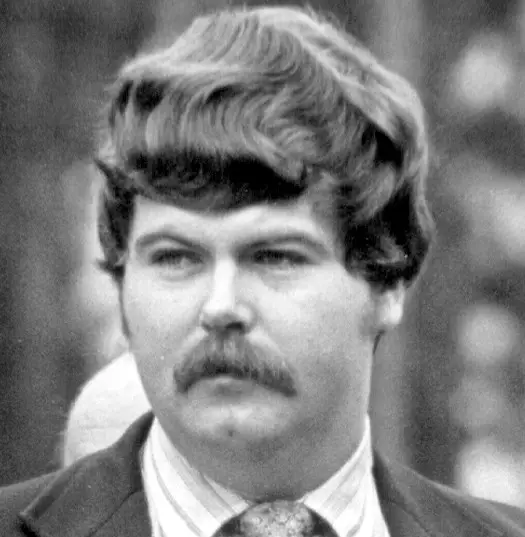
John Peoples
Murderer Brian Kevin Rosenfeld
Murderer · USA · 1985
Brian Kevin Rosenfeld Brian Kevin Rosenfeld was sentenced to three concurrent l…
23 victims
Brian Kevin Rosenfeld
Murderer · USA · 1985
Brian Kevin Rosenfeld Brian Kevin Rosenfeld was sentenced to three concurrent l…
23 victims
 Marvin Gray
Murderer · USA · 1975
Marvin Gray was convicted killer who claimed responsibility for 23 slayings and…
23 victims
Marvin Gray
Murderer · USA · 1975
Marvin Gray was convicted killer who claimed responsibility for 23 slayings and…
23 victims
 Yahweh ben Yahweh
Murderer · USA · 1980
Yahweh ben Yahweh was born and legally named Hulon Mitchell Jr. (October 27, 19…
23 victims
Yahweh ben Yahweh
Murderer · USA · 1980
Yahweh ben Yahweh was born and legally named Hulon Mitchell Jr. (October 27, 19…
23 victims
 Russell Ellwood
Murderer · USA · 1991
Russell Ellwood was a former taxi driver. Authorities suspected him of killing…
20 victims
Russell Ellwood
Murderer · USA · 1991
Russell Ellwood was a former taxi driver. Authorities suspected him of killing…
20 victims
 Jennifer Mee
Murderer · USA · 2010
Jennifer Mee became known as the “Hiccup Girl” after she experienced a case of…
1 victim
Jennifer Mee
Murderer · USA · 2010
Jennifer Mee became known as the “Hiccup Girl” after she experienced a case of…
1 victim
 Leslie Wallace
Murderer · USA · 2001
Leslie Wallace fatally shot her 6-year-old son, James, with a shotgun and attem…
1 victim
Leslie Wallace
Murderer · USA · 2001
Leslie Wallace fatally shot her 6-year-old son, James, with a shotgun and attem…
1 victim
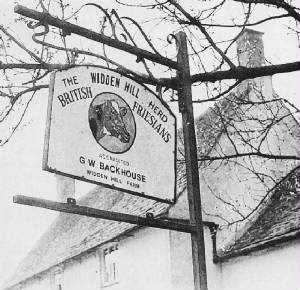 Graham Backhouse
Murderer · United Kingdom · 1984
Graham Backhouse was convicted of the murder of Bedale-Taylor and the attempted…
1 victim
Graham Backhouse
Murderer · United Kingdom · 1984
Graham Backhouse was convicted of the murder of Bedale-Taylor and the attempted…
1 victim
 John Wade Adams
Murderer · USA · 1997
John Wade Adams was born on January 26, 1963. He was previously convicted of bu…
1 victim
John Wade Adams
Murderer · USA · 1997
John Wade Adams was born on January 26, 1963. He was previously convicted of bu…
1 victim
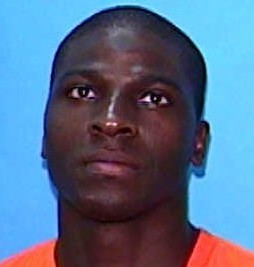 Perry Alexander Taylor
Murderer · USA · 1988
Perry Alexander Taylor was convicted and sentenced to death for the murder of G…
1 victim
Perry Alexander Taylor
Murderer · USA · 1988
Perry Alexander Taylor was convicted and sentenced to death for the murder of G…
1 victim
- Gender
- male
- Country
- USA
- Location
- Talladega County, Alabama, USA
- Date of birth
- January 9, 1957
- Age at first offence
- 26
- Characteristics
- robbery, abuse, torture
- Victim profile
- Paul and Judy Franklin and their 10 year old son Paul
- Method of murder
- Beating with a rifle
- Date(s) of murder
- July 6, 1983
- Years active
- 1983
- Date of arrest
- 5 days after
- Status
-
Executed
Executed by lethal injection in Alabama on September 22, 2005
Case details
John W. Peoples Jr. was a defendant in a capital murder case arising from the July 1983 disappearance and murders of Paul Franklin, Judy Franklin, and Paul Franklin Jr. in Talladega County, Alabama. He was executed by lethal injection in Alabama on September 22, 2005.
The Franklin family were murdered on 6 July 1983. In July 1983, Paul Franklin Sr., his wife Judy, and their 10-year-old son Paul Jr. lived near Pell City in St. Clair County. They lived in a house on a peninsula that extended into Lake Logan Martin.
Paul Franklin owned several personal vehicles between 1980 and 1983, having as many as five at one time, including a red 1968 Chevrolet Corvette. In July 1983, Paul Franklin had in his employ a tutor for his son, who had been employed for the summer months, and a housekeeper, who came regularly and who had been doing so for three years.
Judy Franklin scheduled an appointment for 9:00 a.m., July 7, for Paul Jr. for a session with his tutor. However, the whole family, along with the red Corvette, disappeared from their lake home sometime on the night of Wednesday, July 6, 1983.
Timeline
- August 3, 1983 — John W. Peoples Jr. was indicted by the Talladega County Grand Jury in a five-count capital murder indictment.
- July 7, 1983 — The housekeeper arrived for the scheduled housekeeping and found the house unlocked, with no one home; lights and color televisions were turned on.
- July 10, 1983 — Further investigation disclosed the name “John Peoples” written in eyebrow pencil on the top of a clothes hamper in the bathroom.
- July 11, 1983 — Police stopped Peoples after a call to Childersburg Police Chief Ira Finn; Peoples was taken to the police station and told of the Corvette report and missing family.
- July 12, 1983 — Officer Owen Harmon swore out a theft warrant; bond was set at $25,000.
- July 13, 1983 — Peoples and his attorney provided information that the Franklin family was dead; Peoples led officers to the bodies.
- July 14, 1983 — Talladega County District Attorney Robert Rumsey visited St. Clair County to determine in which county venue would be proper.
- July 15, 1983 — A polygraph examination was attempted; Peoples refused to answer relevant questions; he was returned to the St. Clair County Jail.
- July 19, 1983 — Peoples sent a note to the St. Clair County sheriff seeking to talk without contacting his lawyer; he wrote and signed a statement admitting “The case I am in I did do it.”
- July 21, 1983 — Peoples’s co-defendant Timothy Gooden gave a statement later described in the postconviction proceedings.
- July 22, 1983 — Peoples was removed from St. Clair County and transported to the Talladega County Jail.
- January 1984 — Peoples was sentenced to death.
- 27 January 1984 — The trial court made findings of fact in regard to the punishment phase and the Court done this day.
- 1986 — The Alabama Court of Criminal Appeals affirmed on direct appeal in Peoples v. State, 510 So.2d 554.
- 1987 — The Supreme Court of Alabama affirmed in Ex parte Peoples, 510 So.2d 574.
- November 2, 1987 — The United States Supreme Court denied Peoples’s petition for a writ of certiorari, Peoples v. Alabama, 484 U.S. 933 (1987).
- September 22, 2005 — Peoples was executed by lethal injection in Alabama.
The offence
In the disappearances and murders that followed, the trial court later found that the conduct of John W. Peoples Jr. constituted a brutal, aggravated, merciless, and intentional killing of a man, his wife, and their 10-year-old child.
At the Franklin residence, the housekeeper reported that a voice told her, “Rosa, get the hell out of here and now,” whereupon she “dropped everything right then and there” and left.
Officers later found that the bodies of Paul Franklin Sr., Judy Franklin, and Paul Franklin Jr. were located in a wooded area just off County Road 377. Officers found unexpended rounds of .22 caliber rat shot near the bodies and a gun sight elevator. Mud-grip tire tracks led off the paved road, and a “mashed” path of grass indicated that the body of Paul Franklin Sr. had been dragged through the grass. The bottoms of the yellow pajamas Peoples was wearing were pulled down around his ankles, consistent with his body having been dragged. Judy Franklin and Paul Franklin Jr. had been blindfolded. The bodies were all in the same stage of advanced decomposition.
The trial included findings about injuries:
- The skull of Judy Franklin had been fractured, with “There was a large fragmented skull fracture 4 1/2 by 4 inches in diameter. There were ten separate pieces of skull in this area.” The pathologist reported blunt force trauma due to a blow to the head.
- She had also been shot: “The upper arm near the armpit on the right showed a perforated wound going from this arm through the arm and a few perforations were present in front of her armpit in this area. Went through the robe and skin and soft tissue in this area and minute, very small pellets were recovered from the wound.”
- The skull of Paul Franklin Jr. was also crushed, with “There was a large fragmented skull fracture in the back of the left side of the head ... virtually the entire left side of the head ... [an] area 6 1/2 by 4.” The skull fracture was described as very similar to Judy Franklin’s and there were approximately 15 fragments in the fractured area. The impact side of the child’s skull was described as a patterned injury.
- In the pathologist’s opinion, the manner of death of Paul Franklin Sr. “was not accident or natural or suicide.”
- The impact injuries to the child were described as consistent with having been inflicted by “the rifle the appellant had shown the two deputies,” and the child died from blunt trauma to the skull.
The State proved beyond a reasonable doubt that the defendant committed murder during a robbery in the first degree, or an attempt thereof, during a burglary in the first degree, or an attempt thereof, and during a kidnapping in the first degree, or an attempt thereof; and that the defendant committed murder of two people by one act or pursuant to one scheme or course of conduct.
Indictment and charges
Peoples was indicted on August 3, 1983, in a five-count capital murder indictment. Count one charged murder of two or more persons, namely Paul G. Franklin Sr. and Judy C. Franklin, by one act or pursuant to one scheme or course of conduct, a violation of § 13A-5-40(a)(10), Code of Alabama 1975.
Count two charged murder of Paul G. Franklin Sr. during the kidnapping in the first degree of said person, a violation of § 13A-5-40(a)(1), Code of Alabama 1975.
Count three charged murder of Paul G. Franklin Jr.
Count four charged murder during a burglary in the first degree, a violation of § 13A-5-40(a)(4), Code of Alabama 1975.
Count five charged murder during a robbery in the first degree, a violation of § 13A-5-40(a)(2), Code of Alabama 1975.
Investigation
The next morning, July 7, 1983, the housekeeper found the house not locked and found the lights and the color televisions turned on; the family dog was “laying” in the washroom. The housekeeper found Mr. Franklin’s Buick Regal downstairs in the garage. It was unusual because inside the garage was where the red Corvette was kept “fastened up all the time”; the Buick was normally parked outside. She noted a puddle of oil where the Corvette was supposed to be “a little after nine o’clock.”
Under the bed in the marital bedroom, she found Mr. Franklin’s pants folded in his usual but peculiar manner; however, they still contained his keys, billfold, and money clip. She noticed the bed in the guest bedroom was unmade. When “a voice” told her, “Rosa, get the hell out of here and now,” she left.
Mr. Franklin’s mother arrived about 2:00 p.m. and found no one home and the doors not locked. She began calling family members and called the sheriff’s office. Judy Franklin’s mother arrived about 7:00 p.m., and a sheriff’s deputy arrived a short time later. The mother noticed her daughter’s purse on the kitchen bar and also saw clothes hanging on a dresser; they were the clothes that her daughter had been wearing the previous day. The deputy’s initial “short investigation” stayed there about an hour and a half gathering information and determining if anything was missing. He put out a police broadcast and later, when he obtained a tag number for the missing Corvette, he entered the missing car into the National Crime Information Center (N.C.I.C.).
The authorities instructed Paul Franklin’s mother and Judy Franklin’s mother to remain in the house until Sunday afternoon, July 10, 1983, when they left and gave the authorities a house key. On the night of July 8, Officers Marvin Roy and Ed Traylor of the Alabama Bureau of Investigation, and Investigator Owen Harmon of the St. Clair Sheriff’s Department continued investigating. Officer Roy “spent a great deal of time [that night] with the family going over the family history and information—where would they go and where would they have gone and what their activities were and things of this nature.” The officers looked around for broken windows, forced entry, and destructive type thing, and checked whether any family luggage was gone.
Officer Traylor noted an oily shoeprint from a shoe or boot that had a “vibram lug type sole” in the basement where the Corvette was usually parked. Further investigation disclosed the name “John Peoples” written in eyebrow pencil on the top of a clothes hamper in the bathroom, covered by toilet tissue and a towel end, with Judy Franklin’s mother recognizing the handwriting as Judy’s. It was determined that the name had been written there after July 2, 1983.
Mr. Franklin’s mother told the officers that John Peoples was someone she knew and that he had worked for her son around the house. She stated that Peoples had borrowed money in the past and lately had been trying to borrow more money and described him as “a ‘big robust type fellow, a big man.’”
The next morning, Monday, July 11, 1983, the officers learned that on the previous Friday a large man named John Peoples attempted to sell a red Corvette with a “59 tag” to Regal Pontiac Company in Sylacauga; he was described as about 6'4" and weighing 240 pounds.
Childersburg Police Chief Ira Finn received a telephone call from a Childersburg druggist about a man at the drug store trying to sell a red Corvette. Finn knew the car was listed on the N.C.I.C. machine; the druggist identified the car by the tag and registration numbers. Finn notified officers to go to the drug store.
Arrest and custody-related events
Assistant Police Chief Lewis Finn arrived at the drug store about 1:29 p.m. and found Peoples and the red Corvette. An officer asked if the car was his, and Peoples replied that it was. The officer told Peoples he had to go to the police station. Peoples was allowed to drive the Corvette to the station while officers followed.
At the police station, Peoples was taken into Chief Finn’s office. Finn told him the Corvette had been reported stolen from Pell City and that the three family members were missing. Peoples replied, “Well, by god, I didn’t steal the car. I’ve got a bill of sale for it.” He then threw a piece of paper on the chief’s desk. Finn replied, “Well, that ain’t too much of a bill of sale. It’s not notarized.” Peoples responded, “Well, I’ve got a goddamn tag receipt,” and he threw another piece of paper on the desk. Finn told him to wait until A.B.I. officers arrived.
Officers Owen Harmon and A.B.I. Officer Ed Traylor arrived around 2:15 p.m., about 20 minutes after Peoples was brought in. Chief Finn gave them the purported bill of sale. The handwritten document read:
“I Paul Franklin trade John Peoples one 1968 Corvette for 50 percent ownership of the C.J. Supper Club. /s/ Paul G. Franklin /s/ John W. Peoples /s/ Judy Franklin "1946785406573 59A7093 59-5560”
Curtis Jackson, who actually owned C.J. Supper Club, arrived and told the officers the supper club belonged to him and that Peoples had only “operating rights from June the 15th to July the 15th.”
Peoples was given a Miranda warning at about 2:45 p.m. At that point he had been at the station about an hour and 15 minutes. While questioning, attorney Ray Robbins telephoned; Officer Traylor talked first with Robbins. Robbins told Traylor that Peoples’s father had contacted him and that he “just called to see what was going on with” Peoples. Peoples then spoke with Robbins and told him he “didn’t need him or an attorney at that time, that [the officers] were talking to him about the car that he had purchased from Paul Franklin, and that if he decided he needed him later he would call him back.”
During questioning, Peoples gave a statement admitting that he and an individual named Timothy Gooden had gone to the Franklin residence on the night of July 6, 1983, in his Toyota pickup truck, but that they left the Franklins at home alive and well about 12:00 or 12:30 that night. The officers asked for permission to search his Toyota pickup and his residence in Talladega and the Corvette. Peoples said “that would be fine.” A permission to search form was read to him about his right to refuse. At approximately 4:30 p.m. on July 11, 1983, he signed the permission form. He left the station with the officers and took them to his father’s residence where they searched the Toyota pickup truck; nothing was taken from the truck. They then went to his apartment in Talladega, and he unlocked the door for the officers.
In a dirty clothes box, officers found a shirt and a pair of pants that appeared to have bloodstains on them. Peoples said the stains were from barbecue sauce “that he got on there on the 4th of July when he was barbecuing down at the club.” The narrative describes that Peoples then “got very nervous and upset” and began sweating.
At the St. Clair County Jail in Pell City at 9:00 p.m. on July 11, 1983, Peoples was given a Miranda warning again, and he read and signed a waiver-of-rights form. He was interviewed until about 1:30 a.m., when the decision was made by the assistant district attorney of St. Clair County to place him under arrest for theft by deception of the Corvette. He was wearing “what appeared to be pigskin type boots with a vibram lug type sole,” similar to the shoeprint found in the Franklin home. Before he was locked up, officers asked him for the boots; he took them off and gave them to the officers.
On July 12, Officer Owen Harmon appeared before a magistrate and swore out a theft warrant. The warrant was later read to Peoples. Bond was set at $25,000.
Sometime after the warrant had been read, Peoples sent a note requesting the officers come talk to him, stating it was “important.” Officer Marvin Roy responded, read Miranda warnings again, and Peoples made statements that he could “clear this thing up about 90 percent” and could furnish “two names,” but he wanted to wait until his lawyer arrived.
The attorney, Ray Robbins, arrived about noon on July 12, and after talking with Peoples, Robbins told officers Peoples “didn't have anything that would help [them].”
Routine mugshots and fingerprints were made that afternoon. Robbins returned the next day, July 13, about noon, to participate in an interview of Peoples’s wife. A discussion between Robbins and Assistant District Attorney Dennis Abbott occurred and lasted somewhat less than an hour. Abbott described Robbins telling him Peoples “had already told us all that he knew and there might be one or two little things that we didn't already know, but it wouldn't help us any in our investigation.” Abbott then asked whether he would recommend a polygraph test. Abbott stated that if a polygraph confirmed truthfulness, Peoples could post bond, a preliminary hearing could be set, and he would “probably walk” after the preliminary hearing. Robbins then stated he would recommend the polygraph because he believed Peoples was telling the truth.
At about 5:00 p.m. on July 13, Peoples and his attorney were brought from the county jail to the sheriff’s office. The lawyer told Officer Marvin Roy that Peoples had some information to add. In the presence of his attorney and Officers Harmon and Traylor, Peoples stated that the Franklin family was dead. Officer Traylor asked Peoples if he would take them to the bodies. Assistant District Attorney Robert Rumsey was called, and Robbins said, “John Peoples is going to tell ya'll some more. All of them are dead.” Peoples then took officers to the bodies of the Franklin family and described the location.
On the night of July 19, 1983, Peoples sent the sheriff of St. Clair County a note: “To whom it may concern I John Peoples are asking to see the sheriff of St. Clair County on the date of July 19, 1983 it is important and he is the only one I will talk to. Thank you '/s/ John W. Peoples Jr. 'In reference to case that your working on.”
When Sheriff Lewis Brown went to the jail, Peoples indicated he wanted to talk to Talladega County Sheriff Jerry Studdard. After Brown began advising Peoples of Miranda rights, Peoples interrupted, saying, “[Y]ou don't have to read those rights, I've probably had those rights read to me over a thousand times.” Brown read the entire warning and asked again if he wanted a lawyer. Peoples answered, “No, I don't want to call a lawyer, I just want to talk to ya'll. I don't want you taping anything or I don't want ya'll writing down any kind of statement, I just want to talk to ya'll.” After signing, Peoples wrote a statement that read: “The case I am in I did do it. Concerning the Franklin family I did do it.” After writing it, Peoples said, “Man, I am glad I told somebody that. It's really a load off my shoulders. I am really glad I told you.”
On July 22, 1983, Peoples was removed from St. During booking, Peoples said to Deputy Terry Brewer, “Terry if you'll get [Deputy] Ricky [Daniels], I'll show ya'll where the gun is.” Brewer got Deputy Daniels, and they took Peoples to an investigator’s office where they met with Sheriff Studdard. Peoples was given a Miranda warning, said he understood his rights, and signed a waiver-of-rights form. He wrote on the form: “I already have a lawyer, but I do not wish to talk to him or have him present with me at this time.” Peoples then took the officers “out in the Brecon area” and showed them a gun wrapped in a towel and concealed in some bushes. The gun was described as bent and broken.
Trial
Peoples was indicted by the Talladega County Grand Jury on August 3, 1983, in a five-count capital murder indictment. The defendant was convicted in the Circuit Court, Talladega County, Jerry L. Fielding, J., of various charges relating to murder of family and appealed.
In the direct appeal narrative, the Alabama Court of Criminal Appeals held that Peoples was not entitled to change of venue; veniremen did not have to be stricken for cause; Peoples was not prejudiced by a prosecutor’s remark during jury selection; Peoples’s arrest was proper and evidence seized pursuant to that arrest was not “fruit of poisonous tree”; bodies of victims would have been discovered through independent source; Peoples had waived right to counsel and confession was admissible; the trial court was required to give instruction as to Peoples’s right not to testify; and the death penalty was properly imposed. The Court of Criminal Appeals affirmed.
The Supreme Court of Alabama affirmed in Ex parte Peoples, 510 So.2d 574 (Ala. 1987). It later described holdings that police possessed reasonable suspicion justifying investigatory stop and evidence found at crime scene was properly admitted.
Sentencing
At the conclusion of the sentence hearing, the jury returned a verdict recommending that Peoples be punished by death. The vote was 11 for death and 1 for life without parole.
The trial court’s findings in the punishment phase included:
- The conduct constituted a brutal, aggravated, merciless, and intentional killing of a man, his wife, and their 10-year-old child.
- The aggravating circumstances outweighed mitigating circumstances proved by Peoples.
- The death sentence was “not recommended by the jury under influence of passion, prejudice, or any arbitrary factor.”
- The court took judicial knowledge of the proceedings and found the composition of the jury trying the defendant: two white males, eight white females, one black male, and one black female.
- The court stated it done this 27th day of January 1984.
The Court found that the State proved beyond a reasonable doubt and to a moral certainty that Peoples committed four provisions of the capital punishment offenses under Section 13A-5-40, including murder during robbery in the first degree, murder during burglary in the first degree, murder during kidnapping in the first degree, and murder of two people by one act or pursuant to one scheme or course of conduct.
Postconviction and appeals
Direct appeal
The case Peoples v. State, 510 So.2d 554 (Ala. Cr.App. 1986) affirmed the conviction and death sentence. The Court of Criminal Appeals affirmed on multiple grounds and held the death penalty was properly imposed.
Supreme Court review
1987), and it affirmed the judgment after granting certiorari as a matter of right. The Supreme Court’s holdings included that police possessed reasonable suspicion justifying investigatory stop and that evidence found at crime scene was properly admitted.
United States Supreme Court
Peoples petitioned for certiorari to the United States Supreme Court. The United States Supreme Court denied that petition on November 2, 1987, Peoples v. Alabama, 484 U.S. 933 (1987).
State postconviction relief
Peoples filed a motion for postconviction relief. The Circuit Court of Talladega County, Jerry Fielding, J., denied relief. The Court of Criminal Appeals, Tyson, J., affirmed. It held that Peoples was not denied effective assistance of trial counsel by virtue of counsel’s failure to obtain written agreement concerning polygraph examination, and that Peoples was not entitled to relief based on newly discovered evidence in the form of the state witness’ recantation of his trial testimony.
In the Rule 20 petition proceedings described, the petition sought post-conviction relief under Rule 20, Alabama Temporary Rules of Criminal Procedure. The petition was denied by the trial court after appointment of counsel and a full evidentiary hearing. There were some thirteen issues presented to the trial court and the court made express written findings, adopted as Appendix A and approved.
The postconviction proceedings addressed newly discovered evidence:
- Peoples claimed newly discovered evidence existed in the form of Timothy Gooden’s recantation of his trial testimony, entitling him to a new trial.
- At the Rule 20 hearing, Peoples called Gooden, Gooden’s father, and George Sims as witnesses. Respondents called Robert Rumsey, C.J. Hallmark, and Jerry Studdard.
- The court found Gooden was not a credible witness at the Rule 20 hearing.
- The court found Peoples’s remaining witnesses did not support his claim and that George Sims contradicted Gooden’s testimony.
- The court found Sims and the State’s witnesses credible.
The court summarized Gooden’s recantation at the Rule 20 hearing:
- Gooden recanted his trial testimony and claimed he had been forced to testify against Peoples.
- Gooden testified that while he took Peoples to the Franklin home on July 6, 1983, he left Peoples there and did not go in the house, and denied knowledge of the Franklins’ murder.
- Gooden denied going with Peoples and the Franklins to the murder scene.
- Gooden claimed he testified falsely at Peoples’s trial, explaining he did so because he had been threatened by District Attorney Rumsey, Sheriff Studdard, and police officers including C.J. Hallmark.
- Gooden testified he was afraid he would be beaten because he had been beaten by deputies, including Hallmark, in 1978.
- Gooden admitted giving two statements that conformed to his Rule 20 testimony, but denied giving two other statements that incriminated him along with Peoples.
- Gooden claimed that after his arrest he was taken to the Franklins’ home in St. Clair County and that Studdard and Rumsey dictated a statement for his signature.
- Gooden claimed he did not take the authorities to the murder scene, but was shown the scene by Studdard and Rumsey.
- Gooden testified that Rumsey and George Sims, who was Gooden’s lawyer, told him what to say at Peoples’s trial.
The court addressed credibility evidence and testimony contradicting Gooden’s recantation:
- The court referenced that Gooden’s plea for robbery of the Franklins resulted in a sentence to life and that his plea agreement was conditioned on truthful testimony and continued cooperation.
- The court found Gooden’s plea was voluntary and that Gooden later appealed his plea and it was affirmed.
- The court recounted that George Sims was appointed to represent Gooden; Sims did not find unusual a change from protestation of innocence to admission of guilt; Sims and Rumsey negotiated a plea agreement the night before Gooden testified; Rumsey told Gooden he would be prosecuted for capital murder if he did not tell the truth; Sims did not tell Gooden what to say, and Rumsey did not.
- The court included testimony from Gooden’s father, Millard Gooden, that in 1979 he was called to pick up his son after his son had been beaten and that photographs were taken.
The court discussed testimony and statements by other witnesses, concluding:
- Hallmark testified he never threatened or abused Gooden and was not present for one statement and was present for other statements without dictation or threats.
- Rumsey testified he did not dictate any statements and did not threaten; the court stated that Rumsey entered into a plea agreement conditioned on truthfulness and that he did not tell Gooden what to testify beyond requiring him to tell the truth.
- Studdard testified he was involved in the investigation and was present for interviews and statements described, and that neither he nor anyone in his presence threatened or abused Gooden.
The court concluded that Peoples failed to prove newly discovered evidence and not enough existed to warrant relief. It described recantation of trial testimony as inherently unreliable.
Federal habeas proceedings
The proceedings also described that Peoples v. Campbell, 377 F.3d 1208 (11th Cir. 2004) addressed habeas corpus. It described that after capital murder conviction and death sentence were affirmed on direct appeal and state postconviction relief was denied, Peoples sought writ of habeas corpus in federal court.
The United States District Court for the Northern District of Alabama denied the petition (No. 94-02175-CV-B-E, Sharon Lovelace Blackburn, J.). The United States Court of Appeals for the Eleventh Circuit vacated and remanded for issuance of a certificate of appealability. After issuance of a COA, the Court of Appeals, Tjoflat, Circuit Judge, held that:
- petitioner was not entitled to consideration of his Fourth Amendment claim;
- petitioner was not “in custody” while in police chief’s office and therefore not entitled to advice of his Miranda rights;
- even if petitioner’s attorneys’ performances were constitutionally deficient, petitioner suffered no prejudice. It then affirmed.
Outcome
The Alabama Court of Criminal Appeals affirmed the conviction and death sentence in Peoples v. State, 510 So.2d 554. The Supreme Court of Alabama affirmed the judgment in Ex parte Peoples, 510 So.2d 574. After the denial of certiorari by the United States Supreme Court on November 2, 1987, postconviction relief was denied and affirmed through state proceedings and federal habeas appeals.
Aftermath
John W. Peoples Jr. was executed by lethal injection in Alabama on September 22, 2005.
The narrative included that Peoples allegedly cooperated with authorities by taking them to hidden locations of the Franklins’ bodies, the hidden location of the murder weapon, and the location of a car where additional evidence would be discovered. It also described claims of ineffective counsel and other asserted constitutional violations, as well as a request to the Governor to stop the execution of Peoples. The co-defendant Timothy Gooden was described as convicted of the same murders and sentenced to life imprisonment. The postconviction proceedings described Gooden’s recantation claim and the court’s findings about credibility and the unreliability of recantation.


Spotted an error, or have more information about this case?