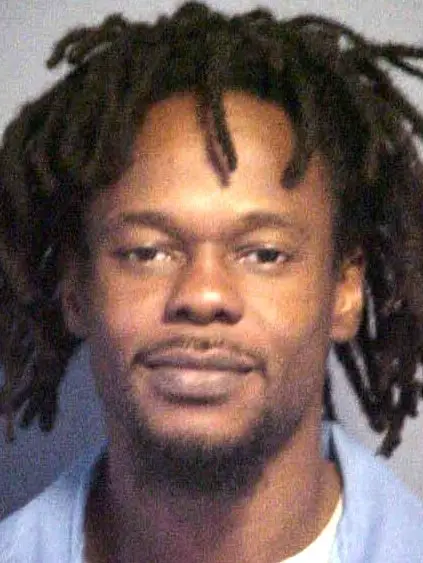
Michael Pennington
Murderer Brian Kevin Rosenfeld
Murderer · USA · 1985
Brian Kevin Rosenfeld Brian Kevin Rosenfeld was sentenced to three concurrent l…
23 victims
Brian Kevin Rosenfeld
Murderer · USA · 1985
Brian Kevin Rosenfeld Brian Kevin Rosenfeld was sentenced to three concurrent l…
23 victims
 Russell Ellwood
Murderer · USA · 1991
Russell Ellwood was a former taxi driver. Authorities suspected him of killing…
20 victims
Russell Ellwood
Murderer · USA · 1991
Russell Ellwood was a former taxi driver. Authorities suspected him of killing…
20 victims
 Robert Martines Perez
Murderer · USA · 1994
Name: Robert Martines Perez · Other name used in proceedings: Robert Martinez P…
15 victims
Robert Martines Perez
Murderer · USA · 1994
Name: Robert Martines Perez · Other name used in proceedings: Robert Martinez P…
15 victims
 Billy Frank Vickers
Murderer · USA · 1993
Billy Frank Vickers Vickers was executed by lethal injection in Texas on Januar…
14 victims
Billy Frank Vickers
Murderer · USA · 1993
Billy Frank Vickers Vickers was executed by lethal injection in Texas on Januar…
14 victims
 Beatrice Cenci
Murderer · Italy · 1598
Beatrice Cenci (6 February 1577 – 11 September 1599) was an Italian noblewoman.…
1 victim
Beatrice Cenci
Murderer · Italy · 1598
Beatrice Cenci (6 February 1577 – 11 September 1599) was an Italian noblewoman.…
1 victim
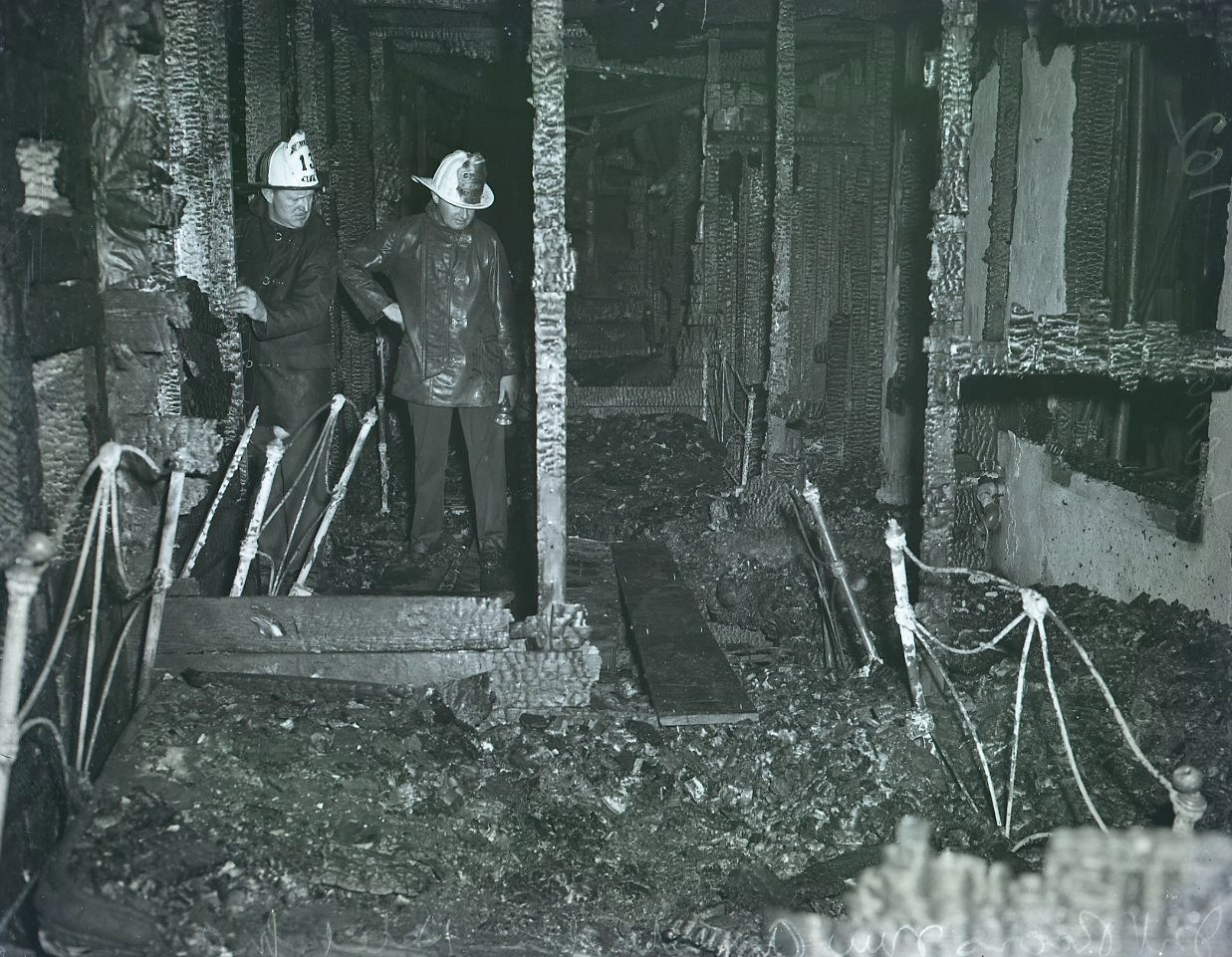 George Holman
Mass murderer · USA · 1944
George Holman was described as a pyromaniac and an arsonist blamed for a deadly…
22 victims
George Holman
Mass murderer · USA · 1944
George Holman was described as a pyromaniac and an arsonist blamed for a deadly…
22 victims
 Kirk Douglas Billie
Murderer · USA · 1997
Kirk Douglas Billie was sentenced to life in prison for the drowning death of h…
2 victims
Kirk Douglas Billie
Murderer · USA · 1997
Kirk Douglas Billie was sentenced to life in prison for the drowning death of h…
2 victims
- Gender
- male
- Country
- USA
- Location
- Comanche County, Oklahoma, USA
- Date of birth
- November 25, 1967
- Age at first offence
- 24
- Characteristics
- robbery
- Victim profile
- Bradley Thomas Grooms, 20 (convenience store clerk)
- Method of murder
- Shooting ( sawed-off 12-gauge shotgun)
- Date(s) of murder
- October 21, 1991
- Years active
- 1991
- Date of arrest
- Next day
- Status
-
Executed
Executed by lethal injection in Oklahoma on July 19, 2005
Case record: Michael Pennington (also known as Sharieff Sallahdin)
Background
Michael L. Pennington was an in-prison convert to Islam at the Oklahoma State Penitentiary and changed his name to Sharieff Sallahdin while in prison. He was also described as having changed his name to Sharief Imani Sallahdin.
Pennington was a former U.S. soldier who described anabolic steroids as altering his normal behavior and transforming him from a disciplined soldier into a fleeing killer. He was described as 37 at the time of his execution. He was also described as a former weightlifter and body builder.
Bradley Thomas Grooms was a 20-year-old convenience store clerk.
Louise Grooms was the mother of Bradley Grooms. James Principi was working with Bradley Grooms when Pennington shot him in the back and refused media requests for interviews. Lynn Renee Smith was known to Pennington for about three years and had seen him earlier that evening at the Peacock Lounge. Sylvia Smith lived in the neighborhood near the 7-11. Jose Rodriguez lived next door to Sylvia Smith and left for duty at Fort Sill about quarter after 5:00 a.m. the morning of the shooting. Priscilla Jordan was Pennington’s girlfriend in Lawton.
The offence
On October 21, 1991, James Principe and Bradley Grooms were working the late shift at a 7-11 convenience store located in Lawton at Fort Sill Boulevard and Rogers Lane. At approximately 5:00 a.m., Principe and Grooms were stocking shelves, with Grooms located toward the front of the store.
A black male entered the store, went to the bathroom, and left. Principe described the pattern of the man’s outfit as cow-like with black and white spots and noted that he was wearing a black and white outfit with matching top and pants.
About one minute after this male left, Principe, while still stocking shelves in the back of the store, heard a loud bang. He stood up from his crouched position and noticed another black man wearing sunglasses standing just inside the door of the store looking in the direction of Grooms. Principe immediately heard Grooms exclaim, "Oh shit." Principe ducked down and made his way to the back of the store. As he was running, he looked back and saw the man again taking a step towards Grooms. Principe got a good look at the shooter and noticed he was wearing a black trench coat. Principe heard another shot, ran to the bathroom, and locked himself inside.
While locked in the bathroom, Principe heard several more shots. He then heard the front door buzzer and some voices, heard the door buzzer again, and came out to contact the police. He observed Grooms laying motionless between the first two aisles of the store. Principe later identified Pennington as the man who did the shooting.
Pennington shot Bradley Grooms in the back with a sawed-off shotgun. The medical examiner testified that the cause of death was a shotgun wound to the chest, and that twelve pellet wounds were found in the left back with an exit wound in the back right area of the neck. In the homicide investigation, police learned the scene showed that nothing was missing from the store after the incident, but the cash register drawer had been pulled and pried upon and also apparently fired at, since four large holes were in the front drawer area.
After the initial gunshot, Principi hid in a bathroom, locking himself in. Pennington did not make off with any cash, and police said he left the store empty-handed because he couldn’t open the register.
A separate account of the same events described that Pennington entered the store at 5 a.m. on October 21, 1991, to rob it. He fired several rounds from a sawed-off shotgun purchased at Kmart. Bradley Grooms was shot in the back, at least one shot went into a cooler, and several were fired at the cash register.
Investigation
Police tracked Pennington to his wife’s house in Akron, Ohio, where he was arrested. During this time, Pennington volunteered information about the location of the shotgun.
The shotgun was located in an orange duffel bag in the basement of the Akron residence, along with a green compass pouch containing four shotgun shells. Subsequent ballistics tests conducted on the shotgun revealed that the five expended shells from the scene, and one expended shell found in the orange duffel bag, were fired from the shotgun found in the orange duffel bag.
A further search was conducted the next day in the area where the duffel bag had been recovered. Police recovered a black baseball style cap, a three quarter length trench coat, and a gray and black sports sweatshirt.
During the homicide investigation, police had learned Pennington was absent without leave from his unit. The police also learned of Priscilla Jordan, and from Jordan discovered Pennington owned a shotgun which he kept in an orange duffel bag. With this information, police revisited the personnel at Pennington’s battery and obtained information that led them to the K-Mart store where Pennington had purchased a Maverick Shotgun.
Arrest
Pennington was taken into custody the following day by Ohio authorities at the home of his wife in Akron, Ohio.
Trial
Charges and trial court
Pennington was tried by jury for Murder in the First Degree (malice aforethought) in violation of 21 O.S.1991, § 701.7, in Case No. CRF-91-386, in the District Court of Comanche County before the Honorable Peter Clinton Moore, District Judge. The State filed a Bill of Particulars alleging three aggravating circumstances:
- the defendant knowingly created a great risk of death to more than one person;
- the murder was committed for the purpose of avoiding or preventing lawful arrest or prosecution;
- that defendant was a continuing threat to society.
Pennington was represented by counsel.
Evidence and witnesses
Lynn Renee Smith testified she stopped at the 7-11 just after the shooting to get a cup of ice. She had known Pennington for about three years and had seen him earlier that evening at the Peacock Lounge. As Smith pulled up to the store, she noticed Pennington behind the cash register. Smith believed Pennington must work at the store. She testified Pennington asked her what she wanted; she told him and he gave her a cup of ice. Smith testified she did not see anyone else while she was in the store and that it appeared unusually quiet.
After leaving the store, Smith drove to her sister’s house approximately fifty yards from the 7-11 and backed into the driveway. Looking towards the 7-11, Smith saw Pennington, wearing a black trench coat, leave the store and drive away in his car. Smith testified Pennington was wearing a black baseball style cap worn backwards and had sunglasses that were not mirrored. She described Pennington as being about 5' 5" tall. She testified she did not see Pennington wearing the black trench coat in the store.
Sylvia Smith testified that she heard a gunshot between 4:30 and 5:00 a.m. She saw two black males running up the street away from the 7-11.
Jose Rodriguez left for duty at Fort Sill about quarter after 5:00 a.m. on the same morning and stated he also saw two individuals running. Rodriguez testified he was unable to describe the second runner but recalled that the first individual appeared to have on a knee length black coat.
At trial, the defense called Pennington. Pennington described his early life and military career, his problems with the premature birth of his child, and his plans to leave the military. He testified that on the morning of the 7-11 shooting, he decided to go home to Akron even though his discharge papers had not yet been processed.
He testified he made a deal to buy firearms to take home to sell in order to raise some money. He testified the deal was entered into with a man known only as "T."
Pennington testified about his version of events on the early morning hours of October 21, 1991: "T" and two other black males got into Pennington’s car near the Peacock Lounge, and the group rode around to make sure they were not followed. Pennington testified they directed him to stop near the 7-11 on Fort Sill Boulevard. Pennington testified he parked near a massage parlor and pawn shop close to the store. He testified that one of the men exited the vehicle saying he was going to get the stuff. He stated he went into the 7-11 to purchase Lactaid milk and took his $1,500.00 to purchase the guns but left his gun behind in the car. Pennington testified that while he was in the store, "T" walked in carrying Pennington's shotgun and "T" began firing the gun. Pennington testified he jumped behind the checkout counter. He testified that "T" then came behind the checkout counter and told him not to worry, but to just give him the money he knew Pennington had on him to purchase the guns. Pennington testified he gave "T" his cash. He testified that "T" focused on the locked cash register, got mad, shot the cash register several times, and tried unsuccessfully to yank it open. Pennington testified "T" ran out of the store with Pennington’s gun. Pennington testified that he remained in the store in shock, looked over, saw Grooms motionless, and assumed he was dead. He testified this was the point at which Lynn Smith entered the store and asked for the cup of ice. He testified that after she left, he got a grip on himself and ran out of the store. Pennington testified that as he ran toward the car he saw his shotgun laying on the ground and picked it up as a reflex action, drove off, and went back to the post. He testified he did not call the police because he feared "T" who he described as a notorious gang member. Pennington testified "T" was never found or identified.
Verdict and sentence
The jury returned a verdict of guilty and set punishment at death. The trial court sentenced Pennington in accordance with the jury’s verdict.
Direct appeal
Pennington v. State, 913 P.2d 1356 (Okl.Cr. 1995) (Direct Appeal):
- The Court of Criminal Appeals held the judgment should be affirmed.
- The Court of Criminal Appeals’ holdings included (among others) that:
- a juror was properly not excused for cause;
- prospective jurors were properly excused for cause;
- the prosecutor provided a race-neutral explanation for use of a peremptory challenge;
- the statute allowing a person 70 years of age or older to opt out of jury service was not unconstitutional;
- in-court identification of defendant was independently reliable;
- defendant waived his right to remain silent;
- a shotgun was admissible;
- defendant’s wife and father-in-law had authority to consent to search house;
- police reasonably believed that wife and father-in-law had authority to consent to search bag and clothing;
- the check which defendant wrote to purchase gun and testimony that defendant sawed off barrel of shotgun were admissible;
- postmortem photographs of victim were admissible;
- steroid rage syndrome evidence was not admissible;
- finding that defendant created great risk of harm to others was not supported by evidence;
- finding that defendant killed victim to avoid arrest or prosecution was supported by evidence;
- finding that defendant presented continuing threat to society was supported by evidence;
- continuing threat aggravating circumstance was not vague or capable of arbitrary and capricious use.
- The case was affirmed, and the trial court’s Judgment and Sentence was affirmed.
Sentencing and clemency-related events
Pennington’s mother, wife, and spiritual adviser were present in the viewing room when three chemicals were injected into his arms via tubes coming from two holes in the wall behind his head.
At a recent clemency hearing, Louise Grooms said Pennington appeared apologetic but then filed a request for a stay of execution in which he alleged his race was the reason he was convicted and sentenced to death. Pennington was black.
Appeals and post-conviction / habeas proceedings
Post-conviction relief
Sallahdin v. State, 947 P.2d 559 (Okl.Cr. 1997) (PCR):
- Following conviction and affirmance, Pennington filed application for postconviction relief and requests for discovery and evidentiary hearing.
- The Court of Criminal Appeals held that:
- claim of ineffective assistance of trial counsel was barred;
- claim of ineffective assistance of appellate counsel was not supported by any evidence;
- requests for discovery and evidentiary hearing would not be granted.
- The application was denied.
Sallahdin v. State also included procedural narrative stating:
- On direct appeal in Case No. F-93-968, conviction and sentence were affirmed.
- Pennington v. State, 913 P.2d 1356 (Okl.Cr.1995), cert. denied, 519 U.S. 841, 117 S.Ct. 121, 136 L.Ed.2d 72 (1996).
- A Petition for Rehearing was filed on January 17, 1996, and denied on April 26, 1996.
- On January 15, 1997, Pennington filed an initial application for postconviction relief with requests for discovery and an evidentiary hearing.
- The opinion listed propositions of error that the court stated would not be considered because they were raised on direct appeal (res judicata) or could have been raised on direct appeal and were now waived. These propositions included:
- claims about prosecutor references to post arrest silence violating due process rights;
- claims about jury members misrepresenting facts to support challenges for cause;
- claims about jury instruction on life without parole;
- claims about a juror being asleep during the defense’s case;
- claims about refusal to sustain challenges for cause;
- claims challenging the continuing threat aggravating circumstance as unconstitutionally vague;
- claims about failure of information to properly allege elements of the offense;
- claims about admission of shotgun and other seized items and evidence gathered without search warrant and without valid consent;
- claims about failure to disclose exculpatory evidence.
- The Court of Criminal Appeals concluded Petitioner was not entitled to relief and denied the application for postconviction relief and application for an evidentiary hearing and discovery.
Federal habeas corpus
Sallahdin v. Gibson, 275 F.3d 1211 (10th Cir.) (Habeas):
- A federal habeas corpus petition was denied by the United States District Court for the Western District of Oklahoma, and petitioner appealed.
- The Court of Appeals affirmed in part, reversed in part, and remanded.
- The appellate court held (among others) that:
- defendant was not deprived of a fair and impartial jury;
- information was constitutionally adequate;
- trial court’s failure to define life without parole for the jury was not constitutional error;
- prosecutor’s references to post-arrest silence did not violate defendant’s right to remain silent;
- two aggravators applied to sentencing were supported by sufficient evidence;
- continuing threat aggravator was constitutional;
- jury instructions sufficiently informed the jury that it did not have to be unanimous to find and apply mitigating circumstances;
- proposed testimony of psychiatrist as defendant’s steroid expert in sentencing phase was admissible;
- defendant was prejudiced by the absence of the proposed steroid testimony; and
- determination of counsel’s reasons (or lack thereof) for foregoing the use of the expert’s testimony during the sentencing phase required remand to district court.
Sallahdin v. Mullin, 380 F.3d 1242 (10th Cir. 2004) (Habeas):
- On remand, the district court granted conditional habeas relief in the form of a new sentencing hearing.
- The Court of Appeals reversed the conditional habeas relief and remanded for further proceedings, holding that the prisoner failed to overcome the presumption that trial counsel acted within a wide range of reasonable professional assistance by making a strategic decision not to present mitigating evidence of the effects of the prisoner’s steroid use during the sentencing phase.
- The opinion recounted background and steroid-use evidence issues, including that the trial court granted the state’s motion in limine limiting expert testimony concerning "Steroid Rage Syndrome" and that counsel did not present steroid-use evidence during either stage of trial.
- The Court of Appeals concluded that counsel could have reasonably decided not to present steroid-related evidence during the second stage and that the district court erred in holding the first prong of Strickland was satisfied, reversing the conditional habeas grant.
Outcome
Pennington was executed by lethal injection in Oklahoma on July 19, 2005.
Pennington was described as receiving a lethal injection and being pronounced dead at 6:10 p.m. Corrections officials stated the Oklahoma Court of Criminal Appeals rejected a stay request filed the week before, and the U.S. Supreme Court declined to stop the execution.
Shortly before 6 p.m., Pennington was strapped to a gurney in the execution chamber. Pennington’s only comment was, "No statement." He mouthed the words "I love you," to two family members who witnessed his execution.
The emotion and statements attributed to Louise Grooms included:
- "Mr. Pennington has taken so much from me,"
- "I don't want him taking any more from me."
- "I know it's all clinical, but it's not something you deal with everyday,"
- "With his surviving, that helped the police to identify Pennington."
- "I'm glad that he survived,"
- "It's been a weird day,"
- "I have to call some friends in Florida. Maybe it'll sink in by then."
- "He got options. He got to pick his last meal and all that stuff."
- "It's because you're a killer. Once you have killed, what kind of a crime is lying? He's a liar and a killer. He didn't have to do this. You can't get away with committing crimes."
- "Bradley was 20 for two months and one week,"
- "It's like he's still 19 to me."
Allison Carson, the Attorney General's Victims' Witness Coordinator, called Grooms at 6:13 p.m., informing her of Pennington’s official time of death. Grooms stated, "It's been a weird day," and "I have to call some friends in Florida. Maybe it'll sink in by then."
Timeline
- Oct. 21, 1991 — Bradley Grooms was shot in the back during a robbery attempt at a 7-11 convenience store in Lawton at Fort Sill Boulevard and Rogers Lane.
- Oct. 22, 1991 — Pennington was taken into custody in Akron, Ohio, at the home of his wife.
- 1993 — Pennington was convicted of murdering Bradley Thomas Grooms, 20, during a robbery attempt at a Lawton convenience store.
- September 17, 1993 — The trial court sentenced Pennington to death.
- January 17, 1996 — A Petition for Rehearing was filed.
- April 26, 1996 — The Petition for Rehearing was denied.
- Jan. 15, 1997 — Pennington filed an initial application for postconviction relief with requests for discovery and an evidentiary hearing.
- July 19, 2005 — Pennington was executed by lethal injection in Oklahoma.
Other details
Pennington and Bradley Grooms:
- Bradley Grooms was barely 20 years old when he was killed; his mother said, "Bradley was 20 for two months and one week," and "It's like he's still 19 to me."
- Pennington maintained that the guilty party was a person he was with, but that person was never found.
Execution-related drugs were described as:
- Sodium thiopental,
- vecuronium bromide,
- potassium chloride. A saline wash was injected through a pair of intravenous lines flowing from two holes in the wall and ending in each arm.
Pennington’s final meal request included:
- a small vegetarian pizza,
- a large garden salad with Italian dressing,
- a hot fudge sundae,
- a bag of Oreo cookies,
- a pint of milk.
At the time of Pennington’s execution, the next execution in Oklahoma was scheduled for Aug. 11 for Kenneth Eugene Turrentine, described as scheduled to die for murdering his girlfriend during a Tulsa County killing spree. The narrative also stated Turrentine was convicted of June 4, 1994 slayings of his sister, Avon Stevenson, his girlfriend, Anita Louise Richardson, and Richardson’s children, Tina L. Pennington, 22, and Martise D. Richardson, 13. The narrative stated Turrentine shot Stevenson at her home and Richardson and her children at their residence, both in northeast Tulsa.
Spotted an error, or have more information about this case?