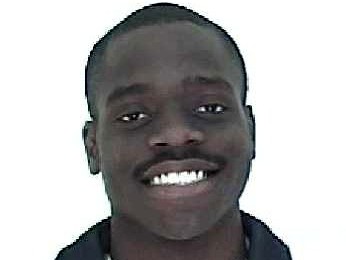
Mustafa Raheem
Murderer Russell Ellwood
Murderer · USA · 1991
Russell Ellwood was a former taxi driver. Authorities suspected him of killing…
20 victims
Russell Ellwood
Murderer · USA · 1991
Russell Ellwood was a former taxi driver. Authorities suspected him of killing…
20 victims
 Robert Martines Perez
Murderer · USA · 1994
Name: Robert Martines Perez · Other name used in proceedings: Robert Martinez P…
15 victims
Robert Martines Perez
Murderer · USA · 1994
Name: Robert Martines Perez · Other name used in proceedings: Robert Martinez P…
15 victims
 Billy Frank Vickers
Murderer · USA · 1993
Billy Frank Vickers Vickers was executed by lethal injection in Texas on Januar…
14 victims
Billy Frank Vickers
Murderer · USA · 1993
Billy Frank Vickers Vickers was executed by lethal injection in Texas on Januar…
14 victims
 Bruno Lüdke
Serial killer · Germany · 1928
Bruno Lüdke (3 April 1908 – 26 April 1944) was an alleged German serial killer.…
84 victims
Bruno Lüdke
Serial killer · Germany · 1928
Bruno Lüdke (3 April 1908 – 26 April 1944) was an alleged German serial killer.…
84 victims
 Sara María Aldrete
Serial killer · Mexico · 1987
Sara María Aldrete (born September 6, 1964 in Matamoros, Tamaulipas, Mexico) wa…
15 victims
Sara María Aldrete
Serial killer · Mexico · 1987
Sara María Aldrete (born September 6, 1964 in Matamoros, Tamaulipas, Mexico) wa…
15 victims
 Kenneth Fults
Murderer · USA · 1996
Kenneth E. Fults was sentenced to death in Spalding County for killing a neighb…
1 victim
Kenneth Fults
Murderer · USA · 1996
Kenneth E. Fults was sentenced to death in Spalding County for killing a neighb…
1 victim
 Kim de Gelder
Murderer · Belgium · 2009
Kim de Gelder was a Belgian aged 20 from Sinaai. He was described as a silent b…
4 victims
Kim de Gelder
Murderer · Belgium · 2009
Kim de Gelder was a Belgian aged 20 from Sinaai. He was described as a silent b…
4 victims
 Sabrina Butler
Murderer? · USA · 1989
Sabrina Butler was an African-American woman who was seventeen when her nine mo…
0 victims
Sabrina Butler
Murderer? · USA · 1989
Sabrina Butler was an African-American woman who was seventeen when her nine mo…
0 victims
- Gender
- male
- Country
- USA
- Location
- Henry County, Georgia, USA
- Date of birth
- May 21, 1979
- Age at first offence
- 20
- Characteristics
- armed robbery, burglary, rape
- Victim profile
- Miriam Diane Hollis and her son Brandon Jamal Hollis, 19
- Method of murder
- Shooting
- Date(s) of murder
- April 1, 1999
- Years active
- 1999
- Date of arrest
- —
- Status
-
Sentenced to death
Sentenced to death on February 19, 2001
Background
Mustafa Raheem was sentenced to death for the 1999 murders of a mother and her teenage son. Superior Court Judge Hal Craig imposed the death penalty against Mustafa Raheem, 21, on recommendation from the Henry County jury that heard the case. Raheem was also sentenced to consecutive life prison terms for two counts of armed robbery and a 20-year prison term for burglary.
Raheem’s convictions and sentences were affirmed.
The offence
Raheem was found guilty of shooting to death Miriam Diane Hollis and 19-year-old Brandon Jamal Hollis on Good Friday 1999.
At trial, Mustafa Askia Raheem was convicted on two counts of malice murder, four counts of felony murder, two counts of armed robbery, and one count of burglary.
1 The jury fixed the sentence for the malice murder of the first victim, Brandon Hollis, at life imprisonment without parole, after finding beyond a reasonable doubt that the murder was committed for the purpose of receiving things of monetary value. See OCGA § 17-10-30(b)(4).
1 The jury fixed the sentence for the malice murder of the second victim, Miriam Hollis, at death, after finding beyond a reasonable doubt that her murder was committed during the commission of the murder of Brandon Hollis, during the commission of a burglary, during the commission of an armed robbery, and for the purpose of receiving things of monetary value. See OCGA § 17-10-30(b)(2) and (4).
Investigation
During the guilt/innocence phase, the State presented the testimony of Michael Jenkins, who claimed that he and Raheem had been present at both killings but that Raheem had been the triggerman. The State also presented Raheem’s videotaped statement, wherein Raheem admitted being present at both killings but denied being the triggerman.
Arrest
After discovering the body of Miriam Hollis, law enforcement officers followed leads to Raheem’s girlfriend, Veronica Gibbs. Officers interviewed Gibbs at her place of employment. She informed the officers that Raheem had been staying with her in her apartment, that Raheem had shown her a woman’s body in the trunk of a white Lexus, that Raheem had admitted shooting the woman and her son, that Raheem had “brought some stuff” to her apartment from the dead woman’s home, and that the officers could go retrieve the “stuff” from the apartment. Gibbs traveled with the officers and accompanied them as they entered her apartment, never withdrawing her consent to the officers’ entry.
These facts demonstrated that Gibbs gave consent to the entry into the apartment and reinforced the uncontested fact that the officers had probable cause to arrest Raheem. Gibbs’s name was the only name on the lease for the apartment. A warrant is required for an arrest made inside the arrested person’s residence, absent consent or exigent circumstances. Payton v. New York, 445 U.S. 573, 583, 100 S.Ct. 1371, 63 L.Ed.2d 639 (1980); Thompson v. State, 248 Ga. 343(1), 285 S.E.2d 685 (1981). However, the warrant requirement does not apply where entry into the arrested person’s residence is consented to by a third party who shares common authority over the residence. Illinois v. Rodriguez, 497 U.S. 177, 181(II), 110 S.Ct. 2793, 111 L.Ed.2d 148 (1990). Here, the trial court correctly found that Gibbs, who had at least common authority over her own apartment, gave valid consent to the officers to enter. Id. Accordingly, the trial court did not err by finding Raheem’s arrest was lawful under the Fourth Amendment and by refusing to suppress evidence based on Raheem’s argument to the contrary.
Trial
Guilt/Innocence phase
During the guilt/innocence phase, the district attorney made reference to the evidence as follows:
“[Y]ou remember Michael Jenkins' testimony, and Mustafa Raheem didn't take the stand but you heard his video taped statement. And I submit to you that it ain't true.”
Raheem moved for a mistrial on the ground that the district attorney had made a comment upon Raheem’s silence at trial, and argued that a curative instruction would not cure the harm allegedly done by the comment. The trial court, which was not urged to do so by Raheem, did not give a curative instruction. However, at the conclusion of the parties’ closing arguments, the trial court instructed the jury:
[T]he defendant in a criminal case is under no duty to produce any evidence tending to prove innocence and is not required to take the stand and testify in the case. If the defendant elects not to testify, no inference hurtful, harmful, or adverse to the defendant shall be drawn by the jury, nor shall such fact be held against the defendant in any way.
As a rule of both constitutional law and Georgia statutory law, a prosecutor may not make any comment upon a criminal defendant’s failure to testify at trial. Griffin v. California, 380 U.S. 609, 615, 85 S.Ct. 1229, 14 L.Ed.2d 106 (1965); OCGA § 24-9-20(b). This rule ensures that the State does not impose “a penalty” for or make “costly” the exercise of the constitutional right to remain silent. 380 U.S. at 614, 85 S.Ct. 1229.
This Court concluded that the constitutional and statutory rule was violated. Nevertheless, considering the firsthand observation of the trial court that the comment did not appear designed to or likely to urge any negative inference, the strength of the evidence against the defendant, the charge given to the jury, and the context in which the comment was made, this Court concluded that the violation was harmless beyond a reasonable doubt.
Pretrial issues
Raheem contended that the trial court erred by overruling his demurrer to counts four and six of his indictment. Those counts charged Raheem with felony murder, alleging that Raheem “did ․ unlawfully while in the commission of a felony, to wit: Possession of a Firearm by a Convicted Felon, cause the death of [the victims] by shooting [them] with a gun, contrary to the laws of [the] State․”
Raheem argued that possession of a firearm by a convicted felon could serve as the underlying felony in a felony murder charge only where the possession of the firearm was somehow “ inherently dangerous.” Ford v. State, 262 Ga. 602-604(1), 423 S.E.2d 255 (1992) (holding that an accidental shooting of an unanticipated victim by a convicted felon while the felon was unloading a firearm in his apartment could not support a felony murder conviction); compare, e.g., Hulme v. State, 273 Ga. 676, 677-679(1), 544 S.E.2d 138 (2001) (holding that a violation of the controlled substances statute was, under the particular facts shown by the evidence at trial, “inherently dangerous to human life”). Raheem did not contend that the possession of the firearm in his case was not shown at trial to be inherently dangerous, but he argued that, because the contested counts of his indictment did not specify how or why the possession of the firearm was necessarily inherently dangerous to the victims, those counts failed to satisfy the requirement that a charge in an indictment be “wholly complete within itself, and plainly, fully, and distinctly set out the crime charged in that count.” Smith v. Hardrick, 266 Ga. 54, 55(1), 464 S.E.2d 198 (1995).
This contention was moot because the trial court vacated Raheem’s felony murder convictions. Furthermore, this Court concluded it was without merit. OCGA § 17-7-54 provided that:
“[e]very indictment of the grand jury which states the offense in the terms and language of this Code or so plainly that the nature of the offense charged may easily be understood by the jury shall be deemed sufficiently technical and correct.”
The Court concluded that Raheem’s indictment was pled in the “terms and language” of the Code and was fully sufficient to place him on notice of the issues to be decided and to allow him an opportunity to present evidence that the possession of the firearm was not inherently dangerous so that any conviction for felony murder based on the possession of the firearm could be challenged on appeal. Further specificity in the indictment was not required.
Raheem also argued that the trial court erred by refusing to declare execution by electrocution unconstitutional. The Court held that argument was moot because this Court had directed that all executions in Georgia be carried out by lethal injection. See Dawson v. State, 274 Ga. 327, 328, 554 S.E.2d 137 (2001).
Voir dire issues
At the conclusion of voir dire, Raheem challenged the State’s use of its peremptory strikes, alleging race discrimination under Batson v. Kentucky, 476 U.S. 79, 106 S.Ct. 1712, 90 L.Ed.2d 69 (1986). Because the trial court directed the State to put forward race-neutral reasons for its strikes, the question of whether a prima facie case of discrimination was shown was moot, and the State’s proffered reasons were examined.
Raheem conceded the State’s proffered reasons were sufficient to demonstrate a lack of discriminatory intent as to all but one of the stricken prospective jurors, juror Smith. With regard to juror Smith, the prosecutor explained that, upon learning in voir dire where the juror attended church, the prosecutor had inquired of members of that church and had received reports that the juror:
“was odd, that he was strange, that he exhibited some weird personality traits, [and that the church members] wouldn't put him on any kind of a jury.”
The prosecutor also explained, and the trial court confirmed on the record, that juror Smith had exhibited difficulty hearing in court. This Court concluded the reasons did not rely on racial stereotypes and were not too vague, and it concluded the trial court’s finding that Raheem failed to carry his burden of persuasion was not clearly erroneous.
Raheem contended that the trial court erred by refusing to excuse prospective jurors on grounds that they allegedly were unable or unwilling to consider a sentence of life with the possibility of parole upon a conviction for murder. This Court concluded that the trial court did not abuse its discretion in finding the jurors qualified to serve.
Raheem contended further that prospective juror Maxey-Jolley was unqualified because of her voir dire responses regarding her friend who had been murdered and regarding the friend’s murderer who, after being sentenced and imprisoned, had stabbed a prison guard and had himself been killed in an attempted escape. Given the juror’s responses, this Court concluded the trial court did not abuse its discretion in finding that the juror would remain impartial despite her past experience and honestly expressed concerns about the possible impact of that past experience upon her deliberations.
Motions to suppress
Raheem renewed his motion to suppress a videotaped statement he had given while in custody. He argued that, assuming he had previously received notice of and had waived his rights under Miranda v. Arizona, the portion of the Miranda notice referring to the potential use of any statement against him in court was vitiated when he allegedly asked if the statement could be used in court and the law enforcement officers present answered negatively.
The trial court reviewed the relevant portion of the videotape several times and heard testimony from the law enforcement officers present when the videotaped statement was made. Detective Rene Swanson testified that, prior to the taking of his videotaped statement, Raheem had been allowed to watch the interview of his girlfriend, Veronica Gibbs, from a nearby “recording room.” Detective Swanson then testified that she believed that, in the relevant portion of the videotaped statement, Raheem asked if there was “anybody in the recording room.” Sergeant Michael Gaddis testified that Raheem had said “something in reference to the recording room” in the relevant portion of the videotape. Raheem testified that he did not know what he had said on the videotape, but he denied that he had said anything about the recording room.
The trial court found:
“[T]here is no evidence that whatever inquiry the defendant was making at the time in question was any inquiry as to whether or not his statement would be used in a court, or a courtroom.”
This Court concluded the finding was not clearly erroneous given the difficult, if not impossible, to understand portion of the videotaped statement, as shown by Raheem’s failure to understand his own words after hearing them played repeatedly in the courtroom.
Sentencing phase
During the sentencing phase, the State objected to detailed testimony of a psychiatrist who had treated Raheem as a child about efforts to secure further psychiatric treatment for Raheem in the face of an insurance company’s refusal to allow such treatment. In ruling on the objection, the trial court stated:
“[P]roceed on but let's try to maintain some relevancy to the testimony. It may be there, I just haven't heard it yet. But it just seems like we're going into a great deal of detail about it.”
Because Raheem did not move for a mistrial, his complaint regarding the statement was waived.
The certified copy of an adjudication against Raheem in a juvenile proceeding demonstrated it was entered upon Raheem’s free and voluntary admission of guilt before the juvenile court with the benefit of counsel, and Raheem offered no evidence in rebuttal.
Timeline
- April 2, 1999 — Raheem picked up Michael Jenkins and Dione Feltus in Raheem’s girlfriend’s blue Honda automobile.
- 4:00 p.m. — Raheem dropped Dione Feltus off at his place of employment; Feltus remained there until 10:00 p.m.
- 10:00 p.m. — Dione Feltus remained at his place of employment until this time.
- February 5, 2001 — Raheem’s trial began.
- February 15, 2001 — The jury found Raheem guilty on all charges.
- February 17, 2001 — The jury fixed the sentence for the malice murder of Miriam Hollis at death.
- February 19, 2001 — The death penalty sentence was imposed.
- March 19, 2001 — Raheem filed a motion for a new trial.
- August 31, 2001 — The trial court denied the motion for a new trial in an order filed.
- September 28, 2001 — Raheem filed a notice of appeal.
- October 9, 2001 — The appeal was docketed in this Court.
- January 14, 2002 — The appeal was orally argued.
- March 11, 200 — The Supreme Court of Georgia decision date appeared as “March 11, 200”.
Other details
Evidence and actions described at trial
Viewed in the light most favorable to the guilt/innocence phase verdicts, the evidence showed the following.
Raheem told Jenkins he wanted to shoot his .380 caliber handgun. He then shot the handgun out the window of the blue Honda, explaining to Jenkins that he wanted to make sure the weapon would not jam. Raheem purchased black plastic trash bags at a grocery store and called Brandon Hollis from a nearby payphone. Raheem picked up Brandon Hollis and then drove Brandon Hollis and Jenkins to a remote location, where Raheem fired his .380 caliber handgun in the direction of a tree and handed the handgun to Jenkins.
After Brandon Hollis said the handgun was too loud, Raheem took the handgun from Jenkins and began walking toward the blue Honda. As Jenkins walked behind Raheem and Brandon Hollis, Raheem shot Brandon Hollis in the head. Jenkins asked whether Brandon Hollis was dead, and Raheem replied:
“ No, but he is on his way out.”
Raheem took Brandon Hollis’s watch and commented to the dying man:
“I guess you ain't going to be needing this watch no more.”
Raheem also took Brandon Hollis’s keys and commented to Jenkins:
“ I'm glad you didn't run.”
After killing Brandon Hollis, Raheem drove himself and Jenkins to the home of Miriam Hollis, Brandon Hollis’s mother. Raheem opened Ms. Hollis’s door with Brandon Hollis’s key and instructed Jenkins to bring a trash bag into the home. Ms. Hollis stood and Raheem and Jenkins entered her home. Raheem fired a shot at her but missed her. Raheem ordered Ms. Hollis to her hands and knees and shot her in the head. Raheem placed the trash bag over Ms. Hollis’s head, got Ms. Hollis’s keys from her kitchen, placed Ms. Hollis’s body in the trunk of her white Lexus automobile, and attempted to mop up Ms. Hollis’s blood inside the home.
Raheem told Jenkins later that he previously had given Ms. Hollis money for the Lexus automobile but that she had refused to give the automobile to him.
Raheem drove with Jenkins in Ms. Hollis’s Lexus to visit Raheem’s girlfriend, Veronica Gibbs. Raheem boasted that he had a new automobile, opened the trunk to show Gibbs Ms. Hollis’s body, and informed Gibbs that he had shot the woman and a young man. Later, Raheem drove back with Jenkins and Gibbs to Ms. Hollis’s home, where they burglarized the home, stole a number of items, and retrieved Gibbs’s blue Honda.
Later, Raheem changed his shoes, which had blood on them, and drove with Jenkins to dispose of Ms. Hollis’s body. The body was placed underneath planks and tires, doused with a flammable liquid, and set ablaze.
Sentence review and proportionality
The Court concluded the evidence was sufficient to enable a rational trier of fact to find beyond a reasonable doubt the existence of statutory aggravating circumstances supporting the death sentence.
In the sentencing phase, the State presented evidence that Raheem had previously carried a weapon on school grounds at age 15 and had stolen an automobile and fled from police at age 17. The State also presented evidence that Raheem had concealed in his jail cell several rudimentary weapons and a detailed map of the jail.
A Henry County Police Department officer testified that Raheem said about the murders:
“I had to do what I had to do. It was just business.”
The same officer testified that on another occasion Raheem engaged in misconduct in the jail and said:
“I also know you're a witness in my case, you little snitch. I'll kill you.”
One of Raheem’s fellow inmates testified that Raheem stated he was going to have his girlfriend and the district attorney killed and that the district attorney “didn't know who he was messing with.”
The Court found the death penalty neither excessive nor disproportionate to penalties imposed in similar cases in the State, noting that cases in the Appendix involved defendants shown at trial to have murdered more than one person.
The Court also found that the sentence of death was not imposed under the influence of passion, prejudice, or any other arbitrary factor.
Appeals outcome
Judgment affirmed.

Spotted an error, or have more information about this case?