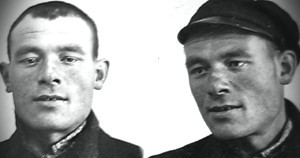
Bruno Lüdke
Serial killer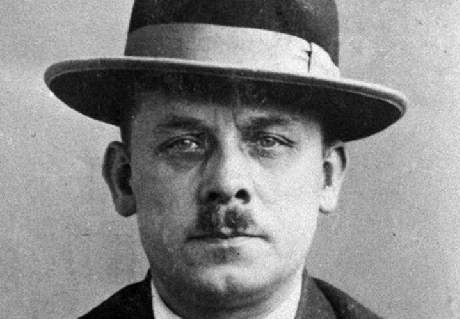 Friedrich Haarmann
Serial killer · Germany · 1918
Friedrich "Fritz" Haarmann (October 25, 1879 – April 15, 1925) was a serial kil…
27 victims
Friedrich Haarmann
Serial killer · Germany · 1918
Friedrich "Fritz" Haarmann (October 25, 1879 – April 15, 1925) was a serial kil…
27 victims
 Georg Karl Grossmann
Serial killer · Germany · 1913
Georg Karl Grossmann, who commonly called himself just Karl Grossman (also give…
50 victims
Georg Karl Grossmann
Serial killer · Germany · 1913
Georg Karl Grossmann, who commonly called himself just Karl Grossman (also give…
50 victims
 Karl Denke
Serial killer · Germany · 1909
Karl Denke (August 12, 1870 – December 20, 1924) was a serial killer from Germa…
30 victims
Karl Denke
Serial killer · Germany · 1909
Karl Denke (August 12, 1870 – December 20, 1924) was a serial killer from Germa…
30 victims
 Stephan Letter
Serial killer · Germany · 2003
Stephan Letter was a German serial killer who was known to be responsible for t…
28 victims
Stephan Letter
Serial killer · Germany · 2003
Stephan Letter was a German serial killer who was known to be responsible for t…
28 victims
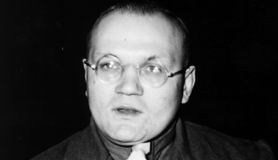 Rudolf Pleil
Serial killer · Germany · 1946
Rudolf Pleil was convicted in connection with manslaughter in the axe killing o…
25 victims
Rudolf Pleil
Serial killer · Germany · 1946
Rudolf Pleil was convicted in connection with manslaughter in the axe killing o…
25 victims
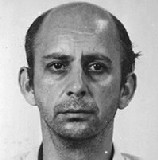 Joachim Kroll
Serial killer · Germany · 1955
Joachim Kroll was sentenced to 9 terms of life-imprisonment on April 8, 1982. H…
13 victims
Joachim Kroll
Serial killer · Germany · 1955
Joachim Kroll was sentenced to 9 terms of life-imprisonment on April 8, 1982. H…
13 victims
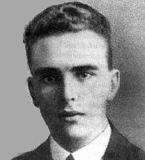 Frederick Bywaters
Murderer · United Kingdom · 1922
Frederick Edward Francis Bywaters (27 June 1902 – 9 January 1923) and Edith Jes…
1 victim
Frederick Bywaters
Murderer · United Kingdom · 1922
Frederick Edward Francis Bywaters (27 June 1902 – 9 January 1923) and Edith Jes…
1 victim
 Jermarr Arnold
Murderer · USA · 1983
Jermarr Arnold was convicted of the capital offense of murdering Christine Sanc…
2 victims
Jermarr Arnold
Murderer · USA · 1983
Jermarr Arnold was convicted of the capital offense of murdering Christine Sanc…
2 victims
 Barbara Stager
Murderer · USA · 1988
Barbara Stager (born October 30, 1948) was an American woman convicted in 1989…
2 victims
Barbara Stager
Murderer · USA · 1988
Barbara Stager (born October 30, 1948) was an American woman convicted in 1989…
2 victims
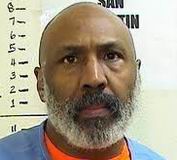 William Choyce
Serial killer · USA · 1988
William Jennings Choyce was raised in Oakland and worked as a trash hauler from…
3 victims
William Choyce
Serial killer · USA · 1988
William Jennings Choyce was raised in Oakland and worked as a trash hauler from…
3 victims
 Isaac Wood
Murderer · USA · 1855
Isaac L. Wood was a Livingston Republican mentioned in July 1858 execution cove…
2 victims
Isaac Wood
Murderer · USA · 1855
Isaac L. Wood was a Livingston Republican mentioned in July 1858 execution cove…
2 victims
- Gender
- male
- Country
- Germany
- Location
- Germany
- Date of birth
- April 3, 1908
- Age at first offence
- 20
- Characteristics
- rape, necrophilia, history of mental illness
- Victim profile
- G irls / women
- Method of murder
- Strangulation / St abbing with knife
- Date(s) of murder
- 1928 - 1943
- Years active
- 1928–1943
- Date of arrest
- March 18, 1943
- Status
-
Died from a chemical injection on April 8, 1944
Case identification
Bruno Lüdke (3 April 1908 – 26 April 1944) was an alleged German serial killer.
Background
Lüdke had a mild intellectual disability. He could not tell interrogators how many minutes there were in an hour. He was described as feeble-minded since birth and he could not calculate or write and was unable to perform simple mental challenges, but he was orientated to time, place and person and was fit to work as a cart driver.
Lüdke was born in Köpenick. He visited the local school in Köpenick from 1914 to 1919 and had difficulties keeping pace with other children. He did not manage to reach the sixth grade and was sent to a school for children with learning difficulties. After leaving this “Hilfsschule” in 1922, he worked in the laundry of his parents until 1939.
When his father died in 1937 of throat cancer, Lüdke became responsible for driving the horse and cart and delivering the laundry to customers. He received 50 pfennig per day from his mother and received 1 Reichsmark extra on Sundays. He stole parts of the money he received from customers, which led to discussions with his strict mother.
He was a notorious smoker and most of the money he earned was spent on tobacco for his pipe and an incidental glass of beer. He was known as “Dumme Bruno”. He had no friends and no enemies and was described as good-natured and far from dangerous.
Complaints were made in early 1938 about him using a whip too often on his horse. As a result, he was checked in the Staatskrankenhaus der Polizei to assess whether he was mentally and physically fit to be a horseman. Examples of test questions and answers were given, including:
- “We are surrounded by fog. All we can see is a distant village” — “That could be true”
- “A man fell out of a window and broke his leg. To get help he ran to the hospital” — “I don’t know”
- “Can you tell me the alphabet?” — Answers correct until F.
- “How many days in a year?” — “I don’t know”
- “How many hours in a day?” — “24”
- “How many minutes in an hour?” — “I don’t know”
- “Who was Hindenburg?” — “That was before our emperor”
- “Who is our reichscancellor?” — “Adolf Hitler, our Führer The” Führer
The outcome of the tests was that he was physically healthy but feeble-minded since birth.
The Third Chamber of the “Erbgesundheitsgericht” in Berlin ordered in January 1939 that Lüdke should be sterilized following laws concerning “prevention of posterity with a mental disease”. The sterilization was carried out in Berlin on 22 May 1940.
Other criminal history
Before the killings, Lüdke and the local police were described as “no strangers”, involving only small thefts, and his criminal record showed no violence or sexual crimes. His crimes included stealing and selling wood regularly. He stole a total amount of 13 x 28 cubic meters of wood worth 187,5 Reichsmark and earned 13 Reichsmark with it. It cost him 3 months in jail.
Another theft occurred on the evening of 16 February 1940 when he entered Café Fuchs at the Bahnhofstrasse 20 in Köpenick. Under his arm he had a bag with a dead duck. He tried to sell the animal to a visitor for 15 Reichsmark. A visitor who was an officer of the Sicherheitspolizei confiscated the duck and arrested Lüdke. At the Köpenick police station, they found out that Lüdke had stolen the duck from a farmer named Skole. Skole reported the theft and stated that the duck had cost him 10 Reichsmark. Lüdke stayed in detention on remand for five weeks but was never tried. Clause 51 of the penal code was referenced: a feeble-minded person could not be tried.
One month after he was released from jail, he was caught with a stolen cock that he tried to sell in another local pub.
The offence
Nazi police officials connected Lüdke to at least 51 murder victims, mainly women, killed in a 15-year period that began in 1928 and ended with his arrest in 1943.
One of the murders that led to the case being pursued was the killing of Frieda Rössner. On Friday 29 January 1943, Frieda Rössner, a 59-year-old widow, was murdered in the woods near her house in Köpenick while she was collecting firewood. She was found two days later. She had been strangled with her shawl. The murderer abused her and stole her purse containing 1 Reichsmark.
Another account described a woman found murdered in the woods near Köpenick on 31 January 1943, strangled with her own shawl, with signs of post-mortem sexual abuse and her purse missing.
Lüdke later made confessions to numerous killings. In the confessions, he was said to have raped or tried to rape “fifty women” over a period of several years. Other confessions were described as ultimately listing eighty-five murders committed since 1928. Confessions also claimed that most of the killings had been sexually motivated, and that rape was his primary motive, though victims were occasionally robbed.
Investigation
Immediately after Rössner’s body was found, the Köpenick police alarmed the homicide department of the Berlin police. A group of three detectives was formed led by Kriminalkommissar Heinz Franz. The other members of the team were KS Jachode and KS Mahnke. The same Sunday they hurried to the scene of the crime.
The investigation team formed an impression about Lüdke as someone known for troubling local women and questioned him accordingly.
A Dutch former Chief of Police, Blaauw, later took an interest in the case and investigated original police reports. He found the reports inconclusive, incoherent and vague. He expressed disbelief that a semi-illiterate man who once got caught stealing a chicken could evade authorities for nearly 20 years and get away with murder.
The case material also asserted that the 50-odd crime scenes showed no similarities in modus operandi, signature, or motive, and that no fingerprints were ever found.
Arrest
Lüdke was arrested on 18 March 1943 after the investigation identified him as a worker named Bruno Lüdke living in the area of the Elisabethstrasse.
From KK Franz’s report:
“On 18 March 1943 we learned that a worker named Bruno Lüdke was a feeble-minded man who was known for troubling local women. As we figured that this man, who lives in the area of the Elisabethstrasse, could know more about the murder, I questioned him at work. Following this informal interview I got the impression that he should know more.”
Trial
Lüdke was never put on trial for any of the killings. Clause 51 of the penal code was referenced earlier as a basis that a feeble-minded person could not be tried.
Sentencing and medical confinement
Lüdke was declared insane. He was sent to the SS-run “Institute of Criminological Medicine” in Vienna.
Medical experiments were carried out on him until his death. He died from a chemical injection on April 8, 1944.
A Telex message from KK Franz dated 1 March 1944 was described as stating that Lüdke was liquidated in a police prison in Vienna, with the reason given as the clause 51 situation, which would prevent him from being tried. The case narrative also described that the phenomenon of a serial killer in the National-Socialist police state was “unthinkable” and had to be kept “under the hat”.
Appeals
No appeals were mentioned in the material. Attempts at reopening the case by members of the Kriminalrat Faulhaber yielded no results.
Outcome
Lüdke died from a chemical injection on April 8, 1944. The true nature of the 51 murders remained unsolved to this day. The narrative additionally claimed that Lüdke was liquidated in Vienna in relation to being protected from trial.
Controversy and disputed reliability
The case narrative stated that there were no clear similarities across the connected crime scenes, including lack of fingerprints and lack of evidence against Lüdke being presented. It also reported concerns that confessions were coerced or unreliable, and that “confessions” were made in an order that suited investigators.
The narrative described that Kriminalkommissar Franz was the only person who interviewed Lüdke during the investigations and a bond grew between them, with Lüdke trusting Franz. It asserted that Franz had no evidence other than Lüdke’s confessions.
The narrative further stated that:
- “Lüdke did not tell Franz about the murders, Franz told Lüdke about them.”
- Confessions were said to be completed after reconstructions at scenes.
- The information given in reports was described as sometimes not true or plain lies.
- It was claimed that police and others failed to connect the murders and that the “supervising Reichskriminalpolizeiamt” never managed to connect the murders.
A further dispute was that Lüdke’s first confessions about “fifty women” were never mentioned again and that for the years covered by that claim no single complaint was made. It was also asserted that it appeared police method and intimidation and suggestive questioning and manipulation produced the confessions.
The narrative included statements about geographical knowledge and questioned how Lüdke could have travelled and committed murders without being noticed, stating it was ridiculous to consider he travelled in wartime Germany in the way he told KK Franz.
There were also claims about a missing “signature” connecting murders and that the cases showed different ways of killing and different motives.
Dr. Wehner told Blaauw that even the supervising Reichskriminalpolizeiamt never managed to connect the murders and that at no murder scenes were useful fingerprints found.
Other details
Lüdke was described as a drifter and a petty thief with sadistic urges. His murders were said to often involve sexual crimes. His sterilization in the Nazi eugenics context was referenced.
The material also referenced a post-war movie “Nachts, wenn der Teufel kam” and stated that it affirmed an image of Lüdke as one of Germany’s worst serial killers.
After the war, Kriminalrat Faulhaber’s doubts were said to have been left without serious investigation, and the narrative concluded that the case left Germany with 51 unsolved murder cases.
Other repeated descriptive metadata included:
- SEX: M
- RACE: W
- TYPE: N
- MOTIVE: Sex.
- DISPOSITION: Died under Nazi experimentation, Apr. 8, 1944

Spotted an error, or have more information about this case?