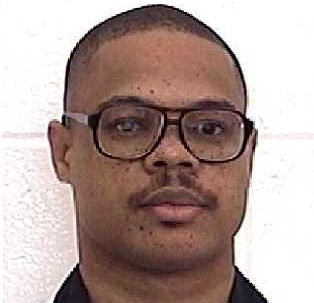
Kenneth Fults
Murderer Russell Ellwood
Murderer · USA · 1991
Russell Ellwood was a former taxi driver. Authorities suspected him of killing…
20 victims
Russell Ellwood
Murderer · USA · 1991
Russell Ellwood was a former taxi driver. Authorities suspected him of killing…
20 victims
 Robert Martines Perez
Murderer · USA · 1994
Name: Robert Martines Perez · Other name used in proceedings: Robert Martinez P…
15 victims
Robert Martines Perez
Murderer · USA · 1994
Name: Robert Martines Perez · Other name used in proceedings: Robert Martinez P…
15 victims
 Billy Frank Vickers
Murderer · USA · 1993
Billy Frank Vickers Vickers was executed by lethal injection in Texas on Januar…
14 victims
Billy Frank Vickers
Murderer · USA · 1993
Billy Frank Vickers Vickers was executed by lethal injection in Texas on Januar…
14 victims
 Anthony Green
Murderer · USA · 1987
Anthony Green was executed by lethal injection in South Carolina on August 23,…
1 victim
Anthony Green
Murderer · USA · 1987
Anthony Green was executed by lethal injection in South Carolina on August 23,…
1 victim
 Anthony Joe LaRette
Serial killer · USA · 1977
Anthony Joe LaRette was convicted of capital murder and sentenced to death for…
3 victims
Anthony Joe LaRette
Serial killer · USA · 1977
Anthony Joe LaRette was convicted of capital murder and sentenced to death for…
3 victims
 Taiana Matheny
Murderer · USA · 2005
Taiana Matheny was a Tucson woman accused of luring two Omaha, Neb., men to the…
2 victims
Taiana Matheny
Murderer · USA · 2005
Taiana Matheny was a Tucson woman accused of luring two Omaha, Neb., men to the…
2 victims
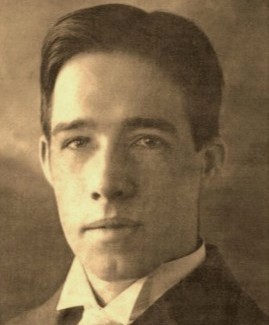 Chester Gillette
Murderer · USA · 1906
Defendant/Appellant: Chester Gillette · Victim: Grace Brown · Place of victim’s…
1 victim
Chester Gillette
Murderer · USA · 1906
Defendant/Appellant: Chester Gillette · Victim: Grace Brown · Place of victim’s…
1 victim
 Caruthers Alexander
Murderer · USA · 1981
Caruthers Alexander was convicted of capital murder and was executed by lethal…
1 victim
Caruthers Alexander
Murderer · USA · 1981
Caruthers Alexander was convicted of capital murder and was executed by lethal…
1 victim
 Nicole Guyette
Murderer · USA · 2008
Nicole Guyette was a Newark woman who pleaded not guilty to murder, aggravated…
1 victim
Nicole Guyette
Murderer · USA · 2008
Nicole Guyette was a Newark woman who pleaded not guilty to murder, aggravated…
1 victim
- Gender
- male
- Country
- USA
- Location
- Spalding County, Georgia, USA
- Date of birth
- 1968
- Age at first offence
- 28
- Characteristics
- history of mental illness, murder-suicide, spree killer
- Victim profile
- Cathy Bonds, 19 (neighbor)
- Method of murder
- Shooting (.22 caliber handgun)
- Date(s) of murder
- January 30, 1996
- Years active
- 1996
- Date of arrest
- Next day
- Status
-
Sentenced to death
Sentenced to death on May 30, 1997; convictions and sentences were affirmed on appeal in 2001 by FULTS v. THE STATE
Case information
Kenneth E. Fults was sentenced to death in Spalding County for killing a neighbor, 19-year-old Cathy Bonds, after breaking into her home on Jan. 30, 1996.
Fults had a history of mental illness but no prior felony convictions. A direct appeal had not been filed yet.
FULTS v. THE STATE. S01P0641. (274 Ga. 82) (548 SE2d 315) (2001) THOMPSON, Justice. Murder. Spalding Superior Court. Before Judge Caldwell.
Timeline
- Jan. 30, 1996 — Fults carried out a week-long crime spree centered, at least in part, upon his desire to murder a man engaged in a relationship with his former girlfriend; during this period he killed 19-year-old Cathy Bonds after breaking into her home.
- Feb. 7, 1996 — Fults was indicted by a Spalding County grand jury for malice murder, felony murder, burglary, kidnapping with bodily injury, possession of a firearm during the commission of a crime, and two counts of possession of a firearm by a convicted felon.
- Mar. 1, 1996 — The State filed written notice of its intent to seek the death penalty.
- May 12, 1997 — An order of nolle prosequi on the two charges of possession of a firearm by a convicted felon was filed.
- May 12, 1997 — Jury selection began.
- May 19, 1997 — Fults pled guilty to all remaining charges.
- May 30, 1997 — Fults was sentenced to death.
- June 19, 1997 — Fults filed a motion for new trial.
- March 16, 2000 — Fults amended the motion for new trial.
- March 17, 2000 — The motion for new trial was denied.
- April 14, 2000 — Fults filed a notice of appeal.
- May 16, 2000 — The appeal was docketed in this Court.
- June 30, 2000 — The case was stricken from this Court's docket and remanded for further proceedings.
- November 30, 2000 — Fults filed an amended motion for new trial.
- December 1, 2000 — The amended motion for new trial was denied.
- December 29, 2000 — A new notice of appeal was filed.
- Jan. 22, 2001 — The instant appeal was docketed.
- April 16, 2001 — The case was orally argued.
- June 11, 2001 — The case was decided.
- July 16, 2001 — Reconsideration was denied.
The offence
Fults committed two burglaries and obtained several handguns.
After a failed attempt at murdering his former girlfriend's new boyfriend with one of the stolen handguns, Fults burglarized the home of his next-door neighbors.
After the male neighbor left for work, Fults forced his way through the front door wearing gloves and a hat pulled down over his face.
Fults confronted the female occupant of the home, Cathy Bounds, brandishing a .22 caliber handgun he had stolen during one of the burglaries. Ms. Bounds begged for her life and offered Fults the rings on her fingers.
Fults turned Ms. Bounds toward the bedroom, either taped or forced her to tape her eyes closed by wrapping over six feet of electrical tape around her head, forced her into the bedroom, placed her face-down on her bed, placed a pillow over her head, and shot her five times in the back of the head.
Fults executed the murder execution-style, firing five shots to the back of the victim's head as she lay face-down on her own bed, blinded by over six feet of electrical tape and smothered under a pillow.
A search of Fults' trailer home revealed a boastful letter he had written in gang code in which he described the murder with some alterations of detail.
Upon being confronted with this letter by a law enforcement officer, Fults confessed to killing Ms. Bounds but maintained that he had shot her by accident while in a dream-like state.
The murder weapon was recovered from under Fults' trailer home.
.22 caliber shell casings shown to have been fired by the murder weapon as well as items from the earlier burglaries were found behind Fults' trailer home.
The evidence showed that Fults committed several burglaries to further his plan to murder a man and that during one of these burglaries he murdered Cathy Bounds.
Investigation
Fults wrote a boastful letter in gang code describing the murder with some alterations of detail, which was found during a search of his trailer home.
A law enforcement officer confronted Fults with the letter, and Fults confessed to killing Ms. Bounds while maintaining that he had shot her by accident while in a dream-like state.
Shell casings fired by the murder weapon and items from earlier burglaries were found behind Fults' trailer home.
Arrest / custody and in-jail conduct
The evidence showed that Fults had once claimed to have shot another man.
Evidence was presented by the State showing that Fults had been uncooperative with guards while in jail, resulting in his being physically compelled to cooperate on two occasions.
Evidence also showed that Fults had made death threats against a fellow inmate over a dispute involving $10.
Trial
Charges and plea
Kenneth Earl Fults pled guilty to charges of malice murder, kidnapping with bodily injury, burglary, and possession of a firearm during the commission of a crime.
The jury fixed the sentence for the malice murder at death, finding beyond a reasonable doubt that the murder was committed during the commission of the capital felony of kidnapping with bodily injury, was committed during a burglary, and was outrageously and wantonly vile, horrible, or inhuman in that it involved depravity of mind. OCGA 17-10-30 (b) (2) and (7).
The jury fixed the sentence for the kidnapping with bodily injury at life imprisonment without parole, finding beyond a reasonable doubt that the kidnapping with bodily injury was committed during the commission of the capital felony of murder, was committed during a burglary, and was outrageously and wantonly vile, horrible, or inhuman in that it involved depravity of mind. Id.
Voir dire / juror issue
Fults contended that the trial court erred in finding prospective juror Huckaby qualified to serve as a juror.
Ms. Huckaby indicated during questioning by defense counsel that she had been exposed to newspaper reports about the murder and the arrest of Fults. She admitted that she had formed an initial opinion of Fults' guilt, but she also indicated that she understood the presumption of innocence under law, that she would find the defendant not guilty if the State failed to prove its case, that she would base her decision solely on the evidence presented in court, and that her initial opinion was not fixed.
In response to additional questioning by the trial court, she indicated that she would "certainly try" to set aside any prior opinions and to base her decision solely on the evidence presented at trial.
The trial court did not abuse its discretion in finding Ms. Huckaby qualified to serve.
Fults also argued that defense counsel should have been allowed to ask a juror who had previously stated that she would be unable to vote for a death sentence whether she understood that she would cast her vote as a member of a jury.
The trial court focused voir dire on the individual juror's ability to cast a vote for the death penalty under any circumstances.
Through trial counsel's selective use of jury strikes, each of the prospective jurors detailed in Fults' claim was either stricken or never reached, so there could have been no actual harm resulting directly from any alleged failure of trial counsel to question those jurors.
The court also found that Fults had failed to show actual prejudice stemming indirectly from jurors who were present on panels of prospective jurors, and each of the jurors who actually served appeared fully qualified.
Ineffective assistance claims
Fults contended that his trial counsel, now deceased, rendered ineffective assistance by failing to investigate more fully Fults' claim that other persons were involved and were more culpable in the murder than he was.
Fults testified in an evidentiary hearing held on remand that he informed trial counsel approximately two weeks before jury selection began that several other persons were involved in the burglary of the victim's trailer home, and that another person identified by Fults in the evidentiary hearing as "D." and as "Derrick Smith" did the actual shooting at the behest of someone identified as "K. G."
Fults further testified that he would not have allowed trial counsel to present this theory about the crime at trial and that he had informed trial counsel that he would not testify about the alleged co-perpetrators because he feared for the safety of his daughter.
The private investigator employed by defense counsel for pretrial preparation testified at the evidentiary hearing that Fults made a claim to the investigator and trial counsel about "D." and "K. G." and that the investigator never attempted to locate these two men.
The investigator's testimony also confirmed Fults' testimony that Fults would not have allowed the theory to be presented at trial.
The investigator also testified that Fults admitted his guilt to him on two separate occasions.
The evidence gathered by the State, including Fults' confession and an encoded letter he had written to a friend, pointed toward Fults as the sole perpetrator of the burglary, kidnapping, and murder.
The court concluded that Fults failed to show deficient performance or actual prejudice for the ineffective assistance claim.
Fults also contended that trial counsel rendered ineffective assistance by persuading him to plead guilty.
To prevail on the claim, Fults had to show deficient performance and that, but for counsel's errors, there was a reasonable probability he would have insisted on going to trial.
The private investigator employed by defense counsel testified during the hearing held on remand that he and defense counsel discussed the case and believed the best strategy was for Fults to plead guilty.
The investigator testified that Fults "trusted [defense counsel's] idea, and he went along with it 100 percent."
Fults testified during the hearing held on remand: "[B]y me pleading guilty to the charges and getting up here and testifying [defense counsel] told me that that will show . . . I have some kind of sympathy for what I did and I know that what I did was wrong, so I did that."
Fults testified that defense counsel had guaranteed him a result other than the death penalty, and the defense investigator's testimony contradicted this testimony.
The court concluded that defense counsel's strategy in having Fults plead guilty was professionally sound and that counsel fully advised Fults of the proposed strategy and its legal ramifications, never guaranteed a sentence less than death, and properly allowed Fults to make the final decision about his plea.
Fults contended that because he pled guilty, evidence of his guilt was irrelevant and improper in his sentencing trial, and that trial counsel rendered ineffective assistance in failing to object to that evidence.
The court found that the circumstances of the offense were relevant in both guilt and sentence and that the evidence presented in sentencing was relevant to dispel lingering doubts and demonstrate the aggravated nature of the crimes.
The court found that Fults' trial counsel did not render ineffective assistance by failing to object to admissible evidence concerning his crimes during sentencing.
Evidence relevance in sentencing
The boastful letter about the murder written in gang code was presented.
Evidence was presented that Fults attempted to direct the activities of a gang from jail.
General evidence about the gang placed other evidence in context.
The court found these were all relevant in the sentencing phase.
Sentencing
Fults received a death sentence for malice murder.
Fults received a sentence of life imprisonment without parole for kidnapping with bodily injury.
The jury fixed the sentence for malice murder at death and found statutory aggravating factors including that the murder was committed during the commission of the kidnapping with bodily injury and that the murder was committed during a burglary, and that it was outrageously and wantonly vile, horrible, or inhuman in that it involved depravity of mind.
The jury fixed the sentence for kidnapping with bodily injury at life imprisonment without parole and found statutory aggravating factors including that the kidnapping with bodily injury was committed during the commission of the murder and during a burglary, and that it was outrageously and wantonly vile, horrible, or inhuman in that it involved depravity of mind.
The court set aside the jury's finding that the kidnapping with bodily injury was committed during the commission of the murder, based on the rule that mutually supporting aggravating circumstances were impermissible where multiple death sentences had been imposed and the same rule applied where a death sentence and a sentence of life imprisonment without parole had been imposed.
The court did not reverse the life imprisonment without parole sentence for the kidnapping with bodily injury because it remained adequately supported by the jury's findings that the kidnapping with bodily injury was committed during a burglary and was outrageously and wantonly vile, horrible, or inhuman in that it involved depravity of mind.
The court concluded that the death sentence imposed for the murder was neither excessive nor disproportionate to penalties imposed in similar cases in Georgia.
The court found that the sentence of death was not imposed under the influence of passion, prejudice, or any other arbitrary factor. OCGA 17-10-35 (c) (1).
Appeals
Fults filed a motion for new trial on June 19, 1997, which he amended on March 16, 2000, and which was denied on March 17, 2000.
Fults filed a notice of appeal on April 14, 2000, which was docketed on May 16, 2000, and the case was stricken and remanded on June 30, 2000.
Fults filed an amended motion for new trial on November 30, 2000, which was denied on December 1, 2000.
A new notice of appeal was filed on December 29, 2000.
The instant appeal was docketed on January 22, 2001 and orally argued on April 16, 2001.
The court decided the case on June 11, 2001, and reconsideration was denied on July 16, 2001.
The court affirmed the convictions and sentences, while setting aside the jury's finding that the kidnapping with bodily injury was committed during the commission of the murder.
Aftermath / proceedings details
After the jury fixed Fults' sentence for the murder at death and his sentence for the kidnapping with bodily injury at life imprisonment without parole, the trial court entered judgment on the jury's sentences.
The trial court also sentenced Fults to consecutive terms of imprisonment of 20 years for the burglary and five years for the possession of a firearm during the commission of a crime.
Other details
Fults' crimes were committed on January 30, 1996.
The Spalding County grand jury indicted Fults on February 7, 1996, for malice murder, felony murder, burglary, kidnapping with bodily injury, possession of a firearm during the commission of a crime, and two counts of possession of a firearm by a convicted felon.
The State filed written notice of intent to seek the death penalty on March 1, 1996.
An order of nolle prosequi on the two counts of possession of a firearm by a convicted felon was filed on May 12, 1997.
Jury selection began on May 12, 1997, and Fults pled guilty to all remaining charges on May 19, 1997.
The trial court merged the felony murder charge with the malice murder charge by operation of law.
Fults was represented in appeal by Sullivan & Sturdivant, including Harold A. Sturdivant and Michele W. Ogletree, for appellant.
The District Attorney was William T. McBroom III, and Assistant District Attorney was Daniel A. Hiatt, Attorney General Thurbert E. Baker, Senior Assistant Attorney General Susan V. Boleyn, and Assistant Attorney General Karen A. Johnson for appellee.
The court listed an APPENDIX referencing William T. McBroom III, District Attorney, Daniel A. Hiatt, Assistant District Attorney, Thurbert E. Baker, Attorney General, Susan V. Boleyn, Senior Assistant Attorney General, and Karen A. Johnson, Assistant Attorney General, for appellee.

Spotted an error, or have more information about this case?