William Joseph Burns
Murderer Russell Ellwood
Murderer · USA · 1991
Russell Ellwood was a former taxi driver. Authorities suspected him of killing…
20 victims
Russell Ellwood
Murderer · USA · 1991
Russell Ellwood was a former taxi driver. Authorities suspected him of killing…
20 victims
 Robert Martines Perez
Murderer · USA · 1994
Name: Robert Martines Perez · Other name used in proceedings: Robert Martinez P…
15 victims
Robert Martines Perez
Murderer · USA · 1994
Name: Robert Martines Perez · Other name used in proceedings: Robert Martinez P…
15 victims
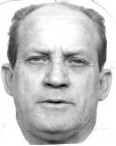 Billy Frank Vickers
Murderer · USA · 1993
Billy Frank Vickers Vickers was executed by lethal injection in Texas on Januar…
14 victims
Billy Frank Vickers
Murderer · USA · 1993
Billy Frank Vickers Vickers was executed by lethal injection in Texas on Januar…
14 victims
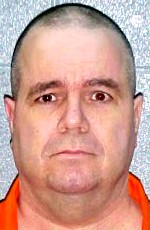 Michael Joe Murdaugh
Murderer · USA · 1995
Michael Joe Murdaugh was sentenced to death on November 16, 2001. He was convic…
2 victims
Michael Joe Murdaugh
Murderer · USA · 1995
Michael Joe Murdaugh was sentenced to death on November 16, 2001. He was convic…
2 victims
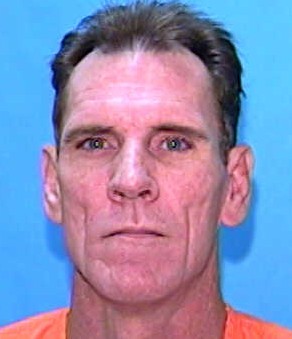 David Wyatt Jones
Murderer · USA · 1987
David Wyatt Jones was tried in the Fourth Judicial Circuit, Duval County, under…
2 victims
David Wyatt Jones
Murderer · USA · 1987
David Wyatt Jones was tried in the Fourth Judicial Circuit, Duval County, under…
2 victims
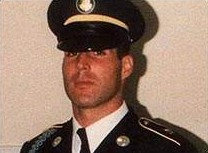 Frank Ronghi
Murderer · Kosovo · 2000
Frank Ronghi was an American Staff Sergeant in the U.S. Army. · Merita Shabiu w…
1 victim
Frank Ronghi
Murderer · Kosovo · 2000
Frank Ronghi was an American Staff Sergeant in the U.S. Army. · Merita Shabiu w…
1 victim
 Anthony Green
Murderer · USA · 1987
Anthony Green was executed by lethal injection in South Carolina on August 23,…
1 victim
Anthony Green
Murderer · USA · 1987
Anthony Green was executed by lethal injection in South Carolina on August 23,…
1 victim
 Tivasha Logan
Murderer · USA · 2009
Tivasha Logan was sentenced to life in prison without parole on July 11, 2012 a…
1 victim
Tivasha Logan
Murderer · USA · 2009
Tivasha Logan was sentenced to life in prison without parole on July 11, 2012 a…
1 victim
- Gender
- male
- Country
- USA
- Location
- Shenandoah County, Virginia, USA
- Date of birth
- April 30, 1966
- Age at first offence
- 32
- Characteristics
- rape, robbery
- Victim profile
- Tersey Elizabeth Cooley, 73 ( his mo the r-in-law )
- Method of murder
- B lunt force trauma to the chest, which resulted in the rupture of victim’s heart
- Date(s) of murder
- September 20, 1998
- Years active
- 1998
- Date of arrest
- Next day
- Status
-
Sentenced to death
Sentenced to death in May 2000
Case record: William Joseph Burns
Background
William Joseph Burns was convicted of capital murder of his mother-in-law, Tersey Elizabeth Cooley, in the commission of rape, statutory burglary, and forcible sodomy at her home in Edinburg, Virginia.
Penny Marlene Cooley Burns was Burns’ wife. Burns’ ex-girlfriend, Hazel Buckley, testified during the penalty phase. Penny’s sister, Linda Yvonne Heres, discovered Cooley’s body and phoned police.
The offence
On September 20, 1998, Burns started fighting with his wife, Penny, after drinking heavily that day. Due to previous physical abuse, Penny left the house to stay with friends. During a previous violent altercation, Penny had stayed with her mother.
Around September 21, 1998, Cooley was found dead in her bedroom. Linda Yvonne Heres discovered the victim dead body lying on the floor. Cooley’s face was partially covered by a mattress that had been pulled from the bed, and Cooley’s lower dentures were lying on the floor about four feet from her jaw. The bedroom was in disarray, and the bedclothes were scattered around the room.
An autopsy performed by Frances Patricia Field, Assistant Chief Medical Examiner for the Northern Virginia District Medical Examiner’s Office, reported “multiple injuries about the head,” including abrasions and bruises on the right forehead; beside the right eyebrow; on the white part of the eyeball; on the right and left jaw lines; on the neck; and on the right cheek, chin, and mouth. Cooley also had large bruises on her upper chest and lower neck. Cooley’s inner lips were likewise bruised, and Dr. Field testified that the injuries to Cooley’s gums and lips were consistent with her dentures having been in place at the time of the assault. Finally, Cooley sustained 24 fractures to her ribs.
Dr. Field determined that the cause of death was “blunt force trauma to [Cooley's] chest, with rupture of the heart” and compression of the neck. Dr. Field also testified about tearing of Cooley’s pericardium causing blood to spill out of the heart into the chest cavity. Dr. Field opined that a broken rib probably had punctured the heart, although direct force applied to the chest might have ruptured the heart. Dr. Field concluded that death occurred within two to three minutes after Cooley’s heart ruptured due to rapid bleeding when the heart was ruptured.
At the guilt phase, Burns was convicted of capital murder in the commission of a rape. He was also convicted of statutory burglary, rape, and forcible sodomy.
During the penalty phase, the jury recommended death, based on its findings relating to future dangerousness and the vileness of the offense, including torture, depravity of mind, or aggravated battery beyond the minimum necessary to accomplish the act of murder.
Investigation
After Linda found Cooley’s body, she called “911.” Police and a rescue squad arrived at the scene.
Larry W. Green, Sheriff of Shenandoah County, set up a “traffic-canvassing detail” to ascertain if any drivers had traveled through the area between approximately 7:00 p.m. on September 20 and 11:30 a.m. on September 21. Sheriff Green testified that as he moved a flare south of Cooley’s residence, a vehicle approached him. Burns was operating the vehicle. Sheriff Green testified that he approached the driver’s side. Before Sheriff Green could say anything, Burns asked, “What’s going on? That’s my mother-in-law’s house.” After Sheriff Green realized Burns was related to the decedent, Sheriff Green asked Burns to speak with Garlan Gochenour, a lieutenant with the Shenandoah County Sheriff’s Office.
Gochenour informed Burns about Cooley’s death and advised him of his Miranda rights.
Burns told Gochenour that he had not been in the victim’s house within the last five days or within the last year. Burns admitted that he had driven by Cooley’s home on September 21 between 1:00 a.m. and 1:30 a.m., but insisted that he had merely turned around in the driveway and then proceeded to the Funkhouser residence.
Because Gochenour determined Burns had been at the crime scene during the approximate time when the murder occurred, Gochenour asked Burns to go to the sheriff’s department to be fingerprinted. Burns agreed and drove his own vehicle.
At the sheriff’s office, Gochenour advised Burns again of his Miranda rights. During subsequent questioning, Burns stated that he had been at a gas station near Cooley’s residence at approximately 2:52 a.m. and again at approximately 6:35 a.m. on September 21. Burns produced receipts for items he purchased at the station and explained he kept the receipts because he was on probation and needed to account for every place he went.
Gochenour and John Thomas, an investigator with the Shenandoah County Sheriff’s Office, discussed a Physical Evidence Recovery Kit (PERK Kit) with Burns, and Burns agreed to go to the hospital for samples of his hair and bodily fluids to be obtained for the PERK Kit.
Gochenour and Thomas accompanied Burns to the hospital, where the samples were taken. On September 26, Burns returned to the sheriff’s office. After again being advised of Miranda rights, Gochenour interviewed Burns a second time. During this interview, Burns admitted that he was in the victim’s home on the night of the murder.
Burns stated that when he entered the house he encountered a black male who had already murdered Cooley. Burns told Gochenour that he killed that man and disposed of the body because he did not want his wife to find out that a black man had raped and murdered her mother.
Burns stated that he cleaned Cooley’s vaginal area with soap and water, masturbated, digitally inserted his semen into Cooley’s vagina, and “smeared it on the bed.” Burns denied inserting his semen into the victim’s anus.
At the conclusion of this interview, Burns was arrested. At Burns’ request, Gochenour spoke with Burns again on September 27 after advising Burns of his Miranda rights. Burns admitted he had not encountered an unidentified black man at Cooley’s house. Burns admitted that he broke into Cooley’s house by putting his hand through the screen and then breaking a window pane in the door. Burns insisted that Cooley was already dead when he broke in. Burns stated that because he thought his wife, Penny, had murdered her mother, he wanted “the crime to lead to [him].” Burns stated that he masturbated and digitally inserted his semen into the victim.
Karolyn Leclaire Tontarski, a forensic scientist employed by the Commonwealth of Virginia Department of Criminal Justice Services Division of Forensic Science, analyzed physical evidence collected from Burns, Cooley, and the crime scene. Tontarski reported spermatozoa on vaginal and anal smears taken from the victim.
Based upon DNA typing results, Tontarski testified that for the vaginal swab sperm fraction it was “1.6 million times more likely to have come from Burns than from any other randomly chosen Caucasian individual,” “100 million times more likely in the Black population,” and “18 million times more likely in the Hispanic population.” For the anal swab sperm fraction, Tontarski testified it was “8.7 million times more likely in originate from Burns than from any other randomly selected Caucasian individual,” “540 million times more likely in the Black population,” and “86 million times more likely in the Hispanic population.”
Tontarski also found sperm cells on a sheet and pillowcase recovered from the bedroom where Cooley’s body was discovered, on Cooley’s lower denture found on the floor of the bedroom, on a washcloth found under Cooley’s left thigh, and on several items recovered from Cooley’s bathroom.
Arrest
After Burns’ September 26 interview, Burns was arrested.
Trial
Guilt phase
At the guilt phase, Burns faced charges including capital murder in the commission of robbery and in the commission of, or subsequent to, rape or object sexual penetration. The Commonwealth amended the first count to allege that Burns “did unlawfully, feloniously, willfully, deliberately, and with premeditation kill and murder Tersey Elizabeth Cooley, in the commission of robbery or forcible sodomy or rape . . . .”
The trial involved a bifurcated proceeding for the penalty phase. The jury convicted Burns of capital murder in the commission of a rape. The court also sentenced Burns on the statutory burglary conviction and on the convictions for rape and forcible sodomy.
Evidence regarding penetration and DNA
The prosecution presented evidence that spermatozoa were found on vaginal and anal smears taken from Cooley and testimony from the forensic scientist, Karolyn Leclaire Tontarski, about DNA match probabilities and the presence of sperm cells on items from the bedroom and bathroom areas.
Burns argued sufficiency issues based on alleged intoxication, conflicts in evidence regarding his whereabouts, and lack of penetration evidence. The appellate opinion addressed these arguments and stated that evidence was sufficient to support the convictions.
Suppression and evidentiary rulings
Burns challenged a roadblock set up by Sheriff Green and argued the roadblock did not pass constitutional muster. The court addressed whether the roadblock violated Burns’ constitutional rights and discussed constitutional standards for roadblocks, including the Brown v. Texas framework and related authorities. The appellate opinion concluded the roadblock did not contravene the Fourth Amendment.
Burns also challenged Miranda and voluntariness related to his statements on September 21, September 26, and September 27, and challenged the taking of fingerprints, hair, and samples of bodily fluids as not voluntarily provided. The appellate decision concluded Burns was not “in custody” during those discussions and concluded the trial court did not err in refusing to suppress the results of the tests.
Burns further argued that search warrants issued for his personal property at the jail and for his residence were based on misleading information. The appellate decision addressed the affidavit content and concluded that Burns’ admission regarding sexual assault established probable cause, and that Burns offered no evidence of an intention to deceive or reckless omission.
The appellate decision also addressed Burns’ motion to examine law enforcement officials under oath regarding possible nondisclosure of exculpatory evidence to the Commonwealth’s Attorney, and it rejected that argument.
The appellate decision addressed jury selection issues, including the disallowance of a voir dire question about prospective jurors’ views of the death penalty and decisions regarding striking jurors Trina H. Bailey and Emma M. Smith for cause.
Photographic and transcript evidence
Burns challenged admission of autopsy photographs, including Exhibit Numbers 141, 142, 143, and 146, and challenged admission of autopsy photographs generally, arguing they were prejudicial and cumulative. The appellate decision concluded the trial court did not abuse its discretion.
Burns also challenged the admission of a transcript of a videotaped conversation between Burns and Hazel Buckley, arguing the transcript contained “inaudible” references and gaps, and that it highlighted prejudicial portions. The appellate decision addressed the standard for allowing a jury to use a transcript and found no abuse of discretion.
Marital communications letters
While incarcerated awaiting trial, Burns wrote several letters to his wife. Penny turned the letters over to Thomas, who had them examined by a handwriting expert and identified Burns as the writer. Burns filed a motion in limine to exclude the letters based on Code § 8.01-398. The trial court ruled that Code § 8.01-398 did not prevent testimony by a third party in lawful possession of the letters. The appellate decision addressed Burns’ privilege argument and concluded the court did not err in admitting Burns’ letters into evidence through testimony of a law enforcement officer.
Competency evaluation during trial (trial court proceedings)
During the second day of trial, while an audio tape of Burns’ September 26 statement was being played, Burns’ counsel moved under Code § 19.2-169.1 for evaluation of Burns’ competency to stand trial. Burns’ counsel proffered that Burns advised counsel he did not want to participate and wanted to leave the courtroom and return to jail.
The court questioned Burns about his wish to leave. Burns repeatedly said he did not want to remain in the courtroom. The court recessed for about one hour and twenty minutes. After the recess, counsel proffered Burns expressed willingness to remain in the courtroom but indicated difficulty understanding what was transpiring.
Counsel quoted Dr. Stejskal’s June 10, 1999 report that Burns’ “capacity to assist in his own defense is marginally intact.” Before ruling, the court called the jail nurse, Bonnie Sager, as a witness. Sager described medications prescribed to treat Burns’ anxiety and depression and to help him sleep, and stated she gave Burns his medicine at noon that day. She described occasional mood changes when Burns became angry. The court denied the motion and made findings including that competence had been restored on June 23rd based on Dr. Stejskal and a psychologist’s opinion, that the psychologist found Burns was malingering at one point, and that letters showed Burns understood proceedings and challenges to officers’ statements.
The court concluded there was no probable cause to believe Burns’ mental state deteriorated to the point that he was no longer competent to stand trial during the case.
A separate opinion disagreed with the majority on competency evaluation, arguing that probable cause required an evaluation under Code § 19.2-169.1(A) and discussed circumstances including medication, recesses, and the trial judge’s observations of Burns’ answers as “inaudible” or “unintelligible” at times.
Sufficiency of the evidence
Burns argued the evidence was insufficient for capital murder, rape, forcible sodomy, and statutory burglary. The appellate decision concluded the evidence was sufficient to sustain the jury’s verdicts. It stated the jury could reject self-serving statements and addressed the sperm evidence as supporting penetration.
Sentencing
The jury recommended that Burns be sentenced to death on the capital murder conviction, finding that “there is a probability that [Burns] would commit criminal acts of violence that would constitute a continuing serious threat to society” and that his conduct in committing the offense was “outrageously or wantonly vile, horrible or inhuman in that it involved torture, depravity of mind or aggravated battery to the victim beyond the minimum necessary to accomplish the act of murder.”
The jury also sentenced Burns to 18 years for the statutory burglary conviction and to life imprisonment on each of the convictions for rape and forcible sodomy. After reviewing the post-sentence report required by Code § 19.2-264.5, the trial court sentenced Burns in accordance with the jury verdicts.
The appellate record included discussion of Virginia death penalty statutory review, including passion, prejudice, and proportionality review under Code § 17.1-313.
Appeals
Burns filed 46 separate assignments of error on appeal, reduced to 26 questions. Several assignments were not briefed and were deemed waived.
The appellate opinion addressed issues including:
- Denial of motion to quash the capital murder indictment due to preliminary hearing and multiplicity arguments.
- Denial of motion to suppress evidence based on roadblock constitutionality, Miranda, voluntariness of statements, voluntariness of fingerprints/hair/bodily fluids, and search warrant omissions.
- Denial of motion to examine law enforcement officials under oath regarding exculpatory evidence.
- Jury selection issues, including voir dire questions and decisions on jurors Trina H. Bailey and Emma M. Smith.
- Admission of photographs.
- Admission of transcript of videotaped conversation.
- Cross-examination limitations regarding Cooley’s revocation of power of attorney and harmlessness.
- Admission of evidence regarding probation status, prior acts of violence, and sexually aggressive tendencies when consuming alcohol for purposes of explaining why Penny left on September 20.
- Admission of Burns’ letters to Penny as marital communications.
- Denial of competency evaluation during trial.
- Sufficiency of the evidence.
On March 2, 2001, the Supreme Court of Virginia affirmed the convictions and death sentence. The case included Virginia Supreme Court Record Nos. 001879 & 001880, with the opinion by Justice Cynthia D. Kinser.
Outcome
The Supreme Court of Virginia affirmed the judgments of the circuit court, including the death sentence, and affirmed the convictions in Record No. 001879 and Record No. 001880.
A subsequent habeas corpus issue was raised regarding mental retardation as provided by Virginia statute for capital murder convictions prior to April 29, 2003. The Warden of Sussex objected, but the court ruled against Sussex and remanded the petition for a writ of habeas corpus to the Circuit Court of Shenandoah County. Burns’ IQ was stated as 77, in the low-average range.
Timeline
- September 20, 1998 — Burns started fighting with his wife, Penny, after drinking heavily that day.
- September 21, 1998 — Linda Yvonne Heres found her mother, Tersey Elizabeth Cooley, dead in the bedroom; she called “911”; law enforcement conducted the traffic-canvassing detail; Burns approached Sheriff Green and asked, “What’s going on? That’s my mother-in-law’s house.”
- September 21, 1998 — Burns admitted he drove by Cooley’s home between 1:00 a.m. and 1:30 a.m. and later stated he was at a gas station at approximately 2:52 a.m. and 6:35 a.m.
- September 26, 1998 — Burns returned to the sheriff’s office; after Miranda, Burns admitted he was in the victim’s home on the night of the murder; at the conclusion of the interview, Burns was arrested.
- September 27, 1998 — Burns provided further admissions to Gochenour after Miranda, including breaking into the house by putting his hand through the screen and breaking a window pane, and stating that he wanted “the crime to lead to [him].”
- March 2, 2001 — The Supreme Court of Virginia affirmed the convictions and death sentence.
Other details
- Burns was sentenced to 18 years for statutory burglary, and to life imprisonment for each of the convictions for rape and forcible sodomy.
- The jury recommended death after the penalty phase of a bifurcated trial.
- Hazel Buckley testified that Burns anally raped her nine times during a two-week period and that she did not report the incidents because Burns threatened her and her daughter.
- During the penalty phase, defense counsel introduced evidence of child abuse by Burns’ alcoholic father.
- A former correctional officer testified that while in prison for an earlier conviction Burns had never been violent and had always been respectful.
- Burns had a history of mental illness and took medication for chronic depression.
- A former inmate testified Burns had been a “peacemaker” when they were in jail together.
- A shift supervisor at the Shenandoah County Jail testified Burns was respectful and that Burns had never become violent during incarceration.
- During closing argument in the penalty phase, the Commonwealth’s Attorney argued Cooley was a modest, private person who had an “animal” enter her life; after an objection, the following colloquy occurred:
- MR. EBERT: “Excuse me. A person acting like an animal. Excuse me. THE COURT: All right. MR. EBERT: Excuse me, A person acting with depravity of mind. MR. ALLEN [Burns’ attorney]: I have a motion, Your Honor. And I will make the motion after he finishes. Note my objection at this time. THE COURT: All right. MR. EBERT: Excuse me, ladies and gentlemen. I don't mean to characterize him as an animal. But I will characterize him as a human being with a depravity of mind, a person who acted in a vile, horrible, inhumane way, to an innocent person.”
- The trial court instructed the jurors that “the words ‘imprisonment for life’ mean imprisonment for life without possibility of parole,” and emphasized that life means life without parole.
- Burns challenged the refusal of proposed jury instructions about parole ineligibility as repetitious and not permitted as emphasizing a particular mitigating factor.
- The jury found Burns not guilty of forcible sodomy (fellatio).
- The circuit court granted Burns’ motion to strike the evidence with regard to a charge of robbery.
- The dissenting opinion included statements about the need for competency evaluation under Code § 19.2-169.1(A) and disagreed with the majority conclusion that the trial court properly denied a competency evaluation during trial. The dissent stated that it would reverse Burns’ conviction and remand for a new trial.
Spotted an error, or have more information about this case?