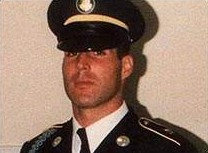
Frank Ronghi
Murderer Dr. Wouter Basson
Murderer · 1992
Wouter Basson (born July 6, 1950) was a South African cardiologist and the form…
230 victims
Dr. Wouter Basson
Murderer · 1992
Wouter Basson (born July 6, 1950) was a South African cardiologist and the form…
230 victims
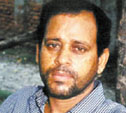 Ershad Sikder
Murderer · Bangladesh · 1990
Ershad Sikder was an influential political figure in the south-western city of…
30 victims
Ershad Sikder
Murderer · Bangladesh · 1990
Ershad Sikder was an influential political figure in the south-western city of…
30 victims
 Russell Ellwood
Murderer · USA · 1991
Russell Ellwood was a former taxi driver. Authorities suspected him of killing…
20 victims
Russell Ellwood
Murderer · USA · 1991
Russell Ellwood was a former taxi driver. Authorities suspected him of killing…
20 victims
 Umesh Reddy
Murderer · India · 1998
Umesh Reddy was sentenced to death on October 27, 2006. The Karnataka High Cour…
18 victims
Umesh Reddy
Murderer · India · 1998
Umesh Reddy was sentenced to death on October 27, 2006. The Karnataka High Cour…
18 victims
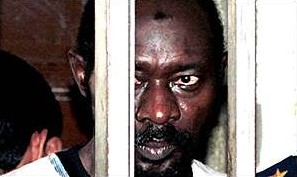 Mohammed Adam Omar
Murderer · Yemen · 1995
Mohammed Adam Omar was a morgue assistant at Sanaa University’s medical faculty…
16 victims
Mohammed Adam Omar
Murderer · Yemen · 1995
Mohammed Adam Omar was a morgue assistant at Sanaa University’s medical faculty…
16 victims
 Albert Dyer
Murderer · USA · 1937
Albert Dyer was a 32-year-old WPA crossing guard and traffic guard at Centinela…
3 victims
Albert Dyer
Murderer · USA · 1937
Albert Dyer was a 32-year-old WPA crossing guard and traffic guard at Centinela…
3 victims
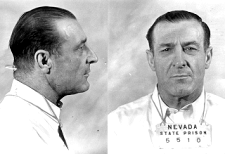 Eugene Leo Gambetta
Murderer · USA · 1948
Eugene Leo Gambetta Eugene Leo Gambetta was executed in Nevada State Prison on…
1 victim
Eugene Leo Gambetta
Murderer · USA · 1948
Eugene Leo Gambetta Eugene Leo Gambetta was executed in Nevada State Prison on…
1 victim
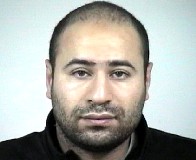 Nordine Amrani
Mass murderer · Belgium · 2011
13 December 2011 — Nordine Amrani carried out a murder–suicide attack in Saint-…
6 victims
Nordine Amrani
Mass murderer · Belgium · 2011
13 December 2011 — Nordine Amrani carried out a murder–suicide attack in Saint-…
6 victims
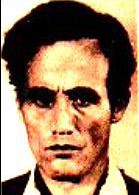 William MacDonald
Serial killer · Australia · 1961
William MacDonald was an Australian serial murderer who was dubbed the “Sydney…
5 victims
William MacDonald
Serial killer · Australia · 1961
William MacDonald was an Australian serial murderer who was dubbed the “Sydney…
5 victims
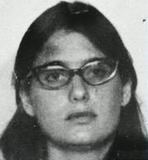 Kathy Boudin
Murderer · USA · 1981
Kathy Boudin pleaded guilty. She was sentenced to 20 years to life in prison. S…
3 victims
Kathy Boudin
Murderer · USA · 1981
Kathy Boudin pleaded guilty. She was sentenced to 20 years to life in prison. S…
3 victims
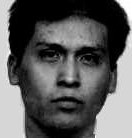 Miguel Angel Flores
Murderer · USA · 1989
Miguel Angel Flores was a Mexican foreign national with no prior criminal recor…
1 victim
Miguel Angel Flores
Murderer · USA · 1989
Miguel Angel Flores was a Mexican foreign national with no prior criminal recor…
1 victim
- Gender
- male
- Country
- Kosovo
- Location
- Vitina, Kosovo
- Date of birth
- 1964
- Age at first offence
- 36
- Characteristics
- rape, abuse, torture
- Victim profile
- Merita Shabiu, 11
- Method of murder
- Strangulation
- Date(s) of murder
- January 13, 2000
- Years active
- 2000
- Date of arrest
- Same day
- Status
-
Life imprisonment
Sentenced to life in prison without parole on July 31, 2000; conviction affirmed by the United States Court of Appeals for the Armed Forces, decided June 30, 2004
Case record
Parties and identifiers
- Frank Ronghi was an American Staff Sergeant in the U.S. Army.
- Merita Shabiu was an 11-year-old ethnic Albanian girl in Kosovo and was the victim.
- Hamdi Shabiu was Merita Shabiu’s father.
- Merita Shabiu’s parents and two of her siblings, Kirnete and Sami, travelled from Kosovo to give evidence in the case.
- The appeal is styled: UNITED STATES, Appellee v. Frank J. RONGHI, Staff Sergeant U.S. Army, Appellant No. 03-0520 Crim . App. No. 20000635.
- The United States Court of Appeals for the Armed Forces considered the case with the following procedural markers: Argued February 11, 2004; Decided June 30, 2004.
- Judge GIERKE delivered the opinion of the Court, with CRAWFORD, C.J., EFFRON, BAKER, and ERDMANN, JJ., joining.
Outcome
- Ronghi was sentenced to life in prison without parole on July 31, 2000.
- The United States Army Court of Criminal Appeals affirmed the findings and sentence in an unpublished opinion.
- The United States Court of Appeals for the Armed Forces affirmed the decision of the United States Army Court of Criminal Appeals.
Timeline
- January 13, 2000 — Frank Ronghi committed the crimes in Kosovo while deployed with the 82d Airborne Division.
- August 1, 2000 — A court-martial panel sentenced Ronghi to LWOP, a dishonorable discharge, forfeiture of all pay and allowances, and reduction to the lowest enlisted grade.
- February 11, 2004 — The United States Court of Appeals for the Armed Forces heard oral argument.
- June 30, 2004 — The United States Court of Appeals for the Armed Forces decided the appeal, affirming the Army Court of Criminal Appeals.
- July 31, 2000 — Ronghi received a life without parole sentence.
Background
Frank Ronghi was deployed with the 82d Airborne Division in Kosovo on January 13, 2000, when he committed the crimes that resulted in his sentence to LWOP.
The offence
Ronghi took advantage of the trust, respect, and kindness that eleven-year-old Merita Shabiu showed to American soldiers.
Ronghi led her to a dark and deserted, filthy, trash-strewn basement where he indecently assaulted, forcibly anally sodomized, and murdered with premeditation.
The court decided that Ronghi sexually assaulted and murdered Merita after entering her family’s apartment in search of a 23-year-old girl with whom he had been flirting. Unable to find the older woman, Ronghi encountered Merita as he was leaving and lured her into the basement where he sexually assaulted and killed her.
Investigation and arrest
Ronghi was arrested after absconding from a patrol and making a crude attempt to dispose of the child’s body.
Trial
Ronghi entered a guilty plea and was found guilty of premeditated murder, indecent acts with a child under 16 years of age, and forcible sodomy of a child under 16 years of age, in violation of Articles 118, 134, and 125 of the Uniform Code of Military Justice (UCMJ). 10 U.S.C. §§ 918, 934, and 125 (2000).
Ronghi agreed to plead guilty under a pretrial agreement that provided for a non-capital referral.
At trial, both the defense counsel and Appellant personally agreed that the maximum authorized punishment included LWOP.
A six-officer panel deliberated for less than an hour before returning the verdict, and Ronghi sat impassively as the decision was announced.
Guilty plea and apology statements
Ronghi made a public apology for his actions.
In his first public statement since being arrested six months ago, Ronghi told the court:
“I apologise from the bottom of my heart to the family...I ask them for my forgiveness,”
In a statement to the court, sitting in Wurzburg, Germany, Ronghi apologized to the army, his unit and his family “for all the hurt I have caused”.
Ronghi did not try to excuse his actions, and told the court:
“I never did anything wrong before,”
“I know what I did was very wrong. That's why I pleaded guilty.”
Sentencing
On August 1, 2000, a court-martial panel of officer members sentenced Ronghi to:
- LWOP
- a dishonorable discharge
- forfeiture of all pay and allowances
- reduction to the lowest enlisted grade
The convening authority approved the sentence as adjudged.
Ronghi was also stripped of his pay and rank and given a dishonourable discharge from the army.
Appeals
Legal issue on appeal
The issue was whether LWOP was an authorized court-martial punishment for the crime of premeditated murder during the period between enactment of the LWOP statute and the Manual’s revision.
The Court concluded that the statute creating LWOP authorized that punishment for premeditated murder offenses committed after November 18, 1997.
Statutory and manual background included in the appeal
Congress passed a bill authorizing the court-martial punishment of confinement for life without eligibility for parole (LWOP) on November 6, 1997. The President signed that bill into law on November 18, 1997.
The President did not amend the Manual for Courts-Martial to incorporate LWOP until April 11, 2002.
The decision discussed Article 56a and its applicability:
- Article 56a(a) provides, “For any offense for which a sentence of confinement for life may be adjudged, a court-martial may adjudge a sentence of confinement for life without eligibility for parole.”
- The statute adding this language provided that Article 56a “shall be applicable only with respect to an offense committed after the date of the enactment of this Act.”
- The date of enactment was November 18, 1997, when the President signed it into law.
The decision also stated that when Congress adopted Article 118, it provided only two authorized sentences for premeditated murder and felony murder: “death or imprisonment for life,” and concluded Congress intended LWOP as a third available sentence for premeditated murder that occurred after November 18, 1997.
The decision concluded the 2000 Manual for Courts-Martial did not conflict with the LWOP statute because:
- The 2000 Manual provided that the maximum punishment for premeditated murder was “death”.
- The mandatory minimum punishment for premeditated murder was “imprisonment for life.”
- Because LWOP is a lesser punishment than death, the maximum sentence provision did not conflict with the congressionally-authorized sentence of LWOP in a premeditated murder case.
It also discussed that an April 11, 2002 executive order amended the Manual to incorporate LWOP and indicated the punishment “shall only apply to offenses committed after November 18, 1997.”
The decision addressed Rule for Courts-Martial (R.C.M.) 1003 and held that “confinement for life without eligibility for parole” fell within the meaning of R.C.M. 1003(b)(7)’s term “confinement.”
The Court held that LWOP was an authorized punishment for Appellant’s offenses and stated it did not need to address LWOP’s availability for any other offense.
Conclusion of the appeal
The decision of the United States Army Court of Criminal Appeals was affirmed.
Outcome
Ronghi received a life imprisonment sentence without the possibility of parole.
He was expected to be transferred to a high-security prison in the United States in about a week, after being taken to a US army prison at Wurzburg, 96km (60 miles) east of Frankfurt.
The Army Court of Criminal Appeals affirmed the findings and sentence.
The Court of Appeals for the Armed Forces affirmed the decision of the Army Court of Criminal Appeals.
Aftermath
Ronghi apologized to the family, to the army, and to his unit.
Merita Shabiu’s parents and two siblings, Kirnete and Sami, provided evidence in the case.
During the trial, Merita Shabiu’s parents told the court about fleeing from Serb persecution in Kosovo and about being relieved to return home under NATO forces protection.
None of the family’s six children felt more reassured by the international presence than Merita, and Hamdi Shabiu said:
“She was very happy because she thought they had come to protect us,”
Other details
- Ronghi was from Niles, Ohio.
- The court sat in Wurzburg, Germany.
- The appeal’s procedural description included citations and footnotes discussing legislative enactment and Manual revisions.

Spotted an error, or have more information about this case?