
Anthony Green
Murderer Brian Kevin Rosenfeld
Murderer · USA · 1985
Brian Kevin Rosenfeld Brian Kevin Rosenfeld was sentenced to three concurrent l…
23 victims
Brian Kevin Rosenfeld
Murderer · USA · 1985
Brian Kevin Rosenfeld Brian Kevin Rosenfeld was sentenced to three concurrent l…
23 victims
 Yahweh ben Yahweh
Murderer · USA · 1980
Yahweh ben Yahweh was born and legally named Hulon Mitchell Jr. (October 27, 19…
23 victims
Yahweh ben Yahweh
Murderer · USA · 1980
Yahweh ben Yahweh was born and legally named Hulon Mitchell Jr. (October 27, 19…
23 victims
 Russell Ellwood
Murderer · USA · 1991
Russell Ellwood was a former taxi driver. Authorities suspected him of killing…
20 victims
Russell Ellwood
Murderer · USA · 1991
Russell Ellwood was a former taxi driver. Authorities suspected him of killing…
20 victims
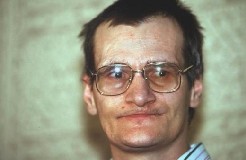 Francis Heaulme
Serial killer · France · 1984
Francis Heaulme was sentenced to several life sentences in different trials, 19…
9 victims
Francis Heaulme
Serial killer · France · 1984
Francis Heaulme was sentenced to several life sentences in different trials, 19…
9 victims
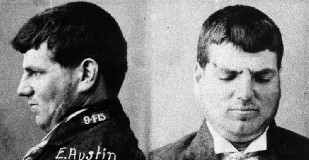 Ernest Austin
Murderer · Australia · 1913
Ernest Austin died on 22 September 1913. He was the last person executed by Que…
1 victim
Ernest Austin
Murderer · Australia · 1913
Ernest Austin died on 22 September 1913. He was the last person executed by Que…
1 victim
 James Waybern Hall
Serial killer · USA · 1944
James Waybern Hall (1921–1946) was executed by electrocution in Arkansas on Jan…
4 victims
James Waybern Hall
Serial killer · USA · 1944
James Waybern Hall (1921–1946) was executed by electrocution in Arkansas on Jan…
4 victims
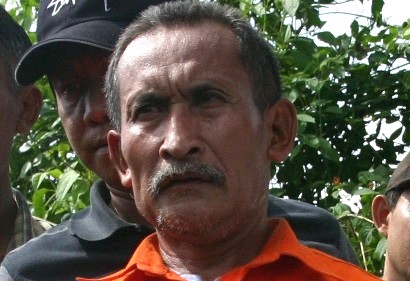 Baekuni
Serial killer · Indonesia · 2010
Baekuni was a street vendor who sheltered street children at a rented house. He…
14 victims
Baekuni
Serial killer · Indonesia · 2010
Baekuni was a street vendor who sheltered street children at a rented house. He…
14 victims
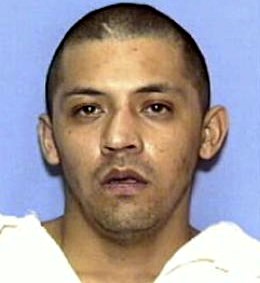 Michael Rosales
Murderer · USA · 1997
Michael Rosales was convicted of capital murder and robbery and was sentenced t…
1 victim
Michael Rosales
Murderer · USA · 1997
Michael Rosales was convicted of capital murder and robbery and was sentenced t…
1 victim
 Steven James Rollins
Murderer · USA · 2001
Steven James Rollins was thirty-seven years old when he killed John Bussell, an…
1 victim
Steven James Rollins
Murderer · USA · 2001
Steven James Rollins was thirty-seven years old when he killed John Bussell, an…
1 victim
- Gender
- male
- Country
- USA
- Location
- Charleston County, South Carolina, USA
- Date of birth
- December 24, 1961
- Age at first offence
- 26
- Characteristics
- robbery, rape
- Victim profile
- Susan Barbara Babich (female, 36)
- Method of murder
- Shooting (rifle)
- Date(s) of murder
- November 21, 1987
- Years active
- 1987
- Date of arrest
- Same day
- Status
-
Executed
Executed by lethal injection in South Carolina on August 23, 2002
Case record: Anthony Green
Overview
Anthony Green was executed by lethal injection in South Carolina on August 23, 2002.
Susan Babich was shot in the head and robbed in a parking lot at Charles Towne Square Shopping Mall in Charleston, South Carolina, in November 1987. Green was tried by jury in Charleston County, South Carolina, was found guilty of murder and armed robbery, and received a sentence of death.
Timeline
- November 21, 1987 — Susan Babich parked her car in the rear lot of the Charles Towne Square Shopping Mall in Charleston, South Carolina; after shopping, before she could drive away, Green approached with a rifle, shot her in the head, stole her pocketbook, and fled in another car.
- November 21, 1987 — Based on an eyewitness’s description, the police apprehended Green in the vicinity of the mall; police found the rifle and Ms. Babich’s checkbook in Green’s car; Green gave a statement admitting to his involvement.
- October 1, 1988 — A jury recommended a sentence of death for Green.
- 1988 — Green was sentenced to death for the murder of Susan Babich.
- May 2000 — Green’s case was argued in the United States Court of Appeals for the Fourth Circuit.
- August 1, 2000 — The Fourth Circuit decided Green v. Catoe, affirming the denial of federal habeas corpus relief.
- 2001 — The U.S. Supreme Court denied certiorari in Green v. South Carolina, 121 S. Ct. 2002 (2001).
- 2002 — The South Carolina Supreme Court set an August 23 execution date for Anthony Green.
- August 23, 2002 — Green was executed by lethal injection in South Carolina.
Background
In the afternoon of November 21, 1987, Susan Babich parked her car in the rear lot of the Charles Towne Square Shopping Mall in Charleston, South Carolina. After shopping at the mall, she returned to her car; before she could drive away, Green approached with a rifle.
The offence
Green advanced a rifle in hand and shot Ms. Babich in the head. Green stole Ms. Babich’s pocketbook and fled the scene in another car.
In the jury’s findings, Green was found guilty of murder and armed robbery.
Investigation
Based on a description from an eyewitness, police apprehended Green in the vicinity of the mall soon after the shooting. Police found the rifle and Ms. Babich’s checkbook in Green’s car. Green ultimately gave a statement admitting to his involvement in these crimes.
Arrest
Police apprehended Green in the vicinity of the mall based on an eyewitness’s description.
Trial
Green was tried by jury in Charleston County, South Carolina.
During jury selection, the trial court declined to remove three jurors whom Green had moved to excuse for cause from the jury venire, and Green used peremptory challenges on all three. Green ultimately exhausted his peremptory challenges, and two jurors were seated on the jury that convicted Green and condemned him to death.
Verdict and recommendation
The jury found Green guilty of murder and armed robbery. After a separate sentencing proceeding, the jury recommended a sentence of death.
Direct appeal in South Carolina
On direct appeal, the Supreme Court of South Carolina upheld Green’s conviction and sentence (State v. Green, 301 S.C. 347, 392 S.E.2d 157 (1990)).
In its resolution of Green’s direct appeal, the Supreme Court of South Carolina concluded the trial court had erred in denying Green’s motion to excuse for cause one of the three jurors, but declined to award Green a new trial by imposing what Green characterized as a “new” third requirement that “this error deprived him of a fair trial” (the “fair trial element”) (Green, 392 S.E.2d at 160).
Sentencing
After the sentencing proceeding, the jury recommended a sentence of death, and Green was sentenced to death in 1988.
Appeals
State post-conviction and procedural history
Following the exhaustion of remaining state remedies, including an application for post-conviction relief, Green filed a petition for federal habeas corpus relief.
Federal habeas corpus and Fourth Circuit
Green filed a petition for federal habeas corpus relief. The district court dismissed the petition and granted Green a certificate of appealability. On appeal, the United States Court of Appeals for the Fourth Circuit affirmed.
Green v. Catoe (Fourth Circuit)
- Anthony Green, Petitioner-Appellant, v. William D. Catoe, Director, South Carolina Department of Corrections; Charles M. Condon, Attorney General, State of South Carolina, Respondents-Appellees. No. 99-30. United States Court of Appeals, for the Fourth Circuit. Argued: May 4, 2000. Decided: August 1, 2000. Appeal from the United States District Court for the District of South Carolina, at Greenville. Before WILKINS, MOTZ, and KING, Circuit Judges. Affirmed by published opinion. Judge King wrote the majority opinion, in which Judge Wilkins joined. Judge Motz wrote a dissenting opinion.
Claims raised on appeal
Green challenged the dismissal of two claims:
- The Supreme Court of South Carolina denied him procedural due process in resolving his direct appeal.
- He was denied effective assistance of counsel at sentencing, in violation of the Sixth Amendment.
The Fourth Circuit concluded that Green was not in custody in violation of the Constitution or laws of the United States, and therefore affirmed the judgment.
Due process claim
Green asserted a procedural due process violation related to the Supreme Court of South Carolina’s resolution of his direct appeal.
During jury selection, the trial court had declined to remove three jurors for cause, and Green used peremptory challenges on all three until he exhausted them. Green argued that under South Carolina law as it existed prior to the resolution of his direct appeal, he was entitled to a new trial if:
- He was forced to use a peremptory challenge on a venireperson who should have been excused for cause, and
- He had exhausted his peremptory challenges before the jury was impaneled.
The Supreme Court of South Carolina, according to the Fourth Circuit description, had held the trial court erred in denying Green’s motion to excuse for cause one juror, but declined to award a new trial after imposing the “fair trial element” requiring a showing that the error deprived him of a fair trial.
Green asserted that the imposition of this “fair trial element” was effected without proper notice, in violation of procedural due process, and he argued that the change in law was applied retroactively to his appeal.
The Fourth Circuit considered whether there exists a liberty or property interest interfered with by the State, and whether the procedures attendant upon that deprivation were constitutionally sufficient. The Fourth Circuit concluded, on these facts, that the rule in effect prior to the resolution of Green’s direct appeal would have entailed entitlement to a new trial without requiring the “fair trial” showing, and therefore that there was a liberty or property interest interfered with by the State.
The Fourth Circuit then concluded that due process was satisfied, reasoning that a reasonably foreseeable change in law gave sufficient notice for the due process requirement. The Fourth Circuit held that Green’s due process claim failed.
Ineffective assistance at sentencing
Green also asserted ineffective assistance of counsel at sentencing because counsel failed to submit two mitigating factors to the jury:
- Lack of future dangerousness, and
- Adaptability to prison life.
The Fourth Circuit stated that the state PCR court, the federal magistrate judge, and the district court rejected the claim and concluded it was not unreasonable under Williams v. Taylor, 120 S. Ct. 1495, 1523 (2000).
Dissent in the Fourth Circuit
MOTZ, Circuit Judge, dissented. The dissent agreed with the majority on multiple points, including that a “clear, settled rule” existed in South Carolina prior to Green’s case and that Green satisfied the rule’s two elements. The dissent disputed the majority’s conclusion that Green could have foreseen the abolition of that rule in his case.
The dissent included this concluding statement:
“I therefore respectfully dissent. Notes: * The majority nevertheless maintains that hints of a change in law must necessarily come in non-controlling case law. I respectfully suggest that a hint could lie in a subsequent case on point that declined to reach the relevant issue, or a subsequent case on point that followed doctrine but suggested misgivings in dicta, or a subsequent case on point from a lower court that criticized the relevant rule of law. home last updates contact”
U.S. Supreme Court certiorari denials
The record reflected these U.S. Supreme Court certiorari outcomes:
- Green v. South Carolina, 498 U.S. 881 (1990) (certiorari denied).
- Green v. South Carolina, 121 S. Ct. 2002 (2001) (certiorari denied).
Outcome
The South Carolina Supreme Court voted 4-1 to let Anthony Green’s death sentence stand.
Green’s death sentence was not stayed and he was executed by lethal injection in South Carolina on August 23, 2002.
Green chose not to give a final statement before his execution.
Other details
Victim details
Susan Babich was the victim. The record stated she was shot moments after she parked her car at the Charles Town Square Mall in November 1987. Her husband was in the Navy, and the record stated they had two children.
Police evidence and statement
Police found the rifle and Susan Babich’s checkbook in Green’s car. Green told police he shot Babich because she saw him sneaking up on her.
Witnesses and family attendance
The record stated that nobody from Babich’s or Green’s families attended the execution.
The record stated Green’s attorney, Teresa Norris, was present and flipped through a Bible before the maroon curtain to the death chamber was opened. It also stated that Green’s breathing became rushed and his head jerked slightly to the left.
The record stated that the Babich family thanked the jurors on Green’s case and the South Carolina justice system, and that they chose not to attend “for it will serve no purpose in our lives. We seek not mere revenge but what the justice system has deemed necessary and appropriate.” It also included the statement:
“Justice has prevailed,” they wrote, “and will be served in our conscious absence.”
Execution timing
The record stated that Green died by lethal injection at 6:18 p.m.
Execution date setting
The record stated that an execution date was set for Aug. 23 for Anthony Green.
Spotted an error, or have more information about this case?