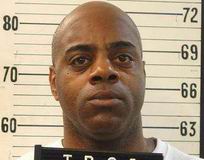
Charles Rice
Murderer Russell Ellwood
Murderer · USA · 1991
Russell Ellwood was a former taxi driver. Authorities suspected him of killing…
20 victims
Russell Ellwood
Murderer · USA · 1991
Russell Ellwood was a former taxi driver. Authorities suspected him of killing…
20 victims
 Robert Martines Perez
Murderer · USA · 1994
Name: Robert Martines Perez · Other name used in proceedings: Robert Martinez P…
15 victims
Robert Martines Perez
Murderer · USA · 1994
Name: Robert Martines Perez · Other name used in proceedings: Robert Martinez P…
15 victims
 Billy Frank Vickers
Murderer · USA · 1993
Billy Frank Vickers Vickers was executed by lethal injection in Texas on Januar…
14 victims
Billy Frank Vickers
Murderer · USA · 1993
Billy Frank Vickers Vickers was executed by lethal injection in Texas on Januar…
14 victims
 Velma Ogden-Whitehead
Murderer · USA · 2005
Velma Ogden-Whitehead pleaded guilty to first-degree murder in the 2005 killing…
1 victim
Velma Ogden-Whitehead
Murderer · USA · 2005
Velma Ogden-Whitehead pleaded guilty to first-degree murder in the 2005 killing…
1 victim
 Mohammed Merah
Spree killer · France · 2012
Mohammed Merah was a French-Algerian Islamist terrorist who had previously been…
7 victims
Mohammed Merah
Spree killer · France · 2012
Mohammed Merah was a French-Algerian Islamist terrorist who had previously been…
7 victims
 Efrain Perez
Homicide · USA · 1993
June 24, 1993 — Jennifer Ertman, 14, and Elizabeth Pena, 16, left a pool party…
2 victims
Efrain Perez
Homicide · USA · 1993
June 24, 1993 — Jennifer Ertman, 14, and Elizabeth Pena, 16, left a pool party…
2 victims
 Richard Clay
Murderer · USA · 1994
Richard D. Clay’s close friend, Charles Sanders, had an affair with Stacy Marti…
1 victim
Richard Clay
Murderer · USA · 1994
Richard D. Clay’s close friend, Charles Sanders, had an affair with Stacy Marti…
1 victim
 Nicholas Sheley
Spree killer · USA · 2008
Nicholas Troy Sheley (born July 31, 1979) was an American ex-convict accused of…
8 victims
Nicholas Sheley
Spree killer · USA · 2008
Nicholas Troy Sheley (born July 31, 1979) was an American ex-convict accused of…
8 victims
 Jason Bautista
Murderer · USA · 2003
Jason Bautista killed his mother, Jane Bautista. Jane Bautista was 41 years old…
1 victim
Jason Bautista
Murderer · USA · 2003
Jason Bautista killed his mother, Jane Bautista. Jane Bautista was 41 years old…
1 victim
- Gender
- male
- Country
- USA
- Location
- Shelby County, Tennessee, USA
- Date of birth
- February 2, 1965
- Age at first offence
- 35
- Characteristics
- rape, convicted rapist
- Victim profile
- Emily Branch, 13 (his stepdaughter)
- Method of murder
- Stabbing with knife
- Date(s) of murder
- June 18, 2000
- Years active
- 2000
- Date of arrest
- 8 days after
- Status
-
Sentenced to death
Sentenced to death on January 14, 2002
Status and outcome
Charles Rice was sentenced to death on January 14, 2002.
He was convicted of first degree premeditated murder and of first degree felony murder, and those convictions were subsequently merged into a single conviction. During the sentencing phase, the jury found aggravating circumstances and sentenced him to death. The Tennessee Court of Criminal Appeals upheld both the guilty verdict and the sentence of death, and the Tennessee Supreme Court upheld the death sentence. The United States Court of Appeals for the Sixth Circuit and the Supreme Court of Tennessee opinions concurring and dissenting were also referenced.
Timeline
- June 6, 2000 — Tracie Anderson left Charles Rice and moved in with her brother after they argued.
- June 18, 2000 — Emily Branch left her father’s house at about 11:00 a.m. with three other girls, walked with her group, and later went to Rice’s house on Firestone Street; Rice and Emily were seen walking away from Rice’s house toward Bellevue Street in the afternoon; Emily was reported missing that night after she had not returned home by 5:00 p.m.
- June 25, 2000 — Emily Branch’s body was discovered behind the Amoco station on Chelsea Street; police were called at approximately 5:00 p.m.
- June 26, 2000 — Charles Rice was interviewed by Officer Michael Jeffrey Clark and Officer Ernestine Davison at approximately 2:00 a.m.
- June 27, 2000 — Sergeant James L. Fitzpatrick took Charles Rice back to the crime scene for a “walk through” video of the events leading to Emily’s death.
- July 5, 2000 — Charles Rice attempted suicide.
- January 2, 1991 — Charles Rice pled guilty to aggravated assault.
- July 16, 2001 — Stephanie Fitch gave a police statement in which she said she saw the victim at the store around 5:00 p.m. with other girls and later saw her walking alone on the railroad tracks.
- October 3, 2001 — Evans was convicted of possession with intent to sell fifteen grams of crack cocaine and 2.7 grams of powdered cocaine.
- January 14, 2002 — Charles Rice was sentenced to death.
- February 21, 2006 — The death sentence was reported as upheld by the Tennessee Supreme Court.
Background
People and relationships
- Charles Rice was 51 and lived in Memphis, and he was married to Tracie Anderson during the time relevant to this case.
- Emily Branch was the victim; she was 13-year-old stepdaughter of Charles Rice.
- Steven Dwayney Branch (“Branch”) was Emily’s father.
- Tracie Anderson (“Anderson”) was Emily’s mother.
- Margaret Branch was mentioned as the victim’s usual residence with Branch’s sister.
- Willie Lee Hall (“Hall”) was Rice’s stepfather who lived with Rice at 1272 Firestone Street.
- Mario Rice (“Mario”) was Rice’s nephew.
- Delores Hall was mentioned as Rice’s mother.
- Tony Evans (“Evans”) was a friend of Emily’s mother and father.
- Monica Downey (“Downey”) was one of the daughters of Branch’s girlfriend and was with Emily on June 18.
- Marquette Houston (“Houston”) was a friend of Emily from the neighborhood.
- Roy Herron provided an alibi for Charles Rice.
- Lee Bearden (“Bearden”), R.L. Branch, Donnie Tate (“Tate”), and Larry Rice provided an alibi for Mario.
- Michael Patton (“Patton”) was called to discredit Evans’ testimony about hiding in the crawl space.
- Joyce Rice was Rice’s sister.
- Stephanie Fitch was a witness who gave a July 16, 2001 police statement.
- Bob Fleming was a criminal court clerk.
- Gloria Shettles was a mitigation investigator.
- Dr. Cynthia Gardner was a medical examiner with the Shelby County medical examiner’s office.
- Dr. Steven Symes was a forensic anthropologist with the Shelby County medical examiner’s office.
- Dr. Joseph Angelillo was a clinical psychologist.
- Corporal Barbara Williams was an employee of the Shelby County Sheriff’s Department.
- Rosyln Johnson was a presentence investigator for Correctional Alternatives, Inc.
- Sergeant Robin Hulley, Sergeant James L. Fitzpatrick, Officer Michael Jeffrey Clark, and Officer Ernestine Davison were involved in the investigation and interviews.
Prior conduct and family circumstances
The State presented a prior conviction in sentencing: Bob Fleming, a criminal court clerk, testified that Charles Rice pled guilty to aggravated assault on January 2, 1991.
In sentencing testimony, mitigation witnesses described deaths among relatives, school performance, and mental health and substance use history, including testimony that Rice had used “crack” cocaine for about two years and that his life was going downhill.
The offence
Emily Branch was stabbed 16 times when her body was found in a wooded area near Bellevue and Chelsea. Her shorts and underwear were down around her ankles.
The medical examiner testimony included that all wounds were consistent with being inflicted by a kitchen knife. The medical examiner opined that due to advanced decomposition in the vaginal area, there had been some sort of trauma or injury to that area prior to death. The cause of death was multiple stab wounds.
During the sentencing phase, the jury found that the murder was knowingly committed by the defendant while the defendant had a substantial role in committing, or was fleeing after having a substantial role in committing or attempting to commit a rape.
Investigation and evidence
Missing person and searches
Emily Branch was reported missing on June 18, 2000, and her body was discovered on June 25, 2000. Emily’s father began to worry when she had not returned home by 5:00 p.m. on June 18 and called the police that night to report her missing. The police told him she would probably be back and would be reported as a runaway.
Branch testified that Emily had never run away before, and neighbors helped him search. The following day, Tracie called Tony Evans and asked if he had seen Emily. Evans told her that he had seen Emily and Rice go down the path next to the Amoco station. Evans searched the area of the path but did not find anything.
Witness observations on June 18
- One of the girls with Emily testified that Rice came by and talked to Emily while the group was out walking; the girl could not hear what was said.
- After Rice left, the girls went to a store and then to Rice’s house on Firestone Street; Emily went inside while the other girls waited outside; Emily later came outside, told them they had to leave, and the girls left Emily on Rice’s front porch and went to a park. The time was about 4:00 or 5:00 p.m. in the afternoon.
- Willie Lee Hall testified that Emily came by asking to walk the dog; after he refused, Emily went outside to talk to the girls; then Emily left the house with Rice, walking toward Bellevue Street, about 3:40 p.m.
- Tony Evans testified that on the afternoon of June 18, around 2:00 or 3:00 p.m., he saw Emily and “a lot of little girls” walk to Rice’s house, and he later observed Emily and Rice walking away from the house heading west on Firestone. He followed them after thinking it was surprising because he knew the victim’s mother had recently left Rice due to abuse.
- Evans testified about a route toward an Amoco station and that he stopped following when they reached a path by the Amoco station, because the path leads to Brown Street where some of Rice’s relatives lived.
Evans’ later observations and hiding
Evans testified that two days after Emily was last seen, he saw Mario Rice and Rice walk down to the woods by the Amoco station. He said that police were called but did not get there in time because it was night.
During the week Emily was missing, Evans saw Rice and Mario sitting in the yard of a house on Alaska Street watching that same pathway. Evans testified that for two to three nights in a row, he hid in the crawl space underneath the house on Alaska Street, overhearing Mario and Rice discuss plans to kill Tracie, and that he never heard them talk about Emily. Evans stated he remained under the house until 4:00 or 5:00 in the morning.
Discovery of the body (June 25, 2000)
On June 25, Evans repaired his four-wheeler and drove back to search around the pathway. He smelled an odor like something had died, chopped through bushes with a machete, and saw Emily’s shoes. He ran to Branch’s house and told him he had found Emily’s body behind the Amoco station on Chelsea Street.
Branch, Evans, and Houston went in Branch’s truck to the Amoco station parking lot. Evans led them down a trail behind the station. They reached Emily’s body lying in a ditch in a heavily wooded area. Emily’s shorts and underwear were down around her ankles. Branch recognized clothing, shoes, and necklace as the same as on the day she disappeared, even though facial features were unrecognizable due to decomposition. Evans recognized Emily by her hair and clothes.
Sergeant Robin Hulley of the Memphis Police Department was called to the Amoco station on Chelsea Street at approximately 5:00 p.m. on a “DOA unknown.” Sergeant Hulley testified about a pathway opening onto a grassy field and that the body was located in what appeared to be a dry creek bed in a heavily wooded area to the right of the opening. He testified the body was lying face up, with white short overalls pulled completely down around her ankles and underwear pulled down, and that her shirt was still in place. He also testified that the body was not visible from the path or grassy field, though it was not covered by any brush. He testified the only blood found at the scene was directly around the body. He testified about the head appearing to be “mummified.”
Sergeant James L. Fitzpatrick was in charge of the crime scene on June 25, 2000 and testified the victim’s body was found in an old ditch, in advanced stages of decomposition. He testified there was no upper torso, the legs and arms were still intact, and the head appeared to be “mummified.” The victim had short pants down around below her knees.
Sergeant Hulley also testified that while walking down the path he noticed a broken Vanilla Ice CD he thought was strange because there was no other debris on the path. Houston also noticed a Vanilla Ice CD on the ground and testified it looked “cracked or something,” with the same scratch as seen earlier.
Arrest, interviews, and statements
Michael Jeffrey Clark, an officer with the Memphis Police Department, was assigned to investigate the murder on June 25, 2000. At the scene, Clark spoke briefly with Evans and Houston and then later interviewed Branch, Anderson, and Mario at the homicide office. He then spoke with Rice’s stepfather Hall and Rice’s mother Delores Hall.
Hall testified that Rice told police that on the day of her disappearance, he and Emily parted ways at the intersection of Bellevue and Firestone.
Charles Rice was subsequently brought to the police station, where Officer Clark and Officer Ernestine Davison interviewed him at approximately 2:00 a.m. on the morning of June 26. Officer Clark read Rice his Miranda rights and Rice signed a form indicating he understood those rights.
Officer Clark told Rice that other witnesses had seen him enter the woods with Emily near the Amoco station. Rice denied going into the woods with her and denied any knowledge of her disappearance.
Clark then told Rice that it appeared to him Emily had been raped and asked if Rice would be willing to submit to a DNA test for comparison of Rice’s DNA with DNA found on Emily. Rice then admitted that he had engaged in consensual sex with Emily inside the kitchen of his parents’ house on June 18, explaining: “I had sex for about a minute with her.”
Rice admitted Emily asked him for money and to walk his dog. He said that he asked her to walk to the store with him so he could get some change, but when they arrived at the store, he told Emily he did not have any money, and they parted ways. He then changed his story again, stating that he and Emily went to his house after she asked him for money, leading to the sexual act in the kitchen. He said that Emily left the house alone and that he did not see her again.
When officers confronted Rice with Hall’s testimony that Hall saw Rice leave the house with Emily, Rice replied that he entered the woods with Emily but denied any wrongdoing. Officers decided to arrest Rice and place him in the Shelby County jail.
While checking him in, Rice asked to be placed in protective custody because he had received threats from family members in the neighborhood. Clark asked Rice: “Do you mean the family members of the girl you killed?” Rice responded: “Yes, sir.” Officers testified on cross-examination that Rice constantly maintained that he did not kill Emily.
Sergeant Fitzpatrick read Rice’s statement to the jury. In his statement, Rice said that the last time he saw Emily was between 4:30 and 5:30 p.m. on June 18, 2000, behind the Amoco station. Rice replied when asked how he and Emily came to be behind the Amoco station: “Me and Emily walked down through there on the way to the field. And that’s when my nephew killed Emily Branch.”
Rice stated that he and Mario planned to have Emily at that location so Mario could kill Emily. Rice said that Mario wanted to kill Emily because Mario “was tired of seeing me go through things I was going through with Emily’s mother.”
Rice said that the initial plan was to have Tracie accompany Rice to the field where Mario would kill her, but they could not find Tracie.
Rice said he first encountered Emily between Bellevue and Smith Street with her friends. Emily wanted to walk his dog and wanted ten dollars, so Rice told her to meet him at his stepfather’s house on Firestone Street. Rice said that while at the house, they had sex in the kitchen, and “that lasted about sixty seconds.” Rice said Emily “brushed her chest against me and said she knowed that her stuff was gooder than her mother’s.” Rice said it was the first time they had sex and that he did not reach climax.
Rice said that after the sexual encounter, they left the house and went to the Amoco station on Chelsea Street under his guise that he would get change and give Emily the ten dollars she requested, then told her he did not have the money. Rice said Emily followed him into woods, where they were met by Mario.
Rice’s statement included the following language about the killing: “And that’s when we said, “F*** this bh; let’s kill this bh.” I told Emily about an apple tree and a fenced-in area, so she went in there, and that’s when my nephew started to stab her. He stabbed her in the head first and in the throat numerous times and in the chest area numerous times. That’s when I ran, and my nephew, Mario Rice, ran behind me. We got out to the street on Brown, and I ran towards Lewis or Louisville. I don’t know which one. And Mario went the other way on Brown. I went up Louisville or Lewis to a friend’s house on Montgomery. Then I went to another friend’s house on Ayers, and that’s where Mario and I met up again. We started drinking, and we stayed together until about 10:00 p.m. And then he went home and I went home.”
Rice said Mario used a “kitchen knife, not a butcher knife.” Rice then provided more details about the murder: “She was facing him, and he was facing her, and there were a lot of words. He was talking to her. I really don’t know exactly what he was saying. Then he pulled the knife from out of his left back pocket, and then he stabbed her in the head. She went down on one or two knees, and that’s when he stabbed her in the throat a bunch of times, and she fell back on her back. She was moving her hands like she was trying to tell Mario to stop. She pulled – and she had pulled her clothes down before the first stabbing, and I guess she thought she was getting ready to be raped by what Mario was saying because it made me wonder why was she taking her clothes down. As I think about it, I think she must of fell back because of the way Mario was stabbing her in the neck and chest.”
Rice said that the plan was to lure Emily’s mother to the field and to “take care” of her. Rice said that he “was going to take care of the mother, and Mario was going to take care of anybody else.” Rice stated: “I was probably going to jump on the mother. That probably wasn’t all I would have done to her.”
About Emily’s death, Rice stated he felt “sad, guilty, and responsible” because he “could have prevented it by not luring her into that field.”
Sergeant Fitzpatrick took Rice back to the crime scene on June 27 for a “walk through” video. Rice said he got Emily to accompany him to a secluded part of the field by telling her there was an apple tree back there. He led officers directly to the spot where the body had been discovered. On cross-examination, Sergeant Fitzpatrick admitted that in every statement given by Rice, Rice denied actually killing Emily.
Search of the home and seizure
Two or three days after police first went to Hall’s house, officers returned and asked to search the house. Hall granted permission. Police took a knife that was on the dining room table. Hall testified the knife had been lying there for the “longest time.”
Forensic findings
Medical examiner testimony
Dr. Cynthia Gardner, a medical examiner, testified that she first examined Emily’s body at the crime scene. She said the body was found “lying on her back in a field” with shorts pulled down around her ankles. She testified the body was in advanced decomposition and that “in many areas . . . the soft tissues were completely gone and only the skeleton remaining.”
Dr. Gardner testified decomposition occurred at different rates in different areas and explained: “differential decomposition is associated with areas of injuries. If there’s a breach in the skin surface somewhere or even if there is a large bruise, which is just a collection of blood, both of those factors are very attractive to the infection bacteria that promote decomposition. So when you see a body where there are areas of decomposition which has occurred at a faster rate, it’s more advanced decomposition in a very specific area. That indicates that there was probably injury in that area.”
She noted advanced decomposition in the “head, the neck, the chest, the upper back, and in the groin area.” She opined that because of advanced decomposition in the vaginal area, there had been some sort of trauma or injury to that area prior to death.
She testified Emily had what appeared to be stab wounds in the right lower quadrant of her torso and on the left wrist, and the wounds to the wrist were defensive injuries. She testified all wounds were consistent with those inflicted by a kitchen knife.
Dr. Gardner testified that Emily’s shirt had multiple tears consistent with those produced by a knife. She identified ten total defects in the shirt: one in the right lower quadrant; four in the anterior left chest; one in the right chest; three in the arm; and one in the back. She observed injury to Emily’s neck indicating a sharp instrument went all the way through the soft tissue from the skin down to the bone in the back. She explained that the windpipe and esophagus are located directly in this region of the neck and would “most definitely have been severed.” She described another point of sharp trauma to the back of the skull where there was a puncture wound that did not penetrate through the skull.
Dr. Gardner determined there were ten stab wounds on the shirt, three to the neck, one to the back of the head, and two to the left wrist, for a total of sixteen stab wounds. She concluded the cause of death was multiple stab wounds.
Dr. Gardner testified that due to the extent of decomposition, she was unable to obtain DNA from Emily’s body for testing.
Dr. Gardner testified the body was identified as Emily Branch through comparison of dental records.
Forensic anthropology testimony
Dr. Steven Symes testified as a forensic anthropologist. He examined the bones of Emily’s upper body and found four instances of “sharp trauma to bone,” three in the neck and one in the back of the skull. He testified the wounds in the neck were inflicted from front to back, penetrated through her neck, and impacted her spinal cord. He testified the knife used had been a single-edged blade like those of some kitchen knives.
Trial
Guilt phase evidence and witnesses
After deliberation, the jury convicted Charles Rice of first degree premeditated murder and of first degree felony murder; these convictions were subsequently merged into a single conviction.
The State presented proof that included witness testimony about Emily leaving her father’s house, going to Rice’s house on Firestone Street, and the sightings of Rice and Emily walking away together in the afternoon. The evidence included Rice’s admissions of consensual sex, and later his statements describing luring Emily to a secluded field area and describing Mario stabbing Emily.
Defense and alibi evidence
In his defense, Charles Rice called witnesses who provided alibis for both himself and Mario, in direct contradiction to Rice’s statement to police that he had lured Emily to the field where Mario proceeded to murder her.
Providing an alibi for Mario were:
- Lee Bearden (“Bearden”)
- R.L. Branch
- Donnie Tate (“Tate”)
- Larry Rice
Bearden testified that R.L. Branch and Tate, plus Mario, were watching football and playing dominoes at Bearden’s house from 1:00 p.m. until about 3:00 p.m. on June 18, 2000. Mario then left with R.L. Branch and Tate and went to the Save-A-Lot grocery store where they met Larry Rice and Carolyn Rice at about 4:00 p.m. They then went to Tate’s house for dinner. Around 8:00 p.m., R.L. Branch took Mario to meet a girlfriend. R.L. Branch testified that Mario and Emily were cousins and that they were close.
Roy Herron provided an alibi for Rice. Herron testified that at 5:00 p.m. on June 18, 2000, Rice came to his house where they watched the U.S. Open golf tournament until its conclusion at about 7:00 p.m. Herron testified that Rice did not have any blood on his clothes or shoes and did not have a weapon on him.
Julie Scobey, an employee of WMC-TV in Memphis, confirmed that on June 18, 2000, the U.S. Open golf tournament was broadcast on their station from 12:30 p.m. until 6:59 p.m.
The defense sought to discredit Evans’ testimony about hiding in the crawl space. The defense called Michael Patton (“Patton”). Patton testified that in June of 2000 he stayed at 1039 Alaska Street at least once a week, usually two to three times a week, and that there was a hole behind the house leading to the crawl space and that nothing was kept under there except a ladder. Patton testified the entrance to the crawl space was located at the back of the house under the children’s bedrooms, and that dogs in neighboring yards would bark if anyone was in the backyard. Patton testified a person inside the house would be able to hear if someone was hiding in the crawl space. Patton testified he was not at that house on either June 23 or 24.
Stephanie Fitch’s prior police statement was addressed. Fitch had given a statement to police on July 16, 2001, saying she saw the victim at the store around 5:00 p.m. At trial she testified that the prior statement was not true and that she denied signing it. Fitch testified at trial that she last saw the victim on the morning of the 18th at the store with a bunch of girls.
Evans’ criminal conviction
Evans was convicted on October 3, 2001, of possession with intent to sell fifteen grams of crack cocaine and 2.7 grams of powdered cocaine. This was after the arrest of Rice but before Rice’s trial. Evans received a six-year sentence. Rosyln Johnson prepared Evans’ presentence report indicating Evans said he had been diagnosed as paranoid schizophrenic, listed his next psychiatric appointment, and provided medicine bottles. Johnson testified that on cross-examination Evans denied he had been diagnosed with paranoid schizophrenia and denied taking medication for any mental illness. Evans also denied that statements in records given to his corrections officer were true after being shown the records.
Dr. Joseph Angelillo testified for the defense and stated he met with Charles Rice five times and performed a series of tests.
Sentencing
Aggravating circumstances
During the sentencing phase, the jury found the following aggravating circumstances:
- The defendant was previously convicted of one or more felonies, the statutory elements of which involve the use of violence to the person.
- The murder was especially heinous, atrocious, or cruel in that it involved torture or serious physical abuse beyond that necessary to produce death.
- The murder was knowingly committed by the defendant while the defendant had a substantial role in committing, or was fleeing after having a substantial role in committing or attempting to commit a rape.
The jury found that these aggravating circumstances outweighed any mitigating circumstances beyond a reasonable doubt and sentenced the defendant to death.
Mitigation testimony
Mitigation included testimony by:
- Steven Branch, who testified that the victim was thirteen years old when she disappeared, wanted to be a model, and that he was saving money for modeling school, and he testified to feeling “real bad” and spending nights sitting in his living room looking at her picture.
- Gloria Shettles, the mitigation investigator, whose witnesses included family members describing deaths in the defendant’s family and describing the defendant’s school record.
- Joyce Rice, who testified that Charles Rice was the youngest of six children with only three still alive, that he had witnessed a crime, believed he saw men being killed, and that one brother was murdered over gambling by being hit in the back of the head and thrown into a swimming pool. She also conceded that Charles Rice had been using “crack” cocaine for about two years.
- Dr. Joseph Angelillo, who met with the defendant several times, reviewed school records, and social history, and described the defendant’s IQ and mental health and substance use history, and testified that the defendant suffers from a delusional and paranoid disorder factored with drug and alcohol abuse. Angelillo also testified about testing findings including anger and mistrust and stated intellectual tests showed an IQ of 79 placing him in the eighth percentile. The testimony included quotes: “very angry . . . somewhat sullen, mistrustful, and generally self-indulgent.” Angelillo also described drug use as “one’s erratic behavior, moods, unpredictability, change in personality, change in impulse control, and things like that with the repeated use of that particular substance.”
- Corporal Barbara Williams testified there were no incidents of violence reported involving Charles Rice since he had been confined at the Shelby County Jail. She also testified that he did attempt suicide on July 5, 2000.
Education and personal history
Bob Fleming’s prior conviction testimony established Rice pled guilty to aggravated assault on January 2, 1991. Education testimony included that the defendant attended school in Memphis, was held back in the third grade, read at about a third-grade level in the fifth grade and failed spelling, had unsatisfactory conduct in the sixth grade and reading below a third-grade level, received all Fs in seventh grade except a D in music, had no grades in the eighth grade due to nonattendance, and dropped out of school.
Appeals and legal decisions
Tennessee Court of Criminal Appeals and Supreme Court
On appeal, the Court of Criminal Appeals upheld both the verdict of guilty and the sentence of death. The Tennessee Supreme Court upheld the death sentence.
A Supreme Court majority opinion by Chief Justice William M. Barker stated: “After considering the entire record in this case we conclude that the defendant is not entitled to relief on any of the issues raised,” and affirmed the Court of Criminal Appeals decision.
A concurring and dissenting opinion by Justice Adolpho A. Birch, Jr. agreed that Charles Rice’s convictions should be affirmed but dissented “as to the sentence of death, however, I respectfully dissent.”
Birch disagreed with the method used in capital cases to conduct statutorily mandated proportionality review, stating the method was “inadequate to shield defendants from the arbitrary and disproportionate imposition of the death penalty.”
The majority determined Rice’s sentence “was not applied arbitrarily and was not excessive or disproportionate when compared to similar cases in which the same penalty was imposed,” and continued to evaluate proportionality among similar cases.
Issues raised on appeal
The Tennessee Supreme Court considered seven issues raised by Rice and rejected them or found they were harmless errors by the trial court. One issue addressed evidence sufficiency to prove he raped and murdered the victim, and the majority stated: “By his own admission, the defendant lured the victim into the woods by promising to show her an apple tree but did not intend for her to leave the woods alive,” Barker wrote. “Once in the woods, the victim was stabbed 16 times and left to die. When the defendant returned to the woods with the police, he was able to lead the police directly to the location where the victim’s body had been found … Based on all the evidence, clearly a rational trier of fact could have found that the defendant was the perpetrator of the crime.”
Sentence implementation order
Barker wrote: “The sentence of death shall be carried out as provided by law on the twenty-eighth day of June, 2006, unless otherwise ordered by this Court or other proper authority.”
Federal appellate reference
The case record also referenced “United States Court of Appeals For the Sixth Circuit” and “United States of America v. Charles E. Rice.”
Outcome
Charles Rice’s death sentence was affirmed, and his convictions were affirmed as well. The death sentence remained in effect following the Tennessee Supreme Court decision. The case record indicated that Rice had state and federal appeals remaining in his case.
Spotted an error, or have more information about this case?