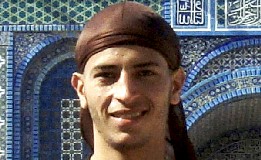
Mohammed Merah
Spree killer Christian Dornier
Spree killer · France · 1989
Christian Dornier Christian Dornier was found insane on November 10, 1989 and w…
14 victims
Christian Dornier
Spree killer · France · 1989
Christian Dornier Christian Dornier was found insane on November 10, 1989 and w…
14 victims
 Jean-Baptiste Troppmann
Spree killer · France · 1869
Jean-Baptiste Troppmann was born in Alsace in 1848 and was executed at the age…
8 victims
Jean-Baptiste Troppmann
Spree killer · France · 1869
Jean-Baptiste Troppmann was born in Alsace in 1848 and was executed at the age…
8 victims
 Guy Martel
Spree killer · France
Guy Martel killed seven people and wounded five others in a shooting spree thro…
7 victims
Guy Martel
Spree killer · France
Guy Martel killed seven people and wounded five others in a shooting spree thro…
7 victims
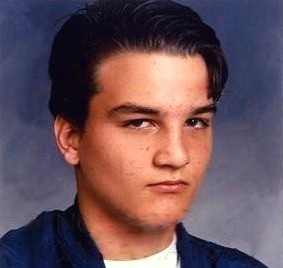 Eric Borel
Spree killer · France · 1995
Eric Borel (11 December 1978 – 24 September 1995) was a French student. At the…
5 victims
Eric Borel
Spree killer · France · 1995
Eric Borel (11 December 1978 – 24 September 1995) was a French student. At the…
5 victims
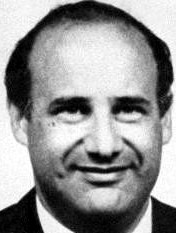 Jean-Claude Romand
Spree killer · France · 1993
Jean-Claude Romand (born February 11, 1954) was a French impostor and murderer…
5 victims
Jean-Claude Romand
Spree killer · France · 1993
Jean-Claude Romand (born February 11, 1954) was a French impostor and murderer…
5 victims
 Sid Ahmed Rezala
Spree killer · France · 1999
Sid Ahmed Rezala Rezala committed suicide apparently by inhaling the dense blac…
3 victims
Sid Ahmed Rezala
Spree killer · France · 1999
Sid Ahmed Rezala Rezala committed suicide apparently by inhaling the dense blac…
3 victims
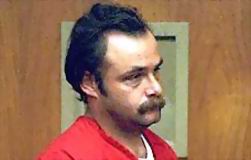 Wesley Shermantine
Serial killer · USA · 1984
Wesley Shermantine Wesley Shermantine was sentenced to death in California on M…
24 victims
Wesley Shermantine
Serial killer · USA · 1984
Wesley Shermantine Wesley Shermantine was sentenced to death in California on M…
24 victims
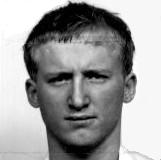 Joseph John Cannon
Homicide · USA · 1977
Joseph John Cannon was executed by lethal injection in Texas on April 22, 1998.…
1 victim
Joseph John Cannon
Homicide · USA · 1977
Joseph John Cannon was executed by lethal injection in Texas on April 22, 1998.…
1 victim
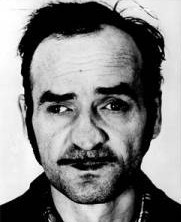 Fritz Honka
Serial killer · Germany · 1971
Fritz Honka Fritz Honka was a German serial killer. He killed at least four pro…
4 victims
Fritz Honka
Serial killer · Germany · 1971
Fritz Honka Fritz Honka was a German serial killer. He killed at least four pro…
4 victims
 Martha Freeman
Murderer · USA · 2005
Martha Freeman was convicted, together with Rafael DeJesus Rocha-Perez, of firs…
1 victim
Martha Freeman
Murderer · USA · 2005
Martha Freeman was convicted, together with Rafael DeJesus Rocha-Perez, of firs…
1 victim
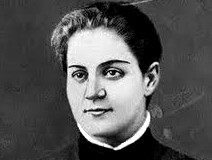 Jane Toppan
Serial killer · USA · 1887
Jane Toppan (1880-1901) was a nurse from Boston, Massachusetts. Another record…
31 victims
Jane Toppan
Serial killer · USA · 1887
Jane Toppan (1880-1901) was a nurse from Boston, Massachusetts. Another record…
31 victims
- Gender
- male
- Country
- France
- Location
- Montauban and Toulouse, Midi-Pyrénées region, France
- Date of birth
- October 1988
- Age at first offence
- 24
- Characteristics
- anarchist, escape attempt, fugitive, hate crime, member of the "texas seven
- Victim profile
- Master Sergeant Imad Ibn-Ziaten, 30 / Corporal Abel Chennouf, 24, and Private Mohamed Legouad, 23 / Rabbi Jonathan (Yonatan) Sandler, 30; his two oldest children Aryeh, 6, and Gabriel, 3; and the head teacher's daughter, Miriam Monsonego, 8
- Method of murder
- Shooting
- Date(s) of murder
- March 11-19, 2012
- Years active
- 2012
- Date of arrest
- —
- Status
-
Shot and killed after a 30-hour siege with police on March 22, 2012
The case
Mohammed Merah was a French-Algerian Islamist terrorist who had previously been a petty criminal.
Timeline
- 11 March 2012 — Master Sergeant Imad Ibn-Ziaten, an off-duty paratrooper in the 1st Parachute Logistics Regiment, was killed when he was shot in the head at point-blank range outside a gym in Toulouse.
- 15 March 2012 — Two uniformed soldiers were killed and a third was seriously injured outside a shopping centre in Montauban at around 14:00 while withdrawing money from a cash machine.
- 19 March 2012 — Four people, including three children, were killed at the Ozar Hatorah Jewish day school in Toulouse during a shooting.
- 20 March 2012 — The bodies of four victims were flown to Israel, accompanied by French foreign minister Alain Juppé.
- 21 March 2012 — Blasts were heard at the apartment block in an attempt to intimidate Merah into surrendering.
- 22 March 2012 — French police decided to arrest Merah at 10:30; he was shot in the head by a police sniper and was found dead on the ground. The death was later confirmed by President Sarkozy.
Background
Merah was a French and Algerian citizen, born to French parents of Algerian descent. His birth date was 10 October 1988 and his death date was 22 March 2012.
His parents divorced when he was five. He was raised, along with his two brothers and sisters, by his single mother in a "tough part of Toulouse".
As a minor he was described as having "a violent profile from childhood and behavioural troubles". During his youth he was arrested numerous times, mostly for petty crimes such as purse-snatching. He was first arrested in 2005 and served two short prison terms: the first was 18 months in 2007-8 for aggravated robbery, and the second was in 2009. His convictions reportedly included thefts and driving offences.
According to his friends he never went to the mosque. He was known to French authorities because he had traveled to Afghanistan and Pakistan.
After the shootings, a French intelligence document dating back to 2006 was published by French TV station M6, which presented Merah as a member of the Islamist jihadist movement, Forsane Alliza, a France organisation with a cluster of followers in Toulouse that was suspected of inciting to violence and terrorism. Merah was described as having the "ability to travel and furnish logistic assistance to other militants." The document revealed that Merah was under surveillance since 2006.
Forsane Alizza was outlawed in France for encouraging citizens to travel to Afghanistan to fight jihad.
Police have been investigating whether Merah acted alone in planning his attacks. The lawyer for the group, speaking after the shootings, denied claims that the leader of the group had any connections with Mohammed Merah.
On 25 December 2008, Merah tried to commit suicide by hanging. A subsequent psychiatric report described Merah as polar narcissistic noting Merah's slicked back hair and Merah's interest in personal grooming and designer clothes. Merah was described as a polar introvert.
The psychiatrist stated Merah's "mood is stable" but that he "recently had dark thoughts" and spoke of "suicidal intentions." He found Merah to be "anxious" and "introverted" but not "psychologically disturbed." He said Merah exhibited "neurotic fragility due to the departure of his father and lack of supervision on his mother's part."
Merah had a history of psychological problems. French intelligence officials suggested he had a double life or even a split personality which allowed him to party in nightclubs and drink alcohol with acquaintances who were unaware that he was amassing an arsenal of weapons, visiting Afghanistan and Pakistan and methodically plotting attacks.
In January 2008, he tried to join the French Army, but was rejected due to his criminal past. In July 2010, he went to the recruitment center of the Foreign Legion and stayed overnight, but decided to leave before he could be evaluated.
According to declassified documents, the DCRI (French domestic intelligence), Merah and his older brother Abdelkader had been placed under surveillance in late 2009, in particular after they traveled to Egypt, where Merah went to learn Arabic. In 2010, he was identified as a "new recruit" in radical Islamist circles, and questioned by the DCRI after returning from a visit to Pakistan.
French media reported that in 2010 he had forced a neighbor's boy to watch bloody videos from Afghanistan and then beat up the boy's sister after the mother intervened.
Bernard Squarcini said that Merah "appeared on radars" when arrested in Kandahar, Afghanistan in December 2010 while visiting as a "tourist." He was followed officially after his return from Pakistan in 2011.
The French newspaper JDD reported that Merah's friends described him as a "nice guy" who "got on well with everyone". Sometimes his friends found him devout, but other times Merah would go clubbing. A friend commented that Merah identified "more with Islam than with France." One friend said Merah had been seen in a Toulouse night club three weeks before the attacks. He had also been in Geneva, Switzerland on a skiing trip with two friends a month before the attacks. He allegedly bought the GoPro video camera which he used to film the attacks, from a Fnac store in Geneva.
According to Merah's lawyer, Merah was sentenced to a month in prison on 24 February 2012 after driving without a driver's licence, and was due before the judge again in April.
Merah had reportedly split from his wife days before the shootings. He was unemployed at the time of the shootings after having worked as a coachbuilder.
The offence
The Toulouse and Montauban shootings were a series of three gun attacks targeting French soldiers and Jewish civilians in the cities of Montauban and Toulouse in the Midi-Pyrénées region of France in March 2012.
In total, seven people were killed, and five others were injured, four seriously.
The perpetrator was identified as Mohammed Merah.
Merah attacked French Army personnel reportedly because of its involvement in the war in Afghanistan.
Merah admitted antisemitic motivations, and said he attacked the Jewish school because "The Jews kill our brothers and sisters in Palestine."
The authorities determined that all three attacks involved the same weapon, a .45 pistol. In all three attacks, the helmeted shooter arrived and left on the same stolen scooter.
11 March 2012: paratrooper in Toulouse
On 11 March, Master Sergeant Imad Ibn-Ziaten, aged 30, an off-duty paratrooper in the 1st Parachute Logistics Regiment (1er régiment du train parachutiste) was killed when he was shot in the head at point-blank range outside a gym in Toulouse.
At the time Ibn-Ziaten was waiting to meet someone who had claimed to be interested in buying a motorcycle from him; however, it is suspected that the supposed buyer attacked him instead. The perpetrator was described as wearing a helmet and riding a motorcycle.
The family of Ibn-Ziaten subsequently buried him in their hometown of M'diq, Morocco.
15 March 2012: three paratroopers in Montauban
On Thursday, 15 March, at around 14:00, two uniformed soldiers were killed and a third was seriously injured outside a shopping centre in Montauban, around 50 km north of Toulouse, while withdrawing money from a cash machine. They were all from the 17th Parachute Engineer Regiment (17e régiment du génie parachutiste), whose barracks are close to the town.
Corporal Abel Chennouf, 24, and Private Mohamed Legouad, 23, both of North African origin, were killed. Corporal Loïc Liber, 28, from Guadeloupe, was left in a coma.
The security cameras showed the killer on a powerful moped and wearing a black helmet.
The killer reportedly pushed aside an elderly woman, who was waiting to withdraw money from the cash machine, while taking aim.
19 March 2012: Ozar Hatorah school in Toulouse
The Ozar Hatorah school in Toulouse was part of a national chain of at least twenty Jewish schools throughout France, educating children of primarily Sephardic, Middle Eastern and North African descent.
The school was a middle and secondary school, with most children between the ages of 11 to 17. It also served as a transportation node for other schools. Many parents brought their younger children to Ozar Hatorah and placed them on shuttle buses that traveled to other schools in the area.
At about 8:00 am on 19 March, a man drove up to the Ozar Hatorah school on a Yamaha TMAX motorcycle. He dismounted, and immediately opened fire toward the schoolyard.
The first victim was a rabbi and teacher at the school who was shot outside the school gates as he tried to shield his two young sons from the gunman.
The gunman shot one of the boys as he crawled away, as his father and brother lay dying on the pavement. He then walked into the schoolyard, chasing people into the building.
Inside, he shot at staff, parents, and students. He chased an 8-year-old girl into the courtyard, caught her by her hair and raised a gun to shoot her. The gun jammed at this point and he changed weapons from what the police identified as a 9mm pistol to a .45 calibre gun, and shot the girl in her temple at point-blank range.
The gunman then retrieved his moped and drove off.
Security was increased in the immediate aftermath of the shooting. Many Jewish institutions were already under continuous protection, but as a result of the shootings, streets in France that have Jewish institutions on them were closed to traffic.
President Nicolas Sarkozy, as well as other candidates in the presidential elections, immediately traveled to Toulouse and to the school and the election campaign was suspended. Sarkozy called for a minute of silence in all schools the following day.
On 23 March, Ange Mancini, intelligence adviser to President Sarkozy, said Merah had actually wanted to kill a soldier, but arrived too late and instead attacked the nearby Jewish school.
Investigation, arrest, and siege
The killings spurred one of the biggest manhunts in modern French history.
The police erected roadblocks in Toulouse and placed extra security outside Jewish and Islamic schools across France.
Because of the ethnic identities of the victims, most of whom were of Jewish or Arab descent, police initially suspected the involvement of neo-Nazis. Since he drew little attention to himself otherwise, police faced an uphill struggle in focusing in on Merah as a suspect, even as the killings continued.
Merah had taken care to ensure that the magazine and shell casings he left offered no fingerprints or DNA.
The search for Sergeant Ibn Ziaten's bogus motorbike buyer homing in on the Merahs' computer: cross-checks revealed that the Toulouse woman who owned the IP address had two sons on the anti-terrorism watchlist.
The hunt for the gunman's scooter took a decisive turn when Merah asked a motorcycle mechanic in Toulouse about removing a GPS anti-theft tracking device on his bike. Merah also said that he had just repainted the bike white.
Siege and death
An hour before police surrounded his apartment, Merah called the French television channel France 24 and Ebba Kalondo, the editor who spoke with him, reported that for Merah, "these acts were not only necessary, but that they were to uphold the honour of Islam.”
According to Ebba Kalondo, "He said he was in connection with al Qaeda, that what he had done was only the beginning. He said he was against the law on the veil and fought against the French participation in operations NATO in Afghanistan."
At 03:00 local time (02:00 UTC), the French police tried to arrest Merah at his apartment on Sergent Vigné Street in the Côte Pavée neighborhood. Merah shot at the police through the door, injuring three police officers.
The RAID, an elite anti-terrorist unit, surrounded the 1960s five-storey block of flats soon after.
Merah was armed with an AK-47, an Uzi, a Sten, a Winchester 12 gauge Pump-action shotgun, three Colt 45s, a 9mm Glock, and a Colt Python .357 Magnum.
Further weapons were found in a rented Renault Megane parked near the apartment building.
The five-story building block and nearby buildings were evacuated and the police turned powerful spotlights onto Merah's building to attempt to blind him and prevent him from observing the police operations.
The electricity and gas supplies were cut off to the apartment block and the street lights in the neighbourhood were switched off.
Merah exchanged a Colt 45 for a walkie-talkie used to communicate with the police. He told them the location of a bag containing the blood-spattered camera that he had used to film his attacks.
One of Merah's brothers was arrested, and another handed himself into custody. Police found weapons and explosives in his brother's car.
His mother was brought to the scene to help with negotiations, but she refused to become involved due to her lack of influence on him.
Merah informed the police that he intended to give himself up at 22:45. Contact was established with him at that time but Merah then said that he would not succumb without a fight and would kill policemen if necessary.
In the late evening on 21 March, blasts were heard at the apartment block intended to intimidate the gunman into surrendering. The police blew off the window shutters with a grenade, after which two shots were heard. After that there was no response from Merah until 11:00 the next day.
The police continued the explosions at regular intervals to wear Merah down. Officers did not know if Merah was alive because he did not respond to the series of explosions during the night and on Thursday morning.
At 10:30 on 22 March, the decision was taken to arrest him. Grenades were thrown into the apartment but elicited no response.
A 15-strong team of specially trained officers decided to enter the flat first by the door, then using the windows whose shutters had been removed during the night. The team deployed technical devices and video equipment to inspect the different rooms.
No presence was detected until a device was introduced into the bathroom. At that point the killer emerged shooting long and frequent bursts. The officers returned fire and snipers opposite attempted to neutralise him.
Mohammed Merah then jumped out of the window with weapon in hand and continued to shoot.
Merah was shot in the head by a police sniper and was found dead on the ground.
Less than one hour later it was announced to media in Toulouse that Merah was dead. Merah's death was later confirmed by President Sarkozy.
Agence France-Presse reported that three police officers had been injured in the preceding gunfire, one of whom sustained "fairly serious" wounds.
It was discovered that Merah had a bulletproof vest, components of Molotov cocktails and weapons parts stockpiled inside his flat.
During the standoff with police, Merah told police that he intended to keep on attacking and he loved death the way the police loved life. He also claimed connections with al-Qaeda.
Victims and casualties
Ozar Hatorah school victims
Four people died:
- 30-year-old Rabbi Jonathan (Yonatan) Sandler
- Aryeh, aged 6 (Sandler’s two oldest children, out of three)
- Gabriel, aged 3 (Sandler’s two oldest children, out of three)
- Miriam Monsonego, eight-year-old head teacher's daughter, the girl shot in the head
Bryan Bijaoui, a 17-year-old Jewish boy, was gravely injured.
It was described as the worst school-related attack in French history.
The two deceased children of Sandler were dual French-Israeli citizens, as were Sandler's widow and surviving child.
The bodies of all four dead were flown to Israel on 20 March, accompanied by French foreign minister Alain Juppé. They were buried by family members at the Har HaMenuchot cemetery in Jerusalem.
Other deaths and injuries mentioned
Master Sergeant Imad Ibn-Ziaten, aged 30, was killed on 11 March.
On 15 March, two uniformed soldiers were killed and a third was seriously injured:
- Corporal Abel Chennouf, 24, killed
- Private Mohamed Legouad, 23, killed
- Corporal Loïc Liber, 28, left in a coma
During the siege, three police officers were injured in the preceding gunfire, one of whom sustained "fairly serious" wounds.
Claims, motivations, and statements
Before Merah was discovered as the attacker, President Nicolas Sarkozy said the antisemitic motivation of the school attack appeared obvious.
After Merah was identified, Sarkozy stated that "the Islamic faith has nothing to do with the insane motivations of this man," and others echoed this view.
Merah admitted anti-Semetic motivations for his attack. Some media described Merah as an "Islamic terrorist".
Merah said he was motivated by France's ban on wearing the burqa, and stated that "the Jews have killed our brothers and sisters in Palestine," and he wanted to avenge the French Army's involvement in the war in Afghanistan.
Merah was recorded making the statement: "you killed my brothers, I kill you".
Mustafa Akyol argued that Merah’s motivation was nationalism but not religion.
An editor at France 24 reported that Merah told him that these acts were not only necessary, but that they were to uphold the honour of Islam.
Mohammed Merah's older brother Abdelghani said that Mohammed was raised in an "atmosphere of racism and hatred" and blamed his family for Mohammed's attraction to extremist Islamism and antisemitism.
Merah's sister Souad was recorded saying: "I am proud of my brother. He fought until the end... Jews, and all those who massacre Muslims, I detest them."
Abdelghani said their mother frequently stated that Arabs were born to hate Jews during their childhood and that there may be more "Mohmmed Merah's" if families were allowed to teach such hatred.
According to Christian Etelin, Merah's lawyer since he was 16, Merah was suffering from "psychological difficulties".
Etelin lawyer stated that Merah was abandoned by his father as a child, and there were reports that he split with by his wife days before the attacks.
Etelin denied that Merah was an Islamist and said the shootings could have been an episode of "paranoid schizophrenia during which he completely disconnected from reality."
Bernard Squarcini, head of DRCI, stated: "you have to go back to his broken childhood and psychiatric troubles. To carry out what he did smacks more of a medical problem and fantasy than a simple jihadist trajectory."
Intelligence documents later showed Mohamed Merah was not working alone and had made more than 1,800 calls to over 180 contacts in 20 different countries, in addition to several trips to the Middle East and Afghanistan.
Media recording and communication
Merah filmed all of the killings using a GoPro camera strapped to his body.
He made a video of them set to music and verses of the Koran.
The video was sent to news agency Al Jazeera. After a request from President Nicolas Sarkozy, Al Jazeera opted not to air the video.
One video shows Merah shooting two Muslim French soldiers in Montauban, who is heard shouting Allahu Akbar.
Reactions
The attacks were condemned by many governments around the world.
The United Nations condemned the killings "in the strongest possible terms."
The French Council of the Muslim Faith also condemned the attacks.
At an UNRWA event to Palestinian youths, the European Union's High Representative Baroness Ashton said: "When we think about what happened today in Toulouse, we remember what happened in Norway a year ago, when we know what is happening in Syria, and we see what is happening in Gaza and Sderot and in different parts of the world – we remember young people and children who lose their lives."
Israeli ministers harshly criticised her comparison of the Toulouse murders to the situation in Gaza.
Prime Minister Benjamin Netanyahu said: "It is unthinkable to compare a massacre and the Israeli army's surgical, defensive actions against those who use children as human shields."
Lady Ashton said the press reporting of her speech was "grossly distorted" and that she had also referenced Israeli victims in Sderot, but that this had been incorrectly omitted from the original transcript.
The Palestinian Authority condemned the attacks as "racist crimes".
Palestinian Prime Minister Salam Fayyad said terrorists must stop trying to justify their acts of violence "in the name of Palestine.
On 19 March, the date of the attack on the Jewish school, President Sarkozy declared the date to be "a day of national tragedy."
Both Sarkozy and Francois Hollande condemned the attacks.
On 20 March, cities across France observed a minute's silence in remembrance of the victims.
Dalil Boubakeur, Rector of the Grand Mosque of Paris, condemned the attacks.
Gilles Bernheim, the Chief Rabbi of France, called for strengthening the links between Jewish and Muslim communities.
Rabbi Marc Schneier said thousands of Muslims and Jews joined together in solidarity marches in communities throughout Paris.
Many Jewish children in France were afraid to go to school after the shootings, and Jewish teenagers reported fears of dressing in a recognisably Jewish manner.
Some Israeli politicians called on French Jews to emigrate to Israel to escape the anti-Semitism in France.
A number of French media questioned the role of the security services during the operation and whether more could have been done to prevent the killings.
French counter-terrorism expert Christian Prouteau criticised the siege operation, saying tear gas might have been used to capture Merah alive and reduce the chance he could attack police.
Reactions in French society: teacher incident
Following Merah's death, an English teacher from Rouen asked her students for a moment of silence and called Merah a "victim".
Most of the students immediately left the classroom and wrote to the director. When the students began to leave and remonstrate, the teacher appeared to back down, saying: "not feeling too well" and "perhaps take some time off."
A representative of teachers union SGEN-CFDT said she was weak and had health concerns and immediately regretted what she said.
A school spokesman said what had happened was a "sad incident" and a disciplinary procedure was under way.
The teacher was suspended a few days later at the request of French education minister Luc Chatel, who said he "condemned this unspeakable behaviour without reservation".
Reactions in French society: neighborhood support and conviction
Nicholas Vancour reported that the reaction in the neighbourhood of Les Izards, a "sensitive urban zone" where Mohamed Merah grew up, of which many are Muslim Arabs and where the unemployment rate for people under 30 is rising and can reach 30%, was to regard Merah to be "one of their own, no matter what he did."
One woman was supportive of Merah's family. A woman who was a family friend of the Merahs expressed sympathy for him but said she didn't condone his actions.
A group of twenty youths accosted police, and Mohamed Redha Ghezali, a 20-year-old man from the neighbourhood, was sentenced to three months in prison for praising Merah's actions.
The man while haranguing police officers said: "My friend Mohamed is a real man – too bad he wasn't able to finish the job."
He was convicted of "provoking racial hatred" and "apology for terrorism".
The Toulouse prosecutor stated that the state would "systematically pursue" people expressing support for Merah.
Abdelkader Merah and charges
After Merah’s death, there was a movement to mount a demonstration in support of Abdelkader Merah, who faced charges of complicity in murder and conspiracy to commit acts of terrorism.
Some young men of the neighborhood found conspiracy theories more convincing than that one of their own could be a killer.
Mohammed Merah's older brother Abdelghani later wrote a book condemning hero-worship of Mohamed among some young French Muslims.
He recalled "whoops of joy" and that people were congratulating his mother at the wake for Mohammed.
Possible accomplice Abdelkader Merah, aged 29, was detained after the death of his brother and faced preliminary charges of complicity in murder and conspiracy to commit acts of terrorism.
Investigators believed he may have assisted Mohamed with the preparation of the killings.
Abdelkader's lawyer denied these allegations, saying press reports that Abdelkader expressed pride in his brother's acts were false, and that he had not been aware of Mohamed's plans.
In Les Izards, where some were planning to mount a demonstration in support of Abdelkader, many found the idea of an organised plot by the Merahs to be absurd.
Rallies and demonstrations
On 19 March, several thousand people marched silently in Paris in memory of the victims of the shootings.
On 24 March, hundreds of people gathered in Lyon and Rouen to pay tribute to the victims in silent marches, with many holding signs saying "We will never forget".
In Toulouse, 6000 people marched on 25 March, including mayor Pierre Cohen, Chief Rabbi of France Gilles Bernheim and Hassen Chalghoumi, the imam at Drancy.
Small demonstrations honoured Merah were held on housing estates, including the Toulouse one where he grew up.
A small rally of around 30 people was held in Toulouse in tribute of Merah and was dispersed by French police.
The AGI reported that most protesters were young women wearing the burka, which is banned in France in public places.
Several people acquainted with the killer attempted to leave flowers outside his flat. Members of the group said this was a gesture to restore dignity to the Muslim community of Toulouse and to the gunman’s family, and not an attempt to vindicate Merah. Others said they did not wish to judge him harshly and that the vilification of Merah was unfair.
The New York Times quoted Pierre Cohen stating that rumours of Muslims organizing a demonstration for Merah were "false".
Graffiti in Toulouse read "Viva Merah", "Vengeance" and "Fuck the kippa" before being cleaned.
Criticism of media
Joel Braunold criticised the "airbrushing anti-Semitism out of the Toulouse attack" and described the view that Merah was "imbued neither with the values of Islam, or driven by racism and anti-Semitism" as shocking.
Braunold criticised the "dehumanization of Merah’s victims" and the way some interpreted it as a symbol of attacking society in general.
He said he was disturbed at the "inabilities of some to even mention anti-Semitism as a cause" despite the fact that victims were not random and were Jews.
Aftermath
Fears of backlash and policy proposals
In the aftermath, many French Muslims feared stigmatization of the Muslim community and an increase in Islamophobia.
President Sarkozy warned against stigmatizing millions of French Muslims because of the actions of a single extremist.
President Sarkozy proposed a new law that would imprison those who repeatedly visit websites promoting terror or hatred.
The Times of India reported that legal experts were concerned the law could curtail freedom of speech.
Reporters Without Borders accused Sarkozy of trying to create an internet surveillance system.
Anti-Semitic incidents
A spate of anti-Semitic incidents followed Merah's attack on the school.
The French Jewish community documented 90 anti-Semitic incidents in the 10 days that followed.
The Service de Protection de la Communauté Juive (SPCJ) recorded 148 anti-Semitic incidents in March and April, with forty-three classified as violent.
Authorities recorded 105 instances of anti-Semitic intimidation and threats during those two months.
Jewish graves were vandalised in Nice, France, and the Daily Mail reported such vandalisms occurred across France.
The SPCJ said the situation was "deeply worrisome" and reflected support for Merah's attack.
The Interior Minister Manuel Valls held a meeting with Jewish representatives in which he promised increased protection for Jewish institutions in France.
French police investigated email and telephone threats received by staff at the school in the days following the attacks.
On 26 March, a 12-year-old boy was hit and punched in the back of his head as he left his Ozar Hatorah school in Paris by youths reciting anti-Semitic slogans.
In one attack, a Jewish man and his friend were attacked by people identifying themselves as Palestinians who promised to "exterminate" the Jews.
In Villeurbanne, three youths wearing Jewish skullcaps were leaving a Jewish school when they were attacked with a hammer and iron bars.
Incoming French Prime Minister Jean-Marc Ayrault described the attack as "intolerable violence."
Arrests and expulsion of radical Islamists
Police arrested 19 suspected militants connected to extreme Islamist group Forsane Alizza during dawn raids in Toulouse and in a number of other cities.
The BBC reported the arrests appeared to be in response to the shootings.
They were suspected of inciting to violence and terrorism, according to daily Le Parisien.
The CNN and BBC reported that French authorities did not link any of those arrested to Merah.
The French prosecutor denied any link between the arrests and the shootings, describing the arrests as the product of an investigation begun in October 2011.
President Sarkozy said the arrests were not directly linked to Mohammed Merah.
Sarkozy requested that police increase its surveillance of "radical Islam" amid rising concerns of a jihadist threat in France.
There were suggestions the government and DCRI were intensifying efforts to deal with suspected militants after being criticised for allowing Merah to slip through the net.
During raids, the domestic intelligence agency seized several firearms including five rifles, four automatic weapons and three Kalashnikovs, as well as a bulletproof vest.
French officials said two radical Islamists were deported and three more were to be expelled.
French Interior Minister Claude Gueant said the deported were a Malian imam who had preached anti-Semitism and promoted wearing the burka, which is illegal in France in public space, and Ali Belhadad, an Algerian with involvement in a 1994 Marrakech attack.
Two imams from Saudi Arabia and Turkey and a suspected Tunisian militant were also due for expulsion from France.
A police source stated that some of the arrested were planning to kidnap a Jewish magistrate.
On 4 April, French police arrested 10 people on suspicion that they were "Islamist militants".
On 5 April, four of them were released after prosecutors found insufficient evidence to detain them.
On 6 April, there were reports that French police would release the last six individuals as well.
The Interior minister commented: "We do not accept Islamic extremism. This is not a new policy... but after what happened in Toulouse and Montauban we have to be more vigilant than ever."
President Sarkozy said the aim was to deny entry of certain people to France who did not share the country's values and said: "It's not just linked to Toulouse. It's all over the country. It's in connection with a form of radical Islam"
He added that “more suspected Muslim extremists will be rounded up.”
He said after the traumatic events in Montauban and Toulouse it was necessary to "draw some conclusions."
According to a Parisien report, the government banned six Islamist leaders from entering France for a Muslim conference expected to be held in Paris.
Spotted an error, or have more information about this case?