
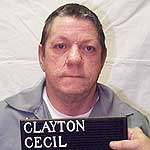
Richard Clay
Murderer Brian Kevin Rosenfeld
Murderer · USA · 1985
Brian Kevin Rosenfeld Brian Kevin Rosenfeld was sentenced to three concurrent l…
23 victims
Brian Kevin Rosenfeld
Murderer · USA · 1985
Brian Kevin Rosenfeld Brian Kevin Rosenfeld was sentenced to three concurrent l…
23 victims
 Russell Ellwood
Murderer · USA · 1991
Russell Ellwood was a former taxi driver. Authorities suspected him of killing…
20 victims
Russell Ellwood
Murderer · USA · 1991
Russell Ellwood was a former taxi driver. Authorities suspected him of killing…
20 victims
 Robert Martines Perez
Murderer · USA · 1994
Name: Robert Martines Perez · Other name used in proceedings: Robert Martinez P…
15 victims
Robert Martines Perez
Murderer · USA · 1994
Name: Robert Martines Perez · Other name used in proceedings: Robert Martinez P…
15 victims
 Billy Frank Vickers
Murderer · USA · 1993
Billy Frank Vickers Vickers was executed by lethal injection in Texas on Januar…
14 victims
Billy Frank Vickers
Murderer · USA · 1993
Billy Frank Vickers Vickers was executed by lethal injection in Texas on Januar…
14 victims
 Antonis Daglis
Serial killer · Greece · 1992
Antonis Daglis (Greek: Αντώνης Δαγλής, born 1974) was a Greek serial killer. He…
3 victims
Antonis Daglis
Serial killer · Greece · 1992
Antonis Daglis (Greek: Αντώνης Δαγλής, born 1974) was a Greek serial killer. He…
3 victims
 Domingo Cantu
Murderer · USA · 1988
Domingo Cantu was identified as the offender in a capital case involving the ra…
1 victim
Domingo Cantu
Murderer · USA · 1988
Domingo Cantu was identified as the offender in a capital case involving the ra…
1 victim
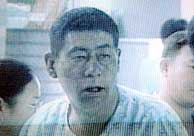 Kim Dae-Han
Mass murderer · South Korea · 2003
Name: Kim Dae-Han · Age: 56 · Occupation/background: He was an unemployed forme…
198 victims
Kim Dae-Han
Mass murderer · South Korea · 2003
Name: Kim Dae-Han · Age: 56 · Occupation/background: He was an unemployed forme…
198 victims
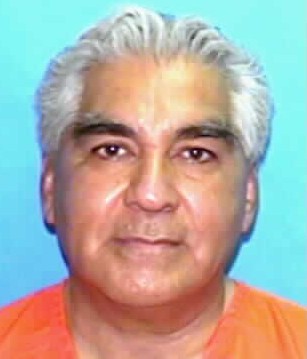 Peter Ventura
Murderer · USA · 1981
Peter Ventura was convicted and sentenced to death for the murder of Robert Cle…
1 victim
Peter Ventura
Murderer · USA · 1981
Peter Ventura was convicted and sentenced to death for the murder of Robert Cle…
1 victim
 Daniel Plata Estrada
Murderer · USA · 1995
Daniel Angel Plata Estrada was convicted of capital murder on October 14, 1996.…
1 victim
Daniel Plata Estrada
Murderer · USA · 1995
Daniel Angel Plata Estrada was convicted of capital murder on October 14, 1996.…
1 victim
- Gender
- male
- Country
- USA
- Location
- Callaway County, Missouri, USA
- Date of birth
- January 20, 1965
- Age at first offence
- 29
- Characteristics
- murder for hire
- Victim profile
- Randy Martindale
- Method of murder
- Shooting
- Date(s) of murder
- May 19, 1994
- Years active
- 1994
- Date of arrest
- Same day
- Status
-
Sentenced to death
Sentenced to death September 18, 1995
Case record: State of Missouri v. Richard D. Clay
Background
Richard D. Clay’s close friend, Charles Sanders, had an affair with Stacy Martindale. In February 1994, Martindale asked Sanders to help her kill her husband. Martindale was unhappy in her marriage and was also the primary beneficiary of her husband’s life insurance policy with a face amount of $100,000.
During the spring of 1994, Sanders and Martindale discussed various plans to kill her husband. Sanders confided in Clay, who told him that he would be "crazy" to help her with the plan.
At that time, Clay was unemployed and did not own a car. Clay often borrowed Sanders’ car. He twice took the gun out of the car without permission and left the gun at a friend’s house. Clay testified that he removed the gun so that he would not be caught with it while driving Sanders’ car.
Timeline
- February 1994 — Stacy Martindale asked Charles Sanders to help her kill her husband.
- Spring 1994 — Sanders and Martindale discussed plans to kill her husband; Sanders confided in Richard D. Clay, who told him he would be "crazy" to help with the plan; Sanders borrowed a gun and kept it in his car while he bought ammunition and practiced firing the weapon with Martindale.
- April 28, 1994 — Stacy Martindale separated from her husband.
- April 1994 — Martindale offered Sanders $10,000 to kill her husband and gave him a check for $4996.36 as a "down payment."
- A few weeks later (after April 1994) — Sanders returned the check to Martindale and told her he could not execute the act they had been discussing.
- May 19, 1994 (during the evening) — Martindale met Sanders at Sanders’ place of employment; Clay waited inside; afterward, Clay shot Randy Martindale four times; the victim bled to death.
- May 20, 1994 (next day) — Multiple officers saw Clay run into the woods; he was arrested after officers continued their search.
- 08/25/1998 — Missouri Supreme Court affirmed the conviction.
- 09/18/1995 — Sentence of death was imposed.
- September 22, 1998 — Opinion modified by the Court’s own motion; this substitution did not constitute a new opinion.
The offence
On May 19, 1994, Martindale met Sanders at Sanders’ place of employment. Clay waited inside to give them privacy. Outside, Martindale pressured Sanders to kill her husband. When Sanders refused, Martindale told him that she was going ask Clay to do it. Then Martindale immediately rode around alone with Clay.
After leaving Martindale, Clay went to a bar, to a restaurant, and then to a trailer. Clay left the trailer carrying a black zippered bag. At 9:45 p.m., Martindale picked up Clay, who still had the black bag, and drove him to her home.
In the meantime, Martindale’s estranged husband had taken her two boys to a baseball game. He brought the boys back to Martindale’s house after 10 p.m. Martindale invited him to spend the night. He went into her bedroom, sat down on a love seat, and took off his shoes and socks. While he was sitting there, Clay came out of the bedroom closet where he was hiding and shot him four times. The victim bled to death.
Martindale ran next door, awakening the neighbors with her screams. A neighbor came over to the house with her and discovered the victim bleeding from gunshot wounds, slumped over on the loveseat in the bedroom, after the two boys had discovered the victim.
Investigation
After the shooting, a police officer saw a red Camaro with sparks flying beneath it. Because the driver continued to drive despite the sparks, the officer believed the driver to be drunk. The officer pursued the Camaro, and when it accelerated, the officer turned on his red lights. The officer caught up to the Camaro on a gravel road where it stopped. Both doors opened with the engine running.
The officer requested backup and turned off the ignition of the Camaro. A shoe print, later found to match Clay’s, was found outside the passenger door.
When other officers arrived, they began a search sweeping the area from the vehicle to a swamp. An officer found a dry, live .380 caliber Remington-and-Peters cartridge that matched those found at the crime scene in dew-covered grass. The search lasted throughout the night.
The police never found the murder weapon.
Arrest
The next day, several officers were sitting on a levee when one saw Clay run into the woods. Clay was carrying a black bag. As the officer closed in on him, Clay emptied the bag and threw it behind him. Officers continued the search through the swamp until one saw Clay’s face as he surfaced to breathe. When officers reached him, they arrested him.
Trial
Conviction and charges
A jury convicted Richard D. Clay of murder in the first degree and assessed the punishment as death; the circuit court imposed the death penalty.
Direct appeal: points and rulings
In the direct appeal, Clay raised fourteen points of error. The Missouri Supreme Court affirmed.
The Missouri Supreme Court held that alleged trial errors were either unpreserved, harmless beyond a reasonable doubt, or not error. The court addressed multiple categories of alleged error, including:
- The trial judge’s comment during voir dire referencing another trial "going on in California at the moment," and the conclusion that no objection was made at trial.
- Evidentiary and procedural rulings on defense questioning and the failure to make an offer of proof.
- Harmlessness or non-error findings relating to certain evidentiary objections during the guilt and penalty phases.
- Admission of hearsay under the co-conspirator exception, including statements attributed to Martindale and their admission against Clay once a conspiracy was independently established.
- Jury instruction issues, including the court’s rejection of arguments regarding accessorial liability and reasonable doubt instructions.
- Penalty phase instruction issues, including the refusal to give a defense instruction adding non-statutory mitigating circumstances, and rulings on jury instructions relating to aggravating and mitigating factors.
- A clarification issue during penalty phase deliberations, where the jury asked about whether it was required to impose death if it found at least one statutory aggravator; the trial judge directed the jury to review the instructions, and the Missouri Supreme Court found no error where the penalty phase instructions stated the jury was not compelled to fix death.
Prosecutorial misconduct and ineffective assistance
The Missouri Supreme Court held that claims of intentional prosecutorial misconduct and ineffective assistance of counsel for failure to object were either not preserved for appeal or did not constitute plain error, and that Clay was not prejudiced.
The court also held that counsel was not ineffective, including findings that:
- Counsel could reasonably have decided not to object to prosecutor statements.
- Many objections would have been meritless.
- The defense counsel’s decisions did not show a reasonable probability of a different outcome.
Evidence sufficiency
The Missouri Supreme Court held that evidence was sufficient to convict Clay of first-degree murder. The court considered evidence including Clay’s presence at the crime scene, flight from the scene, and false exculpatory statements. The court also relied on evidence that officers found only one set of shoeprints leaving the Camaro that were identified as made by Clay’s shoes, and on evidence about a dry .380 cartridge in dew-covered grass matching cartridges at the crime scene, with expert testimony that this cartridge matched expended cartridges at the scene.
The court rejected Clay’s argument that an “equally valid inference” rule required acquittal.
Sentencing
The jury assessed the punishment as death and the circuit court imposed the death penalty.
The Missouri Supreme Court performed the statutory review required for death sentences and held that:
- No trial error prejudiced Clay, and the jury received correct instructions; the sentence was not influenced by passion, prejudice, or arbitrariness.
- Evidence supported the jury’s finding of the statutory aggravator that Clay acted at Martindale’s direction, and the court did not need to decide whether the victim was rendered helpless because the state needed to prove only one aggravator.
- The death sentence was not disproportionate, and proportionality review was not constitutionally required.
Appeals
Missouri Supreme Court decision
The Missouri Supreme Court identified the case style as: State of Missouri, Respondent, v. Richard Clay, Appellant. The court provided:
- Case Number: 78373
- Handdown Date: 08/25/1998
- Appeal From: Circuit Court of Callaway County, Hon. Frank Conley
The court’s judgment was AFFIRMED.
Federal appellate references
The case summary included:
- United States Court of Appeals For the Eighth Circuit opinion 02-2419.
- A reference to a United States District Court for the Western District in Kansas City granting Clay a new trial, followed by the state’s appeal of that ruling.
Outcome
The Missouri Supreme Court affirmed the judgments.
Other details
- The appellate opinion credited that the victim had been shot four times.
- The appellate opinion noted that the jury returned its verdict recommending death less than an hour after the trial judge instructed jurors to review the instructions.
- The appellate opinion described the admission of Martindale’s statements through the co-conspirator exception to the hearsay rule.
- Clay remained on Missouri’s death row.
- A neighbor found the two boys and discovered the victim bleeding from gunshot wounds, slumped over in the bedroom.
- The appellate opinion mentioned that Martindale was tried separately and did not testify at Clay’s trial.
- Stacy Martindale was later convicted separately of second-degree murder and sentenced to 15 years (as described in the included narrative).

Spotted an error, or have more information about this case?