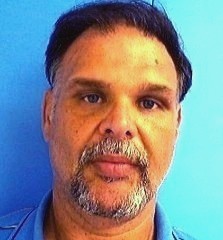
Patrick Burris
Spree killer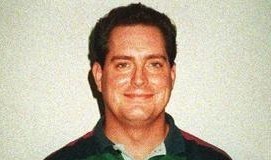 Mark Barton
Spree killer · USA · 1999
Mark Orrin Barton (1955 – July 29, 1999) committed a spree killing in Stockbrid…
12 victims
Mark Barton
Spree killer · USA · 1999
Mark Orrin Barton (1955 – July 29, 1999) committed a spree killing in Stockbrid…
12 victims
 John Allen Muhammad
Spree killer · USA · 2002
John Allen Muhammad carried out the 2002 D.C. sniper attacks with his 17-year-o…
10 victims
John Allen Muhammad
Spree killer · USA · 2002
John Allen Muhammad carried out the 2002 D.C. sniper attacks with his 17-year-o…
10 victims
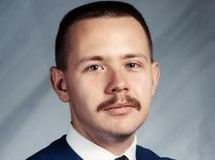 Michael McLendon
Spree killer · USA · 2009
Michael McLendon died of self-inflicted gunshot wound after shootout with autho…
10 victims
Michael McLendon
Spree killer · USA · 2009
Michael McLendon died of self-inflicted gunshot wound after shootout with autho…
10 victims
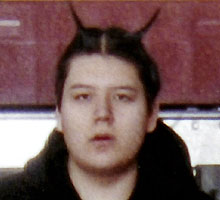 Jeffrey Weise
Spree killer · USA · 2005
Jeffrey Weise, a 16-year-old student at Red Lake High School in Red Lake, an un…
9 victims
Jeffrey Weise
Spree killer · USA · 2005
Jeffrey Weise, a 16-year-old student at Red Lake High School in Red Lake, an un…
9 victims
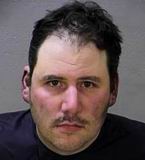 Christopher Speight
Spree killer · USA · 2010
Christopher Speight was the suspect in the Appomattox shootings, a spree shooti…
8 victims
Christopher Speight
Spree killer · USA · 2010
Christopher Speight was the suspect in the Appomattox shootings, a spree shooti…
8 victims
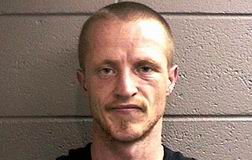 Nicholas Sheley
Spree killer · USA · 2008
Nicholas Troy Sheley (born July 31, 1979) was an American ex-convict accused of…
8 victims
Nicholas Sheley
Spree killer · USA · 2008
Nicholas Troy Sheley (born July 31, 1979) was an American ex-convict accused of…
8 victims
 Marjorie Orbin
Murderer · USA · 2004
Marjorie Orbin murdered her husband Jay Orbin in Phoenix, Arizona on or about S…
1 victim
Marjorie Orbin
Murderer · USA · 2004
Marjorie Orbin murdered her husband Jay Orbin in Phoenix, Arizona on or about S…
1 victim
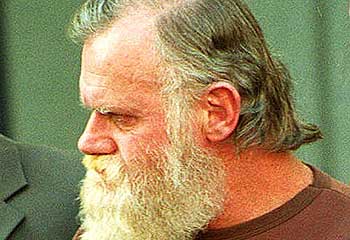 Leonard John Fraser
Serial killer · Australia · 1998
Leonard John Fraser, also known as “The Rockhampton Rapist,” was an Australian…
4 victims
Leonard John Fraser
Serial killer · Australia · 1998
Leonard John Fraser, also known as “The Rockhampton Rapist,” was an Australian…
4 victims
 Albert Burrows
Murderer · United Kingdom · 1920
Albert Burrows (also named Albert Edward Burrows): married farm labourer who to…
4 victims
Albert Burrows
Murderer · United Kingdom · 1920
Albert Burrows (also named Albert Edward Burrows): married farm labourer who to…
4 victims
 Michael Dowdall
Murderer · United Kingdom · 1958
Michael Douglas Dowdall was convicted of killing Veronica Murray and was senten…
1 victim
Michael Dowdall
Murderer · United Kingdom · 1958
Michael Douglas Dowdall was convicted of killing Veronica Murray and was senten…
1 victim
 Johnny Townsend
Murderer · USA · 1983
Johnny Townsend was sentenced to death on March 8, 1985. The case involved aggr…
2 victims
Johnny Townsend
Murderer · USA · 1983
Johnny Townsend was sentenced to death on March 8, 1985. The case involved aggr…
2 victims
- Gender
- male
- Country
- USA
- Location
- Cherokee County, South Carolina, USA
- Date of birth
- August 8, 1967
- Age at first offence
- 42
- Characteristics
- spree killer, motive unknown, armed robbery
- Victim profile
- Kline Cash, 63 / Hazel Linder, 83, and her daughter, Gena Linder Parker, 50 / Stephen Tyler, 45, and his daughter Abby, 15
- Method of murder
- Shooting
- Date(s) of murder
- June 27-July 1, 2009
- Years active
- 2009
- Date of arrest
- —
- Status
-
Died in custody
Killed during a shoot-out with the police on July 6, 2009
Overview
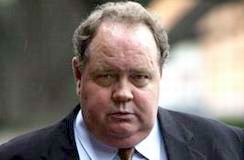
Patrick Tracy Burris (August 8, 1967 – July 6, 2009) was an American spree killer responsible for at least five known murders in Cherokee County, South Carolina, in 2009. Over a span of six days, he shot and killed five people. His final known victim died of her injuries in the hospital on July 4, 2009.
Police shot and killed Burris on July 6, 2009, during a shootout in Dallas, North Carolina. Ballistics tests matched his gun to the bullets used in the murders. Investigators considered whether Burris could be responsible for additional murders.
Timeline
- June 27, 2009 — Kline W. Cash was shot and killed in his home in Gaffney, South Carolina.
- July 1, 2009 — Hazel Linder, 83, and her 50-year-old daughter, Gena Linder Parker, were bound and shot to death in their home in Gaffney.
- July 2, 2009 — Stephen Tyler, 45, was shot and killed in his family's appliance and furniture store; Abby Tyler, 15, was shot and seriously injured when she came to check on him.
- July 4, 2009 — Abby Tyler succumbed to her injuries.
- April 2009 — Burris was released after serving an eight-year sentence in jail.
- July 6, 2009 — Police shot and killed Patrick Tracy Burris during a shootout at a home in Dallas, North Carolina.
- July 8, 2009 — Authorities reported additional evidence found with Burris, and discussed links to the South Carolina killings.
- July 10, 2009 — Authorities discussed potential links between Burris and an unsolved Mooresville homicide.
The offence
Killings in Gaffney, South Carolina
June 27, 2009 — Kline W. Cash
Peach farmer Kline W. Cash was believed to be the first of Burris’s victims. Cash’s wife informed investigators that she and her husband had spoken to a man about buying hay. After Mrs. Cash left to run errands, the man returned and shot and killed her husband in the Cash’s living room; she found his body upon her return.
July 1, 2009 — Hazel Linder and Gena Linder Parker
Four days later, Burris killed Hazel Linder, 83, and her 50-year-old daughter, Gena Linder Parker. They were bound and shot to death.
Authorities found their bodies in the home where Linder lived alone. Investigators were attempting to determine whether anything was taken from that home.
July 2, 2009 — Stephen Tyler and Abby Tyler
The following day, Stephen Tyler, 45, was killed in his family’s appliance and furniture store. His fifteen-year-old daughter Abby was shot and seriously injured when she came to check on her father. The two were found by Tyler’s wife, his older daughter, and an employee.
Abby Tyler died on July 4, 2009.
Suspected additional killing link: Mooresville, North Carolina
Police considered whether Burris could be connected to an unsolved Mooresville homicide. Investigators were looking for evidence to link Patrick Burris to the shooting death of a 31-year-old Mooresville man during a home invasion on June 9.
Mooresville Police Chief Carl Robbins said there was “no connection that we’ve found so far.” He said investigators were evaluating similarities while the investigation proceeded.
A man broke into a Mooresville family’s home last month and shot a couple as they lay in their bed. Matthew Stewart died from his injuries, and his wife, who was shot in the arm, ran to a neighbor’s house to call 911.
Robbins said: “The only thing she can describe about the person that shot him was he was a tall male,” and he added that she didn’t know the shooter’s skin color. Investigators noted that Burris was 41 and stood 6 feet, 8 inches tall.
Robbins described Mooresville as having a population of about 23,000 and called its unsolved homicide record “the only unsolved homicide in Mooresville.” He said many homicides were “domestic-related or drug-related” and that the case had “stumped” the department.
Investigation
Ballistic and evidential links
Authorities found ballistic evidence linking Burris’s gun to the killings in Gaffney. Bullets in the gun found on Burris matched those used to kill residents in and around Gaffney. The gun was sent to the SLED crime lab in Columbia, South Carolina, for matching.
Authorities said they found some items related to the Gaffney killings in the SUV, but they declined to be specific or to release the caliber of the pistol.
Reggie Lloyd, director of South Carolina’s State Law Enforcement Division, stated that additional evidence items were found with Burris and said they appeared to have “come from the victims.” Lloyd would not elaborate on the items during a conference call with reporters.
Broad investigation and coordination
More than 100 investigators from North and South Carolina worked on the case. Authorities said the North Carolina State Bureau of Investigation was investigating the shootout with Gaston County police officers that left Burris dead, and the S.C. Law Enforcement Division was probing the five killings in Gaffney, South Carolina; they were working with Mooresville police to evaluate potential links.
SBI special agent Tony Underwood said detectives from the Mooresville Police Department worked with SBI agents to produce a timeline of Burris’s movements since his April release from Lincoln Correctional Center.
Underwood stated: “Mr. Burris is deceased, and the evidence clearly links him back to the murders in Gaffney, so there’s not really an ongoing criminal investigation,” and: “There’s still a lot of work to be done. A lot of reports have to be done to close this thing out.”
Underwood also said: “Nothing at this point links him,” and: “It’s something that is certainly a possibility, but there’s nothing that says it is or isn’t at this point.”
Arrest / death during police action
July 6, 2009 — Dallas, North Carolina shootout
Police were called to a burglary in progress in Dallas, North Carolina, described as a small town in the northern portion of Gaston County. Eyewitnesses reported seeing a vehicle matching the description of the murder suspect’s Ford Explorer outside an apparently abandoned house.
Upon arrival, police encountered three individuals at the home. One of them drew a gun and shot an officer, injuring him in the leg. Officers returned fire and killed the gunman.
Ballistics tests and checks on the suspect’s vehicle later proved the dead gunman to be Burris.
One officer was shot in the leg, was treated, and was released at a hospital.
Parties present: Mark Stamey and Sharon Stamey; the burglary-in-progress call
Authorities said officers found Burris inside with siblings Mark and Sharon Stamey, who called the house a former residence. It was also reported that the Stameys had met Burris at a hotel about two weeks earlier.
Mark Stamey and Sharon Stamey were identified as having lived in the house. A witness, Mike Valentine, said he saw a Ford Explorer and was concerned it might be connected to the killer. He said the Stameys got out of the car along with a second man and that the second man “was a large man,” and “He was stumbling around like he was really drunk.”
Valentine said the Stameys told the officers it was their house and that they had come to collect some things. Valentine also said he walked across the street and told a police officer there was no electricity at the house and questioned why the three were there.
Police said they asked the three people for identification, and that one gave false identification initially. Police said they eventually got the third person’s correct name and discovered he was wanted by authorities in a neighboring county. When they tried to take him into custody, police said the man, believed to be Burris, fired and hit officer J.K. Shaw in the leg. Police said they fired back, killing the man.
SBI special agent Tony Underwood stated he did not know whether Burris was struck with a Taser, explaining that the weapon can be rendered ineffective if both probes do not attach to a person’s clothing or skin.
The weapon involved a Taser that one officer had drawn as he went inside, “just as a precaution because of the size of the man,” Underwood said.
Police described the Stameys as transients with a drug and criminal past. Authorities said they were not charged and that police were not sure of their whereabouts since questioning them after the shooting.
Timing and vehicle search
Just after 2:30 a.m., a man on Dallas Spencer Mountain Road called local police after he saw a Ford Explorer pull into the driveway across the street from his house. Later, SLED towed a Ford Explorer from an abandoned Gaston County home at about 6:30 p.m. to search for evidence, after police believed the killer drove an Explorer.
Personal background and criminal record
Criminal history and release
At the time of his death, Burris had a criminal record running to more than 25 pages in length. He had served an eight-year sentence in jail and was released in April 2009.
Neil Dolan, deputy director of the South Carolina State Law Enforcement Division, said of Burris: "He was unpredictable. He was scary. He was weird."
Burris was described as having a lengthy record and being a felon. Authorities identified him as a habitual felon in North Carolina corrections records.
The minimum sentence was seven years and nine months on several 2001 felony breaking and entering and larceny convictions, with a maximum of 10 years and a month, according to George Dudley, spokesman for the North Carolina Department of Correction.
As a condition of release, Burris was placed on nine months of supervised parole, Dudley said. Dudley said Burris failed to make his set curfew on several occasions.
Dudley stated: “numerous attempts were made to contact him,” and after those attempts, Burris’s parole officer concluded he had violated his parole and put the process in motion to revoke it.
It was that warrant on a parole violation, out of Lincoln County, North Carolina, that officers attempted to serve on Burris after finding him and checking his background.
George Dudley said corrections officials felt they did their duty but were surprised by the Gaffney deaths. He said infractions listed during Burris’s incarceration were “nothing ‘that would have made someone think that he might do what he did.’”
Violent crime discussion and parole violation context
Reggie Lloyd said burglary is considered a violent crime in South Carolina and that Burris’s history included armed robbery. Lloyd said Burris had weapons charges “coming out of his ear,” and he said: “I consider those violent.”
Lloyd also said the federal system punishes habitual criminals more harshly and states should follow suit.
Sheriff Sam Page said Burris spent many years in Rockingham County, North Carolina, and that most of his convictions originated there. Page noted that in Rockingham County, Burris’s record contained only property crimes—extortion, blackmail, larceny—and “no real crimes of violence.”
Page said he recalled investigating an extortion case in which Burris was thought to have forced an elderly man to write a check to him, but the man was not willing to testify against Burris.
Authorities said Burris originally was from Maryland and had a lengthy record across the Southeast, including Florida, North Carolina, Maryland, Virginia, and West Virginia. Burris was wanted on a North Carolina parole violation.
A timeline of Burris’s movements since his April release from Lincoln Correctional Center was produced by detectives working with SBI agents.
Witnesses, public response, and statements
News conference and fear in Gaffney
Authorities held a news conference just after 8:30 p.m. Monday at the Cherokee County Sheriff’s Department to announce the suspect’s death. Sandy Rhinehart, 42, attended with her three daughters. Rhinehart said: “We just want to make sure he’s gone,” and she said she had a reason to buy a gun for herself that day.
Rhinehart related: “In 1968, a 14-year-old girl who was Rhinehart’s aunt, was killed by the Gaffney Strangler, who stalked lone women and then strangled them.”
Rhinehart said she was probably the only person in Cherokee County who did not have a gun and added: “Even though the suspect had been caught and killed, she said she was going to buy a gun today.”
Cherokee County had been saturated with more than 200 law enforcement officers, coming from more than 20 South Carolina sheriffs offices as well as the South Carolina Highway Patrol and various South Carolina and North Carolina agencies.
The Gaffney Ledger publisher Cody Sossaman, 57, said before police announced the suspect’s death: “We were of the belief he was not going to stop until he was caught,” and also that people were carrying weapons, saying: “Everybody I know — 75 percent of all my friends — we’re all carrying weapons now, everywhere we go.”
Sossaman described the dread as “reasonable,” saying the killer’s profile indicated he might kill again. SLED director Reggie Lloyd said early Monday: “We don’t believe he is going to stop on his own,” and: “This one is scary.”
Statements by law enforcement
Cherokee County Sheriff Bill Blanton said investigators would trace Burris’s recent activities to see if he had killed elsewhere. Blanton said: “We feel the victims’ pain,” and: “This isn’t over. We’re just changing gears.”
Blanton described the suspect as physically intimidating, about 6 feet 7 inches tall and weighing about 300 pounds. Blanton said: “Some people go to prison and learn how to be better and correct themselves,” and: “You never know what people are going to do.”
Underwood said police had dispatched to investigate a reported burglary and explained the Taser precaution. Underwood said: “As I understand it, one of the officers had a Taser in hand when he went back into the residence, just as a precaution because of the size of the man,” and also: “It was that warrant, on parole violation, out of Lincoln County, North Carolina, that officers attempted to serve on Burris after finding him and checking his background early Monday.”
Lloyd said: “what ... the citizens in South Carolina and in this country deserve. And to me, they deserve better than to have somebody with a 25-page rap sheet out on the street with them.”
Dolan characterized Burris as: "He was unpredictable. He was scary. He was weird."
Response at Daddy Joe’s
Gene Wyatt, 35, a housing contractor, said: “I’m really glad this guy got killed,” and said he had not been able to go to people’s houses to do estimates because “People don’t want me there.”
General manager Rea Smiley, 44, said at Daddy Joe’s: “Everyone is just kind of sticking together and being safe,” and: “We all walk out together. We don’t want to, but we’re not being stupid.”
Smiley said: “I haven’t even gone to the bathroom without it.”
Kim Blanton, 49, said: “I’m telling you what — people are just scared to death!” She also said she didn’t have a permit to carry a concealed weapon and that she did not care.
Aftermath / additional notes
Authorities said they were trying to determine if Burris was responsible for more murders. They said there was uncertainty over whether there were connections to other cases, including the Mooresville homicide. Police in Dallas, North Carolina checked Burris’s background and found the warrant, triggering the shootout.
Investigators said that, although the evidence linked Burris to the Gaffney murders, “there’s still a lot of work to be done” to close the case out, including producing reports.
Spotted an error, or have more information about this case?