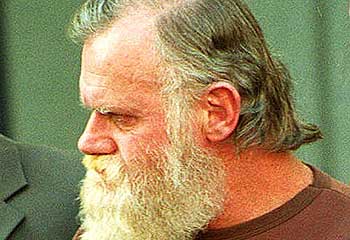
Leonard John Fraser
Serial killer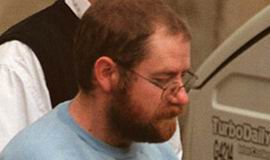 John Justin Bunting
Serial killer · Australia · 1992
John Justin Bunting (born 4 September 1966 in Inala, Queensland) was an Austral…
11 victims
John Justin Bunting
Serial killer · Australia · 1992
John Justin Bunting (born 4 September 1966 in Inala, Queensland) was an Austral…
11 victims
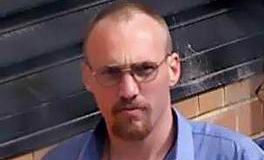 Robert Joe Wagner
Serial killer · Australia · 1992
Robert Joe Wagner (born 28 November 1971 in Parramatta, New South Wales) was an…
10 victims
Robert Joe Wagner
Serial killer · Australia · 1992
Robert Joe Wagner (born 28 November 1971 in Parramatta, New South Wales) was an…
10 victims
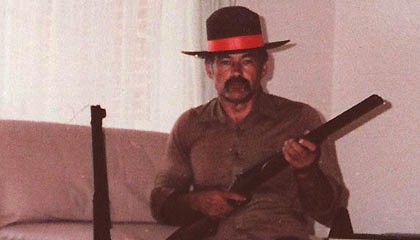 Ivan Milat
Serial killer · Australia · 1989
Ivan Milat was convicted of seven murders and received multiple life sentences.…
7 victims
Ivan Milat
Serial killer · Australia · 1989
Ivan Milat was convicted of seven murders and received multiple life sentences.…
7 victims
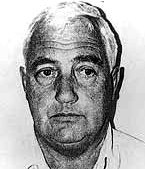 John Wayne Glover
Serial killer · Australia · 1989
John Wayne Glover (26 November 1932 – 9 September 2005) was a British-born Aust…
6 victims
John Wayne Glover
Serial killer · Australia · 1989
John Wayne Glover (26 November 1932 – 9 September 2005) was a British-born Aust…
6 victims
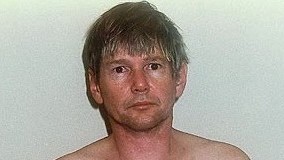 Peter Dupas
Serial killer · Australia · 1997
Peter Norris Dupas was an Australian serial killer known for violence against w…
6 victims
Peter Dupas
Serial killer · Australia · 1997
Peter Norris Dupas was an Australian serial killer known for violence against w…
6 victims
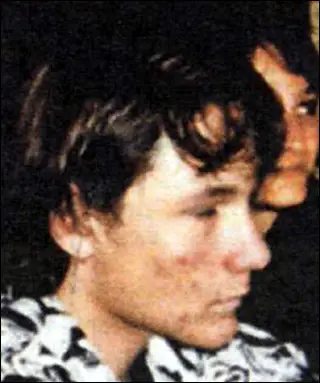 James Vlassakis
Serial killer · Australia · 1997
James Spyridon Vlassakis (born 24 December 1979) was an Australian serial kille…
4 victims
James Vlassakis
Serial killer · Australia · 1997
James Spyridon Vlassakis (born 24 December 1979) was an Australian serial kille…
4 victims
 Serafino Pelizzioni
Innocent · United Kingdom · 1865
The Negretti Murder Case The Golden Anchor, a pub in London EC1, was owned by e…
0 victims
Serafino Pelizzioni
Innocent · United Kingdom · 1865
The Negretti Murder Case The Golden Anchor, a pub in London EC1, was owned by e…
0 victims
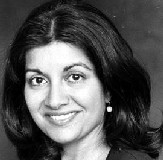 Reetika Vazirani
Murderer · USA · 2003
Reetika Vazirani (1962–2003) was an American poet and educator. On July 16, 200…
1 victim
Reetika Vazirani
Murderer · USA · 2003
Reetika Vazirani (1962–2003) was an American poet and educator. On July 16, 200…
1 victim
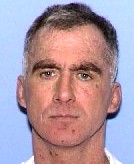 Tracy Lane Beatty
Murderer · USA · 2003
Tracy Lane Beatty was a White male born on 01/23/1961. He was 43 when he was re…
1 victim
Tracy Lane Beatty
Murderer · USA · 2003
Tracy Lane Beatty was a White male born on 01/23/1961. He was 43 when he was re…
1 victim
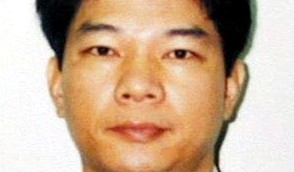 Mamoru Takuma
Mass murderer · Japan · 2001
Mamoru Takuma (宅間 守; November 23, 1963 – September 14, 2004) was a Japanese jan…
8 victims
Mamoru Takuma
Mass murderer · Japan · 2001
Mamoru Takuma (宅間 守; November 23, 1963 – September 14, 2004) was a Japanese jan…
8 victims
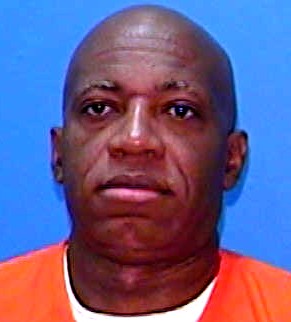 Meryl Stanley McDonald
Murderer · USA · 1994
Meryl Stanley McDonald was convicted in a Florida case involving a murder-for-h…
1 victim
Meryl Stanley McDonald
Murderer · USA · 1994
Meryl Stanley McDonald was convicted in a Florida case involving a murder-for-h…
1 victim
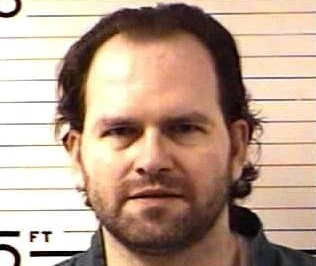 James Genrich
Murderer · USA · 1991
James Genrich was a Colorado man who was convicted of killing two people in 199…
2 victims
James Genrich
Murderer · USA · 1991
James Genrich was a Colorado man who was convicted of killing two people in 199…
2 victims
- Gender
- male
- Country
- Australia
- Location
- Rockhampton, Queensland, Australia
- Date of birth
- J une 27, 1951
- Age at first offence
- 47
- Characteristics
- rape, kidnappings, torture, serial rapist, domestic violence
- Victim profile
- Sylvia Benedetti, 19 / Beverly Leggo, 36 / Julie Turner, 39 / Keyra Steinhardt, 9
- Method of murder
- Strangulation
- Date(s) of murder
- 1998 - 1999
- Years active
- 1998–1999
- Date of arrest
- April 22, 1999
- Status
-
Died in custody
Sentenced to life imprisonment on June 13, 2003; died in prison on January 1, 2007
Case overview
Leonard John Fraser, also known as “The Rockhampton Rapist,” was an Australian convicted serial killer. He was born in Ingham, Queensland (June 27, 1951 – January 1, 2007). Fraser died in prison on January 1, 2007.
Background
Fraser was held at the Wolston Correctional Centre. He had previously served a period in jail for rape.
Fraser had previously been given an indefinite life sentence for the rape and murder of nine-year-old schoolgirl Keyra Steinhardt in April 1999. Fraser grabbed the girl off the street as she walked to school in April 1999.
At his trial in 2003, the judge described Fraser as a sexual predator who was a danger to the community and his fellow inmates.
Fraser was known to frequent the Rockhampton area and had buried his pet dog, which he killed after having sex with it, on the road where Michelle Coral Lewis disappeared.
The offence
Keyra Steinhardt
Fraser was jailed for the abduction and murder of nine-year-old Rockhampton girl Keyra Steinhardt in 1999.
Rockhampton killings between December 1998 and April 1999
In 2003, Fraser was sentenced to three indefinite life terms for the murders of Beverley Leggo and Sylvia Benedetti, and the manslaughter of Julie Turner in the Rockhampton area in 1998 and 1999.
The jury heard that Fraser showed police where Julie Turner’s remains were, but that police could not find her head.
The jury heard that Beverley Leggo had been strangled with her bra and underpants.
The killings took place in Rockhampton between December 1998 and April 1999.
Natasha Ryan
Fraser was charged with murdering teenager Natasha Ryan. Natasha Ryan later emerged from hiding during his murder trial and was found alive, living secretly with her boyfriend after being missing for five years.
Fraser’s trial last year was thrown into disarray after Natasha RYAN was found hiding in a cupboard. The discovery led to calls for Fraser’s trial to be aborted.
Natasha Ryan reunited with her family and faced charges of causing a false investigation. Natasha Ryan was discovered living with her boyfriend Scott Black.
In the 2003 proceedings, Fraser’s charge with murdering Natasha Ryan was dropped when she was found alive.
Other alleged murders and claims
Fraser claimed he murdered up to five other women during his criminal career, which spanned 30 years and two states. He made the claims to a prisoner turned police informant and a homicide detective during a 2001 investigation by Taskforce Alex into the disappearances of four Rockhampton women.
Fraser claimed he murdered a hitchhiker by the name of Sandy Lawrence in an abandoned crocodile zoo in north Queensland in 1982. Detectives spent days digging up the grounds but found no remains.
Fraser also spoke of the murder of his 17-year-old Aboriginal girlfriend, claiming she had her throat cut in the back streets of Kings Cross in the early 1970s. Taskforce recorded Fraser on a listening device saying he murdered two female hitchhikers in separate incidents in the Port Macquarie area in NSW in the 1970s, and he said he had returned to the area to find their skeletal remains still intact.
Some Rockhampton detectives remained convinced Fraser had a hand in the murder of 21-year-old Rockhampton woman Michelle Coral Lewis. She disappeared on the night of January 14, 1989, after leaving a friend’s home in north Rockhampton.
Taskforce Alex investigated Fraser’s claims but could not find enough evidence.
Investigation
Taskforce Alex claims
A 2001 investigation by Taskforce Alex into the disappearances of four Rockhampton women included Fraser making claims about up to five women.
Taskforce recorded Fraser on a listening device saying he murdered two female hitchhikers in separate incidents in the Port Macquarie area in NSW in the 1970s. Fraser also said he returned to the area to find their skeletal remains still intact.
Taskforce Alex investigated the claims, but could not find enough evidence about the alleged further murders.
Evidence found in Fraser’s flat
Police found many trophies of his victims in his flat and ponytails from three different women, which could not be traced to any of his known victims.
Forensic testing in Australia and the US failed to match the hair to any of his murder victims or missing persons in Australia. Police suspected Fraser had kept them as trophies.
Evidence from prison “buddy” Alan Quinn
Fraser’s conviction in 2003 included evidence from his prison “buddy” Alan Quinn about jailhouse confessions. Quinn had convinced Fraser to show police where he dumped his victims’ bodies.
Arrest and detention
Fraser was arrested for the Steinhardt murder.
He was later held at the Wolston Correctional Centre.
In connection with his death, he was taken to a secure section of the Princess Alexandra Hospital in Woolloongabba, after complaining of chest pains.
Trial
2003 convictions
In 2003, a Supreme Court jury convicted Fraser of the murders of Sylvia Benedetti and Beverly Leggo, and the manslaughter of Julie Turner.
The jury found Fraser guilty of murdering Sylvia Benedetti (19) and Beverly Leggo (36) and of the manslaughter of Julie Turner (39).
Fraser was already serving an indefinite sentence for the rape and murder of nine-year-old schoolgirl Keyra Steinhardt.
The jury had also been told about Fraser’s previous conviction for murdering Keyra Steinhart. Justice De Jersey and Justices Geoffrey Davies and Ken Mackenzie rejected Fraser’s argument that the jury should not have been told of his previous conviction.
Trial disruption involving Natasha Ryan
Fraser had been charged with murdering Natasha Ryan.
The trial last year was thrown into disarray after Natasha RYAN was found hiding in a cupboard.
Natasha Ryan was discovered living with her boyfriend Scott Black, which led to calls for Fraser’s trial to be aborted. Fraser’s charge with her murder was dropped when she emerged alive.
Sentencing
June 13, 2003
Fraser was sentenced to life imprisonment on June 13, 2003.
Indefinite terms for later offences
Fraser was sentenced to three indefinite prison terms for the murders of Beverley Leggo and Sylvia Benedetti, and the manslaughter of Julie Turner in the Rockhampton area in 1998 and 1999.
He was sentenced to another three indefinite life terms after the 2003 convictions.
Queensland’s Court of Appeal dismissed Fraser’s application to overturn the convictions.
Appeals
Fraser lost a bid to overturn his convictions for a four month killing spree in Queensland.
Queensland’s Court of Appeal dismissed Fraser’s application to overturn the convictions on the grounds he was not given a fair trial.
Justice De Jersey and Justices Geoffrey Davies and Ken Mackenzie rejected Fraser’s argument that the jury should not have been told of his previous conviction for murdering Keyra Steinhart.
Outcome
Conviction summary (2003)
In 2003, Fraser was convicted of the murders of Sylvia Benedetti and Beverly Leggo and the manslaughter of Julie Turner.
Later status
Fraser’s convictions were not overturned, and he remained in jail indefinitely.
Death in custody and coroner investigation
Fraser was serving three indefinite jail terms when he died.
On December 26, 2006, Fraser was taken to a secure section of the Princess Alexandra Hospital in Woolloongabba after complaining of chest pains while in his jail cell at the Wolston Correctional Centre.
Fraser died of a heart attack on January 1, 2007.
Queensland Corrective Services said Fraser died after having a cardiac arrest about 3.20am yesterday at Brisbane’s Princess Alexandra Hospital. He had been transferred to the hospital on Boxing Day after having chest pains at the Wolston Correctional Centre.
A routine investigation by the Queensland Coroner was conducted into Fraser’s death, and the results had not been released.
Because Fraser died in custody, it was defined under the Coroner’s Act as a reportable death, and it was subject to a routine investigation.
It was unknown whether Fraser’s family had formally requested the coroner to release Fraser’s body for burial.
Aftermath
Comments by Keyra Steinhardt’s father
Keyra Steinhardt’s father, Blair Crewther, told ABC Radio that Fraser’s death had brought some closure.
“I'm actually rather glad that he's now gone,” Mr Crewther said.
“I think it's now actually going to let me get on with my life. It's been an emotional roller-coaster ride for the last seven years and I think it's finally time to get off.”
Blair Crewther later said, “Basically a new start for a new year, it feels right,” and added: “I've had a lot of people say that they would like to have actually seen him be in jail a lot longer, for the rest of his natural life,” he said.
“I’m actually rather glad that he’s now gone,” he said. It’s been an emotional roller coaster ride for the last seven years and I think it’s finally time to get off.”
Comments by Fraser’s lawyer
Peter Shields said Fraser maintained his innocence until the end.
“What use is there in putting people in jail if they're not going to be treated?” he said.
“There needs to be another system invoked if it be a hospital, but we really need to look at what we're actually doing to persons when we put them in prison because they're not coming out better people.”
Peter Shields also said the system failed his client, who was initially jailed in the 1970s for rape and then released without psychiatric support.
Comments by police and officials
Chief Superintendent Graham Rynders, who headed Taskforce Alex, hoped Fraser’s death would bring closure to the families of his victims.
“It is the end of a very sad chapter of Queensland's criminal history and hopefully one that will never be repeated,” he said.
Queensland Premier Peter Beattie said: “I don't think there will be a great deal of sympathy for him,” Queensland Premier Peter Beattie said yesterday.
“His crimes were horrific and, while no one likes to see someone pass away, I don't think there will be a lot of grieving over his passing. I don't think anyone will be shedding any tears.”
Meanwhile, Rockhampton Mayor Margaret Strelow said Fraser’s death would not ease the pain felt by his victim’s families.
“There's probably a sense of closure for some people, but the suffering that Len Fraser caused is going to go on for a very long time,” she said.
“He was already incarcerated, I'm not going to rejoice over the death of anyone, however much pain he caused, but certainly it's going to mean that a lot of that pain will be brought back fresh again to family and loved ones.”
Criminology comments
Bond University professor of criminology and forensic psychology Paul Wilson said more murders were likely to be linked to Fraser.
“He was somebody who clearly revelled in or loved killing and also demonstrating how much of a killer he was,” Prof Wilson said.
“We know that from the fact that he talked to the informer police had in prison with him for so long.”
It was likely, he said, that Fraser was responsible for more murders of women but police would have a difficult time solving them now.
“It's very unlikely he has been caught for all the murders he has committed,” Prof Wilson said.
Asked if Fraser was Queensland's worst killer, he said: “I can't think of a worse one. "
“He certainly displayed all the characteristics of a dangerous psychopath.”
Other details
“The Predator: Leonard John Fraser”
Fraser’s murders were the focus of the Crime Investigation Australia series 2 episode “The Predator: Leonard John Fraser.”
Investigation and reported media items
Fraser’s death led to reported comments and investigation references including “Serial killer death investigated” dated January 11, 2007.
A reported item dated January 2, 2007 stated, “Brutal Queensland serial killer Leonard John Fraser probably took the secrets of several unsolved murders to his grave.”
A reported item dated January 1, 2007 stated “Queensland serial killer dies in hospital” and included details of Fraser being transferred after chest pains and suffering a heart attack.
A reported item dated January 1, 2007 stated “Secrets Taken To Grave” and included claims by Fraser about additional victims, Taskforce Alex’s investigation, and the trophies of hair found in his bedroom when he was arrested for the Steinhardt murder.
A reported item dated April 2004 stated that Fraser lost a bid to overturn his convictions.
A separate reported item referenced the verdict in 2003, including that Leonard John Fraser was found guilty of killing three women in the Rockhampton area in 1998 and 1999.
Spotted an error, or have more information about this case?