
Marjorie Orbin
Murderer Miranda Barbour
Murderer · USA · 2013
Miranda Barbour, 19, defendant. · Elytte Barbour, 22, defendant and husband of…
100 victims
Miranda Barbour
Murderer · USA · 2013
Miranda Barbour, 19, defendant. · Elytte Barbour, 22, defendant and husband of…
100 victims
 Megan Huntsman
Murderer · USA · 1996
Megan Huntsman was 40 at sentencing. She was a mother of three children who wer…
6 victims
Megan Huntsman
Murderer · USA · 1996
Megan Huntsman was 40 at sentencing. She was a mother of three children who wer…
6 victims
 Michele Kalina
Murderer · USA · 1996
Michele Kalina pleaded guilty to murder for one of five infants she initially w…
5 victims
Michele Kalina
Murderer · USA · 1996
Michele Kalina pleaded guilty to murder for one of five infants she initially w…
5 victims
 Tiffany Hall
Murderer · USA · 2006
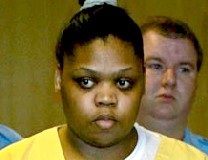
Tiffany Hall was 24 when she was charged in September 2006. She later entered a…
5 victims
Tiffany Hall
Murderer · USA · 2006
Tiffany Hall was 24 when she was charged in September 2006. She later entered a…
5 victims
 Banita Jacks
Murderer · USA · 2007
Banita Jacks was a Washington, DC resident convicted of murdering her four daug…
4 victims
Banita Jacks
Murderer · USA · 2007
Banita Jacks was a Washington, DC resident convicted of murdering her four daug…
4 victims
 Holly Grigsby
Murderer · USA · 2011
Holly Grigsby was sentenced to life in prison without parole on July 15, 2014.…
4 victims
Holly Grigsby
Murderer · USA · 2011
Holly Grigsby was sentenced to life in prison without parole on July 15, 2014.…
4 victims
 Nicholas Vernage
Murderer · Canada · 1991
Nicholas Vernage (26) murdered Sgt Alan King and also killed Lorna Bogle and Ja…
3 victims
Nicholas Vernage
Murderer · Canada · 1991
Nicholas Vernage (26) murdered Sgt Alan King and also killed Lorna Bogle and Ja…
3 victims
 Arthur Hans Halvorsen
Murderer · USA · 1985
March 31, 1985 — Arthur Hans Halvorsen drank at a bar during the afternoon; he…
2 victims
Arthur Hans Halvorsen
Murderer · USA · 1985
March 31, 1985 — Arthur Hans Halvorsen drank at a bar during the afternoon; he…
2 victims
 Charles Daniel Thacker
Murderer · USA · 1993
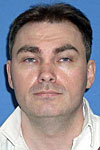
Charles Daniel Thacker was a white male convicted in Harris County, Texas, of c…
1 victim
Charles Daniel Thacker
Murderer · USA · 1993
Charles Daniel Thacker was a white male convicted in Harris County, Texas, of c…
1 victim
 Seema Gavit
Murderer · India · 1990
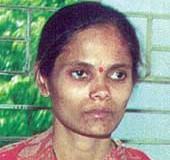
Seema Mohan Gavit and her sister Renuka Shinde received death sentences. The se…
9 victims
Seema Gavit
Murderer · India · 1990
Seema Mohan Gavit and her sister Renuka Shinde received death sentences. The se…
9 victims
 Shaquan Duley
Murderer · USA · 2010
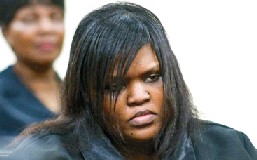
Shaquan Duley (30) was a South Carolina mother who pleaded guilty to two counts…
2 victims
Shaquan Duley
Murderer · USA · 2010
Shaquan Duley (30) was a South Carolina mother who pleaded guilty to two counts…
2 victims
- Gender
- female
- Country
- USA
- Location
- Phoenix, Maricopa County, Arizona , USA
- Date of birth
- October 29, 1961
- Age at first offence
- 43
- Characteristics
- dismemberment, to inherit
- Victim profile
- Jay Michael Orbin, 45 (her husband)
- Method of murder
- Shooting
- Date(s) of murder
- September 8, 2004
- Years active
- 2004
- Date of arrest
- December 6, 2004
- Status
-
Life imprisonment
Sentenced to life imprisonment on October 1, 2009
Case overview
Marjorie Orbin murdered her husband Jay Orbin in Phoenix, Arizona on or about September 8, 2004. Jay Orbin was a jewellery dealer and had been returning home to Phoenix from a long road trip to Florida. Police believed he arrived at his home on September 8, based on his cell phone and credit card records. Jay Orbin was never seen alive again.
Marjorie Orbin was convicted of the murder in 2009 after a trial lasting eight months. The sentencing court imposed life imprisonment on October 1, 2009.
Police investigation concluded that Marjorie Orbin shot and killed Jay Orbin and then dismembered his body in an attempt to keep affairs a secret and inherit Jay’s money. His body was not found until October 23, when his torso was found in a plastic container on the outskirts of Phoenix. The rest of his body was never found.
Timeline
- on or about September 8, 2004 — Jay Orbin returned home to Phoenix after a trip to Florida, was never seen alive again, and later calls and activity were treated as indicating his arrival.
- Aug. 26, 2004 — Noah’s 8th birthday party occurred (described in Marjorie’s video diary).
- Sept. 8, 2004 — Joanne Orbin called her son, Jay, to wish him a happy 45th birthday; the call ended with him saying he would talk later.
- Sept. 10, 2004 — Marjorie was caught on surveillance tape at a Lowe’s hardware store buying two containers with Jay Orbin’s American Express card; she also bought the container later found with Jay Orbin’s torso.
- Sept. 28, 2004 — Detective Jan Butcher left at least three messages for Marjorie before she called back.
- Oct. 23, 2004 — Police believe they found the remains of Jay Orbin; a torso was found in a Rubbermaid container wrapped in heavy black plastic.
- October 23, 2004 — Jay Orbin’s torso was found on the outskirts of Phoenix in a plastic container.
- two weeks after her guilty verdict — The jury sentenced Marjorie Orbin to life in prison.
- late January 2009 — Marjorie Orbin’s trial began and the proceedings detailed her history as an exotic dancer before marrying Jay.
- April (year given in narrative) — Deputy County Attorney Treena Kay stepped into the case.
- September (year given in narrative) — The jury chose to sentence Marjorie Orbin to life in prison instead of death.
- Three months into the trial — Detective David Barnes was placed on leave for what Phoenix police called harassment.
- January 2009 — Marjorie Orbin wrote a letter to The Republic blaming Jay’s brother, Jake, with covering up evidence and redirecting investigators toward her because he stood to inherit Jay’s estate.
- Dec. 6, 2004 — Six weeks after Jay Orbin’s dismembered body was discovered, police arrested Marjorie Orbin and charged her with Jay’s murder.
- October 1, 2009 — Orbin was sentenced to life imprisonment by an Arizona court.
Background
Marjorie Orbin was described as a 47 year old former Las Vegas showgirl. During the trial, the proceedings detailed her history as an exotic dancer before marrying Jay.
Officials described Marjorie Orbin as having affairs with several men. The investigation concluded she killed Jay Orbin and dismembered his body to keep affairs secret and to inherit Jay’s money.
Marjorie Orbin was married seven times by the age of 35.
The offence
Jay Orbin was shot and killed, and his body was dismembered. Police later believed Jay’s remains were found on October 23, with his torso packed inside a Rubbermaid container. The investigation concluded that Marjorie Orbin dismembered his body and disposed of the torso.
The prosecution’s theory included that Marjorie killed Jay Orbin in the garage while their son slept inside the house and then used two jig-saw blades to cut him into pieces. The lead detective described the cuts and missing body parts as part of the investigation, and investigators never found the saw or the gun.
Marjorie Orbin later denied that she killed Jay and claimed an “unforeseen, horrific” confrontation between Jay and someone else. She claimed she did not cause Jay’s death and that she did not have anything to do with his dismemberment.
Investigation
Missing persons phase
After Jay Orbin disappeared in September 2004 following a return trip to Phoenix, the matter was initially handled as a missing persons case. Detective Jan Butcher of the Missing Persons Unit took the case.
Marjorie Orbin’s responses raised concerns during the missing persons investigation. Detective Butcher asked Marjorie to provide information on the license plate of the vehicle Jay was driving, but Marjorie said she would call back and did not. Detective Butcher left at least three messages before Marjorie finally called back.
A recorded conversation included:
- Detective Butcher: "I just kind of get the feeling that you're really not available and willing to help us out. Try to locate where…"
- Marjorie: "You get that feeling, huh? Surprised to hear you say that."
Marjorie told Detective Butcher they divorced for tax reasons but were still living together as man and wife. Marjorie was described as spending Jay’s money, including going through thousands of dollars in a matter of days.
The investigation described purchases including:
- an almost $12,000 baby grand piano
- raiding $45,000 from Jay’s business account
Detective Butcher asked Marjorie to take a polygraph, and the following exchange was recorded:
- Detective Butcher: "Can we schedule you for a polygraph?"
- Marjorie: "You know what. She wants me to take a polygraph tomorrow."
- Male voice: "You tell her to go f--- herself."
Butcher said the male voice in the background turned out to be Marjorie’s boyfriend, Larry Weisberg. The investigation treated Marjorie’s spending and the polygraph call as raising suspicions.
Search warrant and SWAT encounter
Detective Butcher got a search warrant and asked the SWAT team to deliver it. SWAT members broke the door down. Larry Weisberg was confronted inside the home. When he did not move, one SWAT member tased him and he was smashed in the face.
The investigation stated it did not make arrests during the episode. Butcher said the search turned up new clues including numerous credit cards belonging to Jay Orbin that Jay always took on his travels, and Jay’s business checkbook, which was described as always being in his briefcase. Butcher said this evidence indicated Jay came home and never left on another sales trip.
Butcher concluded:
- "I'm thinking this is not a missing persons - it's a homicide investigation."
- "And we need to find out where Jay's remains are."
Discovery of remains
On Oct. 23, 2004, police believe they found what was left of Jay Orbin. Detective David Barnes was called to the scene. Barnes described:
- "As we walked up you could smell the death in the air. Once you smell it, you know what it is for the rest of your life,"
- and described the missing internal organs and severed parts:
- "All of the insides, all of the internal organs, intestines were missing… I thought, 'Who could do this to human being? Cut off his arms, his legs, his head?'"
Barnes said a torso, a wad of cash and a single spent bullet were packed inside a Rubbermaid container. DNA tests later confirmed what Jay’s mother already feared.
From Joanne Orbin:
- "I was shaken. I could not believe it,"
- "It tore us up and it has consumed our life for the last five years."
Barnes linked the murder investigation to Marjorie Orbin’s activities and said everything pointed to Marjorie through the money trail:
- "Everything is pointing towards Marjorie - the money trail... follow the money,"
- "And everything leads right back to Marjorie."
Barnes said Marjorie disposed of Jay’s torso a few miles from her own home, and stated she needed a body and death certificate so she could get the estate of Jay Orbin:
- "She needs Jay to be found. She needs a body,"
- "She needs a death certificate so she could get that estate of Jay Orbin."
Early detention for forgery
Three weeks after police found Jay’s body, police detained Marjorie for forging his signature at a Circuit City store. An officer asked:
- "I want to talk to you a little bit about this mix up here with this credit card stuff at Circuit City."
Marjorie responded:
- "I did not know I was doing anything wrong."
- "I was just trying to get a computer and spend tomorrow getting ready to try and get some orders out so we could pay some bills."
During a break in questioning, Noah was allowed a brief visit:
- Noah: "Did they say that they can use your credit card?"
- Marjorie: "No. That was probably not a good thing to do because the credit card has daddy's name on it and not mine. And you're not supposed to really use a credit card unless it has your name on it."
After the detention, the questioning shifted from fraud to murder.
During questioning, Detective Barnes asked what Marjorie thought happened to Jay:
- Detective Barnes: "What do you think happened to Jay? What would be your best guess right now?"
- Marjorie: "I have no idea. No idea. None whatsoever."
Barnes confronted her with a photo she had not seen before and asked where the rest of Jay was:
- Detective Barnes: "We'd like to know where the rest of Jay is."
- Marjorie (turns away crying): "Oh my God."
- Barnes: "And I think you know."
- Marjorie: "I don't believe you just did that. I don't believe you just did that."
- Barnes: "You're going to go to jail tonight for credit card fraud, Marjorie."
- Marjorie: "This has all been a trick."
Marjorie was released later that night while evidence continued to mount.
Forensic and surveillance evidence
Investigators found receipts for mops and cleaning products purchased one day after Jay went missing. Barnes said the purchases included actions designed to erase blood traces:
- "She acid washes the garage floor and then she epoxy coats the floor,"
- "It completely erased any traces of blood that we could find."
On Sept. 10, Marjorie was caught on surveillance tape at a Lowe's hardware store buying two containers with Jay’s American Express card, including the container found with Jay’s torso. Barnes explained:
- "There she is on the video buying two containers with Jay Orbin's American Express card. Here she is buying the container we find Jay in,"
- "Was as close to the smoking gun as you - we were gonna get at that point."
Marjorie insisted the evidence pointed to the wrong person:
- "I trusted someone that I should not have."
- "And I aided and abetted someone that I should not have."
- "I'm paying a price."
- "And that person is not."
Investigators identified Larry Weisberg as a suspect. Barnes said police found some of Weisberg’s clothing in a drawer in Jay Orbin’s house and asked:
- "We're thinking he's living in the house. Who is he? What's his involvement? You know, the SWAT team comes into the house. Why is he trying to take on the SWAT team?"
During an interview, Van Sant asked about whether Larry and Marjorie fell in love, and Barnes replied:
- "I believe so,"
Barnes and Van Sant discussed motive. Barnes said jealousy and love were typical motives:
- "Yes. That usually is a motive for murder,"
- "Jealousy. Love."
Police later searched Weisberg’s home and vehicle and found he had access to Jay’s garage. Barnes said Weisberg had a remote that let him in and out:
- "He had a remote in his vehicle that let him in and out,"
- and described an alleged sequence:
- "So Jay Orbin comes home. He goes into the garage. Weisberg follows right behind. He kills Jay,"
Van Sant asked whether such a sequence could have happened; Barnes responded:
- "Coulda happened that way,"
- and stated uncertainty about the exact timeline:
- "That's one thing we don't know."
- "What we do know was Marjorie was involved… all the evidence was against Marjorie."
Arrest and charges
On Dec. 6, six weeks after Jay Orbin’s dismembered body was discovered, police arrested Marjorie Orbin and charged her with Jay’s murder.
Noah was sent to live with Jay’s brother, Jake.
Arrest / pre-trial
Marjorie told Peter Van Sant that police handcuffed her in her foyer in front of her child:
- "They handcuffed me in my foyer, in front of my child."
Marjorie said she did not speak up and did not tell police about Weisberg due to fear for her son. Varcoe said the message was:
- "If you tell the police that I committed this crime I will kill your son."
Trial
Prosecutorial misconduct allegations and prosecutor withdrawal
The proceedings were delayed by accusations of prosecutorial misconduct against the initial prosecutor, Deputy County Attorney Noel Levy, and then by Levy’s medical problems, which forced him to withdraw midcase. Anderson threw out the allegations of misconduct.
Noel Levy was also described as being the prosecutor in the case of Ray Krone, whose wrongful murder conviction was overturned after he spent 10 years on death row; and in the case of Debra Milke, who was in federal court as a judge determined whether her 1989 confession was legally obtained. Milke was described as having been on death row since 1991 for the murder of her 4-year-old son.
Deputy County Attorney Treena Kay stepped into the case in April and got a conviction in September. Two weeks later, the jury chose life in prison instead of death.
Use immunity for Larry Weisberg
The prosecution offered Larry Weisberg what was described as use immunity, meaning what he says could not be used against him in court. Varcoe described the immunity as outrageous, saying prosecutors focused on Marjorie Orbin and disregarded other cues.
Defence and prosecution positions
Marjorie’s attorneys were identified as Herman Alcantar and Robyn Varcoe. She argued the case against Weisberg and asked for a new trial after he was granted immunity in exchange for testimony against her.
Defense counsel highlighted that Marjorie had blamed other people in her earlier statements. In a January 2009 letter to The Republic, Marjorie blamed Jay’s brother, Jake, with covering up evidence and redirecting investigators toward her because he stood to inherit Jay’s estate. Anderson denied her request for a new trial earlier this month.
Prosecutor Treena Kay argued that all forensic evidence pointed to Marjorie. Kay stated:
- "All of the forensic evidence points to Marjorie Orbin," and countered that Larry Weisberg was not involved:
- "Larry Weisberg was just another boy toy, another person to manipulate that Marjorie Orbin used… I don't think he's at all involved."
Kay told jurors Marjorie killed Jay by obtaining his gun:
- "Jay Orbin was someone she hated,"
- "She found him disgusting and she wanted him dead and she wanted his money."
- "got his gun, she took it out of his briefcase and she killed him."
Kay theorized dismemberment occurred using jig-saw blades and said:
- "The cuts through Jay's tibia and the vertebrae were consistent with being made by a jigsaw,"
Kay said investigators never found the saw or the gun but relied on surveillance video:
- "Investigators never found the saw or the gun, but Kay had that chilling surveillance video from Lowes."
- "This is a woman that's shopping for the Rubbermaid coffin for her husband,"
Witness testimony and trial evidence
The prosecution’s witness Sophia Johnson was described as Marjorie’s former cellmate. Johnson testified and said Marjorie spoke about Jay and also about Johnson stating:
- "Then she starts talking about how, I did it. I did it,"
- "Those words have never come out of my mouth. Not to anyone." Johnson said Marjorie told her:
- "She said, 'He was shot, frozen, de-thawed and his arms, legs and head was cut off,'" according to Johnson.
The defence dismissed Johnson as a jailhouse snitch.
Larry Weisberg testified after being granted partial immunity. He confronted Marjorie and described her behavior and claims about fearing running away. In his testimony, Weisberg said Marjorie grabbed his hand and told him:
- "Why don't we go into your bedroom" and he testified she said:
- "I'm scared, I'm real scared. I want to run away. I want you to come with me." He said his reply was:
- "What?"
Marjorie’s cross-characterization included the remark:
- "That's baloney." and the statement:
- "The whole thing he said was baloney…He sat on that stand and lied his ass off saying that he didn't know anything about any of this and that is not true."
During direct examination, prosecutor Noel Levy asked:
- Levy : "Do you know anything about what happened to Jay Orbin?"
- Weisberg : "Absolutely not."
- Levy : "Did you have any involvements whatsoever in the murder of Jay Orbin?"
- Weisberg : "God. No."
On cross-examination, defense attorney Herman Alcantar questioned Weisberg about truthfulness:
- Alcantar : "You're a truthful man, right?"
- Weisberg "To a point."
- Alcantar : "So that means sometimes you will be truthful, and other times you will not be truthful. Is that correct?"
- Weisberg : "Yes."
Michael J. Peter testified as support for Marjorie, describing her as a person who could never have killed Jay for money. Marjorie’s response to Peter’s offer was described as:
- "There's nothing in the world I rather do than be with you again, Michael. But Jay's a good man. I would never take the father from the child or the child from the father,"
Marjorie also testified in the narrative that she said:
- "He knew me well enough to know that I could not have done that,"
Her attorneys advised her not to take the stand, and she stated she was told the prosecution had not proven the case beyond a reasonable doubt.
Detective Barnes and evidence testing issues
Detective David Barnes said evidence that may have implicated Weisberg was never tested by the Phoenix crime lab. Van Sant asked:
- "Where did they drop the ball?" Barnes answered:
- "With some hairs,"
Barnes said hairs were found on the tub of Jay Orbin’s remains and that testing did not occur:
- "I tried to get the hair tested… the crime lab said 'No.'"
Van Sant and Barnes discussed possible matches and implications:
- "What if that's Larry Weisberg's hair? What if it's Marjorie's hair?" asked Van Sant.
- Barnes: "It'd be nice to know,"
- Van Sant: "If Larry Weisberg is being falsely accused, these hairs could exonerate him for the rest of his life,"
- Barnes: "Or it could put him in prison for the rest of his life,"
- Barnes: "I know for a fact that Marjorie was involved. I don't know for a fact that Larry was involved. Is it possible? I think it is possible. But everything that we looked at and everything that we were allowed to test eliminated Larry."
It was also stated that two hairs tested did not match Marjorie or Larry, and several other hairs were not tested.
Prosecutor Kay stated there was an amount of forensic testing done that allowed exclusion of evidence recovered from Weisberg’s home:
- "There was an incredible amount of forensic testing done in this case,"
- "We were able to exclude anything recovered from Larry Weisberg's home as having any ties to the murder."
Detective placed on leave
Three months into trial, Barnes was placed on leave for harassment. Barnes believed it was because of his criticism of the crime lab in this and other cases. Only Michael J. Peter spoke up for Marjorie in the narrative.
Sentencing
The jury deliberated for only seven hours after an eight-month trial, and Marjorie Orbin was found guilty.
After two weeks, the jury sentenced Marjorie Orbin to life in prison instead of death, and it was up to Judge Arthur Anderson to determine whether to sentence her to natural life or life with a chance of parole after 25 years.
At sentencing on October 1, 2009, Judge Arthur Anderson sentenced Orbin to life imprisonment. Anderson made remarks comparing the case’s facts to Winnie Ruth Judd:
- "What this seems to be is a revelation of your very darkest side, ma'am,"
- "When that dark side is unleashed, it's about as dark as it gets."
A media-related account included that Anderson told Orbin to spend the rest of her life in prison for killing her husband and dismembering his body.
Orbin appealed the jury’s verdict.
Outcome
Marjorie Orbin was convicted in 2009 after an eight-month trial and was sentenced to life imprisonment on October 1, 2009. She was reported as planning to appeal her conviction.
Aftermath and reactions
Jake Orbin, Jay Orbin’s brother, said the sentencing brought closure and that they were ecstatic. He also said he moved to Arizona after the murder to care for Noah, the 13-year-old son left essentially parentless.
The narrative described Jay’s friends and family celebrating his birthday every year. It also stated that he would have turned 50 on Sept. 8, 2009.
Joanne Orbin wanted her son remembered as a loving father, son, and good brother, saying:
- "That he cared for other people."
- "That he had a precious life that someone has taken from him."
- "And we wish we could get him back."
- "He's in a better place."
Other details
Relationship background described in video diary
Marjorie Orbin described early life decisions and struggles. She stated:
- "At 18, I was told that I could not have children."
- "So I made a conscious decision at that point in my life I would only be responsible for myself."
- "I danced, I traveled."
- "I worked hard, played hard, went through a few marriages."
She stated she wanted children and that she had hoped for a child with Jay. She described the couple’s attempt to have children via fertility treatments and said:
- "The only thing that I ever wanted that I never was able to have was a child, and he wanted a wife and a child more than anything in the world."
- "Jay, by then, the owner of a successful Native American arts business, offered to pay for fertility treatments if Marjorie would marry him and move to Phoenix."
Marjorie stated:
- "I couldn't believe that my son was bringing her into the house and saying he was engaged to her," at which point Joanne Orbin said:
- "Not really." and also said:
- "She was beautiful, yes," and:
- "not as beautiful as she thought she was."
The narrative included Marjorie’s account that she was jealous about other women and that Jay had cared for her. It also included a description of the elopement at the Little White Wedding Chapel on Las Vegas Boulevard and that they got married there.
Marjorie described giving birth to Noah as:
- "It was the most important - most important day of my life," and:
- "It meant everything to you?"
- "Yeah. Yeah," and she said:
- "Both of us. It meant everything to both of us."
Noah and family references
Noah was described as their son and was allowed a brief visit during questioning. A narrative stated that Noah was 13-year-old in the sentencing account and that he was sent to live with Jake Orbin.
Other people named
- Jay Orbin’s mother, Joanne Orbin, was quoted and described regarding fears and remembrance.
- Jay Orbin’s big brother, Jake Orbin, was quoted about the sentencing.
- Jay Orbin’s friend Marshall Roosin was quoted in relation to closure and evidence.
- Shelly Orbin, Jake’s wife, was quoted describing crying.
- Detective Jan Butcher led the Missing Persons Unit.
- Detective David Barnes was involved in investigations and questioning.
- Officer and Detective Barnes were quoted during questioning about credit card fraud and evidence.
- Prosecutor Treena Kay prosecuted the case after Noel Levy withdrew.
- Deputy County Attorney Noel Levy was named in misconduct allegations and withdrawal.
- Larry Weisberg was identified as Marjorie’s boyfriend and a suspect and witness; he was granted partial immunity/use immunity.
- Herman Alcantar was named as one of Marjorie’s attorneys.
- Robyn Varcoe was named as Marjorie’s attorney.
- Sophia Johnson was a former cellmate witness.
- Michael J. Peter was named as an “old flame” and witness/support.
- Peter Van Sant was mentioned as a correspondent in the narrative.
- Liza Finley was mentioned as produced by in the narrative.
Media and publications
Marjorie Orbin’s case was featured in an episode of "Deadly Women" and in the CBS newsmagazine "48 Hours" and in "Scorned: Love Kills." A book titled Dancing with Death by Shanna Hogan was released about the case in May 2011. Another book titled What She Always Wanted by Camille Kimball was released in 2010. An episode page reference named "48 Hours: Diary of a Showgirl" and "CBSNews.com November 21, 2009" appeared in the narrative.
Spotted an error, or have more information about this case?