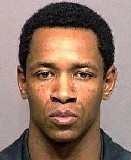
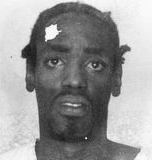
John Allen Muhammad
Spree killer Mark Barton
Spree killer · USA · 1999
Mark Orrin Barton (1955 – July 29, 1999) committed a spree killing in Stockbrid…
12 victims
Mark Barton
Spree killer · USA · 1999
Mark Orrin Barton (1955 – July 29, 1999) committed a spree killing in Stockbrid…
12 victims
 Michael McLendon
Spree killer · USA · 2009
Michael McLendon died of self-inflicted gunshot wound after shootout with autho…
10 victims
Michael McLendon
Spree killer · USA · 2009
Michael McLendon died of self-inflicted gunshot wound after shootout with autho…
10 victims
 Jeffrey Weise
Spree killer · USA · 2005
Jeffrey Weise, a 16-year-old student at Red Lake High School in Red Lake, an un…
9 victims
Jeffrey Weise
Spree killer · USA · 2005
Jeffrey Weise, a 16-year-old student at Red Lake High School in Red Lake, an un…
9 victims
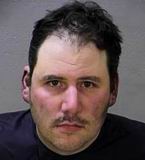 Christopher Speight
Spree killer · USA · 2010
Christopher Speight was the suspect in the Appomattox shootings, a spree shooti…
8 victims
Christopher Speight
Spree killer · USA · 2010
Christopher Speight was the suspect in the Appomattox shootings, a spree shooti…
8 victims
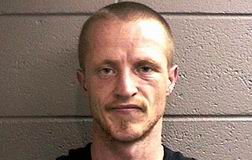 Nicholas Sheley
Spree killer · USA · 2008
Nicholas Troy Sheley (born July 31, 1979) was an American ex-convict accused of…
8 victims
Nicholas Sheley
Spree killer · USA · 2008
Nicholas Troy Sheley (born July 31, 1979) was an American ex-convict accused of…
8 victims
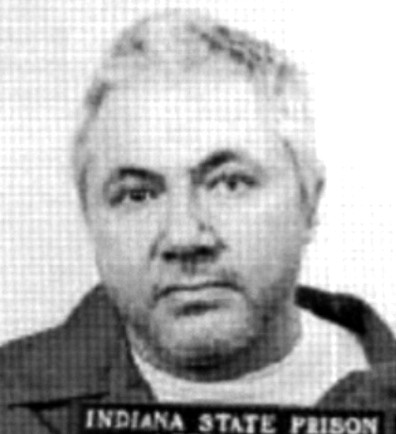 Arthur Paul Baird
Murderer · USA · 1985
Arthur Paul Baird II — defendant (appellant); husband of Nadine Baird; son of K…
3 victims
Arthur Paul Baird
Murderer · USA · 1985
Arthur Paul Baird II — defendant (appellant); husband of Nadine Baird; son of K…
3 victims
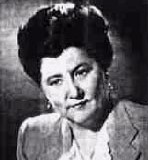 Maria Lee
Murderer · South Africa · 1947
Maria Helena Gertruida Lee (née van Niekerk), later known as Maria Lee, was bor…
1 victim
Maria Lee
Murderer · South Africa · 1947
Maria Helena Gertruida Lee (née van Niekerk), later known as Maria Lee, was bor…
1 victim
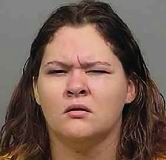 Arline Lawless
Murderer · USA · 2012
Arline Lawless, also known as Arline Seavey, was a 26-year-old Waldoboro woman…
1 victim
Arline Lawless
Murderer · USA · 2012
Arline Lawless, also known as Arline Seavey, was a 26-year-old Waldoboro woman…
1 victim
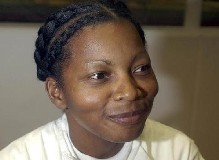 Frances Newton
Murderer · USA · 1987
Frances Elaine Newton (April 12, 1965 – September 14, 2005) was executed by let…
3 victims
Frances Newton
Murderer · USA · 1987
Frances Elaine Newton (April 12, 1965 – September 14, 2005) was executed by let…
3 victims
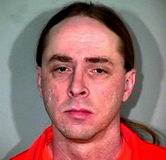 Jeffrey Landrigan
Murderer · USA · 1982
Jeffrey Landrigan In December 1989, Chester Dean Dyer was found dead in his apa…
2 victims
Jeffrey Landrigan
Murderer · USA · 1982
Jeffrey Landrigan In December 1989, Chester Dean Dyer was found dead in his apa…
2 victims
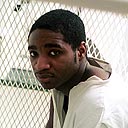 Anzel Keon Jones
Homicide · USA · 1995
Anzel Keon Jones was a 17-year-old at the time of his arrest for the May 1995 m…
1 victim
Anzel Keon Jones
Homicide · USA · 1995
Anzel Keon Jones was a 17-year-old at the time of his arrest for the May 1995 m…
1 victim
- Gender
- male
- Country
- USA
- Location
- Washington, D.C./Maryland/Virginia, USA
- Date of birth
- December 31, 1960
- Age at first offence
- 42
- Characteristics
- shooting spree, abduction
- Victim profile
- James Martin , 55 / James Buchanan , 39 / Premkumar Walekar , 54 / Sarah Ramos , 34 / Lori A . Lewis-Rivera , 25 / Pascal Charlot , 72 / Dean Harold Meyers , 53 / Kenneth Bridges , 53 / Linda Franklin , 47 / Conrad Johnson , 35
- Method of murder
- Shooting ( high powered rifle)
- Date(s) of murder
- September -October 2002
- Years active
- 2002
- Date of arrest
- October 24, 2002
- Status
-
Executed
Executed by lethal injection in Virginia on November 10, 2009
Overview
John Allen Muhammad carried out the 2002 D.C. sniper attacks with his 17-year-old partner, Lee Boyd Malvo. The attacks killed 10 people and wounded several others in the Washington area during October 2002. Muhammad was executed by lethal injection in Virginia on November 10, 2009.
Background
Muhammad was born John Allen Williams and later changed his surname to Muhammad after joining the Nation of Islam in 1987. He had been a soldier-turned-auto-mechanic. Muhammad held a deep grudge against his ex-wife and society. Malvo’s drawings described the murders as part of a "jihad."
During Malvo’s testimony, the intent of the shooting spree was described as an attempt to create havoc to cover plans to kidnap Muhammad’s three children. A longer-term goal described in Malvo’s testimony was to extort law enforcement into giving them money to stop the shootings. Muhammad planned to take the money and move to Canada with Malvo and his three children.
The offence
Most shootings were made with a high-powered rifle from inside the trunk of Muhammad’s vehicle, which had been modified. The vehicle had been modified with heavy window tint, a hinged rear seat providing easy access to the trunk from the passenger compartment, and a hole cut into the trunk lid just above the license plate.
In total, Muhammad was accused of shooting sixteen people and killing ten of them.
Timeline
- October 24, 2002 — Police arrested Muhammad and Malvo while sleeping at a rest stop in Frederick County, Maryland.
- October 14, 2003 — Muhammad’s trial began (trial held in Virginia Beach for Washington D.C. slayings).
- October 17, 2003 — Jury selection completed.
- October 21, 2003 — Muhammad moved to act as own counsel.
- November 17, 2003 — Muhammad was found guilty on four counts: two counts of capital murder, conspiracy, and use of a firearm.
- November 24, 2003 — Jury sentenced Muhammad to death for the capital murder and to twenty-three years in prison for the other crimes; the trial court entered final judgment in accordance with the verdict.
- March 29, 2004 — John Allen Muhammad was sentenced to death.
- August 2005 — While awaiting execution in Virginia, Muhammad was extradited to Maryland to face charges there.
- May 30, 2006 — A Maryland jury found John Allen Muhammad guilty of six counts of murder in Maryland.
- October 24, 2002 — Muhammad and Malvo were captured at a rest area in Frederick County, Maryland; police found a loaded .223-caliber Bushmaster rifle behind the rear seat in a modified Caprice.
- November 10, 2009 — Muhammad was executed by lethal injection in Virginia.
Investigation
An anonymous caller told a priest to tell police to check a liquor store robbery-murder in Montgomery, Alabama. Investigators in Montgomery matched a fingerprint found on a weapons magazine in the parking lot to Malvo’s immigration records. Authorities traced Malvo to a school in Bellingham, Washington, then to a home in Tacoma where he lived with Muhammad.
Police linked the sniper team to Muhammad’s blue Caprice registered in New Jersey. Police broadcast descriptions of the suspects and the vehicle, and a trucker spotted them in a Maryland rest stop, where they were arrested.
Muhammad’s laptop computer had maps marked with icons, including skull and crossbones, indicating where Walekar, Lewis-Rivera, Seawell, Brown, Meyers, and Franklin had been shot. The laptop also contained a document entitled “Allah8.rtf” containing portions of text communicated to police in extortion demands.
Arrest
On October 24, 2002, the FBI captured Muhammad and Malvo at a rest area in Frederick County, Maryland. They were asleep in a Caprice. Police found a loaded .223-caliber Bushmaster rifle behind the rear seat. The DNA on the rifle matched that of both Muhammad and Malvo, with fingerprints found on the rifle belonging to Malvo. Police also found numerous items inside the Caprice, including a global positioning system receiver, a magazine about rifles, an AT&T telephone charge card, ear plugs, maps, plastic sandwich bags, a rifle scope, .223-caliber ammunition, two-way radios, a digital voice recorder, a receipt from a Baton Rouge, Louisiana, grocery store dated September 27, 2002, an electronic organizer, a plastic bag from Big Lots, a slip of paper containing the Sniper Task Force telephone number, and a list of schools in the Baltimore area.
The Caprice was modified with heavy window tint, a hinged rear seat allowing access to the trunk from the passenger compartment, and a hole cut into the trunk lid just above the license plate. Covering the hole was a right-handed brown glove matching a left-handed glove found near the Johnson shooting, and a rubber seal crossed over the hole. The trunk had been spray-painted blue.
Police found LaRuffa’s laptop computer, onto which Muhammad loaded “Microsoft Streets and Trips 2002” on September 2, 2002.
Trial
Virginia trial (Prince William County, Circuit Court; moved to Virginia Beach)
Muhammad was convicted by a jury in the Circuit Court of Prince William County, Virginia, on November 17, 2003 for the 2002 capital murder of Dean Meyers as more than one murder in three years, in violation of Va. Code Ann. § 18.2-31(8) (2003); for the capital murder of Meyers in the commission of an act of terrorism, in violation of Va. Code Ann. § 18.2-31(13) (2003); for conspiracy to commit capital murder; and for the illegal use of a firearm during the commission of murder.
Muhammad’s trial for one of the murders—the murder of Dean Harold Meyers in Prince William County, Virginia—began in October 2003, and the following month he was found guilty of capital murder. Four months later he was sentenced to death.
During the Virginia trial, Muhammad represented himself for the first two days, making points about the fact that no one saw him shoot a single bullet, before switching back to having legal representation after his opening argument. He was granted the right to represent himself in his defense and dismissed his legal counsel, though he immediately switched back to having legal representation after his opening argument.
The jury recommended the death penalty, and on November 24, 2003, the jury sentenced Muhammad to death for the capital murder and to twenty-three years in prison for other crimes. The trial court entered final judgment in accordance with the verdict on March 29, 2004.
Maryland trial (Sussex I State Prison extradition)
While awaiting execution in Virginia, Muhammad was extradited to Maryland to face charges there. In Maryland, he was convicted of six counts of first-degree murder. After trial activity in Maryland, it was planned that he next be returned to Virginia’s death row unless some agreement was reached with another state or the District of Columbia seeking to try him.
A Maryland jury found John Allen Muhammad guilty of six counts of murder in Maryland on May 30, 2006. He was sentenced to six consecutive life terms without possibility of parole on June 1, 2006.
Sentencing
On March 29, 2004, John Allen Muhammad was sentenced to death.
On November 24, 2003, the jury sentenced Muhammad to death for the capital murder and to twenty-three years in prison for other crimes. In Maryland, after conviction, he was sentenced to six consecutive life terms without possibility of parole on June 1, 2006.
Appeals
Muhammad filed legal challenges, including:
- Muhammad v. Commonwealth, 611 S.E. 2d 537 (Va. 2005)
- Muhammad v. Warden of Sussex I State Prison, 646 S.E. 2d 182 (Va. 2007)
- Muhammad v. Kelly, 575 F.3d 359 (4th Cir. 2009)
- Muhammad v. State, 934 A.2d 1059 (Md. App. 2007)
The U.S. Supreme Court refused a last-minute appeal on November 9, 2009.
Outcome
He declined to make a final statement.
Muhammad requested a last meal but refused publication of its contents. His last meal was described as chicken and red sauce, and some cakes. The execution began and proceeded without complications.
Aftermath
After his execution, his body was rushed to a medical examiner in Richmond. The state kept Muhammad’s body for two days after the execution to verify his death.
Other details
Victims and incidents described
Muhammad and Malvo were linked to shootings and deaths across multiple locations during October 2002. The following incidents were described in the case narrative:
September 5, 2002 (Clinton, Maryland) — Paul J. LaRuffa closed his restaurant and proceeded to take his laptop and $3500 in cash and credit receipts to his car. After he sat behind the steering wheel, he saw a figure and a flash of light, then heard gunshots. LaRuffa was shot six times but survived. An employee witnessed a “kid” run up to LaRuffa’s car, fire into it, and take the briefcase and laptop. The briefcase and empty deposit bags were found six weeks later in a wooded area approximately a mile from the shooting. DNA from clothing found nearby was consistent with that of Lee Boyd Malvo.
September 15, 2002 (Clinton, Maryland) — Muhammad Rashid was locking the front door of the Three Roads Liquor Store from the outside when he heard gunshots behind him. A young man rushed him and shot him in the stomach. Rashid testified that the young man was Malvo.
September 21, 2002 (Montgomery, Alabama) — Claudine Parker and Kellie Adams were shot after closing the Zelda Road ABC Liquor Store. Parker died as a result of her gunshot wound through the back, with the bullet transecting her spinal cord and passing through her lung. Adams was shot through the neck; the bullet exited through her chin, breaking her jaw in half, shattering her face and teeth, paralyzing her left vocal cord, and severing nerves in her left shoulder; she survived. Bullets recovered were eventually identified as coming from a Bushmaster high-powered rifle. Malvo was seen approaching Parker and Adams while the rifle was being fired. Officers observed Malvo going through the women’s purses; the officers gave chase, but Malvo escaped and dropped a gun catalog. Malvo’s fingerprints were found on the catalog, and a .22-caliber stainless-steel revolver was found in the stairwell of an apartment building that Malvo traversed; the revolver was the same one used to shoot LaRuffa and Rashid.
September 23, 2002 (Baton Rouge, Louisiana) — Hong Im Ballenger, manager of a Beauty Depot store, was shot once in the head while walking to her car after closing the store. The bullet entered the back of her head and exited through her jawbone; she died as a result of the wound. Witnesses saw Malvo flee with Ballenger’s purse. The bullet was determined to have come from the Bushmaster rifle found on Muhammad during his arrest.
October 3, 2002 (Silver Spring, Maryland) — Premkumar A. Walekar was shot while fueling his taxicab; the bullet went through his left arm and entered his chest, fatally damaging his heart. Sarah Ramos was killed while sitting on a bench in front of the Crisp & Juicy Restaurant; the bullet entered through the front of her head and exited through her spinal cord at the top of the neck.
October 3, 2002 (Kensington, Maryland) — Lori Lewis-Rivera was shot in the back while vacuuming her car at a Shell gas station. An eyewitness said that he saw a Chevrolet Caprice in the area about twenty minutes before the shooting.
October 3, 2002 (District of Columbia) — Pascal Charlot was shot in the chest as he crossed the intersection of Georgia Avenue and Kalmia Road. The shooting happened about thirty blocks from where Muhammad was stopped.
October 4, 2002 (Fredericksburg, Virginia) — Caroline Seawell was putting bags in her minivan outside of a Michael’s craft store when she was shot once in the back. She survived.
October 6, 2002 (Bowie, Maryland) — Tanya Brown was taking Iran Brown to Tasker Middle School. As Iran walked on the sidewalk to the school, he was shot once in the chest; surgeons were able to save his life despite described injuries.
Brown shooting communications and tarot card — In connection with the Brown shooting, police discovered communications from the shooters. A tarot card for death was found with text written on it: “Call me God.” On the back, someone had written, “For you, Mr. Police. Code: Call me God. Do not release to the Press.” Muhammad v. Virginia, 619 S.E.2d at 27.
October 9, 2002 (Manassas, Virginia) — Dean Meyers was fueling his car at a Sunoco station when he was shot in the head by a single bullet. An eyewitness testified to seeing Muhammad and Malvo in the area about one hour prior.
October 11, 2002 (Massaponax, Virginia) — Kenneth Bridges was fired upon at an Exxon gas station; he was shot once in the chest.
October 14, 2002 (Falls Church, Virginia) — Linda Franklin and her husband were loading their car outside of a Home Depot when she was shot in the head and killed.
October 15, 2002 (Rockville, Maryland) — A dispatcher received the following telephone call:
“Don't say any thing, just listen, we're the people who are causing the killings in your area. Look on the tarot card, it says, ‘call me God, do not release to press.’ We've called you three times before trying to set up negotiations. We've gotten no response. People have died.”
October 18, 2002 (Montgomery County, Maryland) — Officer Derek Baliles received a telephone call. The caller told Baliles to “shut up” and said the caller knew who was doing the shootings but wanted police to verify some information. The caller asked questions about the Parker and Adams shootings in Alabama and hung up again. When the caller called again, Baliles verified the shootings. The caller stated that he needed to find more coins and a telephone without surveillance, then hung up.
October 18, 2002 (Ashland, Virginia) — William Sullivan, a priest in Ashland, received a telephone call from two people. One male voice told him that someone else wanted to speak to him. The second male voice said “the lady didn't have to die,” and “it was at the Home Depot.” The caller told him about the shooting in Alabama and said: “Mr. Policeman, I am God. Do not tell the press.” The caller concluded by telling Sullivan to relay the information to the police.
October 19, 2002 (Ashland, Virginia) — Jeffery Hopper and his wife were leaving a restaurant when he was shot in the abdomen. Hopper survived, but his injuries required five surgeries. Police discovered a blind, a shell casing, a candy wrapper, and a plastic sandwich bag decorated with Halloween characters and self-adhesive stars. The shell casing and bullets were determined to have come from a Bushmaster rifle. The sandwich bag contained a handwritten message that included demands, including:
For you Mr. Police. “Call me God.” Do not release to the Press. We have tried to contact you to start negotiation ... These people took our call for a Hoax or Joke, so your failure to respond has cost you five lives. If stopping the killing is more important than catching us now, then you will accept our demand which are non-negotiable. (i) You will place ten million dollar in Bank of america account ... We will have unlimited withdrawl at any atm worldwide. You will activate the bank account, credit card, and pin number. We will contact you at Ponderosa Buffet, Ashland, Virginia, tel. # ... 6:00 am Sunday Morning. You have until 9:00 a.m. Monday morning to complete transaction. “Try to catch us withdrawing at least you will have less body bags.” (ii) If trying to catch us now more important then prepare you body bags. If we give you our word that is what takes place. “Word is Bond.” P.S. Your children are not safe anywhere at anytime.
October 20, 2002 (FBI Sniper Tip Line) — The FBI Sniper Tip Line received a call from a male stating:
“Don't talk. Just listen. Call me God. I left a message for you at the Ponderosa. I am trying to reach you at the Ponderosa. Be there to take a call in ten minutes.”
October 21, 2002 (FBI negotiations team) — The FBI negotiations team received a call re-routed from the Ponderosa telephone number. The recorded voice said:
Don't say anything. Just listen. Dearest police, Call me God. Do not release to the press. Five red stars. You have our terms. They are non-negotiable. If you choose Option 1, you will hold a press conference stating to the media that you believe you have caught the sniper like a duck in a noose. Repeat every word exactly as you heard it. If you choose Option 2, be sure to remember we will not deviate. P.S.-Your children are not safe.
October 22, 2002 (Aspen Hill, Maryland) — Conrad Johnson, a bus driver for the Montgomery County Transit Authority, was shot in the chest as he was entering his bus in Aspen Hill, Maryland. Johnson was conscious when rescue workers arrived but died at the hospital. Police discovered another blind nearby and found a black duffle bag and a brown left-handed glove. DNA from hair found in the duffle bag matched that of Muhammad.
Other linked victims listed in narrative — The narrative also listed additional victims as connected to Muhammad and Malvo, including Keenya Cook, Jerry Ray Taylor, Paul J. La Ruffa, Rupinder Oberoi, Muhammad Rahid, Million Woldemariam, Claudine Lee Parker, Kellie Adams, Hong Im Ballenger, Wright Williams, Jr., and several others.
Victim count and sentencing context
The narrative described 10 killed and several wounded during the October 2002 attacks in the Washington area. It also described Muhammad’s trial in Virginia for the murder of Dean Harold Meyers and convictions including capital murder, conspiracy, and illegal use of a firearm during the commission of murder.
Muhammad’s last statement
Muhammad refused to utter any last words at his execution and said nothing when asked whether he had any last words.
Spotted an error, or have more information about this case?