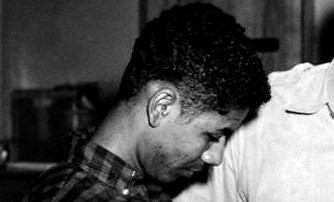
Wilbert Rideau
Murderer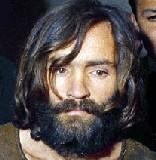 Charles Manson
Murderer · USA · 1969
Charles Milles Manson (born November 12, 1934) was an American criminal and mus…
9 victims
Charles Manson
Murderer · USA · 1969
Charles Milles Manson (born November 12, 1934) was an American criminal and mus…
9 victims
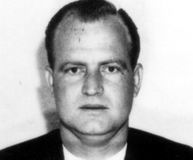 Gary Gene Tison
Murderer · USA · 1967
Gary Gene Tison was serving life sentences at the Arizona state prison. He had…
7 victims
Gary Gene Tison
Murderer · USA · 1967
Gary Gene Tison was serving life sentences at the Arizona state prison. He had…
7 victims
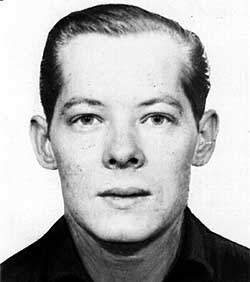 Richard Lee Tingle
Murderer · USA · 1968
Richard Lee Tingle was born out of wedlock in December 1940. He was raised by a…
6 victims
Richard Lee Tingle
Murderer · USA · 1968
Richard Lee Tingle was born out of wedlock in December 1940. He was raised by a…
6 victims
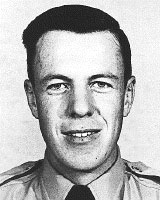 Bertram Greenberg
Murderer · USA · 1971
Bertram Greenberg · Officer James L. Keeton · Officer Don A. Beckstead · A 13-y…
4 victims
Bertram Greenberg
Murderer · USA · 1971
Bertram Greenberg · Officer James L. Keeton · Officer Don A. Beckstead · A 13-y…
4 victims
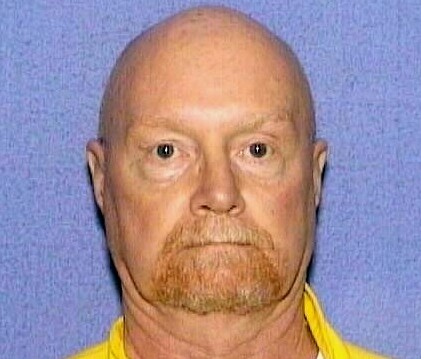 Gary Duane Rardon
Murderer · USA · 1962
Gary Duane Rardon killed a man in 1962 and later served 4 years for manslaughte…
4 victims
Gary Duane Rardon
Murderer · USA · 1962
Gary Duane Rardon killed a man in 1962 and later served 4 years for manslaughte…
4 victims
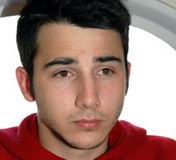 Diego Santoy
Murderer · Mexico · 2006
Diego Santoy Riveroll was a Mexican university student who was accused of stabb…
2 victims
Diego Santoy
Murderer · Mexico · 2006
Diego Santoy Riveroll was a Mexican university student who was accused of stabb…
2 victims
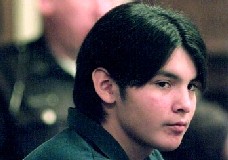 Omer Ninham
Homicide · USA · 1998
Omer Ninham was sentenced to life in prison without the possibility of parole o…
1 victim
Omer Ninham
Homicide · USA · 1998
Omer Ninham was sentenced to life in prison without the possibility of parole o…
1 victim
 Detlev Guenzel
Murderer · Germany · 2013
November 4, 2013 — Detlev Günzel collected Wojciech Stempniewicz and drove him…
1 victim
Detlev Guenzel
Murderer · Germany · 2013
November 4, 2013 — Detlev Günzel collected Wojciech Stempniewicz and drove him…
1 victim
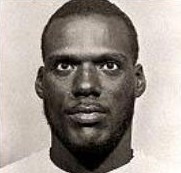 Harrison Graham
Serial killer · USA · 1986
Harrison Graham was a 28-year-old mentally retarded drug abuser who lived in a…
7 victims
Harrison Graham
Serial killer · USA · 1986
Harrison Graham was a 28-year-old mentally retarded drug abuser who lived in a…
7 victims
- Gender
- male
- Country
- USA
- Location
- Lake Charles, Louisiana, USA
- Date of birth
- February 13, 1942
- Age at first offence
- 19
- Characteristics
- bank robbery, kidnapping
- Victim profile
- Julia Ferguson ( bank teller )
- Method of murder
- St abbing with knife
- Date(s) of murder
- February 16, 1961
- Years active
- 1961
- Date of arrest
- Same day
- Status
-
Released
Freed immediately after conviction for manslaughter and a 21-year sentence on 15 January 2005, after serving nearly 44 years; earlier death sentences were thrown out on appeal for government misconduct and constitutional violations
Case record: Wilbert Rideau
Wilbert Rideau (born February 13, 1942) was described by Life magazine in March 1993 as "the most rehabilitated prisoner in America".
Background
Rideau was incarcerated in Louisiana State Penitentiary (Angola) from 1961 to 2000. He was convicted in three successive trials by all-white, all-male juries of murdering bank teller Julia Ferguson in the aftermath of a bank robbery. A fourth trial in 2005, before a mixed-race jury of ten women and two men, resulted in a conviction of manslaughter, for which he was sentenced to 21 years. Since he had already served nearly 44 years, he was freed immediately.
His case dated from the pre-Civil Rights era and was widely studied in law schools for the landmark decision made by the U.S. Supreme Court concerning pretrial publicity (Rideau v. Louisiana, 373 U.S. 723 (1963)).
The offence
On the evening of February 16, 1961, a man robbed a bank in Lake Charles, Louisiana, kidnapped three of the bank's employees, and killed one of them.
Rideau, then a 19-year-old, robbed the Gulf National Bank and kidnapped three bank employees: tellers Dora McCain and Julia Ferguson, and manager Jay Hickman. The employees were forced into Ferguson's car and directed to drive out of town. Hickman tried to escape as Ferguson slowed the car to determine where she was; Rideau exited the car and chased Hickman. Rideau shot Hickman, then shot McCain and Ferguson as they also tried to flee the car. Hickman hid in a nearby bayou. McCain feigned death. Rideau found Ferguson alive.
The 2005 trial disputed some aspects of the killing. Rideau was alleged to have stabbed Ferguson in the heart and allegedly slit her throat; defense witness Dr. Werner Spitz testified that autopsy pictures showed the cut was only an inch long and more likely a tracheotomy.
At the 2005 trial, the parties agreed on basic facts that Rideau robbed a Gulf National Bank branch in Lake Charles on Feb. 16, 1961, kidnapped three white employees of the bank, and shot them on a gravel lane near a bayou on the edge of town, with two employees surviving by jumping into the swamp or feigning death. The differences at trial focused on whether the killing was part of a calculated plan or the result of a bank robbery gone awry.
Rideau testified in his own defense and said he had always admitted robbing the Gulf National Bank, fleeing with three employees, and killing Julia Ferguson. In his 2005 testimony, he said his initial plan was to lock up the employees at the bank and take a bus out of town with the $14,000 he had stolen, but that the plan was foiled by an ill-timed phone call from the bank's main branch. He said he came up with a second plan to drive the employees far out of town in a teller's car and escape as they walked back, but the employees jumped from the car before he could accomplish that, and he started shooting. He testified:
"If I had intended to kill those people, eliminate witnesses, I would have done it right there in the bank,"
"It never entered my mind that I was going to hurt anybody."
At trial, the defense argued that Rideau reacted impulsively when a phone call interrupted the robbery and then when employee Dora McCain jumped from the car and ran and the other two employees followed suit, and that the killing was done in panic rather than premeditatively. The prosecution's sensational version at trial held that Rideau lined up his victims before shooting them and that Ferguson begged for her life.
George H. Kendall made a series of concessions on details in the prosecution's version. Kendall told the jury:
"Let me tell you right now,"
"Mr. Rideau is responsible for the death of Julia Ferguson."
Kendall disputed something Ms. McCain said she heard Rideau say moments before he slit Ms. Ferguson's throat at a prior trial. In Ms. McCain's testimony at the 1970 trial, she said Rideau told Ferguson:
"Don't worry,"
"It'll be cool and quick."
Investigation and arrest
Rideau was arrested in connection with the killing after the bank robbery and kidnapping.
On the evening of February 16, 1961, Rideau was apprehended by the police and lodged in the Calcasieu Parish jail in Lake Charles. The next morning a moving picture film with a sound track was made of an "interview" in the jail between Rideau and the Sheriff of the Parish. The interview lasted approximately 20 minutes and consisted of interrogation by the sheriff and admissions by Rideau that he had perpetrated the bank robbery, kidnapping, and murder. The filmed interview was broadcast over the local television station and was seen and heard by many people in the Parish on multiple days.
Calcasieu Parish Sheriff "Ham" Reid instructed the arresting officers to meet him 11 miles outside of town so that he himself could bring in the teenager. The public was kept abreast of developments through news bulletins aired on local radio and television. A white mob had gathered out front of the courthouse in Lake Charles by the time Sheriff Ham Reid reached it, and he had to sneak Rideau in through the back door. Rideau was not asked if he wanted a lawyer or told that he had a right to an attorney, and he was not allowed to see anyone, not even his mother.
Sheriff Ham Reid held Rideau incommunicado until he could arrange for the local television station to secretly film him "interviewing" the teenager. Rideau was flanked by two state troopers, and the sheriff described the crime by posing leading questions while Rideau mumbled answers in agreement.
The Supreme Court later referred to the televised interview as a "spectacle" and described it as "kangaroo court proceedings" in its due process analysis.
Rideau was arraigned on charges of armed robbery, kidnapping, and murder, and two lawyers were appointed to represent him.
Trial
1961 trial
Rideau was indicted on March 1, 1961, by a grand jury selected from a pool hand-picked by five white jury commissioners who thumbed through race-coded cards they had made up for that purpose. The only African American picked for that jury pool was a yardman who worked for one of the commissioners.
After Rideau was indicted and arraigned, the court appointed two attorneys engaged in the practice of civil law to represent him; neither had ever handled a criminal case. They were given less than six weeks to prepare for trial. They asked that the trial be moved away from Calcasieu Parish because of the sheriff's televised "interview" that had been broadcast repeatedly to an enraged community. The court refused to move the trial.
The trial courtroom was standing-room-only; nearly 450 white people crammed into a courtroom designed to hold 300. Space usually reserved for attorneys was roped off for additional spectators.
An all-white, all-male trial jury was picked. The judge refused to disqualify persons who were friends or relatives of the victim or the witnesses. The judge also refused to disqualify a man who had only months before printed campaign literature for the prosecutor. The defense used up its allotted challenges quickly. As a result, the jury included two Calcasieu Parish sheriff's deputies, a relative of the victim, a vice president of the largest bank in the area (who had known the wounded bank manager, a key witness for the state, for 25 years), and three persons who admitted they saw Ham Reid "interviewing" Wilbert on television.
The record later described questions about the absence of a trial transcript. The reason given was that the Rideau family was indigent and could not pay for it. The two civil lawyers handling the defense were not aware that no transcript was being made until jury selection was well underway because the court stenographer sat in her place even though she was not recording the proceedings. The lawyers made longhand notes of their objections during the trial.
Wilbert's lawyers did not cross-examine key witnesses against him, challenge evidence, or present a defense. After the state finished presenting its case, the defense rested. The jury retired for an hour and Rideau was convicted of murder, which carried a mandatory sentence of death.
The Supreme Court later stated:
"Held: It was a denial of due process of law to refuse the request for a change of venue after the people of the Parish had been exposed repeatedly and in depth to the spectacle of the petitioner personally confessing in detail to the crimes with which he was later to be charged."
The Supreme Court reversed and stated that Rideau could not be tried within the reach of KPLC-TV.
1964 retrial
Because Louisiana law only permitted trials to be moved to an adjoining judicial district and no further, and because all the adjoining judicial districts fell within the broadcast range of KPLC-TV, the trial judge declared a judicial impasse and said Rideau could not be retried.
The district attorney appealed to the Louisiana Supreme Court, which suspended state law so that a retrial could go forward. The district attorney insisted upon moving the 1964 retrial to Baton Rouge, and the defense objected because KPLC-TV could be received in Baton Rouge and because there had been massive newspaper coverage of the case.
During jury selection, the Baton Rouge DA assisting the Calcasieu prosecutor admitted he was a member of the Citizens' Council, described as the genteel counterpart of the Ku Klux Klan.
The second trial took place with a second all-white, all-male jury, which deliberated for 15 minutes before convicting Rideau of murder again. The murder conviction was thrown out by a federal court in 1969.
1970 retrial
Rideau was retried in 1970 with an all-white, all-male jury. A third all-white, all-male jury "deliberated" for eight minutes before convicting Rideau of murder. He was moved back to Death Row at Angola.
The U.S. Supreme Court later vacated all death sentences across America in Furman v. Georgia, and Louisiana resentenced condemned prisoners to life imprisonment. Rideau's death sentence was overturned in 1973 by the Louisiana Supreme Court, in accord with Furman v. Georgia, which voided all death penalty statutes then extant, but let the conviction stand.
2005 trial
In December 2000, the Fifth Circuit Court of Appeals in New Orleans threw out the 1970 murder conviction because of racial discrimination in the grand jury process in Calcasieu Parish, Louisiana. The case returned to Calcasieu Parish, and the Calcasieu Parish prosecutor decided to try Rideau for a fourth time.
Rideau was re-indicted in July of 2001. The fourth trial took place in January 2005 in Lake Charles, Louisiana, before Louisiana 14th Judicial District Judge David Ritchie. Jury selection began January 3, 2005 in Monroe, Louisiana rather than Lake Charles. Finding an unbiased jury in Lake Charles at that point was ruled an impossibility.
The prosecutor in 2005 was District Attorney Rick Bryant. The defense included criminal defense icon Johnnie Cochran, nationally renowned civil rights attorney George Kendall, and famed New Orleans defense attorney Julian Murray, who all worked on the case for free.
Judge Ritchie ruled on what verdicts were allowed for the 1961 definitions of murder and manslaughter. The only two verdicts allowed were on the 1961 definitions of murder—a premeditated killing with a sentence of life imprisonment without parole—and manslaughter, which carried a 21-year sentence.
The trial involved evidence through substituted testimony, reading from earlier transcripts for unavailable witnesses. In opening statement material, Bryant stated he intended to present 13 witnesses that way. Judge David Ritchie excluded most evidence about clemency efforts.
On January 15, 2005, Rideau was convicted of manslaughter by a jury of seven whites, four blacks, and a person of mixed race after nearly six hours of deliberation. He was released quickly from the Calcasieu Correctional Center with credit for 44 years served. The New York Times reported deliberation lasted about five and a half hours and the verdict was returned at 10:40 on Saturday night.
The prosecutor responded to the verdict:
Rick Bryant said: "The verdict makes no sense."
Rick Bryant said: "It's a subtle jury-nullification type of thing. The jury basically said, there is still a conviction and he's done a lot of time."
Representation and counsel in the 2005 trial
Rideau was represented at trial by George Kendall, Julian Murray, Ron Ware, Vanita Gupta, and Parisa Dehghani-Tafti of Holland and Knight. LDF board member Johnnie Cochran, Jr. was also counsel on the case.
Sentencing and post-sentencing
After conviction in 1961, Rideau was sentenced to death. He spent 12 years on death row until the U.S. Supreme Court's 1972 Furman v. Georgia ruling abolished the death penalty as it was then applied, and the Louisiana Supreme Court judicially amended his sentence to life imprisonment by amending the sentence of condemned prisoners to life.
He was put into the general population at Angola in May 1973. The record described the "10-6" life sentence system and said a clean conduct record made prisoners eligible for release after serving 10 years and six months.
He applied for a commutation of his sentence in 1974 and was turned down by the pardon board; he was turned down again in 1976.
In 2005, after conviction of manslaughter, Rideau was sentenced to 21 years in prison.
Appeals and legal history
Rideau v. Louisiana, 373 U.S. 723 (1963) concerned due process and pretrial publicity. The Supreme Court reversed and held that it was a denial of due process of law to refuse a change of venue after the community had been exposed repeatedly and in depth to the televised spectacle of Rideau personally confessing in detail to crimes he was later charged with.
The Supreme Court also described the televised interview, the number of people reached, and the due process implications, stating the spectacle was, in a very real sense, Rideau's trial and that any subsequent trial could be but a hollow formality. The Court stated:
"For anyone who has ever watched television the conclusion cannot be avoided that this spectacle, to the tens of thousands of people who saw and heard it, in a very real sense was Rideau's trial - at which he pleaded guilty to murder."
"Any subsequent court proceedings in a community so pervasively exposed to such a spectacle could be but a hollow formality."
The decision included verbatim excerpts from Justice Stewart's opinion. It also included the written statements and figures concerning the televised broadcasts and their audiences.
A dissent by MR. JUSTICE CLARK, with MR. JUSTICE HARLAN joins, disagreed and argued that due process had not been deprived, emphasizing that adverse publicity was not evidence shown or read to the jury and discussing the nexus between publicity and trial.
The death sentences imposed in 1961, 1964, and 1970 were overturned by appeals courts and constitutional rulings citing government misconduct and constitutional violations.
In the December 2000 Rideau v. Louisiana case, the Fifth Circuit Court of Appeals overruled prior denial and ruled Louisiana must retry Rideau a fourth time or release him.
Rideau’s final trial resulted in a manslaughter conviction and immediate release.
Outcome
Rideau was freed immediately after his 2005 manslaughter conviction and a 21-year prison sentence, after nearly 44 years of incarceration.
After release, he left the courthouse in Lake Charles in the waiting car and traveled to a small hotel on the same street where he killed Ferguson, before traveling to Baton Rouge, Louisiana. He gave his first full interview as a free man to the Associated Press.
Julian Murray said Rideau had been sent threatening e-mails, which Murray dismissed as the work of "kooks."
Rideau expressed remorse and sympathy after release:
Rideau expressed "remorse and deep sympathy to the families of the victims and the community of Calcasieu for their suffering."
The NAACP Legal Defense and Educational Fund characterized the verdict as responsive to the facts. Theodore M. Shaw said:
"This was not a case about innocence,"
"It was about fairness and redemption--fairness, because even the guilty are entitled to a trial untainted by racial discrimination and misconduct, and redemption, because in a real sense the teenager who committed the tragic crime died while incarcerated for 44 years and was reborn as the man who paid the price and struggled for redemption."
LDF Assistant Counsel Vanita Gupta said:
"We are overjoyed that this jury finally saw the truth in this case and issued a just verdict that was responsive to the facts and embodied the reality of what happened on February 16, 1961."
Other details
Childhood and early life
When he was six, his family moved to Lake Charles, Louisiana. He attended the all-black Second Ward Elementary School. He was born into poverty, and when his parents later divorced, he became even poorer. He transferred to W.O. Boston Colored High School when he was in eighth grade and soon started playing hooky.
He started playing hooky, shooting dice, and vandalizing tombs in a cemetery. He started selling cigarettes, three for a nickel. At 13, he got a job at a grocery store by pretending to be 16 and eventually stopped going to school.
Death-row and journalism
Rideau began reading books smuggled in by guards and began to write, starting with writing letters for fellow inmates in exchange for cigarettes or money. He corresponded with Clover Swann, an editor at the New York Times.
He was editor of The Angolite, a prison publication. The outgoing warden C. Murray Henderson appointed him editor in 1975, and incoming warden C. Paul Phelps ratified the choice and made it so that The Angolite had to be held to the same standards as any respected publication. The record described how Phelps gave Rideau freedom from censorship with a requirement that whatever was published had to be provably true and adhere to professional journalism standards.
Rideau won journalism awards including the Robert F. Kennedy Award, the George Polk Award, and the Sidney Hillman Award. He was the first prisoner to win the American Bar Association’s Silver Gavel Award. The record also said The Angolite was nominated for a National Magazine Award seven times.
Rideau became known for exposés of prison life and was credited with helping bring peace and reform to Angola, described as "the bloodiest prison in America" in the 1970s. He traveled the state as a lecturer accompanied only by an unarmed guard and was permitted to fly to Washington D.C. twice to address the nation’s newspaper editors on the subject of prison journalism.
Rideau, with former associate-editor Ron Wikberg and University of Louisiana at Lafayette Professor Burk Foster, put together a criminal justice textbook in its fourth edition and still in use today in Louisiana. Rideau and Wikberg collaborated on Life Sentences, a 1992 anthology of articles from The Angolite.
Rideau and Wikberg were named "Person of the Week" on Peter Jennings' World News Tonight in August 1992.
In the 1990s, Rideau worked in radio, television, and documentary film making. He was a correspondent for National Public Radio, produced a segment for ABC-TV’s newsmagazine "Day One," worked with radio documentarian Dave Isay for "Tossing Away the Keys," and helped create and produce two films: "Final Judgment: The Execution of Antonio James" and "The Farm." The record said "The Farm" was nominated for an Academy Award and won best documentary at the Sundance Film Festival in 1998.
Clemency and public controversy
The record described Rideau as an exemplary prisoner and stated that nearly all other surviving prisoners convicted of murder in the same time period in Louisiana had been released, contributing to controversy over his inability to get clemency.
It described that Governor Edwin Edwards, it was revealed by ABC-TV "20/20", made a secret promise to surviving bank teller Dora McCain that he would never release Rideau, although Edwards believed Rideau was fully rehabilitated.
In addition, it stated that pardon boards unsuccessfully recommended Rideau for release four times. Governor Buddy Roemer denied clemency to Rideau in 1988 and 1990.
The record included a quotation attributed to Governor Buddy Roemer when asked by "20/20" what more Rideau could do to earn clemency:
"His only chance to overcome what he did is what he might propose he could do so that those kinds of crimes would happen less in the future, not more. Only he can address that."
The record also stated that Rideau did not dare make plans for where he planned to live after release. When asked, he declined to say where he planned to live and said:
"Undisclosed location."
He said:
"I'll be 63 in about three more weeks,"
"I'm walking around in sweatpants. Most people my age are retired, and I have no health insurance, no pension, no Social Security. I've got to start producing. I've got to get a job. I'd like to write. I've got so much to say. I'm going to continue, to the extent that I can, to be a journalist."
Trial evidence logistics in 2005
The record said fabric shop and the bank were gone by the time of the fourth trial. It described the gravel lane as now an on-ramp to Interstate 10 and stated that most evidence was lost and most witnesses were dead.
At the fourth trial, testimony from unavailable witnesses was presented by reading transcripts, including for 13 witnesses as part of the prosecution's plan.
Judge Ritchie’s related order on costs
After Rideau’s release, the record stated that Judge David Ritchie ordered him to pay over $127,000 to the court to cover the cost of the trial that freed him. It also stated that this order was overturned by the Louisiana Court of Appeals for the Third Circuit.
Spotted an error, or have more information about this case?