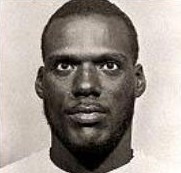
Harrison Graham
Serial killer Rodney Alcala
Serial killer · USA · 1977
Rodney James Alcala (born August 23, 1943) was also known as Rodrigo Jacques Al…
100 victims
Rodney Alcala
Serial killer · USA · 1977
Rodney James Alcala (born August 23, 1943) was also known as Rodrigo Jacques Al…
100 victims
 Glen Edward Rogers
Serial killer · USA · 1993
Glen Edward Rogers was a spree killer whose cross-country rampage in 1994-95 le…
70 victims
Glen Edward Rogers
Serial killer · USA · 1993
Glen Edward Rogers was a spree killer whose cross-country rampage in 1994-95 le…
70 victims
 Michael Swango
Serial killer · USA · 1981
Michael Swango (Joseph Michael Swango) was a physician and American serial kill…
60 victims
Michael Swango
Serial killer · USA · 1981
Michael Swango (Joseph Michael Swango) was a physician and American serial kill…
60 victims
 Efren Saldivar
Serial killer · USA · 1989
Efren Saldivar (born 30 September 1969) was an American serial killer who murde…
50 victims
Efren Saldivar
Serial killer · USA · 1989
Efren Saldivar (born 30 September 1969) was an American serial killer who murde…
50 victims
 Gary Ridgway
Serial killer · USA · 1982
Gary Leon Ridgway Ridgway was born 18-February-1949 in Salt Lake City, UT. He w…
49 victims
Gary Ridgway
Serial killer · USA · 1982
Gary Leon Ridgway Ridgway was born 18-February-1949 in Salt Lake City, UT. He w…
49 victims
 Charles Cullen
Serial killer · USA · 1984
Charles Cullen (born February 22, 1960) was a former nurse and the most prolifi…
45 victims
Charles Cullen
Serial killer · USA · 1984
Charles Cullen (born February 22, 1960) was a former nurse and the most prolifi…
45 victims
 Marie Lafarge
Murderer · France · 1840
Marie-Fortunée Lafarge (née Capelle) was a Frenchwoman convicted of murdering h…
1 victim
Marie Lafarge
Murderer · France · 1840
Marie-Fortunée Lafarge (née Capelle) was a Frenchwoman convicted of murdering h…
1 victim
 Deidre Hunt
Murderer · USA · 1989
Deidre Michelle Hunt was born 2/9/69. She was sentenced from Volusia County on…
2 victims
Deidre Hunt
Murderer · USA · 1989
Deidre Michelle Hunt was born 2/9/69. She was sentenced from Volusia County on…
2 victims
 Joe Franco Garza
Murderer · USA · 1998
Joe Franco Garza, Jr. was convicted of capital murder committed on December 31,…
1 victim
Joe Franco Garza
Murderer · USA · 1998
Joe Franco Garza, Jr. was convicted of capital murder committed on December 31,…
1 victim
 Erick Virgil Hall
Murderer · USA · 2000
October 2004 — Erick Virgil Hall received a death sentence for the killing of L…
2 victims
Erick Virgil Hall
Murderer · USA · 2000
October 2004 — Erick Virgil Hall received a death sentence for the killing of L…
2 victims
 Peter Mangs
Murderer · Sweden · 2003
Peter Mangs was sentenced to life in prison for murder and attempted murder con…
3 victims
Peter Mangs
Murderer · Sweden · 2003
Peter Mangs was sentenced to life in prison for murder and attempted murder con…
3 victims
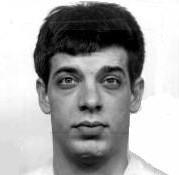 Troy Dale Farris
Murderer · USA · 1983
Troy Dale Farris (#831) was convicted for the December 3, 1983 slaying of Tarra…
1 victim
Troy Dale Farris
Murderer · USA · 1983
Troy Dale Farris (#831) was convicted for the December 3, 1983 slaying of Tarra…
1 victim
- Gender
- male
- Country
- USA
- Location
- Philadelphia, Pennsylvania, USA
- Date of birth
- October 9, 1958
- Age at first offence
- 28
- Characteristics
- mentally retarded, necrophilia
- Victim profile
- Female addicts
- Method of murder
- Strangulation
- Date(s) of murder
- 1986 - 1987
- Years active
- 1986–1987
- Date of arrest
- August 17, 1987 (surrenders)
- Status
-
Executed
Sentenced to life imprisonment, followed by six electrocutions (to prevent parole) on May 1988; deemed incompetent to be executed on December 20, 2003
Case record: Harrison Graham
Background
Harrison Graham was a 28-year-old mentally retarded drug abuser who lived in a slum district of Philadelphia and rented a third floor apartment. He was well-known in his Philadelphia ghetto neighborhood. He sometimes amused local children with his “Cookie Monster” puppet, and other times they found him digging graves for dogs in nearby vacant lots. He was described as quiet and easygoing. Women tenants were not in fear of him; he had done handy work for some and had no history of posing any sort of threat.
Harrison Graham was “known as ‘Marty’ by his neighbors.” During the time described, residents also used other names for aspects of his personality, including “Junior” and “Frank.”
Graham received three hundred dollars each month in social security, but he appeared to be supplementing his life with drug money.
Graham’s family included his mother, Lilly, and he had four younger siblings, all living in the Philadelphia area.
The offence
Authorities found seven bodies in various stages of decomposition inside Graham’s apartment after they broke down the door. Only two bodies could be identified, and one was his former girlfriend.
The victims were seven women, and he was convicted on seven counts of first-degree murder and seven counts of abusing a corpse.
Graham turned himself in to police and admitted strangling all the women while having sex with them during and after their deaths.
Graham’s confession described that he picked up female addicts on the street, enticed them with offers of a fix, and brought them home where they were murdered after sex.
Graham’s confession also included an account that he left a body in his apartment after his first victim, DeShazor. He later attempted to conceal another victim by hoisting the corpse onto his roof through a bedroom window.
In connection with later testimony, a woman named Paula said Graham strangled her during sex and that she passed out at times. Paula said that during the three years she lived with Harrison, off and on, he bragged about strangling Robin Deshazor and then having sex with her dead body. Paula also said her excuse for strangling the woman to death was simply that she’d tried to leave him, and that she endured rape, beatings and torture at the hands of Harrison Graham.
Investigation
Neighbors filed complaints of a pervasive stench that emanated from Graham’s apartment. Officers searched the building and the surrounding neighborhood, house by house, while news teams reported on the case and noted that Graham’s dwelling was located about three miles from Gary Heidnik’s “house of horrors,” where another ghoulish scene had been discovered five months earlier.
One of the first officers to respond to complaints of foul odors was Officer Pete Scallatino, who recognized the scent of death as he entered the dilapidated structure. With the help of investigator Charles Johnson, the door was pried open.
Inside, the bodies discovered included two strangled women’s bodies and additional remains beneath debris and in other locations within the apartment. A search continued through waste and human remains.
The search continued beyond the apartment structure. Investigators found more body parts during digging outside the apartment, including a leg and a foot that were dismembered.
The roof of Graham’s building yielded skeletal remains of the seventh victim. An initial approach by authorities included warrants that simply charged the missing suspect with abuse of corpses, and murder was not proven until a medical examiner reported that the freshest victims had been strangled some time in the past ten days.
The medical examiner was attempting to attach names to bodies. Mary Jeter Mathis was identified as one female victim, described as a mother of five.
Debris from the crime scene included jewelry, including a heart-shaped necklace and three earrings. Photos brought in answers from the public when relatives stepped forward to help identify another two victims.
Arrest
Graham was evicted for smells coming from his apartment. Before he left, he nailed up the bedroom door claiming there was some property in there he was coming back for. When he never came back, authorities broke down the door and found the bodies.
On August 17, Lillian Graham received a phone call from her eldest son, who was hungry and tired. He asked if she might meet him and bring him something to eat. Harrison waited at a street corner for police to pick him up. Officers pressed the detained suspect until he admitted that he had played a role in the murders of the seven women, initially trying to convince police that bodies had been there when he moved in, and then admitting one killing before telling the whole truth.
Graham wrote a ten-paged confession.
Graham surrendered two days after August 14, when another skull and partial skeleton were excavated from the dirt floor of a row house three doors down from Graham’s building.
Trial
A public defender, Joel S. Moldovsky, was appointed. A hearing occurred where the question of whether Graham had been capable of signing his own confession was argued. Moldovsky argued that Harrison was never told he had a right to have an attorney present, and he pointed to due process conflict.
Dr. Robert Stanton evaluated Graham, citing an I.Q. of 63 and considering him less than mentally competent. The evaluation cited chemically induced auditory hallucinations, psychosis, blackouts and chronic paranoia.
A psychologist named Albert Levitt testified that Graham was incompetent in fundamental academic skill, including reading, writing, math, and telling time.
Judge Edward Mekel still declared Graham competent for trial, basing his opinion in part on the DA’s counselor Robert Sardoff, who told reporters that he felt Harrison had been utterly “able” during the initial confession.
Moldovsky argued insanity, specifically a multiple personality disorder. During an interview with Philadelphia’s “Daily News,” Moldovsky commented that Harrison Graham often spoke in a second and third personality.
Graham’s mother, Ms. Graham, did not believe Harrison would be capable of such horrible crimes. She reasoned that he was too simple, and too non-violent, and that even if he had ever gone off due to alcohol or drugs he’d been accused of abusing, he would not have had the wherewithal to plan such crimes or hide bodies.
The judge’s ruling included a “surprise” witness, a woman named Paula, who accused Harrison of strangling her during sex, and said he bragged about strangling Robin Deshazor and having sex with her dead body.
At sentencing-related proceedings, Harrison told the judge on March 8 that he was not responsible for the murders and that “someone else had done [it].” Harrison waived his right to a jury.
The trial resulted in findings that he was found guilty of first-degree murder and abuse of a corpse on all counts.
Quotes
Harrison Graham’s statement included: “Stop running, son. Whatever happened, we can work this out. Just come on home. We love you. Your family loves you.”
Harrison Graham said: “At first, I couldn’t say it. God help me, I couldn’t tell them. But the Lord hath helped me. I know how sin is…it overtook me, lest it wasn’t me…”
Moldovsky’s characterization included: “Marty” was an easy-going handyman. He liked his mother, he was heterosexual and a religious zealot. At times, “Junior” would show himself—this personality was most familiar as the child-like male whose neighbors purportedly remembered hanging on to his Cookie Monster stuffed animal. It was “Frank” who was responsible for the heinous crimes of both murder and necrophilia.
Harrison Graham said: “It was Marty.” Harrison Graham said: “My mamma tol’ me to read my Bible; and Hell hath no place for sin…but he done these things…I love my bible ‘an I hath no place for these things…he done these things…”
Harrison Graham said: “everything would work out just fine…”
A quote attributed to defense strategy included the attorney describing the unusual sentence as “compassionate and brilliant.”
A judge-related quote attributed to Harrison’s attorney described the sentence as “Solomonic.”
Harrison Graham said: “someone else had done [it].”
A psychiatrist involved in the case said: “he tested lower than he functioned, so even if his IQ was below 70, he was not mentally retarded.”
Evidence and procedural disputes
During a six-hour hearing, Harrison was reportedly agitated, rocking back and forth as a detective read findings, including that Graham described maggots in his apartment as “fur ball bugs” to a visitor and that he “had to stay high all the time to [ignore the birds eating a body outside his window.”
The description of his alleged staged movement included that, up to that point, he had staged the corpses of his most recent murders in the front room, and that during the chaotic response he hurried and boarded up the door and ran.
Sentencing
In May, Judge Latrone ruled that while he would sentence Harrison Graham to six death sentences, he would first remand him to prison to serve out a life term. The single life sentence was for DeShazor’s murder.
Graham was additionally sentenced by Latrone to serve six consecutive sentences of seven to fourteen years each.
The life imprisonment sentence was treated as preventing parole, and the subsequent six death sentences were described as to prevent parole.
At sentencing, it was stated that Harrison’s mother had not been able to make herself present for the ruling, while his attorney was greatly relieved, defining the judge’s motion as “Solomonic.”
Appeals
The case continued through appeals and higher courts. The US Supreme Court banned the executions of all mentally retarded criminals in 2002. Graham was described as permanently off death row due to criteria related to onset of mental illness occurring before the age of eighteen.
Later, Graham was deemed incompetent to be executed on December 20, 2003.
Outcome
Harrison Graham’s sentence history included a life term followed by six death penalties to prevent parole, and he was later deemed incompetent to be executed.
Aftermath
Until 1994, Harrison Graham was a prisoner at Harrisburg Penitentiary in Pittsburg, Pennsylvania. Later, he resided in a medium security facility in Pennsylvania.
His case manager described him as “mild and non-violent.” He had received a minister’s certificate and continued to practice his faith religiously.
When interviewed, he said: “could only do the interview if I promised to call him Marty…”
Other details
Graham had an eviction history related to smells coming from his apartment and he nailed up the bedroom door. Before leaving, he claimed there was property in the bedroom he was coming back for.
At the scene, the apartment contained materials including food containers, molded newspapers and magazines, dried feces and filthy clothes piled knee-high. Rough sketches included “one particularly disturbing drawing of a naked women accessorized with someone’s verbal denouncements poured over it in what appeared to be dried blood.” An etched name “Marty” was on a door, and below was an open key-hole.
Officer Pete Scallatino demanded the door be opened, but the legs he could see were motionless.
A family plea was made for Graham to come home, and he was said to have been seen at local shelters and even on a city bus while continuing to elude investigators.
A Daily News story discussed the relatives and friends of Cookie Mathis, described as one victim, and included that Cookie Mathis’s husband heard reports that Cookie was among the victims and recognized a shirt found on a body as his wife’s, stating “He’d bought it for her.”
The record included mention of “Cookie Mathis” and also Mary Jeter Mathis as a named victim.
A quote attributed to a DA’s counselor, Robert Sardoff, was: “able.”

Spotted an error, or have more information about this case?