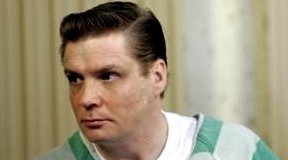
Kenneth Richey
Homicide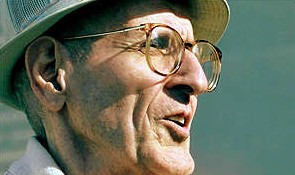 Jack Kevorkian
Homicide · USA · 1990
Jack Kevorkian (born May 26, 1928) was a controversial American pathologist. He…
130 victims
Jack Kevorkian
Homicide · USA · 1990
Jack Kevorkian (born May 26, 1928) was a controversial American pathologist. He…
130 victims
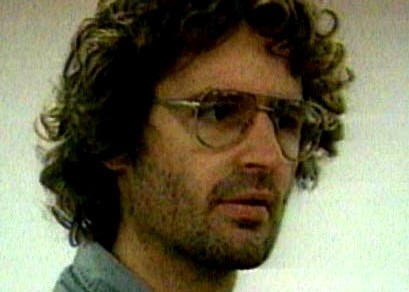 David Koresh
Homicide · USA · 1993
David Koresh (born Vernon Wayne Howell; August 17, 1959 – April 19, 1993) led t…
79 victims
David Koresh
Homicide · USA · 1993
David Koresh (born Vernon Wayne Howell; August 17, 1959 – April 19, 1993) led t…
79 victims
 Todd Hall
Homicide · USA · 1996
Todd Hall was described by neighbors as "mentally slow" and was said to have su…
9 victims
Todd Hall
Homicide · USA · 1996
Todd Hall was described by neighbors as "mentally slow" and was said to have su…
9 victims
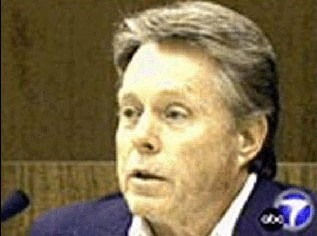 Edward Charles Allaway
Homicide · USA · 1976
Edward Charles Allaway Edward Charles Allaway was found not guilty by reason of…
7 victims
Edward Charles Allaway
Homicide · USA · 1976
Edward Charles Allaway Edward Charles Allaway was found not guilty by reason of…
7 victims
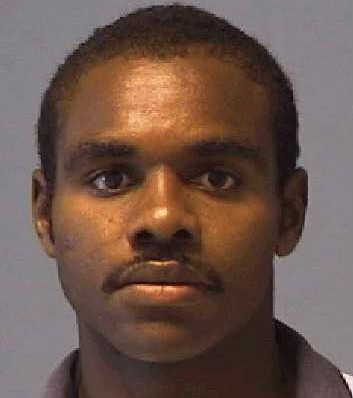 Clinton Bankston
Homicide · USA · 1987
15 August 1987 — Ann Morris (63), her sister Sally Nicholson (59), and Sally’s…
5 victims
Clinton Bankston
Homicide · USA · 1987
15 August 1987 — Ann Morris (63), her sister Sally Nicholson (59), and Sally’s…
5 victims
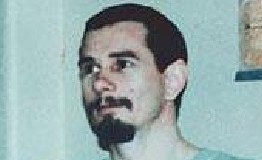 Peter Chester
Murderer · United Kingdom · 1977
Peter Chester (born 1955 in Blackpool, Lancashire, England) was a convicted mur…
1 victim
Peter Chester
Murderer · United Kingdom · 1977
Peter Chester (born 1955 in Blackpool, Lancashire, England) was a convicted mur…
1 victim
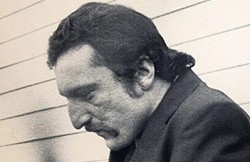 David Shearing
Mass murderer · Canada · 1982
David Shearing was arrested after police received a caller tip about him in a c…
6 victims
David Shearing
Mass murderer · Canada · 1982
David Shearing was arrested after police received a caller tip about him in a c…
6 victims
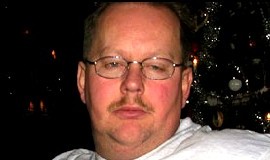 Anders Eklund
Murderer · Sweden · 2000
Anders Eklund (born August 6, 1965) was a Swedish murderer and rapist. He was c…
2 victims
Anders Eklund
Murderer · Sweden · 2000
Anders Eklund (born August 6, 1965) was a Swedish murderer and rapist. He was c…
2 victims
- Gender
- male
- Country
- USA
- Location
- Columbus Grove, Putnam County, Ohio, USA
- Date of birth
- August 3, 1964
- Age at first offence
- 22
- Characteristics
- arson, drug addict
- Victim profile
- Cynthia Collins, 2 (his ex-girlfriend's daughter)
- Method of murder
- A sphyxia related to smoke inhalation
- Date(s) of murder
- June 30, 1986
- Years active
- 1986
- Date of arrest
- —
- Status
-
Released
Released
Case information
Kenneth Richey was a UK-US dual citizen. He was born August 3, 1964, in Zeist, Netherlands. His mother was Scottish and his father was American. He was raised in Scotland and moved to Ohio to join his father in late 1982. He served in the United States Marine Corps and was honourably discharged after 14 months. He was convicted in 1987 of murdering two-year-old Cynthia Collins by arson in 1986. He was on death row in Ohio for 20 years.
Timeline
- 30 June 1986 — A fire broke out at about 4:15 a.m. in the second-floor apartment home of Hope Collins and her two-year-old daughter Cynthia Collins at the Old Farm Village Apartment complex in Columbus Grove, Ohio; Cynthia died from asphyxia related to smoke inhalation.
- 1 July 1986 — Nearly two days after the fire broke out, a deputy sheriff retrieved the carpet from a garbage dump; by this date the investigation had focused on Richey and police arrested him for arson.
- 17 July 1986 — A wood chip sample was removed from Collins’s apartment for testing.
- January 1978 — Richey received his first mental health evaluation at age thirteen, after which he was briefly treated and evaluated for erratic behaviour in various mental institutions.
- 24 June (year not specified) — Richey learned that Candy Barchet had just been in bed with John Butler; Richey pulled a knife on Butler and Butler “bounced him around the room a little bit.”
- 29 June (year not specified) — Candy took her new boyfriend Mike Nichols to a party in Peggy Price’s apartment.
- 19 November (year not specified) — Richey told Deputy Roy Sargent that “Randy Basinger (the prosecutor) was a dead man ” and that “whoever testified against him had better hope he's six feet under.”
- 17 August (year not specified) — Richey told Deputy Mike Ball to take a message to Randy Basinger, “that when he got out he was going to cut his throat.”
- 25 January 2005 — The United States Court of Appeals for the Sixth Circuit overturned his conviction and sentence.
- 28 November 2005 — The United States Supreme Court partially reversed the appellate court’s decision.
- 5 September 2006 — The Sixth Court scheduled oral argument on the remanded issue of ineffective counsel for 24 January 2007.
- 24 January 2007 — The Sixth Circuit panel of three judges heard arguments on ineffective counsel; both the Ohio Attorney General and Richey’s defense counsel, Mr. Ken Parsigian, argued for one half hour each.
- 10 August 2007 — The United States Court of Appeals for the Sixth Circuit upheld its January 2005 overturning of Richey’s conviction and death sentence due to ineffective counsel and again ordered a retrial within 90 days or release.
- 24 August 2007 — Ohio deputy first assistant attorney general Brian Laliberte announced that the prosecution decided not to appeal the Court of Appeals’s ruling to the Supreme Court, accepted a retrial, and Richey was moved off death row to Putnam County Jail.
- 2 October 2007 — At a bail hearing in Putnam County, a bail bond of $10 million was issued for release under strict limitations until the new trial.
- 28 March 2008 — A second trial was scheduled to commence at Putnam County Common Pleas Court.
- 19 December 2007 — It was announced that Richey agreed a plea bargain and would be freed.
People involved
Defendant
- Kenneth Richey — defendant; convicted in 1987 of murdering two-year-old Cynthia Collins by arson in 1986; sentenced to death in 1987; later released after a plea bargain.
Victim
- Cynthia Collins — two-year-old victim; died from asphyxia related to smoke inhalation in the fire.
- Hope Collins — Cynthia’s mother; divorced mother of Cynthia; left her apartment before the fire, having left to spend the night with a boyfriend.
Other named individuals
- Robert Cryer — Assistant State Fire Marshal; investigated the scene after the Fire Chief asked him to investigate further; concluded the fire resulted from arson.
- Thomas Miller — Police Chief; interviewed Richey as a witness on the morning of 30 June and obtained his statement in the afternoon after advising him of his rights.
- Dan Gelfius — state forensic chemist; described chromatogram analysis at trial; testified that carpet and balcony samples contained paint thinner and gasoline.
- Gregory DuBois — consulting engineer; agreed that the fire was caused by arson and that accelerants were used.
- Fire Chief — initially blamed the fire on an electric fan.
- Randy Basinger — Assistant Prosecuting Attorney; participated in a police tape-recorded interview of Richey on 1 July.
- Prosecutor Dan Gershutz — made a quoted comment about execution despite new evidence, stating:
“Even though this new evidence may establish Mr. Richey's innocence, the Ohio and United States Constitutions nonetheless allow him to be executed because the prosecution did not know that the scientific testimony offered at trial was false and unreliable”
- William Kluge — Richey’s attorney at the original trial; identified as a public defender; admitted to making mistakes.
- Ken Parsigian — Richey’s new attorney during appeal; represented him during ineffective-counsel oral argument.
- Judges Michael J. Corrigan — cited “unrefuted evidence” about a fire alarm being disconnected and inferred responsibility and intent to prevent discovery.
- Brian Laliberte — Ohio deputy first assistant attorney general.
- Gary Lammers — Putnam County Prosecutor.
Family and associates mentioned
- Steven — Richey’s brother; accompanied him on arrival back home.
- Kenney’s father — American father living in Ohio.
- Candy Barchet — Richey’s ex-girlfriend; and her new boyfriend were the alleged targets of the fire.
- John Butler — Candy’s partner at the time Richey learned she had just been in bed with him.
- Mike Nichols — Candy’s new boyfriend.
- Peggy Price — lived in the adjacent apartment; testified during the trial.
- Shirley Baker — recalled Richey saying, “A Building was going to burn * * *.”
- Juanita Altimus — overheard Richey say on the landing, “Building A was going to burn tonight.”
- Dennis Smith — drove up around 3:00 and asked Hope to go with him.
- Jeffrey Kezar — testified he heard Richey saying: “If I can't have her (Candy), nobody else can.”
- Robert Dannenberger — described Richey as “very upset” and testified about threats to blow the place up.
- Nichole Edwards — not present as a separate fact beyond being named in the provided text (no additional details supplied there).
- Judith Tolliver — social worker; described Richey as suffering from “histrionic behaviour disorder” and other personality disorders; said Richey was not delusional, mentally impaired, or actively psychotic.
- Dr. Leena Puhakka — psychologist; found classic symptoms of borderline and antisocial personality disorders and said Richey functioned at the emotional level of a ten- or eleven-year-old.
- Dr. Antoine Demosthene — psychiatrist; found no evidence of psychosis or mental disease; said Richey was very socially maladjusted and suffered antisocial personality disorder.
- Dr. William McIntosh — psychologist; testified Richey frequently lied to manipulate mental evaluations; described chaotic family background, early history of violence and drug abuse, erratic behaviour, and poor impulse control.
- Dr. Thomas Sherman — board-certified psychiatrist by deposition for the state; described Richey as “extremely impulsive, self-centred, and hedonistic.”
- Tony Cafe — forensic laboratory analysis authority; submitted an affidavit commentary; said:
“I am sure that most of the world's leading forensic scientists in this field would be horrified if they saw the chromatograms used to convict Kenny Richey. If Kenny Richey were executed on the basis of this scientific evidence, then these chromatograms will become historical documents, examined by scientists all over the world to show just how wrong forensic evidence can be. It would be a great tragedy for the future of forensic science .”
- Richard Custer — specialist in fire reconstruction; testified burn pattern could have resulted from a fire that occurred naturally and said the accelerant pour location would have required the use of 10 gallons of fuel.
- Peggy Villearreal — neighbor; submitted an affidavit on appeal recanting trial testimony about hearing Richey threaten to burn down the apartment building; recalled Cynthia Collins played with matches and lighters, once placed a lit cigarette between sofa cushions, and had twice set fire to her bed.
- Hope’s boyfriend — mentioned as one of the witnesses who denied hearing Hope ask Kenny to watch her child.
- His friend in the passenger seat — mentioned as another witness who denied hearing Hope ask Kenny to watch her child.
- Robert McCall — named in Scottish proceedings; described as 63-year-old; charges were dismissed.
- Max Clifford — representing Richey at his return.
The offence
Richey was convicted of murdering two-year-old Cynthia Collins by arson in connection with a fire at the Old Farm Village Apartment complex in Columbus Grove, Ohio. The death resulted from asphyxia related to smoke inhalation.
Charges referenced
A grand jury indicted Richey for:
- aggravated murder with a specification alleging murder in the course of arson,
- aggravated arson,
- breaking and entering (described as a greenhouse where he was alleged to have obtained gasoline and paint thinner to start the fire),
- involuntary manslaughter,
- child endangering.
At the panel trial, a panel of three judges sitting without a jury convicted Richey of all charges save the manslaughter charge, which was dropped. After a pre-sentence investigation, mental evaluation, and mitigation hearing, the panel sentenced Richey to death for aggravated murder and consecutive prison terms for the other offenses.
Alleged motive and prosecution theory
The prosecution alleged that Richey was angry with his ex-girlfriend, Candy Barchet, and her new boyfriend, so he set fire to the apartment above theirs, hoping the fire would burn through the concrete floor and injure them while they slept.
The prosecution alleged that Richey stole gasoline and paint thinner from a nearby greenhouse, climbed onto a roof of a utility shed below Hope’s living room balcony, splashed gas and paint thinner throughout the living room, set it alight, and escaped back over the balcony with the empty cans.
The prosecution theory also included allegations that Richey:
- threatened to “blow up” or “burn” the apartment building,
- threatened to blow the place up since he had learned how to do explosives in the Marines,
- told Peggy Price, “Well, instead of blowing it up, I'll torch A Section,”
- threatened before the night was over, part of A Building was going to burn down.
Investigation
Scene investigation and initial cause
The Fire Chief initially blamed the fire on an electric fan. After the Fire Chief asked Assistant State Fire Marshal Robert Cryer to investigate, Cryer concluded the fire had resulted from arson, which led to Richey being convicted and sentenced to death.
A smoke detector had been pulled from the ceiling before the fire. The prosecution relied on the claim that the smoke detector had been disabled while starting the fire.
The investigation later included retrieval and testing of fire debris samples:
- The State retrieved six samples of debris remaining from the fire.
- Samples came from the carpet that had first found its way into the garbage dump.
- A deputy sheriff retrieved the carpet on the afternoon of 1 July nearly two days after the fire.
- The carpet stayed in a sheriff’s parking lot located no more than forty feet away from gasoline pumps for three weeks before it was taken to the State Arson Lab for testing.
- A wood chip sample was not removed until 17 July nearly three weeks after the fire.
Interviewing Richey
- Chief Miller interviewed Richey as a witness on the morning of 30 June and also obtained his statement in the afternoon after advising him of his rights.
- By 1 July, the investigation had focused on Richey, and police arrested Richey for arson and took further statements after advising him of his rights.
- Police tape-recorded an interview of Richey on 1 July; Fire Marshal Cryer and Assistant Prosecuting Attorney Randy Basinger participated.
- In those statements, Richey maintained he had been drunk on 30 June and did not remember much, but denied starting the fire or knowing how it started.
- Richey admitted he knew Cynthia was in Hope’s apartment and claimed he had stopped and looked in while she was sleeping during the party.
- Richey claimed he had secret ways with witnesses so they would not testify against him.
- In a later statement, he said he would cut the prosecutor’s throat.
Richey also made the following statements via other individuals:
- Deputy Roy Sargent: “Randy Basinger (the prosecutor) was a dead man ” and “whoever testified against him had better hope he's six feet under.”
- Deputy Mike Ball: “that when he got out he was going to cut his throat.”
Evidence of accelerants and forensic analysis at trial
An accelerant had been poured on:
- the wooden deck, identified as the fire’s point of origin,
- the living room rug.
The Fire was described as a very fast, hot, intense fire because of the accelerant.
Gregory DuBois agreed the fire had been caused by arson and that accelerants had been used.
One rug sample from the Collins apartment contained gasoline and another contained paint thinner. Wood chips from the deck also contained paint thinner.
The State Arson Lab analyzed samples using gas chromatograms. At trial, forensic chemist Dan Gelfius described chromatograms as:
“scientific instrumentation that allows the differential migration of the components of hydrocarbons to separate and to give . . . a pattern similar to the identification of fingerprints.”
Gelfius testified that samples from carpet and balcony contained paint thinner and that another sample of living room carpet contained gasoline.
Contamination arguments
The prosecution argued that:
- the Ohio Supreme Court ruled contamination possibility goes to weight not admissibility,
- even if the rug had been wrongfully admitted, other evidence of arson made any error harmless.
Arrest
By 1 July, the investigation had focused on Richey. Police arrested him for arson and took further statements after advising him of his rights. Police tape-recorded an interview of Richey on 1 July.
Trial
Proceedings
A panel of three judges sitting without a jury convicted Richey of all charges save the manslaughter charge, which was dropped.
At the trial, Richey was convicted on charges that included aggravated murder with a specification alleging murder in the course of arson, aggravated arson, breaking and entering (greenhouse where he was alleged to have obtained gasoline and paint thinner), and child endangering.
Witness testimony and threats
Testimony and accounts during trial included:
- Jeffrey Kezar testified he heard Richey saying: “If I can't have her (Candy), nobody else can.”
- Other testimony included Richey telling persons that “A” Building would burn that night and that he would use his Marine training to do that.
- Robert Dannenberger described Richey as “very upset” and said Richey threatened to blow the place up since he had “learned how to do explosives” in the Marines.
- Peggy Price became upset, and Richey told her: “Well, instead of blowing it up, I'll torch A Section.”
- Shirley Baker recalled that Richey said: “A Building was going to burn * * *.”
- Juanita Altimus overheard Richey on the landing say: “Building A was going to burn tonight.”
- Around 4:15 a.m., neighbours reported bright orange flames and smoke from the Collins apartment, and the fire department responded.
- Firemen removed Cynthia’s body from her burning bedroom after finding she could not be located earlier due to oxygen limitations.
- When firemen arrived, Richey was either at the Collins apartment or arrived shortly thereafter; he was screaming that a child was still inside.
- One fireman saw him coming out of the apartment, helped him up, and had to restrain him to keep him from going back in.
- Richey was combative, argumentative, and interfered with efforts to fight the fire and rescue Cynthia.
- Two deputy sheriffs overpowered Richey and turned him over to Police Chief Thomas Miller to keep him out of the way.
- During the fire, Richey asked Nichols: “Why don't we finish it now, since you think you're so bad?”
- Richey asked Candy if the fire had scared her; when she replied that it had, Richey told her: “if he couldn't have me, that nobody would * * *.”
- Altimus reported that Richey drank a beer, laughed, and said: “It looks like I did a helluva good job, don't it.”
Companions and context at the time
- Hope Collins had left the apartment to spend the night with a boyfriend after a party held with neighbours from adjacent second-floor apartments at the apartment complex.
- When the party was concluding, Hope invited Kenny Richey to sleep in her apartment in return for minding her sleeping daughter.
- Candy and her infant son moved into their apartment around 15 June, and she met Richey.
- Within a few days, Candy and Richey formed a sexual relationship.
- On Sunday evening 29 June, Candy took her new boyfriend Mike Nichols to a party in Peggy's apartment; during the party, Candy kissed Nichols openly and told Richey she wanted to date Nichols.
- Around 1:00 a.m., Candy asked Nichols to spend the night with her.
- That night, Richey wore his Marine Corps camouflage fatigues and combat boots, and he still had his right hand bandaged in a splint.
- Richey had earlier gotten two plants from K & J Greenhouse for Candy, and police found those plants outside Candy’s apartment; the owner identified them as stolen from his greenhouse.
- Richey also offered to steal two plants for Peggy that evening.
Sentencing
After pre-sentence investigation, mental evaluation, and mitigation hearing, the panel sentenced Richey to:
- death for aggravated murder,
- consecutive prison terms for the other offenses.
Mitigation and mental health evidence
Several mental health professionals concluded Richey suffered from borderline and antisocial personality disorders.
- Dr. Leena Puhakka, psychologist, testified that Richey displayed classic symptoms of those personality disorders and functioned at the emotional level of a ten- or eleven-year-old.
- Dr. Antoine Demosthene, psychiatrist, found no evidence of psychosis or mental disease, but found Richey was very socially maladjusted and suffered antisocial personality disorder.
- Dr. William McIntosh, psychologist, testified that Richey frequently lied to manipulate mental evaluations; described chaotic family background, early history of violence and drug abuse, erratic behaviour, and poor impulse control; said that while not psychotic, Richey had mental disorders.
- Dr. Thomas Sherman, psychiatrist, said Richey was “extremely impulsive, self-centred, and hedonistic,” and stated Richey did not show psychosis or inability to understand criminality or to refrain from those acts. Evidence also showed preoccupation with death, blood, and violence and acts of self-mutilation and attempts at suicide resulting in over six hundred self-imposed scars and cuts.
- Social worker Judith Tolliver described Richey as a blustering young man who suffered from a “histrionic behaviour disorder” in addition to other personality disorders, and found him not delusional, mentally impaired, or actively psychotic, but severely and chronically maladjusted.
Letter quoted in the pre-sentence investigation
The pre-sentence investigation quoted a letter Richey wrote to a friend in Scotland. The quote read:
“If one ever pulls a gun on me he'd better shoot to kill. * * * Remember that day when I shot Gog's in the head with your gun, I laughed so hard I almost ripped my sides! (If the police in Scotland) ever found out about 1/2 the stuff we done they'd bring back the death penalty just for us! * * * If they just give me prison time they better hope to hell I die in there, cause when I get out I won't stop hunting them all down until everyone who is involved in this case is dead!”
Appeals
Ohio appeals
- 1992 — A direct appeal was lodged with the Ohio Supreme Court and denied by four votes to three.
- March 1997 — An appeal lodged with the same judge who sentenced Richey was rejected.
- 1998 — An appeal to the Ohio Supreme Court was denied.
- June 1998 — A stay was granted for the last in a series of 13 scheduled execution dates, and the case was transferred to the federal courts.
Sixth Circuit overturning and Supreme Court partial reversal
- On 25 January 2005, the United States Court of Appeals for the Sixth Circuit overturned Richey’s conviction and sentence.
- On 28 November 2005, the United States Supreme Court partially reversed the appellate court’s decision following an appeal by the prosecution. The Supreme Court stated:
“explanation of Ohio law was perfectly clear and unambiguous. We have repeatedly held that a state court’s interpretation of state law … binds a federal court sitting in habeas corpus”
- The Supreme Court remanded the case to the Sixth Circuit for reconsideration in light of the new instructions.
Ineffective counsel proceedings and further Sixth Circuit ruling
- On 5 September 2006, the Sixth Court scheduled oral argument for 24 January 2007 on ineffective counsel.
- On 10 August 2007, the Sixth Circuit upheld its January 2005 overturning of Richey’s conviction and death sentence due to ineffective counsel and ordered retrial within 90 days or release.
Decisions and prosecution stance on retrial
- On 24 August 2007, Brian Laliberte announced the prosecution decided not to appeal the Court of Appeals’s ruling to the Supreme Court, and therefore accepted a retrial. Richey was moved off death row and returned to Putnam County Jail custody.
Outcome
Plea bargain and release
On 19 December 2007, it was announced that Richey had agreed a plea bargain and would be freed.
Richey pleaded “no contest” to:
- involuntary manslaughter,
- child endangering,
- breaking and entering.
The charges of arson and murder were dropped. Richey was released after being sentenced to time served. Part of the agreement was that Richey leave the U.S. immediately.
Aftermath and further proceedings
Bail and preparations
- Richey was moved off death row and to Putnam County Jail following acceptance of retrial.
- A second trial was scheduled to commence at Putnam County Common Pleas Court on 28 March 2008.
- At a bail hearing in Putnam County on 2 October 2007, a bail bond of $10 million was issued for release under strict limitations until the new trial.
Richey’s counsel:
- applied for a change of venue to Columbus instead of Putnam County, presenting 426 newspaper articles, letters to the editor or editorials about the case since it began.
- requested funds to hire an investigator and a mitigation expert to be used only if Richey was re-convicted on death penalty charges and the case proceeded to the penalty phase.
Prosecution witnesses would have included:
- Cynthia Collins’s mother,
- members of the emergency services who attended at the scene,
- former neighbors and friends of Richey, with statements from five witnesses who died since 1986 to be read to the jury.
Reaction and compensation discussions
The text stated that one effect of accepting the plea bargain was that Richey was ineligible for a theoretical $1 million compensation payout for his 20-year incarceration.
Under Ohio law, a wrongfully convicted person could receive $40,330 per year of wrongful incarceration (or an amount determined by the state auditor), plus lost wages, costs and lawyers’ fees, as long as the claimant did not plead guilty. Richey’s defense lawyer, Ken Parsigian, said recovery was almost impossible and quoted:
“There is a statute that allows a wrongfully convicted person to sue the state and collect, but the standard is very, very high, and the amount you can recover is limited. It is not enough to show that the government's case was wrong we would have to prove that he was innocent, and that the prosecutors knew or should have known that “
Richey’s counsel Ken Parsigian was described as confident his client would be exonerated at the retrial, saying the prosecution had a “snowball's chance in hell” of securing a conviction a second time around and that the prosecution case “is 10 times weaker that it was 19 years ago and it wasn't that strong a case then ”. After the plea bargain, Parsigian was quoted saying:
“complete victory and more than Kenny and I could ever wish for... the State wanted him to plead guilty and he would not do that. They have agreed to drop murder, to drop the arson and took the most basic minor face-saving deal of no contest. There was nothing left for them to fight about “
Karen Torley, organizer of the “Kenny Richey Campaign,” urged supporters not to feel let down. She said:
“What Kenny always said was that he would never plead to starting the fire or trying to kill anyone. And he hasn't. The State has caved in and dropped those claims because it can't prove them. What he is pleading "no contest" to is failure to baby-sit and stealing a plant. After 21 years in prison for an unconstitutional conviction on charges the State has now dropped, what sense did it make to spend six more months in prison to fight about a failure to baby sit and stealing a plant? ”
Criminal charges in Scotland
After his return to the UK, Richey was arrested several times. He was charged with assaulting and robbing 63-year-old Robert McCall at his Edinburgh apartment on July 11 2008 and with another assault six days later, and faced trial in March 2009. The charges were dismissed because the judge felt Richey “had suffered enough”. The text also stated that he was most recently charged with stealing a woman's purse.
Return to the United Kingdom and quotations
The text stated that Richey arrived back home in Edinburgh on Wednesday, 9 January 2008. He said: “it feels great”. At arrival, he said: “It's good to be back home.” When asked if he had anything to say to those who convicted him, he replied: “I don't think you want to hear that.” Asked what he thought of the US justice system, he replied: “It sucks.” During the same return narrative, the text included quotes attributed to Mr Stafford Smith:
“What matters most now is that Kenny finds the support he needs to rebuild his life. "For many of the people I have known in his position, adjusting to freedom turned out to be the hardest battle of all .”
Spotted an error, or have more information about this case?