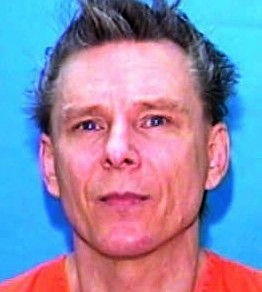
Dieter Riechmann
Murderer Brian Kevin Rosenfeld
Murderer · USA · 1985
Brian Kevin Rosenfeld Brian Kevin Rosenfeld was sentenced to three concurrent l…
23 victims
Brian Kevin Rosenfeld
Murderer · USA · 1985
Brian Kevin Rosenfeld Brian Kevin Rosenfeld was sentenced to three concurrent l…
23 victims
 Yahweh ben Yahweh
Murderer · USA · 1980
Yahweh ben Yahweh was born and legally named Hulon Mitchell Jr. (October 27, 19…
23 victims
Yahweh ben Yahweh
Murderer · USA · 1980
Yahweh ben Yahweh was born and legally named Hulon Mitchell Jr. (October 27, 19…
23 victims
 Russell Ellwood
Murderer · USA · 1991
Russell Ellwood was a former taxi driver. Authorities suspected him of killing…
20 victims
Russell Ellwood
Murderer · USA · 1991
Russell Ellwood was a former taxi driver. Authorities suspected him of killing…
20 victims
 Marybeth Tinning
Murderer · USA · 1972
Marybeth Tinning (née Roe, born on September 11, 1942) was an American prisoner…
9 victims
Marybeth Tinning
Murderer · USA · 1972
Marybeth Tinning (née Roe, born on September 11, 1942) was an American prisoner…
9 victims
 Faisal bin Musaid
Assassin · Saudi Arabia · 1975
Faisal bin Musaid bin Abdul-Aziz (April 4, 1944 - June 18, 1975) was the assass…
1 victim
Faisal bin Musaid
Assassin · Saudi Arabia · 1975
Faisal bin Musaid bin Abdul-Aziz (April 4, 1944 - June 18, 1975) was the assass…
1 victim
 Michael Monert
Serial killer · USA · 1989
Michael Monert was a serial killer who was convicted for killing three women in…
3 victims
Michael Monert
Serial killer · USA · 1989
Michael Monert was a serial killer who was convicted for killing three women in…
3 victims
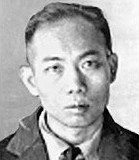 Gee Jon
Murderer · USA · 1921
Gee Jon was executed by asphyxiation-gas in Nevada on February 8, 1924. He was…
1 victim
Gee Jon
Murderer · USA · 1921
Gee Jon was executed by asphyxiation-gas in Nevada on February 8, 1924. He was…
1 victim
- Gender
- male
- Country
- USA
- Location
- Dade County, Florida, USA
- Date of birth
- May 17, 1944
- Age at first offence
- 43
- Characteristics
- attempt to collect insurance money
- Victim profile
- Kersten Kischnick
- Method of murder
- Shooting
- Date(s) of murder
- October 25, 1987
- Years active
- 1987
- Date of arrest
- —
- Status
-
Sentenced to death
Sentenced to death on November 4, 1988
Case information
Dieter Riechmann (born 05/17/44) was tried in the Eleventh Judicial Circuit, Dade County, Case #87-42355. The sentencing judge was The Honorable Harold Solomon. Edward Carhart served as trial attorney (private attorney). Lee Weissenborn served as direct appeal attorney (Special Public Defender). Terri L. Backus served for collateral appeals (Registry).
Timeline
- 10/25/87 — Date of offense.
- 01/27/88 — Dieter Riechmann was indicted on Count I and Count II.
- 07/13/88 — A month-long trial began.
- 08/12/88 — Riechmann was found guilty on all counts charged in the indictment.
- 08/30/88 — After advisory sentencing, the jury voted for the death penalty by a majority of 9 to 3.
- 11/04/88 — Riechmann was sentenced: Count I to death; Count II received suspended entry of sentence.
- 12/30/88 — Riechmann filed a Direct Appeal in the Florida Supreme Court.
- 05/30/91 — The Florida Supreme Court affirmed the conviction and sentence.
- 09/27/91 — A mandate was issued.
- 12/12/91 — Riechmann filed a Petition for Writ of Certiorari in the United States Supreme Court.
- 11/06/92 — The Petition for Writ of Certiorari was denied.
- 09/30/94 — Riechmann filed a 3.850 Motion in the Miami-Dade Circuit Court.
- 05/13/96-05/17/96 — The Circuit Court held evidentiary hearings.
- 06/11/96 — The Circuit Court held evidentiary hearings.
- 07/17/96-07/19/96 — The Circuit Court held evidentiary hearings.
- 11/05/96 — The Circuit Court granted a new sentencing hearing.
- 12/23/96 — The State of Florida filed a 3.850 Appeal; Riechmann also filed a 3.850 Appeal.
- 02/24/00 — The Florida Supreme Court remanded the case for a new sentencing hearing.
- 11/30/99 — A 3.850 Motion was filed by Riechmann.
- 03/05/01 — A mandate was issued.
- 06/15/98 — Riechmann filed a Petition for Writ of Habeas Corpus on those grounds.
- 02/24/00 — The Florida Supreme Court denied the Petition for Writ of Habeas Corpus.
- 02/28/03 — The Miami-Dade Circuit Court denied Riechmann’s 3.850 Motion.
- 04/28/03 — Riechmann filed a 3.850 Appeal in the Florida Supreme Court; the appeal was described as currently pending.
- 01/24/06 — Riechmann filed a Petition for Writ of Habeas Corpus in the Florida Supreme Court.
- 09/21/06 — The Petition for Writ of Habeas Corpus was denied.
- 25 October 1987 — On the evening of the offense date, Kersten Kischnick was shot while sitting in the passenger seat of Riechmann’s rental car.
- 10:32 p.m. (same evening as the offense date) — Miami Beach Police Officer Kelley Reid observed a red Thunderbird rental car and approached.
- 11:30 p.m. — Riechmann was placed in a holding cell for several hours.
The offence
On 10/25/87, Dieter Riechmann was convicted and sentenced to death for the murder of Kersten Kischnick.
Kischnick was shot to death in Miami Beach while she sat in the passenger seat of Riechmann’s rental car. The shooting occurred in Miami Beach on the evening of 25 October 1987, and Kischnick was shot once on the right side of her head just behind and above her right ear.
What happened at the scene
Miami Beach Police Officer Kelley Reid saw a red Thunderbird rental car stop at what she believed was a traffic light at Indian Creek Dr. and 67th St. Reid noticed the driver signaling. The driver was Riechmann. As Reid approached, she heard him say, "Help me, my girl." Reid looked into the car and found a woman sitting in the passenger front seat, identified as Kersten Kischnick.
After the shooting, Riechmann drove through Miami looking for a police officer and eventually found one in Miami Beach. He tried to relate his story in broken English. At 11:30 p.m., he was placed in a holding cell for several hours. When he was removed, he was told the police had made a mistake.
Investigation and arrest
After the shooting, police accompanied Riechmann to his hotel room and seized three guns, shoes, his passport, and blood-stained clothes he had worn in the car. During the next four days, Riechmann was asked to retell his account over and over. He was driven around and asked if he could identify the spot where the shooting happened. He could not recognize the exact location but said the area of 63rd and Biscayne Blvd. looked familiar.
On October 29, police secretly taped a four-to-five hour interview with Riechmann. At the conclusion of the interview, he was arrested by ATF agents on federal gun charges. The charges alleged that Riechmann violated federal law when he purchased the guns that police seized from his hotel room.
Riechmann remained in custody until his federal trial. The federal gun charges went to trial on December 27, 1987. At the end of the government’s case, the judge dismissed two of the three counts for lack of evidence, and the jury acquitted Riechmann on the third charge. When Riechmann walked out of the federal courtroom on December 30, Miami Beach detectives were waiting, and he was arrested and charged with the murder of Kischnick.
Searches in Germany and involvement by Florida prosecutor
While Riechmann was being held in detention on the gun charge, the couple’s apartment in south-west Germany was searched by local police officers. Further searches were carried out in the following months in the presence of the trial prosecutor from Florida, who also conducted numerous interviews among colleagues and acquaintances of the couple.
Trial
Charges
Riechmann was indicted on the following:
- Count I: First-Degree Murder (Kersten Kischnick)
- Count II: Felony committed with a Firear** (as written in the source)
Conviction and advisory sentencing
Riechmann was found guilty on all counts charged in the indictment on 08/12/88.
After advisory sentencing on 08/30/88, the jury voted for the death penalty by a majority of 9 to 3.
Evidence and arguments described
The State’s case was based on three parts:
- Evidence that Riechmann was the beneficiary of several life insurance policies on Kischnick, which the State argued provided motive.
- Forensic evidence described as implicating Riechmann, including traces of gunpowder residue on both hands and results from testing a blanket found in the car.
- A jailhouse informant, described as a former KGB agent, who claimed Riechmann made incriminating statements and behaved in an incriminating fashion while incarcerated together.
The prosecution theorized that Riechmann killed Kischnick for financial gain and believed Riechmann was Kischnick’s pimp, and that he killed Kischnick when she wanted to stop working as a prostitute.
It was described that Riechmann had taken out more than $961,000 in German life insurance policies on Kischnick between 1978 and 1985, and those policies included homicide as accidental death, so Riechmann would be able to collect on Kischnick’s death even if she was murdered.
Reciprocal wills naming each other as the sole heir of each other’s estates were filed in June of 1987.
Riechmann used his Diner’s Club Card to rent the car, which also insured the passengers.
Firearms and forensic testimony described
An expert firearm examiner determined that the bullet used to kill Kischnick was the same kind as the ones found in Riechmann’s room and that two of the three firearms could have been used to shoot Kischnick.
A prosecution expert determined that Riechmann fired a gun based upon the police swab of his hand to test for gunpowder residue at the scene. A defense expert argued that this only proved Riechmann was in the vicinity of the gun as it was fired.
A serologist provided by the State testified that blood found within the driver’s side of the car could not have splattered where it did if someone had been sitting in the driver’s seat. The source also stated that Riechmann should have had blood splatters on his clothing rather than the blood stains, according to the State’s serologist expert witness.
Sentencing
On 11/04/88, Riechmann was sentenced as follows:
- Count I: First-Degree Murder (Kersten Kischnick) — Death
- Count II: Felony committed with a Firearm — Suspended entry of sentence
The source described that Riechmann’s death sentence was later vacated as part of post-conviction proceedings, while the conviction was upheld and a re-sentencing was ordered.
Appeals and post-conviction proceedings
Direct appeal
On 12/30/88, Riechmann filed a Direct Appeal in the Florida Supreme Court. He addressed issues including:
- The court admitting Riechmann’s previous statements because he was not told of his 5th Amendment rights and because the police coerced the statements.
- The hand swab being permitted because it was coerced and because the search warrant was not valid.
- Evidence collected in Germany should not have been permitted.
- His four prior convictions in Germany should not have been admitted into evidence.
The four German convictions were described as solicitation of perjury, involuntary manslaughter, grand theft of an automobile, and forgery.
The Florida Supreme Court affirmed the conviction and sentence on 05/30/91, and a mandate was issued on 09/27/91.
Riechmann filed a Petition for Writ of Certiorari in the United States Supreme Court on 12/12/91, and the Petition for Writ of Certiorari was denied on 11/06/92.
3.850 proceedings
Riechmann filed a 3.850 Motion on 09/30/94 in the Miami-Dade Circuit Court, and the Circuit Court held evidentiary hearings beginning 05/13/96-05/17/96, then 06/11/96, then 07/17/96-07/19/96.
The Circuit Court found merit with Riechmann’s claim of ineffective counsel at the penalty phase and found that the prosecutor wrote the sentencing order instead of the judge. The Circuit Court granted a new sentencing hearing on 11/05/96, but dismissed other claims presented by Riechmann, including ineffective counsel issues during other portions of the trial and newly discovered evidence.
On 12/23/96, the State of Florida filed a 3.850 Appeal after the Circuit Court vacated Riechmann’s death sentence and granted a new sentencing hearing. On 12/23/96, Riechmann also filed a 3.850 Appeal because the circuit court denied most of his claims.
The Florida Supreme Court remanded the case to the trial court for a new sentencing hearing on 02/24/00, to be held after a decision was rendered regarding the 3.850 Motion filed by Riechmann on 11/30/99. A mandate was issued on 03/05/01.
Later, Riechmann filed a 3.850 Motion in the Miami-Dade Circuit Court on 11/30/99, and it was denied on 02/28/03. He then filed a 3.850 Appeal in the Florida Supreme Court on 04/28/03, and the appeal was described as currently pending.
Habeas corpus
Riechmann filed a Petition for Writ of Habeas Corpus on 06/15/98. Issues described included:
- Ineffective assistance of post-conviction and appellate counsel.
- The appropriateness of the trial court’s rulings.
- A violation of equal protection by the court.
The Florida Supreme Court denied the Petition for Writ of Habeas Corpus on 02/24/00, and a mandate was issued on 03/05/01.
On 01/24/06, Riechmann filed another Petition for Writ of Habeas Corpus in the Florida Supreme Court, and the petition was denied on 09/21/06.
Other details
Life circumstances and travel
Riechmann and Kischnick, German nationals and life companions for 13 years, arrived in Florida in early October 1987 for a vacation. On 25 October 1987, Kischnick was shot in the passenger seat of their rental car. The couple had recently returned to Miami to catch their flight back to Germany.
Insurance, prostitution, and wills described
The source described that Kischnick worked as a prostitute in Germany where prostitution was and is legal.
The prosecutors believed Riechmann killed Kischnick when she wanted to stop working as a prostitute and for financial gain.
It was described that reciprocal wills naming each other as sole heir were filed in June of 1987.
Defense position and claimed alternative shooter
Riechmann asserted his innocence from the outset and maintained that Kischnick was shot at close range by a stranger outside the car. He alleged that after dining out, he and Kischnick had lost their bearings in one of Miami’s poorer neighborhoods. When Riechmann pulled over to the kerb, Kischnick rolled down the window to ask a man for directions, and Riechmann said the man shot his companion.
Riechmann also alleged that this was one of a series of random tourist killings carried out in Miami over the following years.
Gun charge dismissal and custody sequence
Riechmann was arrested by ATF agents on federal gun charges after the taped interview on October 29. The source stated that the judge dismissed two of the three federal counts for lack of evidence and the jury acquitted Riechmann on the remaining federal count. It further stated that after leaving the federal courtroom on December 30, Miami Beach detectives arrested him and charged him with murder.
Investigation regarding consulate notice
Police records indicated that Riechmann was not informed upon detention of his right to notify the German Consulate in Miami for assistance, nor was the consulate automatically notified of his arrest as required under Florida law. Since Kischnick was also a German national, her death had been reported to German consular authorities in Miami.
Post-conviction hearing in 1996 and witnesses
At a post-conviction hearing held in May 1996, collateral counsel presented findings and testimony from two eyewitnesses to the shooting.
The eyewitnesses described that the area where the shooting happened was frequented by drug dealers who waited for people to stop and make drug buys. They saw a car with two white occupants stop and saw a black man named Mark approach the car with a gun, then heard a shot as the car sped away. The source said this was the same area Riechmann told police looked familiar.
The judge in 1996 did not overturn the conviction because the witnesses were not credible enough without more corroboration. The judge did find improper ex parte communication by the original trial judge with one of the prosecutors while imposing the death sentence and that prosecutors improperly withheld 37 German witness statements from the defense. As a result, Riechmann’s death sentence was vacated and a re-sentencing was ordered.
German journalist and later allegations of confession
The source described that a German journalist, Peter Mueller, began investigating the case. On August 25, 1998, Mueller interviewed Mark Dugen, who described stopping on 63rd Street near Biscayne Blvd, being in the neighborhood selling drugs, approaching the car, noticing the occupants wore lots of jewelry, deciding to rob them, pulling a gun out, firing a shot, and the car speeding away.
On December 10, 1998, Mueller’s radio broadcast of the Dugen interview was published on German radio. Mueller continued investigating even after broadcasting Dugen’s confession to the murder.
In 2000, Mueller located the jailhouse informant Walter Smykowski. In November of 2000, Mueller conducted a video interview in which Smykowski admitted his testimony at Riechmann’s trial was false. Mueller prepared a television documentary of his investigation, which was broadcast on German television.
The source stated that Riechmann filed a motion for a new trial relying in part upon the German radio and television broadcasts and the new information uncovered by Mueller.
Trial participants named
The source named prosecutors Kevin DiGregory and Beth Sreenan of the Dade County State Attorney’s Office.
The source stated that Riechmann’s representative at trial was Edward Carhart and that the State’s case included a jailhouse informant.
Insurance and car rental details
The source described that Riechmann used his Diner’s Club Card to rent the car, which insured passengers.
It also described that Kischnick was shot while she sat in the passenger seat of Riechmann’s rental car.
Firearms found
Police searched Riechmann’s motel room and found three firearms and ammunition.
Jury and sentencing votes
The source stated that after advisory sentencing, the jury voted for the death penalty by a majority of 9 to 3.
Publication identifiers and judicial descriptors included in the record
The record included identifiers described as: Florida Supreme Court opinion 73492 opinion SC89564 opinion SC03-760 DC# 113993.
Spotted an error, or have more information about this case?