Edward Byrne
Murderer Brian Kevin Rosenfeld
Murderer · USA · 1985
Brian Kevin Rosenfeld Brian Kevin Rosenfeld was sentenced to three concurrent l…
23 victims
Brian Kevin Rosenfeld
Murderer · USA · 1985
Brian Kevin Rosenfeld Brian Kevin Rosenfeld was sentenced to three concurrent l…
23 victims
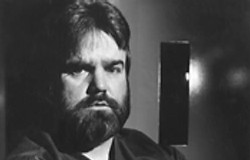 Marvin Gray
Murderer · USA · 1975
Marvin Gray was convicted killer who claimed responsibility for 23 slayings and…
23 victims
Marvin Gray
Murderer · USA · 1975
Marvin Gray was convicted killer who claimed responsibility for 23 slayings and…
23 victims
 Yahweh ben Yahweh
Murderer · USA · 1980
Yahweh ben Yahweh was born and legally named Hulon Mitchell Jr. (October 27, 19…
23 victims
Yahweh ben Yahweh
Murderer · USA · 1980
Yahweh ben Yahweh was born and legally named Hulon Mitchell Jr. (October 27, 19…
23 victims
 Russell Ellwood
Murderer · USA · 1991
Russell Ellwood was a former taxi driver. Authorities suspected him of killing…
20 victims
Russell Ellwood
Murderer · USA · 1991
Russell Ellwood was a former taxi driver. Authorities suspected him of killing…
20 victims
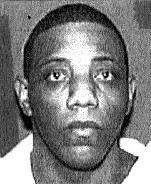 Demetrius Simms
Murderer · USA · 1991
Demetrius Lamont Simms was also referred to as Demetrius Lott Simms. · March 7,…
1 victim
Demetrius Simms
Murderer · USA · 1991
Demetrius Lamont Simms was also referred to as Demetrius Lott Simms. · March 7,…
1 victim
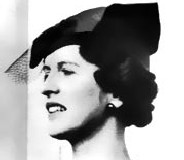 Florence Ransom
Murderer · United Kingdom · 1940
Florence Ransom was a middle-aged woman who was described as physically beautif…
3 victims
Florence Ransom
Murderer · United Kingdom · 1940
Florence Ransom was a middle-aged woman who was described as physically beautif…
3 victims
 Denis Lortie
Murderer · Canada · 1984
Denis Lortie was a Canadian army corporal in the Royal 22 e Régiment of the Can…
3 victims
Denis Lortie
Murderer · Canada · 1984
Denis Lortie was a Canadian army corporal in the Royal 22 e Régiment of the Can…
3 victims
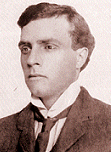 Pleasant Armstrong
Murderer · USA · 1902
Pleasant Armstrong was hanged on January 22, 1904. He was convicted of murder i…
1 victim
Pleasant Armstrong
Murderer · USA · 1902
Pleasant Armstrong was hanged on January 22, 1904. He was convicted of murder i…
1 victim
 Abbas Baqir Abbas
Mass murderer · Sudan · 2000
Abbas Baqir Abbas was identified as a member of the militant Al-Takfir wa al-Hi…
23 victims
Abbas Baqir Abbas
Mass murderer · Sudan · 2000
Abbas Baqir Abbas was identified as a member of the militant Al-Takfir wa al-Hi…
23 victims
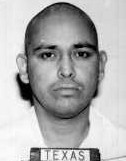 Luis Ramirez
Murderer · USA · 1998
Luis Ramirez was a Hispanic male executed by lethal injection in Texas on Octob…
1 victim
Luis Ramirez
Murderer · USA · 1998
Luis Ramirez was a Hispanic male executed by lethal injection in Texas on Octob…
1 victim
- Gender
- male
- Country
- USA
- Location
- Bossier Parish, Louisiana, USA
- Date of birth
- 1960
- Age at first offence
- 24
- Characteristics
- robbery, torture, dismemberment
- Victim profile
- Roberta Johnson, 25 ( service station cashier )
- Method of murder
- Beating with a hammer
- Date(s) of murder
- August 14, 1984
- Years active
- 1984
- Date of arrest
- —
- Status
-
Executed
Executed by electrocution in Louisiana on June 14, 1988
Case overview
Edward R. Byrne Jr. was executed by electrocution in Louisiana on June 14, 1988. Byrne was convicted of the murder of Roberta Johnson, a Bossier City service station cashier, during an August 14, 1984 robbery.
Victim
Roberta Johnson was a Bossier City service station cashier. Byrne had previously dated Johnson. She was 25 years old at the time of the offense. Her mother died when she was 17 and her father died shortly after her funeral. Johnson was a steady employee and in May of the same year she was promoted to manager of the Racetrack Station where she had worked since 1982.
Timeline
- August 14, 1984 — Roberta Johnson was murdered in Bossier City, Louisiana during a robbery.
- Late Monday (before June 14, 1988) — The State Pardon Board refused to recommend a commutation of the death sentence; the United States Supreme Court refused to delay the execution.
- May 9, 1988 — A United States Court of Appeals decision denied Byrne a certificate of probable cause and vacated a stay of execution.
- June 14, 1988 — Byrne was executed by electrocution in Louisiana.
The offence
Byrne lured Johnson into an intimate relationship to gain an opportunity to rob her of service station daily receipts she was responsible for depositing in the bank. Byrne admitted committing the crime. He beat Johnson on the head and upper body with a ballpeen hammer and then robbed her of $7,000.
The trial proceedings described Johnson’s body as discovered in the locked office of a gas station in Bossier City, Louisiana. As the only eyewitness to the homicide, Byrne provided police with an account of the incident in a taped confession recorded shortly after his arrest, and he acknowledged the accuracy of his account during cross-examination.
Investigation and arrest
Byrne was taken to the Leesville Police Station where he was booked, photographed, and fingerprinted. After being advised of Miranda rights, Byrne asked a policeman whether Roberta Johnson had died and responded that he expected to be “long gone before anybody found out what happened.” Byrne admitted hitting the victim with the hammer several times.
Later that afternoon, Detective West of Bossier City assumed custody and transported Byrne to Bossier City. After being Mirandized and en route to Bossier City, Byrne admitted “having planned this armed robbery from the very beginning.” Byrne advised Detective West that he had planned to initially flee directly to Florida. At the Bossier City Police Station, Byrne confessed that he killed Roberta Johnson while perpetrating the robbery during a taped interview with police. The confession was admitted into evidence and the defendant acknowledged the accuracy of his account during cross-examination.
Trial
Charges and proceedings
A grand jury returned a true bill indicting Byrne for first degree murder in violation of La. Rev. Stat. Ann. § 14:30.
Fish and Ford E. Stinson Jr. were appointed to represent Byrne at trial. A twelve-person jury found Byrne guilty as charged on November 27, 1984.
Guilt phase evidence
The evidence at trial included testimony establishing Johnson’s innocence of any wrongdoing. Byrne’s sole defense at trial was based on his testimony that he did not intend to kill Johnson and that he attempted only to render her unconscious to avoid immediate discovery of the robbery.
Penalty phase and aggravating circumstances
Byrne’s trial was bifurcated. During the penalty phase, the jury unanimously recommended the death penalty and found the existence of three aggravating circumstances:
- the victim had been killed during the commission of an armed robbery;
- the offense was committed in a particularly heinous, atrocious and cruel manner; and
- the victim was a witness to a crime committed by the defendant.
Byrne was sentenced to death on January 29, 1984.
Appeals
Direct appeal and certiorari
Byrne’s conviction and sentence were upheld by the Louisiana Supreme Court in State v. Byrne, 483 So.2d 564. Byrne’s petition for rehearing was denied on March 7, 1986. Byrne’s petition for writ of certiorari to the United States Supreme Court was denied on October 6, 1986 (Byrne v. Louisiana). Byrne’s petition for rehearing of that decision was denied on December 1, 1986.
First federal habeas petition and stay
Byrne filed a “Petition for Writ of Habeas Corpus, Request For Evidentiary Hearing, And Application For A Stay of Execution” on January 16, 1987 in the United States District Court for the Western District of Louisiana. On January 17, the district court granted Byrne a stay of execution, requested all records and transcripts, ordered briefs to be filed, and granted Byrne’s application to proceed in forma pauperis.
In a memorandum ruling filed August 31, the district court denied Byrne’s habeas petition after concluding that an evidentiary hearing was unwarranted and that “[a]ll of [Byrne's] allegations have been conclusory, unsubstantiated and clearly refuted by the existing record.” The district court also entered a separate judgment denying Byrne’s petition.
On September 17, the district court entered a supplemental order to clarify that the January 17 stay would remain in effect until all appeals concerning Byrne’s application for habeas relief were waived or exhausted. On September 24, the district court denied Byrne’s Rule 60(b) motion for relief from the judgment. On October 5, the district court denied Byrne’s application for a certificate of probable cause “as frivolous, without merit and not being in good faith.”
Fifth Circuit decision (certificate of probable cause and vacating stay)
The United States Court of Appeals for the Fifth Circuit denied Byrne’s application for a certificate of probable cause. The court also vacated the stay of execution granted by the district court.
Byrne argued, among other things, that improper restriction of defense voir dire violated his rights, that erroneous prosecutor comments during voir dire affected the jury, that the state prosecutor’s comments on Johnson’s character rendered the trial fundamentally unfair, that he received ineffective assistance of counsel at trial and on direct appeal, that an impermissible aggravating circumstance required a new sentencing hearing, and that mitigating evidence was excluded at the penalty phase in violation of Skipper v. South Carolina.
Voir dire exchange (verbatim)
[MR. FISH:] ... But there are only two choices. One is life imprisonment without benefit of parole, probation or suspension of sentence. That means life in prison with no parole; it means the parole board can't let him out. No probation - that means the Judge can't put him on probation. No suspension of sentence. That means the Judge can't suspend his sentence.
MR. BROWN: Your Honor, my only objection is that that is not an entirely accurate statement of the law. I don't object to him stating what the penalties are, but as far as his comment about what the parole board may or may not can do, I think it's not entirely accurate, but - MR. FISH: Your Honor, I think without parole, it certainly means the parole board can't let him out.
MR. BROWN: Mr. Fish knows full well what that means and what the possibilities are. And I object to that particular statement.
MR. FISH: Your Honor, I would - I would -
THE COURT: I'm going to sustain the objection and I would admonish those of you who are in the jury box and those of you who are prospective jurors that what the attorneys say about the law may or may not be the law. The law in this case will be given to you at the close of this case by the Court and it will be your duty to accept that law as given by the Court irregardless [sic] of what the attorneys may or may not say.
MR. FISH: Your Honor, I would move for a mistrial on the basis of Mr. Brown's statement. I think that it's improper for Mr. Brown to raise the element of a possibility of release when dealing with a death penalty case.
MR. BROWN: I have no [sic] raised that possibility at all, Your Honor. I mean I, - stayed away from it.
THE COURT: You made a valid objection; the Court sustained the objection. The request for mistrial is denied.
The Louisiana Supreme Court held that the state prosecutor’s objections “were not necessarily well founded” since Fish’s statements were merely incomplete rather than inaccurate.
Pardon Board and execution proceedings
Byrne made no final public statement. He told the Pardon Board, the day before his execution:
"I don't know exactly what it is that I can say to y'all. I was planning to rob this woman all along. It was all set up. There were no flaws that I could see. "I just attempted to knock her unconscious. It didn't work. She didn't become unconscious. I just kept hitting her until she did."
Lawyers for Byrne exhausted their avenues when the State Pardon Board refused to recommend a commutation of the death sentence.
Sentencing
Byrne was sentenced to death on January 29, 1984 after the jury unanimously recommended death during the penalty phase and found three aggravating circumstances.
In state appellate review, the Louisiana Supreme Court invalidated one aggravating circumstance because Johnson was not an eyewitness to an earlier independent crime committed by Byrne. The Louisiana Supreme Court concluded that the finding of the invalid aggravating circumstance did not inject an arbitrary factor into the sentencing proceeding because it rested upon otherwise admissable evidence properly adduced at the guilt stage.
In federal proceedings, Byrne argued that he was entitled to a new sentencing hearing because the jury’s consideration of an invalid aggravating circumstance injected an arbitrary factor; the court concluded that the death sentence was not constitutionally impaired where another aggravating circumstance supported the death penalty under the Louisiana procedure.
Other appellate and post-conviction litigation
Second habeas petition in the Fifth Circuit and district court
The Fifth Circuit denied a certificate of probable cause and a stay of execution on an application involving Byrne’s second petition for a writ of habeas corpus. Byrne asserted grounds including:
- violation of eighth amendment rights due to denial of a new sentencing hearing after invalidation of one aggravating circumstance;
- trial court failure to instruct the jury on the definition of “especially heinous, atrocious or cruel”; and
- trial court’s admonition limiting jury consideration of sympathy, passion, prejudice, or public opinion.
The district court in a memorandum ruling concluded Byrne’s petition was patently frivolous, denied the petition for writ of habeas corpus, and denied a motion for a stay of execution. The ruling stated that the petition constituted successive writs and relied on Rule 9(b) determinations, as well as procedural default principles.
Civil rights action and stay request
Byrne also filed a civil rights action under 42 U.S.C. § 1983. He challenged Louisiana’s statute that reset an execution date when a federal stay is dissolved, arguing it violated due process, equal protection, and access to courts by operating to require execution before the time expires to file an application for writ of certiorari under 28 U.S.C. § 2101(c). The United States District Court denied preliminary injunctive relief, and the Fifth Circuit denied Byrne’s request for a stay of execution, concluding he had not shown likely success on the merits or a serious legal question.
Quotes and verbatim statements
Byrne told the Pardon Board, the day before his execution:
The Louisiana Supreme Court summarized Byrne’s arrest and confessions as follows:
Byrne was taken to the Leesville Police Station where he was booked, photographed and fingerprinted. During this process, and after being advised of his Miranda rights, Byrne asked a policeman whether Roberta Johnson had died. Scott responded affirmatively and asked the defendant what he expected to happen. Byrne responded that he "expected to be long gone before anybody found out what happened." Byrne then admitted hitting the victim with the hammer several times. Later that afternoon, Detective West of Bossier City assumed custody of Byrne and transported him to Bossier City. After being Mirandized, and en route to Bossier City, defendant admitted "having planned this armed robbery from the very beginning...." Byrne restated his surprise at his immediate apprehension and advised Detective West that he had planned to initially flee directly to Florida. At the Bossier City Police Station, Byrne confessed that he had killed Roberta Johnson while perpetrating the robbery during a taped interview with police. As the only eyewitness to the homicide, defendant provided police with this account of the incident in a taped confession recorded shortly after his arrest. There is no question that the confession was free and voluntary, and that the defendant had been properly Mirandized. The confession was admitted into evidence, and the defendant acknowledged the accuracy of his account of the incident during cross-examination. Byrne, 483 So.2d at 568-69.
Outcome
Byrne’s request for a certificate of probable cause and a stay of execution were denied in federal proceedings. The State Pardon Board refused to recommend a commutation of the death sentence. The United States Supreme Court refused to delay the execution. Byrne was executed by electrocution in Louisiana on June 14, 1988.
Spotted an error, or have more information about this case?