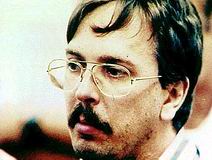
Joel Rifkin
Serial killer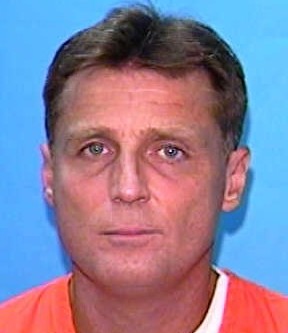 Glen Edward Rogers
Serial killer · USA · 1993
Glen Edward Rogers was a spree killer whose cross-country rampage in 1994-95 le…
70 victims
Glen Edward Rogers
Serial killer · USA · 1993
Glen Edward Rogers was a spree killer whose cross-country rampage in 1994-95 le…
70 victims
 Michael Swango
Serial killer · USA · 1981
Michael Swango (Joseph Michael Swango) was a physician and American serial kill…
60 victims
Michael Swango
Serial killer · USA · 1981
Michael Swango (Joseph Michael Swango) was a physician and American serial kill…
60 victims
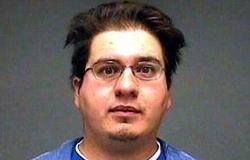 Efren Saldivar
Serial killer · USA · 1989
Efren Saldivar (born 30 September 1969) was an American serial killer who murde…
50 victims
Efren Saldivar
Serial killer · USA · 1989
Efren Saldivar (born 30 September 1969) was an American serial killer who murde…
50 victims
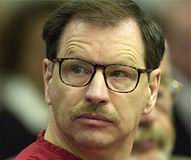 Gary Ridgway
Serial killer · USA · 1982
Gary Leon Ridgway Ridgway was born 18-February-1949 in Salt Lake City, UT. He w…
49 victims
Gary Ridgway
Serial killer · USA · 1982
Gary Leon Ridgway Ridgway was born 18-February-1949 in Salt Lake City, UT. He w…
49 victims
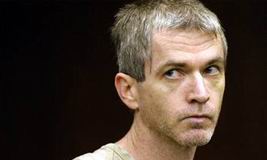 Charles Cullen
Serial killer · USA · 1984
Charles Cullen (born February 22, 1960) was a former nurse and the most prolifi…
45 victims
Charles Cullen
Serial killer · USA · 1984
Charles Cullen (born February 22, 1960) was a former nurse and the most prolifi…
45 victims
 Galareka Harrison
Murderer · USA · 2007
Galareka Harrison was a former University of Arizona student from Chinle. Mia H…
1 victim
Galareka Harrison
Murderer · USA · 2007
Galareka Harrison was a former University of Arizona student from Chinle. Mia H…
1 victim
 Gregory Paul Wilson
Murderer · USA · 1992
Gregory Paul Wilson was born on 5/10/67. Wilson maintained his innocence. The v…
1 victim
Gregory Paul Wilson
Murderer · USA · 1992
Gregory Paul Wilson was born on 5/10/67. Wilson maintained his innocence. The v…
1 victim
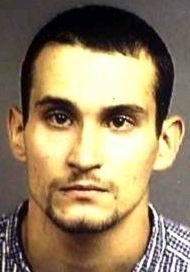 William Joseph Berkley
Murderer · USA · 2000
William Josef Berkley was a white male. His hair color was brown and his eye co…
1 victim
William Joseph Berkley
Murderer · USA · 2000
William Josef Berkley was a white male. His hair color was brown and his eye co…
1 victim
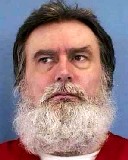 Kenneth Leon Davis
Murderer · USA · 1989
February 23, 1989 — Kenneth Leon Davis entered Dr. Duck's Pawn Shop in Jackson,…
1 victim
Kenneth Leon Davis
Murderer · USA · 1989
February 23, 1989 — Kenneth Leon Davis entered Dr. Duck's Pawn Shop in Jackson,…
1 victim
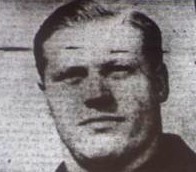 Tore Hedin
Spree killer · Sweden · 1951
September 1943 — Tore Hedin broke into a local brewery near his parental home t…
9 victims
Tore Hedin
Spree killer · Sweden · 1951
September 1943 — Tore Hedin broke into a local brewery near his parental home t…
9 victims
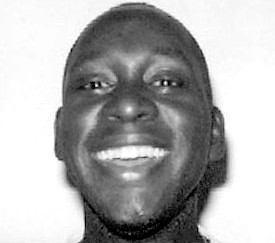 James Brewer
Murderer · USA · 1977
James Brewer was convicted of murder on February 17, 1978, after a jury trial,…
1 victim
James Brewer
Murderer · USA · 1977
James Brewer was convicted of murder on February 17, 1978, after a jury trial,…
1 victim
- Gender
- male
- Country
- USA
- Location
- New York City, New York, USA
- Date of birth
- January 20, 1959
- Age at first offence
- 30
- Characteristics
- dismemberment
- Victim profile
- Susie ( never identified) / Julie Blackbird (remains never found) / Barbara Jacobs, 31 / Mary Ellen DeLuca, 22 / Yun Lee, 31 / “Number six” no name, remains never found / Lorraine Orvieto, 28 / Mary Ann Holloman, 39 / “Number nine” remains anonymous / Iris Sanchez, 25 / Anna Lopez, 33 / Violet O’Neill, 21 / Mary Catherine Williams, 31 / Jenny Soto, 23 / Leah Evens, 28 / Lauren Marquez, 28 / Tiffany Bresciani, 22 (mostly drug addicted prostitutes)
- Method of murder
- Strangulation
- Date(s) of murder
- 1989 - 1993
- Years active
- 1989–1993
- Date of arrest
- June 28, 1993
- Status
-
Life imprisonment
Found guilty of nine murders in 1994 and sentenced to 203 years to life; eligible for parole in 2197 at the age of 238
Timeline
- August 22, 1987 — Joel Rifkin was arrested in Hempstead, Long Island, for soliciting a prostitute.
- March 1989 — Rifkin said he planned the murder of his first victim.
- July 13, 1991 — Barbara Jacobs was picked up by Rifkin and later found dead.
- September 1, 1991 — Mary Ellen DeLuca was last seen alive at 11:00 p.m. when she left friends to earn the price of her next fix.
- September 23, 1991 — Yun Lee was found in the East River.
- July 9, 1992 — Maryann Holloman was retrieved from Coney Island Creek in her oil drum.
- May 13, 1992 — A Jane Doe victim, entombed, was dredged from Newtown Creek, in Greenpoint, Brooklyn.
- June 28, 1993 — State troopers Deborah Spaargaren and Sean Ruane stopped Rifkin’s pickup truck and later identified Tiffany Bresciani’s body; Rifkin was booked and homicide detectives interrogated him.
- June 29, 1993 — Robert Sale met Rifkin for the first time and Rifkin appeared before Judge John Kingston for a preliminary plea of not guilty on the Bresciani murder.
- July 15, 1993 — Rifkin was arraigned for the Bresciani homicide; his lawyer sought suppression and consolidation of murder charges.
- November 8, 1993 — A suppression hearing convened before Judge Ira Wexner.
- April 11, 1994 — Jury selection for Rifkin’s first trial began before Wexner.
- April 20, 1994 — Opening arguments began.
- May 9, 1994 — A jury convicted Rifkin of murder and reckless endangerment; Wexner sentenced Rifkin to 25 years to life for murder and additional time for the lesser charge; Rifkin was transferred to Suffolk County pending trial for the Evens and Marquez slayings.
- January 1996 — By this time, Rifkin was scheduled to serve at least 183 years for seven slayings, with 10 counts outstanding.
- February 1996 — Rifkin arrived at Attica state prison.
- 2000 — A New York appellate court refused to lift the lockdown.
- June 2000 — Rifkin’s lockdown appeal was refused.
- December 14, 2001 — Rifkin lost his latest appeal of his conviction.
- 2002 — New York’s Supreme Court rejected Rifkin’s appeal of his convictions for the murder of nine women.
- (Sentence eligibility) — Rifkin would be eligible for parole in 2197 at the age of 238.
Background
Joel Rifkin was born in 1959 and was born January 20, 1959. He was adopted by Ben and Jeanne Rifkin at three weeks of age. The Rifkin family repeated the procedure with a daughter three years later. In 1965, the family settled in East Meadow, Long Island, where Joel would spend most of his remaining years.
Rifkin had an assessed IQ of 128 and struggled academically. He was teased and bullied by classmates and was known as “The Turtle.” Rifkin graduated from high school in 1977. Over the next twelve years, he made sporadic attempts to attend college. He drifted in and out of jobs, mostly living at home, and had one brief relationship with a girl who described him as sweet but always depressed.
In February 1987, Rifkin’s father killed himself to end the pain of cancer, and Rifkin delivered the eulogy at his funeral. After that, Things seemed to go downhill.
Rifkin was arrested on August 22, 1987 in Hempstead, Long Island, for soliciting a prostitute. He paid a fine and managed to conceal the incident from his mother. He ranged farther afield to seek hookers in Manhattan. He began collecting books and press clippings on serial killers, including the unidentified Green River Killer and Arthur Shawcross.
Rifkin committed his first murder in 1989, and he later described the murder process as involving strangling and dismembering victims. Rifkin’s first two victims have never been found or identified. He recalled killing a hooker in 1989 and another in 1990, dismembering their bodies and dropping the pieces into Manhattan canals, but he did not feel he “hit his stride” until 1991.
Rifkin started a landscaping business in April 1991, renting space at a local nursery to store equipment.
The offence
Rifkin was convicted of nine murders in 1994 and later described additional murders in custody, for a total of seventeen, including Tiffany Bresciani. The murders spanned four years, and multiple victims were described as prostitutes by Rifkin. Surviving relatives of several victims vocally disputed his claim.
Rifkin’s confessions and physical evidence indicated dismemberment and disposal in waterways and containers including plastic bagging, cardboard boxes, steamer trunks, and oil drums.
Named victims included:
- Tiffany Bresciani, 22
- Barbara Jacobs, 31
- Yun Lee, identified as a Korean hooker
- Mary Ellen DeLuca, 22
- Lorraine Orvieto, 28
- Maryann Holloman, 39
- Iris Sanchez, 25
- Anna Lopez, described as a crack addict (age not specified in the provided text)
- Jenny Soto, 23
- Mary Catherine Williams, age 10 years older than O’Neill; O’Neill was 21
- Leah Evens, 28
- Lauren Marquez, 28
- A Jane Doe victim entombed and dredged from Newtown Creek, in Greenpoint, Brooklyn
- Another oil drum victim Rifkin insisted existed but whose name and exact timing he could not recall
Rifkin also reported disposing bodies in areas including the Hudson River, East River, Coney Island Creek, Newtown Creek, the Harlem River, Harlem River’s mouth, Cornwall, New York, and other locations described in the text, including an I-84 route in Brewster.
Investigation
During the traffic stop and aftermath, state troopers Deborah Spaargaren and Sean Ruane smelled the contents in Rifkin’s pickup truck and discovered a woman’s decomposing body in the rear bed area, wrapped in plastic and bound with rope.
Motorist Joel Rifkin helped identify the corpse as 22-year-old Tiffany Bresciani and told officers:
- “I had sex with her, and then I killed her.” He also explained he was on his way to dump the body near Republic Airport when he was spotted.
Rifkin began confessing in custody to other homicides, a total of seventeen, including Bresciani. Police questioned and scoured Rifkin’s home and recovered many items, including identification cards, drivers licenses and credit cards, photographs, articles of jewelry, piles of women’s clothing, and items including a wheelbarrow and a chainsaw stained with human gore.
Investigators conducted a search warrant for Jeanne Rifkin’s home, and officers later carried off a large number of items linked to Rifkin’s murder spree.
Arrest
A traffic stop occurred in the predawn hours around the time described as June 28, 1993. Rifkin’s pickup truck had no license plate, and he did not stop when ordered. The pursuit ended when Rifkin missed a turn and crashed into a lamp post at a Mineola intersection. Officers then removed Rifkin from the pickup.
The driver’s license identified the driver as 34-year-old Joel David Rifkin, residing on Garden Street in East Meadow, Long Island. Rifkin was frisked and an X-acto knife was removed from his pocket. He was booked at Hempstead where homicide detectives launched a marathon interrogation.
A telephone call from police told 71-year-old Jeanne Rifkin that her son had been detained after a traffic accident.
Trial
Rifkin pleaded not guilty at his murder trial despite confessions and evidence.
In 1994, jury selection for Rifkin’s first trial began before Judge Ira Wexner. Opening arguments began. The prosecution described Rifkin as a sexual sadist who relished his victims’ suffering and stated:
- “He got caught red-handed, and now he’s using and abusing the concept of mental illness.” Defense counsel John Lawrence called Rifkin a paranoid schizophrenic and stated:
- “lived in the twilight zone,” and argued violent irresistible compulsions took control of his life.
Long Island psychiatrist Barbara Kirwin deemed Rifkin’s psychological test results “the most pathological” she had seen in 20 years of practice.
Dr. Park Dietz found Rifkin “sick but not insane” and stated:
- “He knew exactly what he was doing, and he did it.” Jurors agreed with Dietz and deliberated briefly before convicting Rifkin of murder and reckless endangerment for leading police on the wild car chase.
On May 9, 1994, Wexner sentenced Rifkin to 25 years to life for murder, plus two and one-third to seven years on the lesser charge. Rifkin had already been transferred to Suffolk County pending trial for the Evens and Marquez slayings.
Sentencing
Rifkin was sentenced to a maximum sentence in the absence of a death penalty statute, and later proceedings added consecutive terms.
By the time of the case resolution described in the text:
- He received the maximum sentence of twenty-five years to life in connection with his first trial and convictions.
- He pleaded guilty on both counts for additional crimes and received two more consecutive terms of 25 years to life in prison.
- He later pleaded guilty to the Sanchez homicide in Queens and to three more counts in Brooklyn: victims Orvieto, Holloman, and the “Jane Doe” killed in 1992.
- By January 1996, Rifkin was scheduled to serve at least 183 years for seven slayings, with 10 counts outstanding.
- Judge Robert Hanophy told spectators:
“It is not in my power to give Mr. Rifkin the sentence he deserves. In case there is such a thing as reincarnation, I want you to spend your second life in prison.”
- Rifkin’s overall sentence in the provided text was 203 years to life, with eligibility for parole only in 2197 at the age of 238.
Appeals
In 2002, New York’s Supreme Court rejected Rifkin’s appeal of his convictions for the murder of nine women. The text also states that on December 14, 2001, Rifkin lost his latest appeal of his conviction, with the appellate court refusing to overturn his sentence despite finding that Judge Wexner should have excluded Rifkin’s confession to the Bresciani murder.
Rifkin’s lawyer argued that his statements to police at arrest should be suppressed because he had not been informed of his rights. His legal strategy also involved seeking consolidation and raising an insanity-related defense.
Outcome
Rifkin was found guilty of nine murders in 1994 and was sentenced to 203 years to life. He would be eligible for parole only in 2197, at the age of 238.
Aftermath
In early 1994, the text reported a jailhouse scuffle involving Rifkin and mass murderer Colin Ferguson, which ended when Ferguson punched Rifkin in the mouth.
Rifkin arrived at Attica state prison in February 1996, and the text describes him as having a black eye from his first assault by fellow inmates while confined on Rikers Island. Prison officials confined him to a cell at the Attica Correctional Facility for 23 hours a day and later held him in solitary confinement for more than four years before transferring him to the Clinton Correctional Facility.
A state appellate court in 2000 determined prison officials had not violated Rifkin’s constitutional rights by housing him in isolation. Rifkin sought $50,000 for each of his 1,540 days in solitary confinement, totaling $77 million. The text states that if he received any money, it would be subject to state laws earmarking most of the award for the families of his victims.
The text also states that corrections officials said Rifkin was imprisoned with more than 200 other inmates at Clinton who were not allowed into general population.
Rifkin was interviewed by ABC’s Martin Bashir as part of the Nightline Prime mini-series, Secrets of Your Mind, during which he underwent a brain scan.
The text also describes Rifkin’s legal and civil actions, including:
- A lawsuit by the Orvieto family for Lorraine’s wrongful death, and Rifkin responding with a handwritten brief branding her an AIDS carrier who “may be responsible for the eventual deaths of numerous individuals,” and crediting her relatives for shared responsibility in “what might have been.”
- In November 1997, Rifkin sued prison officials and the New York Daily News after reports branding him HIV-positive, and the complaint stated the reports prompted inmate assaults leading to confinement in a solitary cell for personal safety.
The text states that in April 1998, Rifkin’s artwork was sold at the New York State legislature’s office building in Albany as part of a program to compensate crime victims, with proceeds split: 50 percent earmarked for New York’s Crime Victims’ Board and inmate artists retaining the rest. It also states that one painting titled “Guardian’s Failure” showed a bare foot with a coroner’s toe tag and an angel weeping in the corner.
In August 1999, Rifkin unveiled plans for “Oholah House,” a proposed shelter for prostitutes that included drug treatment, counseling, medical care, and job training. It states:
- Rifkin explained “Oholah” was the Hebrew word for “sanctuary” and the name of a prostitute whose violent death is described in Ezekiel 23:3-10.
- Rifkin called his plan “a way of paying back a debt, I guess,”
- The text notes the name in Ezekiel was spelled “Aholah,” and it states that most objected to including a “Motivation Room” with photos of hookers murdered on the job. Rifkin said:
- “These girls think, ‘I can’t be touched,’” and:
- “Well, 17 girls thought that, and now they’re dead.”
The text states that, despite efforts, Rifkin had no luck in bids to escape solitary confinement, and by unanimous decision a New York appellate court refused to lift lockdown in June 2000. It further states that he was transferred from Attica to the Clinton Correctional Facility at Dannemora.
The text also states that 203 years to life was being served at the Clinton, N.Y. correctional facility and that he would be eligible for parole in 2197.
Other details
Rifkin lived on Garden Street in East Meadow, Long Island and was sometimes described in the text as having poor hygiene, chronic absenteeism, and general ineptitude preventing advancement.
The text describes multiple specific disposal methods and locations, including oil drums, steamer trunks, cardboard boxes, and dumping bodies in rivers and creeks including:
- Hudson River
- East River
- Coney Island Creek
- Newtown Creek (Greenpoint, Brooklyn)
- Harlem River
- Cornwall area (with victims found in upstate areas)
- Brewster area off Interstate 84
- Cornwall, New York
The text includes multiple references to uncertainty and disputes about Rifkin’s claimed number of murders and victims’ employment status, noting that surviving relatives of several victims vocally disputed Rifkin’s claim that all victims were prostitutes.
The text includes a description of an argument in prison involving Colin Ferguson over the use of a public telephone, which ended with Ferguson punching Rifkin in the mouth.
The text also includes claims about the police interrogation process, stating that there was no recorded session and that Rifkin later claimed he asked for a lawyer “at least 20 times” and was always refused, along with the claim that investigators told him he could not speak with counsel until “you give us one more homicide.”
Spotted an error, or have more information about this case?