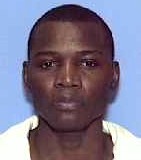
Arthur Lee Burton
Murderer Dr. Wouter Basson
Murderer · 1992
Wouter Basson (born July 6, 1950) was a South African cardiologist and the form…
230 victims
Dr. Wouter Basson
Murderer · 1992
Wouter Basson (born July 6, 1950) was a South African cardiologist and the form…
230 victims
 Ershad Sikder
Murderer · Bangladesh · 1990
Ershad Sikder was an influential political figure in the south-western city of…
30 victims
Ershad Sikder
Murderer · Bangladesh · 1990
Ershad Sikder was an influential political figure in the south-western city of…
30 victims
 Russell Ellwood
Murderer · USA · 1991
Russell Ellwood was a former taxi driver. Authorities suspected him of killing…
20 victims
Russell Ellwood
Murderer · USA · 1991
Russell Ellwood was a former taxi driver. Authorities suspected him of killing…
20 victims
 Anisio Ferreira de Sousa
Murderer · Brazil · 1989
September 4, 2003 — Anísio Ferreira de Sousa was sentenced to 77 years in priso…
19 victims
Anisio Ferreira de Sousa
Murderer · Brazil · 1989
September 4, 2003 — Anísio Ferreira de Sousa was sentenced to 77 years in priso…
19 victims
 Umesh Reddy
Murderer · India · 1998
Umesh Reddy was sentenced to death on October 27, 2006. The Karnataka High Cour…
18 victims
Umesh Reddy
Murderer · India · 1998
Umesh Reddy was sentenced to death on October 27, 2006. The Karnataka High Cour…
18 victims
 Ann Miller Kontz
Murderer · USA · 2000
Ann Miller Kontz was the widow of Eric Miller and the defendant in the arsenic…
1 victim
Ann Miller Kontz
Murderer · USA · 2000
Ann Miller Kontz was the widow of Eric Miller and the defendant in the arsenic…
1 victim
 Nicholas Ncama
Serial killer · South Africa
Nicholas Lungisa Ncama was a South African serial killer who was convicted in 1…
Nicholas Ncama
Serial killer · South Africa
Nicholas Lungisa Ncama was a South African serial killer who was convicted in 1…
 Marcelina Mendoza
Murderer · USA · 1992
Marcelina Mendoza was 20 years old at the time of the Aug. 19 death of her 3-ye…
1 victim
Marcelina Mendoza
Murderer · USA · 1992
Marcelina Mendoza was 20 years old at the time of the Aug. 19 death of her 3-ye…
1 victim
 Eleanor Jarman
Murderer · USA · 1933
Eleanor Jarman was born in 1904. She was the youngest of eight children born to…
1 victim
Eleanor Jarman
Murderer · USA · 1933
Eleanor Jarman was born in 1904. She was the youngest of eight children born to…
1 victim
 Matthew Milat
Homicide · Australia · 2010
Matthew Milat was convicted as a teenage relative of serial killer Ivan Milat.…
1 victim
Matthew Milat
Homicide · Australia · 2010
Matthew Milat was convicted as a teenage relative of serial killer Ivan Milat.…
1 victim
- Gender
- male
- Country
- —
- Location
- —
- Date of birth
- March 29, 1970
- Age at first offence
- 27
- Characteristics
- sexual assault, drugs
- Victim profile
- Nancy Adleman (jogger)
- Method of murder
- Strangulation with shoelace Loca tion : Harris County, Texas, USA
- Date(s) of murder
- July 29, 1997
- Years active
- 1997
- Date of arrest
- —
- Status
-
Sentenced to death
Sentenced to death on September 16, 1998; conviction affirmed and sentence reimposed following vacatur and remand for retrial on punishment only
Case record: Arthur Lee Burton
Background
Arthur Lee Burton was born on 3/29/70. He received a TDCJ number of 999283. He was male and Black. His hair color was Black. His height was 5-10 and his weight was 176. His eye color was Brown. He had a Native county and Native state listed. His prior occupation was listed as Unknown. His prior prison record was None. His education level was listed as 12 years.
The offence
On July 29, 1997, in Houston, Texas, Burton confronted a white female while she was jogging through her neighborhood. He forced her into a nearby wooded area and was attempting to rape her. The victim heard a witness approaching and began to scream. Burton strangled her to death with her own shoelaces. He fled the scene on foot.
Nancy Adleman left home to go on a short jog along the bayou near their house. Around 7:20 p.m., Sharon Lalen was watching her children play by some heavy equipment near the bayou. When she turned around, she was startled by a dirty and angry-looking man on a bicycle standing very close to her. Lalen said, "Hello," but the man just gave her a mean look. Feeling threatened by the encounter, Lalen called her children and went home. As she was calling her children, Lalen saw Adleman jogging along the bayou. Lalen later identified the man on the bicycle as Burton.
The police discovered Adleman’s body the next morning in a hole about three to four feet deep, located in the heavily wooded area off the jogging trail along the bayou. Her shorts and panties had been removed and discarded some distance away from the body, leading the police to believe that she had been sexually assaulted. Adleman had been strangled with her own shoelace, and her body looked as if she had been badly beaten.
In his written statement, Burton admitted attacking a jogger, dragging her into the woods, and choking her until she was unconscious. He then removed her shorts and underwear and attempted to have sex with her. When she regained consciousness and began screaming, he again choked her into unconsciousness and dragged her into a hole. Burton began to leave, but when he saw another person walking nearby, he returned and strangled the jogger with her own shoelace.
Investigation
When initially approached by Deputy Sheriff Benjamin Beall, Burton denied that he ever rode his bicycle along the bayou, and he denied killing Adleman. Beall confronted Burton with inconsistencies in the evidence he had collected, and Burton eventually confessed to the crime.
The state presented evidence that, in 1988, when Burton was eighteen, he had participated in thirty-nine burglaries of vehicles and outbuildings in a single month. Burton and his co-defendants had stolen guns, radios, fishing equipment, calculators, and other items. At times, the perpetrators would not take anything; they would just go through any papers in the car and then destroy the inside of the vehicle. Burton’s brother testified that he knew that Burton used marijuana and sold cocaine when Burton lived in Arkansas.
Arrest
Burton was approached by Deputy Sheriff Benjamin Beall during the investigation of the July 29, 1997 offense. Burton was confronted with inconsistencies in the evidence collected and eventually confessed.
Trial
In June 1998, a jury convicted Burton of capital murder. Tex. Penal Code ? 19.03(a).
Pursuant to the jury’s answers to the special issues set forth in Texas Code of Criminal Procedure Article 37.071, ?? 2(b) and 2(e), the trial judge sentenced Burton to death. Art. 37.071, ? 2(g).
Burton v. State:
- No. 73,204
- Appellant: Arthur Lee Burton
- V. The State of Texas
- On Direct Appeal from Harris County
- Johnson, J. delivered the opinion of the Court, in which Meyers, Price, Keasler, Hervey, Holcomb, and Cochran, JJ. joined.
- Keller, P.J., and Womack, J. concurred.
- Johnson, J. Delivered: May 19, 2004
- En banc
- Do Not Publish
On direct appeal to the Court of Criminal Appeals of Texas, the conviction was affirmed, but the sentence was vacated and the cause was remanded to the trial court for a retrial on punishment only.
On retrial, in accord with the jury’s answers to the special issues, the trial judge sentenced Burton to death. Art. 37.071, ?? 2(b), 2(e), and 2(g).
Direct appeal to the Court of Criminal Appeals was automatic. Art. 37.071, ? 2(h).
Burton raised five points of error, including a challenge to the sufficiency of the evidence to support the jury’s finding that he would be a continuing threat to society. Art. 37.071, ? 2(b). The Court affirmed.
Admitted evidence and objections
During the second day of trial, the court held a hearing outside the presence of the jury to consider the admissibility of certain records provided by the Texas Department of Criminal Justice - Correctional Institutions Division (TDCJ-CID) and the accompanying testimony from prison sociologist J. P. Guyton.
The records reflected Burton’s rationale for the instant offense; it was "just something I couldn't help[.]" They also contained Burton’s admission that he had been using marijuana since he was sixteen years old and had been selling cocaine since age seventeen.
Defense counsel objected to the records on the grounds that "this extraneous offense is going to come in through interrogation of our client without warnings or benefit of counsel and we believe that it should not be admitted on that basis."
Guyton testified that he worked in the sociology department at TDCJ-CID. He explained that his job was to interview each incoming inmate in order to compile a social and criminal history for use in classification. When the "reception and diagnostic committee" classified an inmate, they determined which unit the inmate should be assigned to and which custody level the inmate should be assigned on that unit in order to best fit the inmate's security, educational, and medical needs. Information about drug and alcohol use was routinely elicited so that the drug and alcohol counselors on the units could determine if a particular inmate needed treatment. This information was also used by the Board of Pardons and Paroles to assess whether it should require any counseling before the inmate's release. Finally, the inmate was asked why he committed the offense for which he was sentenced. The same questions were asked of every inmate, and the information obtained was not used to file charges on the inmate.
At the end of the testimony, defense counsel stated:
Judge, if we have just a moment, I just want to make sure I made all my objections clear on Mr. Guyton's testimony as to the extraneous offense. We argue that it's not an offense which they can prove, they can't make the test, as required by case law, as the Court is well aware, to be able to offer that admission. In addition, it's hearsay. And for those reasons we object.
Burton did not reiterate his earlier complaint that the information about extraneous offenses was gleaned through a custodial interview without the benefit of Miranda warnings or counsel. The Court held that the earlier complaint preserved Fifth and Sixth Amendment complaints for review on appeal only with regard to the admissibility of the two extraneous offenses mentioned during the interview. The Court also held that any complaint about other information revealed during the interview had not been preserved for appeal.
During re-trial, Burton’s brother testified without objection that he knew about Burton’s marijuana use and cocaine sales. The Court stated that when evidence similar to that which had been objected to is introduced without objection, a defendant is not in position to complain on appeal.
Sufficiency of evidence of future dangerousness
In his third point of error, Burton complained that the evidence presented at trial was legally insufficient to support the jury’s finding that he would be a future danger. The Court reviewed the sufficiency of the evidence at punishment by looking at the evidence in the light most favorable to the verdict and considering whether any rational trier of fact could have believed beyond a reasonable doubt that Burton would probably commit criminal acts of violence that would constitute a continuing threat to society.
The Court found that a jury could infer future dangerousness from the circumstances of the offense and the surrounding events alone. It noted that jurors heard testimony that Burton first appeared behind Sharon Lalen, leaving only when she turned and talked to him face to face. Lalen was alarmed and called her husband at work and asked him to come home. It also noted that farther down the trail, Burton rode up behind another lone female, grabbed her from behind, dragged her into the woods, strangled her into unconsciousness, then tried to sexually assault her. Eventually, he strangled her. The Court noted that when police questioned Burton, he at first denied any knowledge or responsibility and confessed only when confronted with inconsistencies.
The Court also noted that although Burton’s criminal history consisted only of numerous burglaries committed years earlier, it held that a rational jury could infer from the apparent randomness and unpredictability of the instant crime that there was a probability that Burton would commit future criminal acts of violence that would constitute a continuing threat to society.
The Court overruled point of error three.
Evidence regarding the “Texas Seven”
Burton complained in his fourth and fifth points of error that admission of evidence regarding the "Texas Seven" prison escapees and their murder of a peace officer during their "escape rampage" was irrelevant to any special issue and violated his Fourteenth Amendment right to due process.
After the state rested its case, the defense called corrections consultant Steve Martin to testify about the operation of Texas prisons. During direct examination, Martin opined that the longer a prisoner’s sentence is, the more incentive he may have to try to escape. On cross-examination, the state expanded on Martin’s remarks about the possibility of escapes from the prison system, at one point bringing up the "Texas Seven." The Court noted that at no time during this testimony did Burton object. The Court held that Burton failed to preserve the issue for review and overruled points of error four and five.
Sentencing
A jury convicted Burton of capital murder in June 1998. Pursuant to the jury’s answers to the special issues, the trial judge sentenced him to death. Art. 37.071, ? 2(g).
Burton was sentenced to death on September 16, 1998.
On direct appeal, the conviction was affirmed and the sentence vacated and remanded for a retrial on punishment only. The Court later held that on retrial, the trial judge again sentenced Burton to death based on the jury’s answers to the special issues. Art. 37.071, ?? 2(b), 2(e), and 2(g).
Appeals
On direct appeal to the Court of Criminal Appeals of Texas:
- The Court affirmed the conviction.
- The Court vacated the sentence and remanded the cause to the trial court for a retrial on punishment only.
On retrial:
- The trial judge sentenced Burton to death in accord with the jury’s answers to the special issues.
Burton appealed again, raising five points of error. The Court overruled the points of error and affirmed the judgment of the trial court.
Outcome
The Court affirmed the conviction and the death sentence after the punishment retrial.
Aftermath
The case concluded with affirmance of the judgment of the trial court in the Court of Criminal Appeals of Texas, delivered by Johnson, J., and enrolled en banc.
Other details
- Lalen identified the man on the bicycle as Burton.
- The police discovered Adleman’s body the next morning in a hole about three to four feet deep in the heavily wooded area off the jogging trail along the bayou.
- Her shorts and panties had been removed and discarded some distance away from the body.
- Deputy Sheriff Benjamin Beall confronted Burton with inconsistencies in the evidence and Burton eventually confessed.
- Appellant’s brother testified that he knew Burton used marijuana and sold cocaine when Burton lived in Arkansas.
- The state presented evidence of Burton’s participation in thirty-nine burglaries in 1988 when Burton was eighteen.
- The Court applied Tex. R. App. P. 33.1 preservation principles in addressing points of error four and five and in addressing other related issues of preservation.
- The Court noted that a pretrial motion to suppress Burton’s confession preserved error only if included statements remained, but it also noted that Burton withdrew a motion in open court according to a notation on the order signed by the judge, so it preserved nothing.

Spotted an error, or have more information about this case?