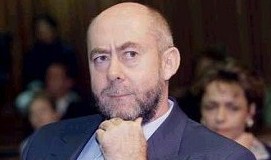
Dr. Wouter Basson
Murderer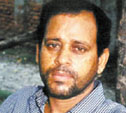 Ershad Sikder
Murderer · Bangladesh · 1990
Ershad Sikder was an influential political figure in the south-western city of…
30 victims
Ershad Sikder
Murderer · Bangladesh · 1990
Ershad Sikder was an influential political figure in the south-western city of…
30 victims
 Brian Kevin Rosenfeld
Murderer · USA · 1985
Brian Kevin Rosenfeld Brian Kevin Rosenfeld was sentenced to three concurrent l…
23 victims
Brian Kevin Rosenfeld
Murderer · USA · 1985
Brian Kevin Rosenfeld Brian Kevin Rosenfeld was sentenced to three concurrent l…
23 victims
 Russell Ellwood
Murderer · USA · 1991
Russell Ellwood was a former taxi driver. Authorities suspected him of killing…
20 victims
Russell Ellwood
Murderer · USA · 1991
Russell Ellwood was a former taxi driver. Authorities suspected him of killing…
20 victims
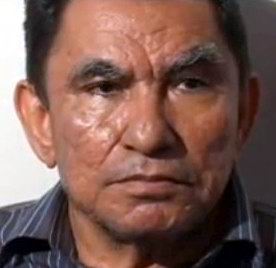 Anisio Ferreira de Sousa
Murderer · Brazil · 1989
September 4, 2003 — Anísio Ferreira de Sousa was sentenced to 77 years in priso…
19 victims
Anisio Ferreira de Sousa
Murderer · Brazil · 1989
September 4, 2003 — Anísio Ferreira de Sousa was sentenced to 77 years in priso…
19 victims
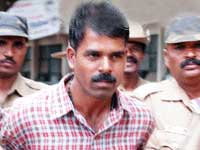 Umesh Reddy
Murderer · India · 1998
Umesh Reddy was sentenced to death on October 27, 2006. The Karnataka High Cour…
18 victims
Umesh Reddy
Murderer · India · 1998
Umesh Reddy was sentenced to death on October 27, 2006. The Karnataka High Cour…
18 victims
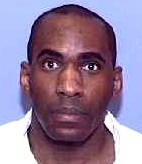 Kerry Dimart Allen
Murderer · USA · 2000
Kerry Dimart Allen was convicted of capital murder and sentenced to death. He a…
1 victim
Kerry Dimart Allen
Murderer · USA · 2000
Kerry Dimart Allen was convicted of capital murder and sentenced to death. He a…
1 victim
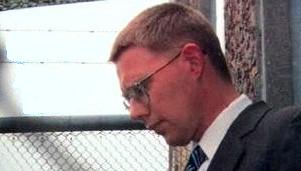 Christopher John Lewis
Murderer · New Zealand · 1996
Christopher John Lewis was found dead in his cell by Auckland Mt Eden prison st…
1 victim
Christopher John Lewis
Murderer · New Zealand · 1996
Christopher John Lewis was found dead in his cell by Auckland Mt Eden prison st…
1 victim
- Gender
- male
- Country
- —
- Location
- —
- Date of birth
- J uly 6, 1950
- Age at first offence
- 42
- Characteristics
- poisoner, drugs
- Victim profile
- Men ( SWAPO prisoners of war and South African Defence Force (SADF) members )
- Method of murder
- Poisoning ( lethal triple cocktail of powerful muscle relaxants ) Loca tion : Namibia/Mozambique/S outh Africa
- Date(s) of murder
- 1992 - 1999
- Years active
- 1992–1999
- Date of arrest
- —
- Status
-
Acquitted / overturned
Acquitted in South Africa on April 10, 2002
Case details
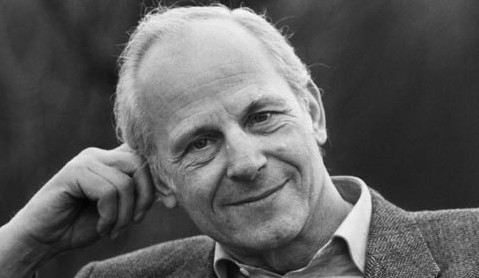
Wouter Basson (born July 6, 1950) was a South African cardiologist and the former head of the country’s secret chemical and biological warfare project, Project Coast, during the apartheid era. He was nicknamed “Dr Death” for his alleged actions in apartheid South Africa. Basson was acquitted on all charges in South Africa on April 10, 2002.
Timeline
- 1981 — Basson worked as a personal physician to state president P. W. Botha; the country’s Surgeon-General hired him to work for the 7th SAMHS Medical Battalion, the SADF’s medical military unit.
- 1981 — Basson collected information about other countries’ chemical and biological warfare capabilities under the name Project Coast.
- 1981 — After a preliminary report, Basson became the head project officer and began to work on the country’s chemical and biological weapons capability.
- 1982 — Basson was alleged to have arranged the killing of 200 SWAPO prisoners.
- 1989 — The company Infadel was split into two companies: D. John Truter Financial Consultants and Sefmed Information Services.
- 1990 — F. W. de Klerk became president and ordered the production of the chemicals to be stopped and the lethal agents destroyed.
- January 1992 — Mozambique reported that a South African helicopter had attacked their soldiers by releasing an unknown lethal substance that led to four fatalities.
- January 1993 — Project Coast was wound down; USA and Britain began to pressure the South African government.
- 1993 — The Office of Serious Economic Offences (OSEO) began to investigate Basson’s business dealings in a seven-year forensic audit.
- 1995 — The South African government hired Basson to work for Transnet.
- 1995 — The USA and UK suspected that during Basson’s visits to Libya between 1993 and 1995, he might have sold chemical and biological weapons secrets.
- 1995 — The government of Nelson Mandela rehired Basson as an army surgeon.
- 1996 — South Africa’s Truth and Reconciliation Commission (TRC) began to investigate the SADF and determined that the army had probably used lethal toxins against ANC activists.
- 1997 — The CIA told the South African government that Basson intended to leave the country.
- 1997 — Basson was arrested in a sting operation in Pretoria with a large quantity of ecstasy pills and various documents.
- 1997 — Basson was arrested in a sting operation for the attempted sale and possession of 1000 ecstasy tablets.
- July 31, 1998 — Basson appeared before the TRC and gave evidence for 12 hours.
- October 4, 1999 — Basson’s trial began in Pretoria.
- October 11, 1999 — Judge Willie Hartzenberg dismissed 6 important charges.
- July 2001 — Basson began to present his own evidence, speaking for 40 days.
- April 22, 2002 — Judge Hartzenberg dismissed all the remaining charges against Basson and granted him amnesty.
- 2003 — The Supreme Court of Appeal refused to order a retrial.
- June 2005 — Swiss investigators questioned Basson about illegal trade in weapons and nuclear material and asked the South African government to stop cooperating with him.
Background
Basson worked on Project Coast, which was a chemical and biological weapons capability. The project was researched in violation of the international BTWC agreement. Basson recruited about 200 researchers from around the world and received annual funds equivalent to $10 million.
Basson created four front companies: Delta G Scientific Company; Roodeplaat Research Laboratories (RRL); Protechnik; and Infadel. In 1989, Infadel was split into two companies: D. The companies were used to officially distance the military from the project, procure necessary chemicals, and channel funds for research. According to later investigation, Basson had a free rein to do what he wanted.
Delta G did most of the research, production, and development of chemical agents. RRL developed chemical and biological pathogens and was allegedly involved with genetic engineering. Protechnik was a large nuclear, biological and chemical warfare plant developing defences against chemical weapons. Infadel dealt with financing and administration of other units and possibly channelling funds between military and research facilities.
Many employees were not aware of what they were involved with. In the 1980s, Basson and the project were allegedly involved with attacks and assassinations against members of anti-apartheid movements. African leaders in South Africa, Angola, and Namibia claimed that more dangerous chemicals were used for crowd control in the country, while the government claimed otherwise and said chemical weapons were used against South African troops.
Basson provided the Civil Cooperation Bureau (CCB) with lethal chemicals to be used against prominent anti-apartheid activists. Basson continued to travel to gather information about chemical and biological warfare programs and set up other shell and paper companies as additional front companies, possibly for money laundering. When F. W. de Klerk became president in 1990, he ordered the production of the chemicals to be stopped and the lethal agents destroyed. Basson concentrated on non-lethal chemical agents and chemicals the government had not banned.
This included a large amount of ecstasy and Mandrax that were apparently exported or allegedly sold to drug dealers in communities active in the anti-apartheid movement. Scientists working on the project later stated that they believed it was to be used to create drug-laced tear gas. Most of the stockpile disappeared afterwards.
In January 1992, Mozambique reported that a South African helicopter had attacked their soldiers by releasing an unknown lethal substance that led to four fatalities. Investigation by the United Nations, U.S. and the United Kingdom identified it as BZ nerve agent. USA and Britain began to pressure the South African government, and in January 1993 Project Coast was wound down. Basson was officially retired and hired to dismantle the project, and he was allegedly profited when some of the South African front companies were privatised. Later government investigation found that large amounts of chemicals and agents were missing.
Investigation
In 1993, the Office of Serious Economic Offences (OSEO) began to investigate Basson’s business dealings in a seven-year forensic audit. In 1995, the South African government hired Basson to work for Transnet, a transportation and infrastructure company, and possibly for other more secretive jobs.
The USA and UK governments suspected that during his visits to Libya between 1993 and 1995, Basson might have sold chemical and biological weapons secrets. In 1995, the government of Nelson Mandela rehired Basson as an army surgeon, allegedly due to USA and UK pressure and possibly because the government wanted to keep an eye on him.
In 1996, South Africa’s Truth and Reconciliation Commission (TRC) began to investigate the SADF and determined that the army had probably used lethal toxins against ANC activists. Basson was connected to many of these attacks.
In 1997, the CIA told the South African government that Basson intended to leave the country. The TRC investigated Project Coast and suspected that Basson had sold his secrets to governments of countries like Libya and Iraq. The TRC asked the help of the Netherlands Institute for Southern Africa (NIZA), and the investigation report was included in the Truth Commission Files. At the same time, the Office for Serious Economic Offences, The National Intelligence Agency (NIA), and the Gauteng Attorney-General’s Special Investigation Team investigated Basson’s affairs. Conflict of interest slowed down the Commission investigation, but the TRC gained more information from OSEO.
Basson was arrested in a sting operation in Pretoria for the attempted sale and possession of 1000 ecstasy tablets. At the time, he had hundreds of secret Project Coast documents in his car. Basson appeared before the TRC on July 31, 1998 and gave evidence for 12 hours. Basson’s lawyers constantly interrupted the questioning with legal technicalities, and the Commission determined that Basson had been the primary decision maker in Project Coast and should be put on trial.
Trial
Basson’s trial began on October 4, 1999 in Pretoria. At the time, the South African media had dubbed him “Dr Death”.
Basson faced 67 charges, including drug possession, drug trafficking, fraud and embezzlement of a total of R36,000,000, 229 murders, and conspiracy to murder and theft. Basson refused to seek amnesty from the Truth Commission.
The prosecution presented 153 witnesses, but the case soon began to turn against them. On October 11, 1999, Judge Willie Hartzenberg dismissed 6 important charges, including four charges of murder and possible involvement in 200 deaths in Namibia, because the South African court could not prosecute crimes committed in other countries. Basson was included in the Namibian amnesty of 1989. Hartzenberg then adjourned the trial for two weeks.
After 18 months of trial, Hartzenberg reduced the number of charges to 46. In July 2001, Basson began to present his own evidence, speaking for 40 days. He stated that he had learned about the weapons of mass destruction from Saddam Hussein, that he had indeed had free rein in the project, and that he had exchanged information with foreign governments. He argued that technically all of that was legal. The defence argued that Basson should have immunity for anything that had happened in Namibia.
On April 22, 2002, Judge Hartzenberg dismissed all the remaining charges against Basson and granted him amnesty. The trial had lasted 30 months.
Sentencing
Judge Willie Hartzenberg found Basson not guilty on all the charges and granted amnesty, after which Basson was acquitted.
“I find the accused not guilty on all the charges,” Judge Willie Hartzenberg said as the judgment was read out in the courtroom in Pretoria.
Appeals
The state threatened to appeal the judgment due to legal inaccuracies, but the Supreme Court of Appeal refused to order a retrial in 2003.
Later that year, the Constitutional Court overturned the judgment of the Supreme Court of Appeal. It ruled that crimes allegedly committed outside the country could be prosecuted in South Africa. Since then, the National Prosecuting Authority had not instituted proceedings against Basson for crimes against humanity.
Outcome
Basson was acquitted in South Africa on April 10, 2002. He showed little reaction, just smiled briefly as he was found not guilty on 46 charges.
The African National Congress condemned the verdict as “outrageously bad,” and ANC spokesman Smuts Ngonyama said: “The justice system has let us down on this case,” describing the verdict as “a clear case of the protection of an individual who has killed people”.
“They (the prosecutors) had to prove beyond all doubt that the accused was guilty. That they did not do,” Mr Hartzenberg added.
Prosecutors accused Judge Hartzenberg of favouring Basson throughout the trial, and the government planned to appeal the verdict before a panel of judges.
The court was packed with white supporters of the 51-year-old cardiologist, and they applauded when the decision was read out. The crowd that came to hear the verdict included apartheid-era Defence Minister Magnus Malan, former military chief Constand Viljoen, and former Surgeon-General Niel Knobel. Constand Viljoen said: “To come to such a logical conclusion, to me, proves that South African courts are still good,”
Aftermath
After his release, Basson continued to travel all over the world as a guest speaker and founded his own private medical practice.
In June 2005, a group of Swiss investigators questioned him about illegal trade in weapons and nuclear material and asked the South African government to stop cooperating with him.
In November 2008, Basson was charged at a hearing of the Health Professions Council of South Africa with offences stemming from his time as an apartheid era “germ warfare expert”. The hearing was postponed on an application submitted by the prosecution. On June 30, 2010, the application by Wouter Basson to the South African High Court was rejected. The application attempted to have the charges set aside as unlawfull, unreasonable and unfair. The judge found that there was no evidence to suggest that the Council was influenced to be biased or prejudiced against the doctor.
Other details
Witnesses had testified that Project Coast sought to create “smart” poisons only lethal to blacks and had hoarded enough cholera and anthrax to start epidemics. Witnesses testified that naked black men were tied to trees, smeared with a poisonous gel, and left overnight to see if they would die; when the experiment failed, the men were put to death with injections of muscle relaxants.
Witnesses testified about weapon ideas including sugar laced with salmonella, cigarettes with anthrax, chocolates with botulism, and whisky with herbicide.
Basson said at the trial he had only been following orders and portrayed himself as a scientist who had sought ways to combat potato blight and a hepatitis-A epidemic. Responding to the charge that he had embezzled state funds, Basson said the government had practically provided him with a blank cheque for his work, which took him all over the world for clandestine meetings with agents.
Basson had been arrested in 1997 on charges of selling ecstasy to a police informant, with illegal drug production described as one arm of Operation Coast’s operations.
Basson refused to apply for amnesty at the Truth and Reconciliation Commission (TRC). Reverend Frank Chikane said:
“For me the issue is not whether or not somebody gets found guilty, the real issue is whether or not the person is able to come to me and say, 'I did this and am very sorry'”
Reverend Frank Chikane was described as nearly having been killed by clothing allegedly poisoned by Project Coast.
Transnet was named as the transportation and infrastructure company that hired Basson in 1995. The Gauteng Attorney-General’s Special Investigation Team was named as one of the bodies investigating Basson’s affairs. The Office of Serious Economic Offences and the National Intelligence Agency were also named as investigating bodies.
Spotted an error, or have more information about this case?